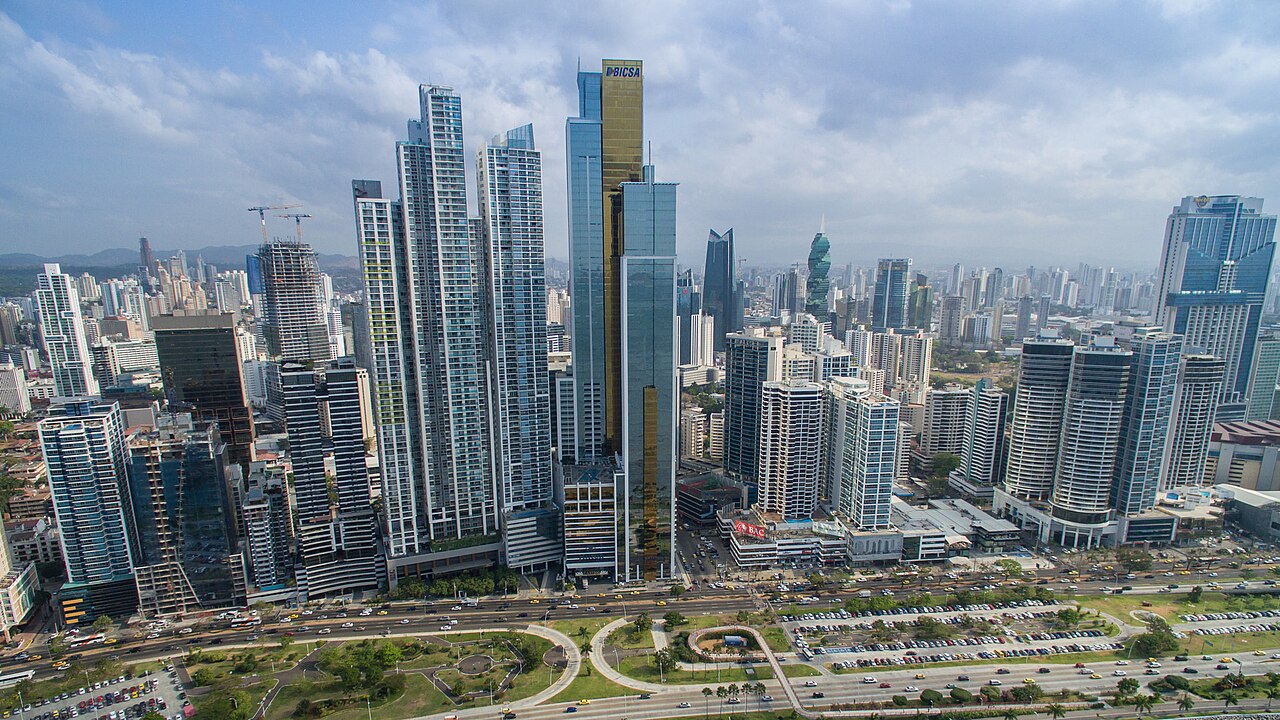


A base for living and international activity
Panama offers several residence pathways, a substantial banking sector and a location connecting the Americas. Its practical usefulness depends on your daily life, business activity and the countries you remain connected to. A second residence can provide optionality without requiring you to immediately make it your primary home.
That flexibility must be separated from a tax claim. A person who obtains Panamanian residence but continues living and running a business elsewhere may still owe tax there.
Choose the route that matches your circumstances
Friendly Nations residence depends on eligible nationality and a qualifying economic or professional basis. Pensionado is tied to a qualifying lifetime pension. Qualified Investor residence uses a qualifying investment and has its own maintenance requirements.
These routes have different capital, documentation and family consequences. The cheapest application is not necessarily the best fit if it conflicts with where your money needs to remain or what work you intend to do.
Treat territorial taxation carefully
The location of a customer or bank account does not alone determine income source. Someone physically performing services in Panama needs a different review from a passive investor holding assets abroad. A company must also consider where its management and operations are located.
Panama adopted specific 2026 measures concerning foreign passive income and economic substance. Business planning should use the applicable current legislation rather than a blanket statement that all foreign income is exempt.
Questions worth resolving early
- Will you live primarily in Panama or hold residence as an additional option?
- Which immigration route matches nationality, income and investment preferences?
- Where will the business’s decisions and value-creating work take place?
- What banking and payment services does the actual activity require?
- How will the previous country view the move and retained connections?
Build around a workable life
Explore neighbourhoods, schools, healthcare, climate, travel connections and relationships before committing. The useful result is a place and structure you can operate comfortably. We can help compare the routes, organise the implementation and identify the obligations that continue afterwards.
Personal and business tax rates have different bases
DGI publishes personal income-tax bands of zero on the first B/.11,000 of taxable income, 15% on the excess to B/.50,000, and B/.5,850 plus 25% of the excess above B/.50,000. The general corporate income-tax rate is 25%. These rates apply within the relevant tax base; territoriality is not a separate universal zero-percent rate.
For an entrepreneur, first identify whether receipts arise from services physically performed in Panama, a local operating business, foreign investments or another category. The customer’s foreign address and payment into an overseas account do not eliminate the need to analyse source. Personal work and a company’s operations can produce different answers.
New foreign-passive-income rules start with the 2027 tax year
Decree 32 of September 2026 expressly begins with fiscal periods starting on or after 1 January 2027. It addresses Panama-constituted or domiciled entities that belong to a multinational group and earn specified foreign passive income. It is not a general announcement that every individual’s foreign income becomes taxable in 2026.
The detailed tests address appropriate people and premises, strategic decisions and risks, and operating expenditure. Qualifying pure holding entities have a narrower substance test, while intellectual-property income has additional rules. The practical implication is to classify the entity and its income before applying an old territorial-tax summary.
The September 2026 investor change affects property selection
MICI distinguishes a B/.300,000 first-sale property investment from B/.500,000 for resale property. It also identifies a B/.500,000 fixed-deposit option at Banco Nacional de Panamá or Caja de Ahorros. A listing described simply as a qualifying USD 300,000 property is therefore incomplete without the transaction category.
Friendly Nations uses a different legal basis and an initial two-year provisional phase. Pensionado depends on a qualifying lifetime pension rather than a general investment balance. Compare the route, family coverage, liquidity commitment and intended work before choosing the asset.
Tax-residence evidence should follow actual life and operations
DGI’s certificate process looks for substantive evidence: travel movements, a dwelling, utilities and local activities for individuals; operating resources and decision-making for companies. An immigration approval is useful evidence of legal permission but is not a substitute for the tax test.
Where the prior country disputes departure, the complete story matters: where the family lives, which home remains available and where management occurs. A Panama certificate cannot, by itself, override another country’s domestic residence rules or a treaty tie-breaker. Coordinate the departure and arrival files together.
The recurring obligations belong in the original budget
A residence investment may require holding-period evidence and immigration maintenance. A company needs its registered-agent relationship, records, accounting and applicable returns. Banking brings its own periodic updates and source-of-funds requests. These obligations should be assigned to named providers before the initial project ends.
DGI describes calendar-year income-tax return deadlines of 15 March for individuals and 31 March for companies, subject to the relevant filing rules and exceptions. The team should decide which person or entity must file, rather than assume territorial treatment means no paperwork.
When Panama is useful and when another place fits better
Panama may work for a pension recipient seeking a home, an investor wanting a residence option or a business owner building a real regional operation. It may fit less well where the owner will continue doing all work and decision-making in another high-tax country, or where the immigration investment would consume capital needed by the business.
The first practical exercise is to map the family, income streams, companies and funds. That makes it possible to decide which residence route is appropriate, what tax evidence is required and which banking institution can support the intended activity. Offshore Capitalist can coordinate those decisions and implementation with the relevant local specialists.
Sources & research notes12 references
Sources supporting this guide. Research draft awaiting editorial review.
- MICI — Qualified Investor programme
- MICI — September 2026 Qualified Investor changes
- Migration Service — Friendly Nations decree
- Migration Service — Pensionado official checklist
- Panama DGI — Tax residence certificates
- Official Gazette — Decree 32 of 2026 on foreign passive income substance
- DGI — Income-tax brackets and corporate rate
- DGI — Income-tax filing
- Official Gazette — Decree 32, effective from tax years beginning in 2027
- MICI — September 2026 property and public-bank thresholds
- Panama DGI — Individual tax registration and residence
- Superintendency of Banks — Customer due diligence agreement 1-2026