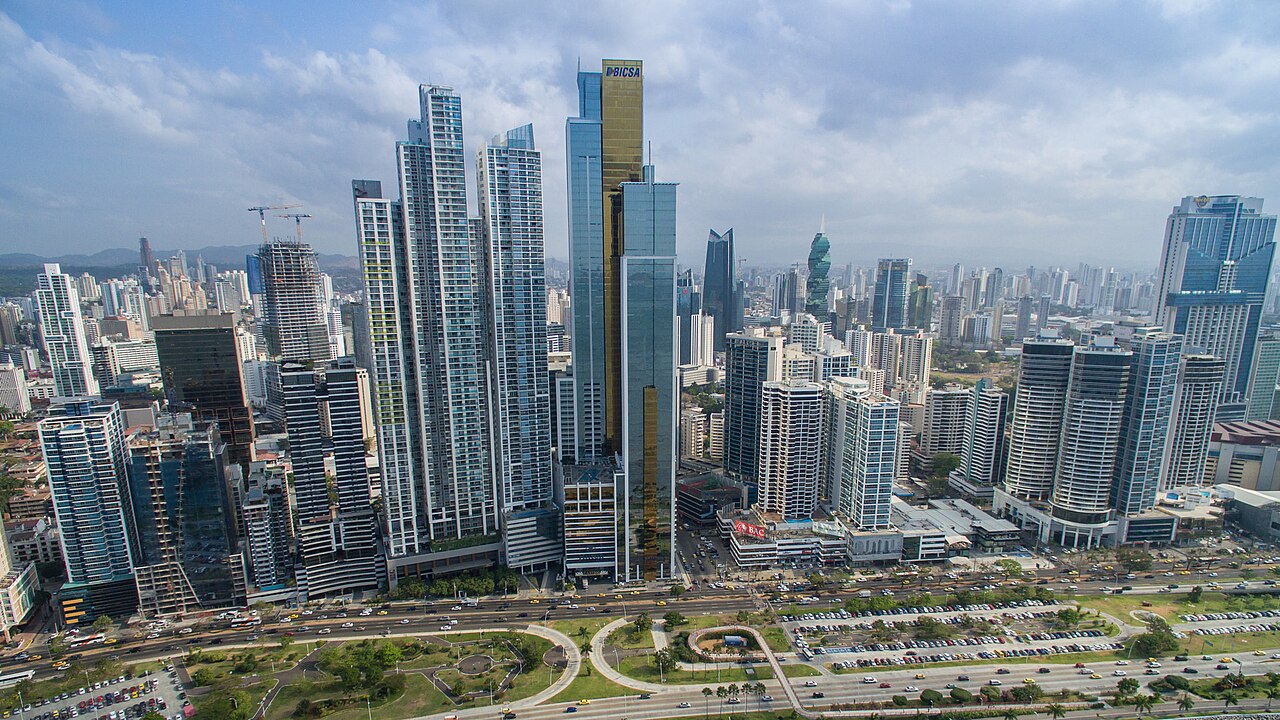
City at a glance
A connected capital with very different daily routines
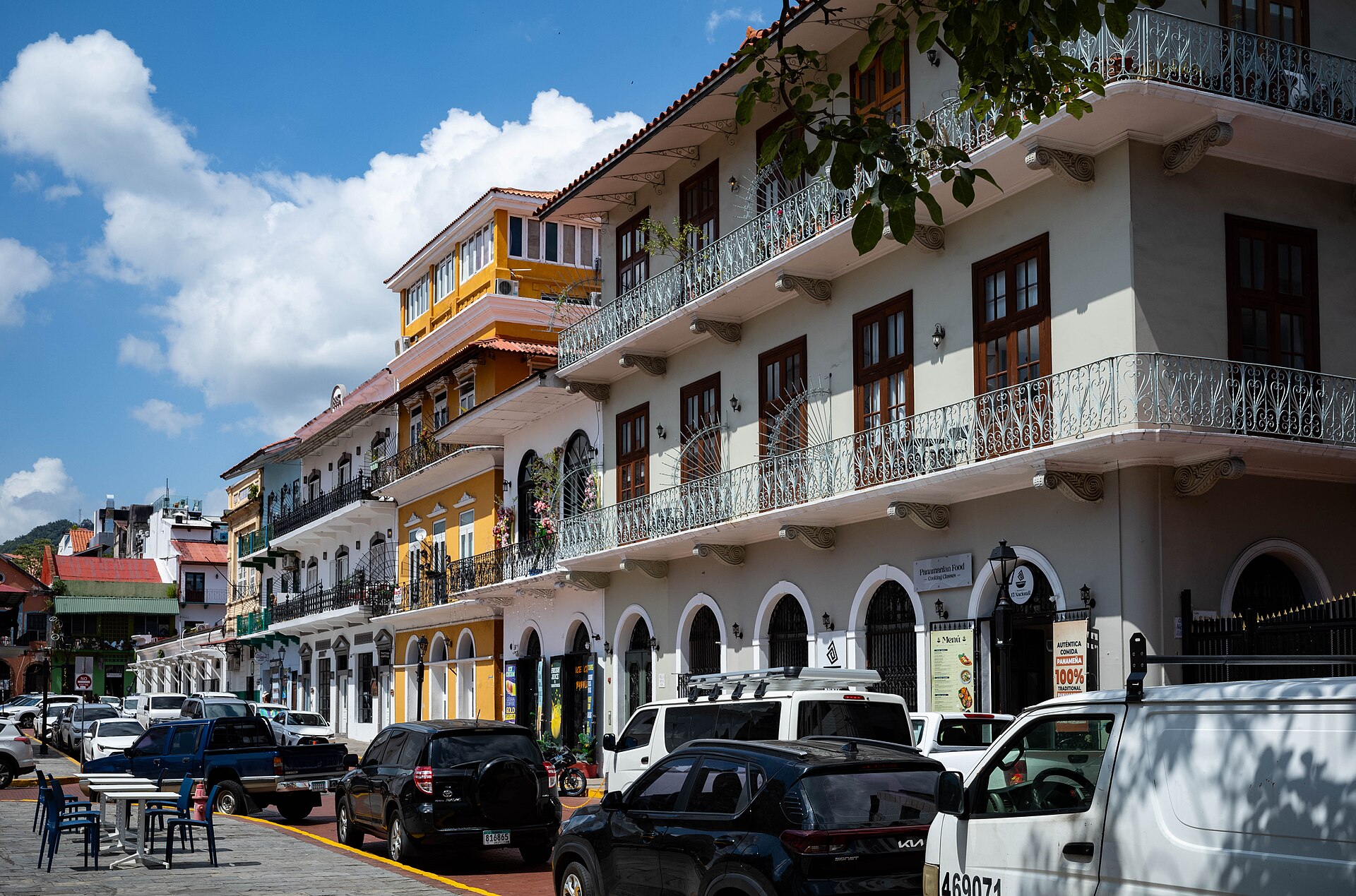
Panama City is most compelling when international flights, business activity and urban services matter more than a beach outside the front door. The waterfront, historic Casco Viejo, established central neighbourhoods and greener former Canal Zone areas offer quite different lives. Choosing between them is a practical decision about where you will work, take children to school and shop on an ordinary Tuesday.
The 2023 census counted 1,086,990 people in Panamá district. That boundary is broader than the central high-rise city and does not include neighbouring San Miguelito. This guide focuses on the capital’s residential choices while identifying destinations outside the district. A school advertised as being in Panama City may be in San Miguelito; a home in Panama Pacífico puts you across the Canal in Arraiján.
Start with a small map of recurring destinations, then shortlist homes on the appropriate side of those journeys. Someone working locally in Casco can have a largely pedestrian routine; someone with clients across the city may still need a car. Neither a sea view nor a neighbourhood’s reputation settles that question.
Neighbourhoods to compare
Use these areas as a scouting shortlist. The last column is a property-specific inspection task, not a claim that every building in the area has the same quality, safety or price. Visit on a working morning and after dark, and repeat the route when rain is forecast.
| Area | Why consider it | Test before choosing |
|---|---|---|
| Casco Viejo | Historic streets, plazas and a concentration of restaurants and cultural activity. | Bedroom noise, stairs, deliveries, parking and lawful residential use. |
| El Cangrejo / Vía Argentina | Established central streets and everyday dining; a useful starting point for a walking-led search. | Continuous pavement to groceries and the Metro, crossings and traffic outside the actual window. |
| Bella Vista / Avenida Balboa | Waterfront towers and access to the Cinta Costera. | The real crossing to the waterfront, afternoon sun, lifts and building charges. |
| Obarrio / Marbella | A central base to compare when offices and appointments are your daily destinations. | Office-hour traffic, weekend activity and whether the last stretch is walkable. |
| San Francisco | A varied residential and dining district. | School pickup, road crossings and the difference between a quiet side street and a busy frontage. |
| Costa del Este | Worth comparing where work or family destinations are on the eastern side. | Peak-time entry and exit; do not assume a nearby-looking school is a short drive. |
| Clayton / Ciudad del Saber | Campus activity and Balboa Academy make this relevant to some families and professionals. | Daily shopping, travel to central offices and the airport, and the cost of car dependence. |
What may appeal
- International airport access with a rail option from the central network.
- Distinct central and greener residential settings for different work and school patterns.
- Published international-school fee schedules make major education commitments easier to compare.
- Urban culture, waterfront public space and managed natural trails support varied routines.
What to weigh up
- School and office geography can create significant cross-city travel.
- Heat, humidity and afternoon downpours make building quality and cooling costs important.
- International-school capital and registration charges can be substantial beyond tuition.
- Walking conditions vary by block; a central address does not remove every need for a car.
Cost of living
Rents and recurring costs to price first
Housing choice and school fees can change the household budget far more than a cheap bus ticket. The figures below are dated observations for particular products, not a citywide average. Panama Equity’s 17 July 2026 market report describes its internationally oriented segment and selected El Cangrejo asking rents; these are not signed-lease statistics or promises that a unit remains available.
Keep three columns in your own plan: recurring charges, one-time spending and money held as a deposit. Ask whether the quoted rent includes the building’s maintenance fee, parking and any utilities. A furnished apartment still needs an inventory: a refrigerator or air conditioner shown in a photograph should also appear in the agreement.
| Observation | Amount | Scope |
|---|---|---|
| Cangrejo Bay, approximately 125 m² | USD 1,350/month | Selected asking rent in the July 2026 agency report; furnishing and charges need confirmation. |
| PH Dali, approximately 105 m² | USD 1,400/month | A different selected El Cangrejo unit; not a comparable lease sample. |
| Luxor Tower, approximately 158.3 m² | USD 1,850/month | Larger selected unit; compare inclusions and condition. |
| Tigo internet-only digital offer | B/.33/month before tax | October 1–31, 2026 offer: 500 Mbps download, 15 Mbps upload; advertised regular price B/.40. Eligibility and coverage apply. |
| MiBus trunk travel: 44 single boardings | B/.11 | Arithmetic at B/.0.25 per boarding; excludes corridor services, Metro, taxis and other travel. |
What a rent quotation leaves out
A home at USD 1,350 and those 44 trunk-bus boardings produce a rent-and-bus subtotal of USD 1,361. It is deliberately narrow: food, electricity, water, internet and its tax, phone, healthcare, insurance, schooling and leisure are still missing. There is no verified representative food basket for a relocating household in this guide, so that subtotal should never be treated as the amount needed to live here.
Cooling is especially important to price from the unit’s own bills. Request recent occupied-period electricity statements, ask how many rooms were cooled and whether common-area electricity is charged through maintenance. A vacant unit’s low bill tells you little about working from home. The distributor and tariff must match the address; an old national electricity table is not a reliable October quotation.
Before a purchase, obtain building financial statements, reserve and special-assessment information, rules on use and pets, maintenance history and the title documentation for independent review. A cheap purchase price can coexist with substantial repair obligations. Compare the running cost of an existing building with the contractual delivery and completion risks of a new one.
Neighbourhoods & finding a home
Websites to find a home
| Website | Search for | Coverage |
|---|---|---|
| Encuentra24 | Rent / Buy | Panama, including Ciudad de Panamá |
About these links
Property-search websites help you find listings; individual properties and agents have not been vetted by Offshore Capitalist. Confirm availability, the legal right to let or sell, and payment instructions before committing.
- Encuentra24 · Checked 2026-10-14
Open Bienes Raíces, choose sale or rental, and narrow to the district and neighbourhood. Separate residential units from offices, rooms and short stays.
Find a home and check the building
The linked Encuentra24 directory supports both renting and buying. Select Ciudad de Panamá and the actual neighbourhood, then distinguish an entire long-term apartment from a room, office or tourist stay. An asking price is an invitation to investigate, not proof of ownership, condition or permission to use the premises as advertised.
During a viewing, run the air conditioning, check hot water and water pressure, inspect window seals and cupboards for damp, and test mobile reception in the intended workspace. Ask which lifts and water pumps work during a power interruption. Check delivery rules, visitor access, parking allocation and whether the advertised amenities are operational.
For waterfront or higher-floor apartments, visit at the time the living room receives direct sun. For Casco, inspect stairs and access as carefully as the restored façade. For any home marketed as suitable for remote work, test an actual video call rather than relying on the building’s nominal broadband availability.
- Get a written schedule of rent, maintenance, utilities and refundable deposits.
- Photograph existing damage and record appliances, meters and keys at handover.
- Ask for the owner’s authority and the administrator’s written contact details.
- Match the lease address, floor, parking and property identifiers to the unit you inspected.
Short stays, leases and the formal deposit
Article 21 of Law 80 of 2012 restricts accommodation rentals of fewer than 45 days in Panamá district without the required public tourist accommodation permit. It is not a countrywide ban on short visits or a ban on authorised hotels. For a scouting trip, verify the operator’s authorisation; a platform listing by itself does not establish it.
The government’s Type B residential lease procedure covers rent above B/.150 and specifies a deposit equivalent to one month’s rent. The required file includes identification and property/owner-authority evidence. At a hypothetical unchanged B/.1,350 rent, that formal deposit would be B/.1,350; it is cash tied up, not an extra month of consumption.
Use MIVIOT’s current forms page for the payment sequence: submit the contract file, wait for confirmation that the documentation meets requirements, then consign the guarantee deposit through an authorised method. Its current instruction explicitly says not to deposit before that confirmation. Keep receipts and the signed inventory; ask who handles registration and how any claim or return is documented.
Work, business & opportunities
Match your work to the right side of the city
Ciudad del Saber in Clayton brings academic, scientific, business and humanitarian activity together and publishes a live opportunities board. It is a useful starting point for people seeking campus organisations, training or professional events. Read each vacancy’s actual employer, language requirements and workplace; appearing on the board does not create permission to work.
Panama’s national multinational-headquarters framework covers activities such as regional administration, logistics and research. Those national rules belong in the country and company guides. For a city move, the useful next questions are where the employer’s office is, how often attendance is required and whether travel across the region is part of the role.
Spanish capability matters for the everyday transaction even when the team works in English: speaking with the building administrator, arranging repairs and understanding a lease are separate from delivering a presentation to international colleagues. Get employment conditions and any relocation assistance in writing. In particular, school reimbursement can change ISP’s registration category, so clarify the package before pricing education.
For remote work, confirm the connection available to the exact apartment and its upload speed. Tigo’s quoted 500 Mbps October package advertises 15 Mbps upload; it is not a symmetric 500/500 service. Test calls, identify a backup workspace and price a separate mobile connection before committing to a work-critical setup.
Schools & childcare
Choose the campus before the neighbourhood
The International School of Panama is in Cerro Viento, San Miguelito. Balboa Academy is in Clayton. Those are materially different daily journeys, even though both are commonly considered by families moving to the capital. Request the actual school transport route, pickup time, after-school arrangements and seat availability before signing a lease.
An application is not an offer. Assemble recent reports, identity records and details of learning or language support; follow the chosen school’s current application and assessment steps. Discuss placement when moving between school calendars rather than assuming the same grade label means the same completed curriculum.
Families choosing the national system should establish the receiving school and the applicable recognition of overseas records. Panamá Digital publishes the foreign academic credit recognition/revalidation process. Ask the school which documents and formal recognition it needs before paying to translate or authenticate an entire file.
International School of Panama: 2026–27 costs
ISP publishes these annual tuition amounts. Registration is separate: USD 1,000 for self-paying non-institutional families, or USD 4,500 where an employer directly or indirectly funds or reimburses fees. Check the classification before comparing offers.
For a new self-paying Grade 1 student, tuition 15,584 + registration 1,000 + application 250 + the full 16,000 capital donation totals USD 32,834. That is a commitment illustration, not all cash due on day one: the donation’s two USD 8,000 instalments fall at admission and next-year re-enrolment in March. Transport, meals, uniforms and applicable additional support are outside this subtotal. The capital charge is not annual tuition and is not prorated to the student’s stay.
| Level | Annual tuition, USD | Separate items to budget |
|---|---|---|
| PK3 | 10,204 | Capital donation is deferred to PK4 and Kindergarten re-enrolment. |
| PK4–Grade 5 | 15,584 | Application, registration and capital donation. |
| Grades 6–8 | 17,092 | Confirm the applicable instalment schedule. |
| Grades 9–12 | 19,328 | Confirm division-specific materials and support. |
Healthcare
Set up routine care before an urgent problem
Establish which system you can actually use. CSS’s 30 April 2026 notice says foreign insured patients must continue presenting the physical CSS card, even as the general identification process becomes digital. It names Renta 5 and the San Miguelito agency for foreign-insured card issuance in Panamá. A residence document alone does not establish insurance entitlement; confirm your registration and local point of care.
For private treatment, Pacífica Salud’s patient guide explains insurer coordination. Ask the insurer and facility about the specific doctor, direct billing, authorisation, deductible and any deposit before a planned visit. Being on an insurer list does not make every procedure or independent physician cashless.
MiniMed offers general medicine for routine assessment; a clinic appointment and a hospital emergency department serve different needs. Keep a list of regular medicines with their generic names and arrange continuity for ongoing treatment. Request a written estimate for planned consultations, tests and procedures rather than applying someone else’s bill to your case.
For each household member, record the policy or entitlement details, emergency contact, allergies and where to seek urgent help. If mobility or a chronic condition affects location choice, test the trip from the home to the intended facility. Nearby on a map is not the same as reachable at the required hour.
Getting around
Metro, buses and the final walk
Metro Line 1 and Line 2 serve different corridors, meeting at San Miguelito. Published regular line fares are B/.0.35 and B/.0.50 respectively; changing lines has its own charging sequence, so do not treat a two-line trip as one Line 1 fare. Use the same payment medium consistently and check the current operator guidance.
MiBus currently lists B/.0.25 for trunk services and B/.0.75 for corridor services. It lists B/.0.50 for a trunk-to-corridor transfer. A MetroBus access card is required under its passenger guide. Compare the actual route and transfers rather than multiplying the lowest fare by every journey.
The walk at either end matters. Inspect crossings, pavement continuity, shade and rain shelter from the building door to the stop. For a child, wheelchair user or person carrying groceries, a broken pavement can make an otherwise convenient location impractical. Resident experiences below illustrate why two households in the same area can reach different conclusions about needing a car.
Before buying or shipping a vehicle, trial the school and office week. Include parking at both ends and any paid roads in the quotation. There is no reliable universal commute duration: write down the route, departure time and conditions of your own test.
Airports & international connections
Use Tocumen as a journey, not just a map pin
Tocumen (PTY) is the main international gateway for these central-city neighbourhoods. Check the operating airline, dates and terminal for the route you actually need; an airport’s network does not guarantee a daily flight or a convenient same-ticket connection.
The Metro airport branch leaves Line 2 at Corredor Sur and serves ITSE and Aeropuerto. The operator’s pocket guide explains the terminal connection, including shuttle arrangements. From a Line 1 neighbourhood the journey involves changing lines and then taking the branch; compare the whole trip with a booked car if travelling with children or substantial luggage.
Confirm the airport code on every domestic or onward booking. A flight departing from Albrook is not departing from Tocumen, and a separate-ticket transfer across the city needs its own ground journey and check-in margin. Use the airport directory below to distinguish gateways, then check the airline’s current itinerary and baggage conditions.
Gateway options
Compare gatewaysTocumen International AirportPTY
InternationalEast of Panama City ·  Panama
Primary gateway Tocumen International (PTY) is the airport to identify on the booking. The Metro’s airport branch connects from Corredor Sur on Line 2 through ITSE to Aeropuerto. Its passenger guide describes the airport-side connection and shuttle arrangements for the terminals. Check the current terminal access and operating hours; a station called Aeropuerto does not mean the final step disappears.
International gateway for Panama City, including San José connections. Tocumen is east of the city; include the ground transfer.
Sources & connectivity notes
International passenger services. Check current routes and seasonal schedules.
Research checked 2026-10-13. Routes can vary by season.
Climate & environment
Plan around heat, rain and the building envelope
IMHPA describes the Pacific side’s rainy season as broadly May to November and its drier period as December to April. Rainy-season downpours commonly arrive in the afternoon with electrical activity. This is a seasonal pattern rather than a promise of dry mornings or an absence of rain in the drier months.
For daily life, that means treating shade, ventilation and rain protection as part of the home and commute. Inspect the route to groceries and school in wet conditions. Check whether entrance ramps, parking levels and the lift lobby collect water. Ask the administrator about previous leaks, roof repairs, drainage maintenance and what happens when lifts or pumps lose power.
Humidity makes the interior inspection especially important: look behind furniture and inside wardrobes, check bathroom extraction and learn who services the air conditioners. Sun exposure can change comfort and cooling use substantially between apartments in the same tower. Request an occupied-period bill and inspect the rooms at the times you will use them.
Seasonal patterns help you plan a move, but an actual viewing day needs a current forecast. Use IMHPA’s forecasts and SINAPROC alerts, and ask the building administrator how residents receive warnings and where they should go if access becomes flooded.
Safety & everyday risks
Inspect the route and prepare for heavy rain
Check the building entrance, lighting, visitor controls and the route home from transport at the time you expect to travel. Keep valuables discreet on busy services and ask the operator’s staff for help if something is wrong. MiBus explicitly tells passengers to watch belongings, use handrails and remain behind the marked safety line.
For floods, SINAPROC recommends identifying safer higher areas and evacuation routes in advance, protecting documents and preparing an emergency bag. Never walk or drive into floodwater on the assumption that a familiar road is still passable. Keep the household’s plan usable if phone service or power is interrupted; 911 is the emergency number.
These are practical checks, not neighbourhood crime rankings. A guarded tower and a pleasant restaurant street do not establish the safety of the whole journey. A home’s past drainage and access problems are often more useful to investigate than a broad claim that the city is safe or unsafe.
Public services & practical setup
Electricity, internet and building administration
Start with the last bill and meter identifier. Naturgy and ENSA publish separate new-service procedures, so first confirm the distributor serving the exact unit. Establish whether you are opening a new account, transferring responsibility or paying the landlord under an existing arrangement. Obtain the required identity, occupancy and owner-authorisation documents before arranging an installation.
For internet, request written confirmation of address coverage, the plan’s upload and download speeds, installation arrangements, the promotion’s expiry and the tax-inclusive recurring charge. A provider’s citywide availability page does not confirm service to a particular apartment. Agree who returns rented equipment when you leave.
Record which issues go to the building administrator, utility, municipality or national agency. MUPA’s citizen correspondence service accepts complaints, requests for information and matters within municipal competence; 311 provides a case-reporting route. Keep the case number and evidence. Neither replaces the emergency line.
At handover, agree the water and waste arrangements, maintenance billing, deliveries and responsibility for appliance repairs. A contact sheet with the administrator, landlord, utility accounts and emergency plan is more useful than discovering the division of responsibility during an outage.
Culture, community & daily life
Build a routine beyond malls and appointments
Casco Viejo and the city’s dining districts are useful for an evening out, while Ciudad del Saber offers a different setting for campus events and professional contact. Pick activities close enough to repeat after work; a spectacular weekend outing does not necessarily create a social routine.
Parque Natural Metropolitano provides marked trails close to the urban area. Its published general visiting hours are 07:00–16:30 daily, including holidays; check conditions and access before setting out. Treat it as a managed natural area, with appropriate footwear, water and attention to weather, rather than an illuminated late-night city park.
Biomuseo in Amador combines its main collection with temporary exhibitions. Its current temporary-exhibition page distinguishes free temporary displays from the ticket needed for the rest of the museum. Check the programme and transport for the day rather than assuming one admission arrangement covers everything.
For families, test an ordinary weekend with the activities you would really repeat: a waterfront walk, a museum visit, a park or a class. Then look at the trip home and how it fits with sleep, heat and rain. This is a more revealing trial than visiting only restaurants near a hotel.
What residents say
What residents say about getting around
The accounts below are attributed public forum experiences, paraphrased rather than presented as testimonials or a representative survey. They were checked on 14 October 2026. The page displayed relative comment ages, so an exact publication date is not asserted. They are useful because each writer describes a different relationship between home, work and transport.
Sources for this section
These are attributed public experiences, not client testimonials. Housing, neighbourhood and household circumstances affect the experience.
Training-Ask1250, who says they were born and raised in Panama City and have lived abroad, criticises gaps in pedestrian infrastructure and Metro reach. Their tolerance of the heat is greater than they expect from some newcomers.
Self-described local resident comparing personal experience abroad; opinion, not a transport or health assessment.
Mt548 describes walking and doing errands around Vía Argentina, El Cangrejo, Bella Vista and Marbella, while also using taxis, Uber and the Metro. They highlight uneven pavements and difficult crossings as obstacles for people with mobility limitations.
Writer reports spending much of their life in Panama; their own central-city routine. Relative comment age only.
Planning your move
Put the daily routine in place before the long commitment
Arrange the school and work geography first, inspect several homes and keep the initial stay flexible. The sequence below separates national status questions from the property transaction and local setup. Complete each dependency before treating the next stage as settled: a submitted application, a property reservation and a confirmed school place are different things.
Bring a portable file with identity records, relevant school reports, medical information and evidence needed for the selected rental and utility procedures. Retain electronic copies securely and keep payment receipts with the signed documents. At the end of the first working week, review the actual journey times and bills rather than the assumptions made before arrival.
Your move, step by step
These stages separate the property transaction from school, healthcare and household setup. They are planning milestones, not promised immigration or provider processing times.
01Map the legal plan and the family’s destinationsBefore choosing a permanent neighborhood
Confirm the immigration and tax brief, school campus and daily destinations. Start school inquiries and request records from the previous school while the housing search remains flexible.
Documents & evidence
- Identity and status records, recent school reports and the household’s route map.
- Do not sign a school-dependent lease before checking the actual campus and admission status.
02Scout from appropriately authorized accommodationDuring the first visit
Check the short-stay accommodation category, particularly the rule for stays under 45 days in Panama district. Visit candidate homes and test routes at the times you expect to use them.
Documents & evidence
- Accommodation authorisation confirmation, shortlist of addresses and timed route notes.
- A listing platform does not establish the operator’s accommodation permit.
03Complete the lease and formal deposit processOnce the property and terms are agreed
Follow MIVIOT’s current document-review and deposit sequence. Keep the registered agreement, payment records and property inventory together.
Documents & evidence
- Signed contract, identification, required property records, deposit evidence and handover photographs.
- MIVIOT asks for document approval before deposit consignment; an agent payment is not automatically the formal deposit.
04Confirm utilities, healthcare and school enrollmentBefore treating the home as fully operational
Use the distributor serving the unit, agree water and building charges, and establish the household’s actual healthcare entitlement. Complete school offer conditions and any applicable recognition of foreign records.
Documents & evidence
- Meter and account identifiers, occupancy/owner documents required by the distributor, healthcare entitlement and school offer conditions.
- A school application is not an offer; a residence card is not CSS enrollment.
05Test the ordinary week and record the deadlinesDuring the first settled working week
Check broadband, cooling, bill allocation and the school commute. Keep the final account details and a calendar for lease, insurance, immigration and school-document deadlines.
Documents & evidence
- Account numbers, insurance or entitlement confirmation, school enrollment record and renewal calendar.
- Promotional broadband price and ordinary recurring bill may differ; recheck the first statement.
Sources & research notes36 references
Sources supporting this guide. Research draft awaiting editorial review.
- INEC — 2023 Census, Panama province, district and locality tables
- Tourism Authority — Panama City places to stay
- Tourism Authority — city dining districts
- Panama Equity — selected El Cangrejo asking rents, 17 July 2026
- Encuentra24 — Panama property search
- Tourism Authority — Law 80 of 2012, article 21
- Panamá Digital — residential Type B lease registration
- MIVIOT — current lease forms and document-review/deposit sequence
- Naturgy — household service contracting
- ENSA — new residential supply
- Tigo — home internet offers and October 2026 terms
- Ciudad del Saber — campus community
- Ciudad del Saber — opportunities and vacancies
- PROPANAMA — multinational headquarters activities
- International School of Panama — admissions and 2026–27 fees
- International School of Panama — 2026–27 tuition
- International School of Panama — Cerro Viento campus
- International School of Panama — application steps
- Balboa Academy — Clayton campus and high school
- Panamá Digital — recognition of overseas academic records
- CSS — identification when accessing care, 30 April 2026
- Pacífica Salud — patient guide for insured patients
- MiniMed — general medicine
- Metro de Panamá — 2024 operating report and fares
- Metro de Panamá — airport branch passenger guide
- Metro de Panamá — airport branch and line fares
- Metro de Panamá — payment when changing lines
- MiBus — current passenger guide, fares and payment
- Tocumen airport — passenger and airport information
- IMHPA — Panama rainfall regime, including Pacific seasonality
- SINAPROC — flood preparation and emergency advice
- Alcaldía de Panamá — citizen services and complaints
- National 311 — citizen service reports
- Parque Natural Metropolitano — trails and visiting hours
- Biomuseo — temporary exhibitions
- Reddit r/panamaexpats — walking in everyday Panama City, individual accounts
lndyLaw describes nine years living in Casco Viejo: their husband’s office was also there and he walked almost everywhere, while the writer drove frequently for immigration, notary and client appointments elsewhere.
Self-reported resident; different work patterns within one household. Relative comment age only.