City at a glance
Choose between the historic centre and the city you will use every day
Ghent can offer a city routine built around walking, cycling and nearby cultural life, but the best address depends on whether the weekly anchor is Gent-Sint-Pieters, Dampoort, a school or a workplace outside the centre. A beautiful flat beside the historic water is a different proposition from a home positioned for early trains.
Use the first visit to test both sides of the choice. Spend an ordinary workday in the area, try the grocery and school journeys, and return in the evening. A cycling route that suits one adult may not suit a young child, someone carrying equipment or a person who needs step-free access. Compare real routes before dismissing an area as near or far.
What may appeal
- Several district types suit different balances of city life and rail travel.
- A circulation plan makes walking and cycling central to the housing decision.
- The municipality publishes separate, practical registration pathways.
What to weigh up
- Car routes and delivery access can differ sharply from the shortest map route.
- School language and places need to be settled alongside the address.
- A tourist or student housing listing may not fit a family’s principal-residence requirements.
Cost of living
Budget the household rather than an average expat lifestyle
Collect quotes for the actual rent, charges, heating, insurance, transport, childcare or school arrangements and internet. Add the deposit and moving costs to a separate arrival budget. If the home needs furniture, include delivery and temporary accommodation overlap rather than spreading every one-off cost into an artificial monthly average.
Compare two candidate addresses using the same household assumptions. A cheaper lease can come with a longer school journey or more transport spending; a property near the station can still require paying for bicycle storage or a separate workspace. The useful number is the cost of the routine you intend to live, not an unsourced city-wide figure.
Neighbourhoods & finding a home
Websites to find a home
| Website | Search for | Coverage |
|---|---|---|
| Immoweb | Rent / Buy | Belgium |
About these links
Property-search websites help you find listings; individual properties and agents have not been vetted by Offshore Capitalist. Confirm availability, the legal right to let or sell, and payment instructions before committing.
- Immoweb · Checked 2026-10-14
Switch between Buy and Rent, then enter the city or postcode. Brussels, Antwerp and Gent/Ghent have location searches.
Five areas with different everyday advantages
The official visitor sources identify the places and redevelopment context. The comparisons are practical questions for property visits, not district-wide promises about price or tranquillity.
| Area | What makes it worth considering | Tradeoff to test before committing |
|---|---|---|
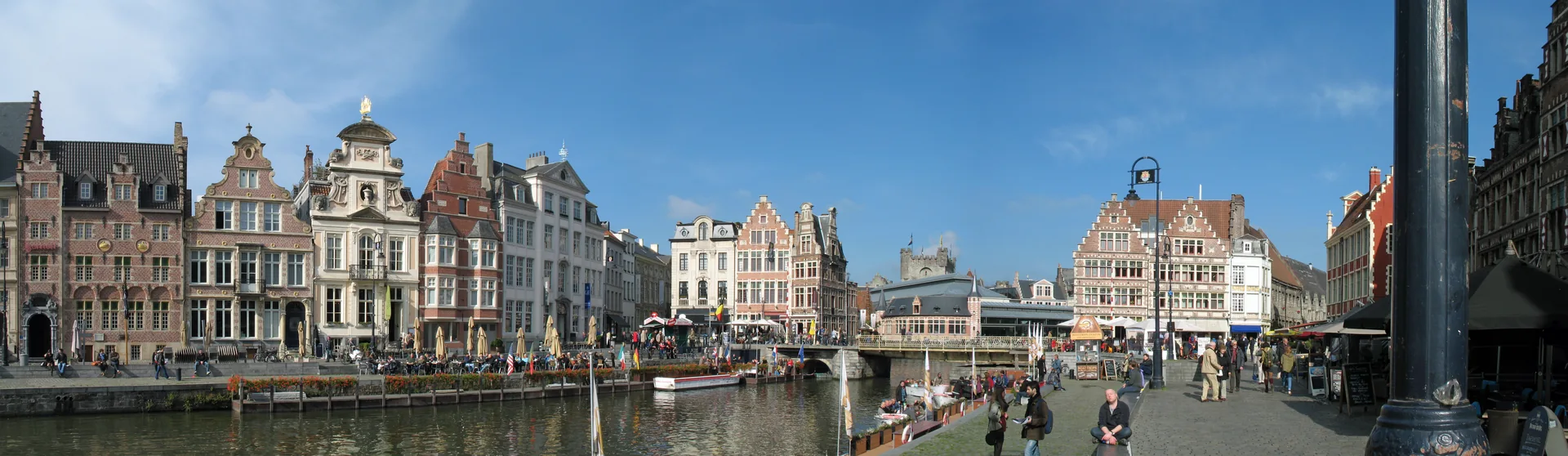
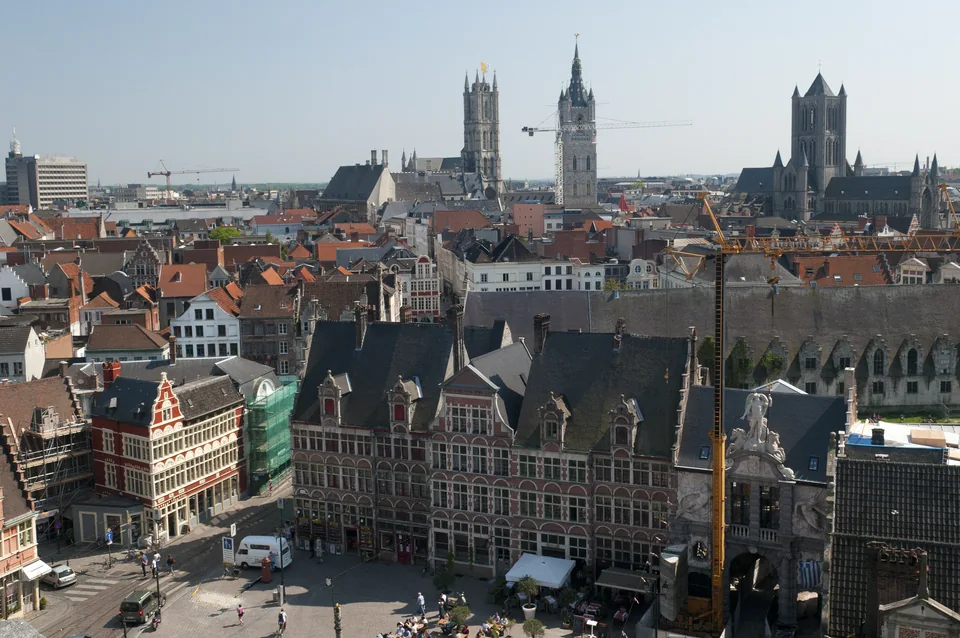
| Historic centre / Patershol | Medieval streets, restaurants and major landmarks put cultural life close to home. | Inspect access with luggage, stairs, delivery arrangements and sound from the street. Ask how a removal van can legally reach the property. |
| Sint-Pieters / Rijsenberg side | A useful shortlist if frequent rail travel is the priority; compare the station-facing streets with homes toward the Leie and recreation areas. | Walk to the actual station entrance and check train noise. A house described as near Sint-Pieters can differ substantially in groceries and daily walking distance. |
| Coupure / western side of the centre | The canal gives a clear route and setting for exploring residential streets outside the main visitor squares. | Check the exact cycling connections, crossings, secure storage and exposure of ground-floor or basement rooms. |
| Macharius / Portus Ganda toward Dampoort | Water, the historic abbey area and the eastern station offer another starting point for a mixed city-and-rail routine. | Separate the immediate station roads from the smaller residential streets. Test the noise and the journey at the time you actually return home. |
| Oude Dokken / Tondelier | Compare dock redevelopment with the park-centred Tondelier project if newer layouts and public space appeal. These are distinct areas, not one development. | Check the stage of nearby building works, common charges, heating arrangements and the location of everyday shops. Verify the completed walking route rather than relying on a masterplan image. |
Separate a main-home tenancy from student accommodation
Ghent’s student accommodation is not automatically suitable for a household establishing its principal residence. Confirm the intended use, contract type and ability to complete the appropriate municipal process before paying. Do not assume that a room advertised for a semester is interchangeable with an ordinary main-home lease.
For covered principal-residence leases under the Flemish decree, the guarantee ceiling is three months’ rent. The landlord is responsible for contract registration, and the parties should prepare an agreed entry inventory. Fire and water liability insurance is required under the applicable main-home rules; cover for furniture and personal equipment should be examined separately.
Ask for an itemised schedule of rent and charges, the energy-performance certificate, meter arrangement and the proposed notice terms. Inspect light, heating, ventilation and the space for coats, laundry and bicycles. A canal view is not compensation for a room that cannot support your ordinary working day.
Schools & childcare
Plan language support and school enrolment together
Local public schooling in Ghent is taught in Dutch. Ask early how the child’s existing schooling and language skills will be assessed. The city’s education service describes reception support for newcomers, including Taalhelden in primary education and OKAN in secondary education. These are support pathways to discuss with the school, not a guarantee of a particular school placement.
For a midyear move, contact the education service and the intended schools directly. For a future intake, obtain that year’s current application calendar rather than reusing the undated months on an older expat page. Ask about places for every child, the relevant year group, before- and after-school care and any learning support.
If an international curriculum is important, verify the actual ages served, current places, progression options and fees with the school. Avoid signing a long lease on the assumption that an English-language school nearby will accept a child of any age. Prepare prior reports and relevant assessments so discussions can address the child rather than just the household’s arrival date.
Healthcare
Find a GP and confirm the insurance before you need treatment
The city’s healthcare guide explains the role of the health-insurance fund and distinguishes standard statutory reimbursement from extra benefits. CAAMI/HZIV provides the statutory scheme without a supplementary membership package. Entitlement and any contribution depend on status; “no supplementary membership fee” is not a promise that all care is free.
Choose a GP accepting new patients and ask whether the practice follows agreed tariffs. Bring identification, medication details and relevant records. A regular GP can organise a global medical file and coordinate care. For planned treatment, ask about the patient share and supplements; a private hospital room can lead to additional charges.
Complete the insurance file for dependants too, and check the effective start date before cancelling existing cover. If an employer or another state remains involved in the coverage, obtain the appropriate confirmation rather than assuming municipal registration alone has completed the health-insurance process.
Sources for this section
Getting around
Understand the route before choosing to keep a car
Ghent’s circulation plan separates central sectors around a restricted-traffic area. A journey that looks short across the centre may require using the ring road by car. Plan the move-in delivery as well as the daily commute, and check whether a permit is needed for the relevant traffic-restricted area. Being allowed into the low-emission zone is a separate matter.
The current LEZ map is more reliable than the shorthand “inside the R40”. After the Verapaz bridge opened in July 2025, part of the ring-road route moved, while the LEZ boundary stayed as it was. Enter the destination in the city’s checker and inspect the approach route as well as the parking location.
For local public transport, use the current De Lijn map and live planner. For BRU, the airport publishes a direct Ghent train connection of roughly 55 minutes; add the local trip to the correct departure station and the airport buffer. Check the timetable for an early flight or late landing rather than relying on a daytime average.
Airports & international connections
Gateway options
Compare gatewaysBrussels AirportBRU
InternationalZaventem; railway station beneath the terminal ·  Belgium
Primary gateway Brussels Airport has a direct rail connection with Ghent. Include the local trip to the correct station and check early-morning and late-evening service for your flight date.
International gateway for Brussels, Antwerp and Ghent. Compare the current destinations, operating season and ground transfer for your itinerary.
Sources & connectivity notes
International passenger services. Check current routes and seasonal schedules.
Research checked 2026-10-13. Routes can vary by season.
- Brussels Airport — existing airport or transport reference
- STIB-MIVB — Brupass and Brupass XL coverage
- STIB-MIVB — Airport Line, published 3 July 2026
- De Lijn — city network maps and platform layouts
- De Lijn — live route planner
- City of Ghent — circulation plan and restricted traffic areas
- City of Ghent — current low-emission zone boundary and access tool
- Aena — Seville airport destinations
Brussels South Charleroi AirportCRL
InternationalCharleroi, Wallonia; separate from Brussels Airport · Belgium
Alternative gateway Alternative gateway. Charleroi, Wallonia; separate from Brussels Airport. Compare the complete onward journey to Ghent with your flight times, luggage and arrival hour.
An alternative international gateway for Brussels and Ghent. Compare the current destinations, operating season and ground transfer for your itinerary.
Sources & connectivity notes
International passenger services. Check current routes and seasonal schedules.
Research checked 2026-10-13. Routes can vary by season.
Climate & environment
Make the building work for winter, summer and remote work
KMI’s Ghent municipal normals for 1991–2020 give a January mean of 3.9°C, July mean of 18.4°C and July average daily maximum of 23.4°C. Annual precipitation averages 875.6 mm, with 136.5 days reaching at least 1 mm. These historical averages do not describe every year or street. Ghent’s climate-adaptation work also identifies heat, drought and flooding as issues to prepare for. Those sources justify investigating the address, not assigning an unsupported risk score to every canal-side property.
Ask whether there has been water ingress, how lower rooms are ventilated, what shades the windows and how heating is controlled. Inspect cycle storage and the practical route in rain. For a top-floor home, test window opening and shading rather than assuming Belgium cannot have uncomfortable hot periods.
At handover, sign the electricity and gas readings with the other party. The Flemish energy form is evidence of readings, not an automatic change of supplier contract. Confirm connectivity for the exact apartment and schedule installation; keep a short-term backup for client calls while the home is being established.
Public services & practical setup
Use the Ghent registration procedure that matches your work
Ghent publishes separate routes for EU workers, EU self-employed people, people with sufficient means and non-EU employees or professional-card holders. Since 1 September 2025, its EU guidance requires the necessary documents at the start of the procedure. Assemble the file for the actual route rather than using an old student or expat leaflet.
For a non-EU person arriving with a professional card and visa D, the city specifies online registration within eight working days. After the file is in order it issues a digital annex 15, the police check the address, and the applicant is invited to arrange the A-card appointment. The document list includes a valid passport, visa and professional card or exemption. These steps are a process, not a guaranteed completion time.
An EU resident applying on sufficient financial means follows a different branch: evidence of means and health insurance is required, together with a private address in Ghent. The city notes that the address check may require multiple visits. Keep the municipality informed of changes and do not use a nominal address where the household is not actually living.
What residents say
These are attributed public experiences, not client testimonials. Housing, neighbourhood and household circumstances affect the experience.
Planning your move
Keep the residence and business changes connected
If you will manage a foreign company from Ghent, identify where the decisions, contracts and actual work will take place. A professional card deals with self-employed activity; it does not answer corporate tax residence, payroll or cross-border reporting questions on its own.
We can connect the country analysis with the move’s execution: the residence application, company structure, banking and the handover between advisers and implementation. Use the guides below to identify the relevant issues, then bring the actual facts of your household and business to the inquiry.
Your move, step by step
A dependency-based arrival sequence. Statutory or official timing is labelled; other timings are planning steps, not promised processing times.
01Choose the station, school and work prioritiesBefore shortlisting homes
02Confirm the tenancy category and property setupBefore committing to the lease
Establish that the home fits the intended principal residence. Inspect the inventory, charges, guarantee arrangement, insurance and building condition.
Documents & evidence
- Lease and deposit arrangement
- Energy certificate, inventory and insurance
- Do not assume a student room can serve the same role as a main-home tenancy.
03Submit the correct local residence fileProfessional-card and visa-D arrival: within eight working days
Use the matching Ghent route and retain the online confirmation. Provide complete evidence and follow the address-check and card-appointment instructions.
Documents & evidence
- Valid passport/identity
- Visa and professional card or other route evidence
- Address, means and insurance where required
- EU and non-EU routes have different requirements.
04Arrange access and document the handoverBefore the removal vehicle arrives; readings on key day
05Confirm the school and health arrangementsDuring the first practical settling-in period
Sources & research notes19 references
Sources supporting this guide. Research draft awaiting editorial review.
- Brussels Airport — railway station and direct connections
- De Lijn — live route planner
- Flanders — concluding a tenancy agreement and rental deposit
- Flemish Housing Rental Decree — current consolidated text
- Flanders — energy contracts and moving house
- City of Ghent — employee, self-employed and EU registration routes
- City of Ghent — registering with a professional card
- City of Ghent — EU registration with sufficient financial means
- City of Ghent — language support for newcomer pupils
- City of Ghent — education for international households
- City of Ghent — circulation plan and restricted traffic areas
- City of Ghent — current low-emission zone boundary and access tool
- Visit Gent — official district and landmark directory
- Visit Gent — Tondelier redevelopment and park
- Visit Gent — dockside and historic districts
- City of Ghent — healthcare services, doctors and insurance
- City of Ghent — climate adaptation and urban greening
- Royal Meteorological Institute — Ghent municipal normals, 1991–2020, p. 2
- r/Gent — living near Sint-Pieters, 1 June 2026
In a June 2026 discussion of the Rijsenberg area near Sint-Pieters, self-described residents valued rail access, cycling connections and proximity to green space. The same discussion raised railway noise, differences in walking access to shops and housing costs as tradeoffs. The useful lesson is to compare the exact side of the station and street, not treat “near Sint-Pieters” as one uniform location.
Self-selected public discussion. The author’s identity and residential history have not been independently verified. This is a personal perspective, not a safety assessment, representative survey or client testimonial.