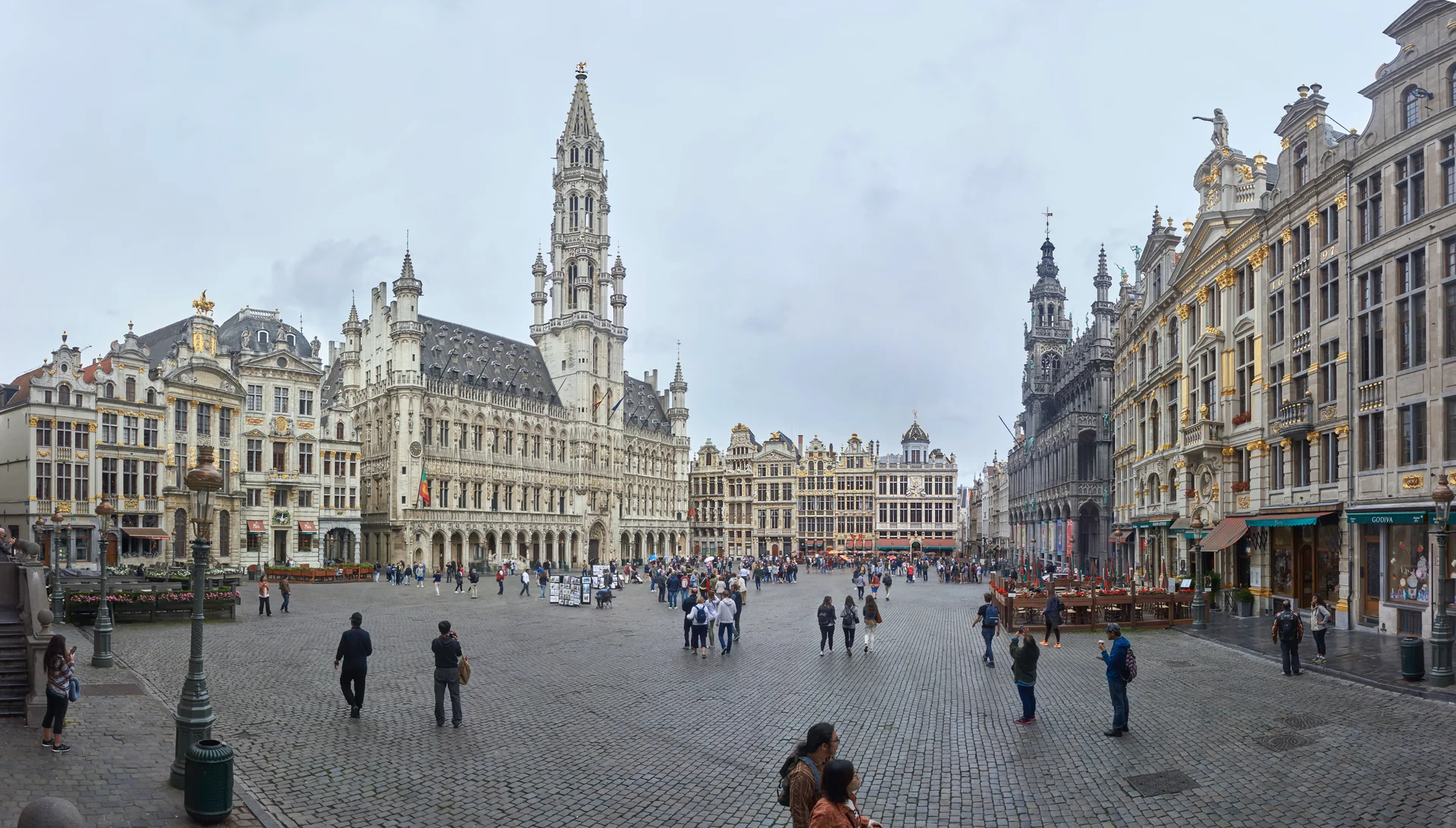
City at a glance
Start with the municipality and the journeys you repeat
Brussels makes most sense when your work, clients or family benefit from being here. The useful housing question is not simply which neighbourhood looks best. It is whether the address supports your actual week: school drop-off, client meetings, the station for international trips and a home where you can work without improvising.
The Brussels-Capital Region and the City of Brussels are different administrative units. Check the exact municipality before booking a registration appointment. The City of Brussels explicitly warns that some addresses with 1040 or 1050 postal codes still fall within its territory; a postcode alone is not a dependable way to choose the office. Ixelles, Saint-Gilles and Etterbeek have their own administrations.
Treat a scouting trip as a test of the routine. Make the weekday journey with a bag or stroller, visit the street after dinner and ask to see the room you would actually use for calls. An easy weekend walk does not establish that a school-and-work commute will be pleasant every day.
Sources for this section
What may appeal
- Several distinct neighbourhood routines to compare within the same urban region.
- Direct airport rail and international-rail options support frequent travel.
- Published regional housing protections and school procedures make key checks traceable.
What to weigh up
- The municipality, school system and transport product each have their own boundaries.
- Property quality and the last part of the commute can outweigh a fashionable district name.
- Insurance, municipal registration and immigration permissions require separate follow-through.
Cost of living
Read the lease, the reference rent and the deposit separately
For Brussels residential leases concluded or renewed from 1 November 2024, the rental guarantee cannot exceed two months’ rent. Use a permitted guarantee arrangement and retain the proof. The money is security rather than rent: its release normally needs a post-tenancy written agreement between the parties or an enforceable judgment.
The reference rent must appear alongside the actual rent in Brussels residential leases. Since 1 May 2025, landlords must not propose an excessive rent. More than 20% above the reference creates a rebuttable presumption, with specific comfort features potentially relevant; defects can also make a rent excessive even below that margin. This is not a blanket permission to charge 20% extra or a simple universal ceiling. Use the official property-specific check and seek a documented explanation for any difference.
Before signing, identify whether this is your principal-home contract, a short lease or another arrangement. Write down the base rent, charges, deposit, insurance, notice terms and any furnished inventory. Clarify whether a home office and the intended principal-residence use are compatible with the contract; do not treat a holiday accommodation booking as proof that long-term registration and use will work.
Neighbourhoods & finding a home
Websites to find a home
| Website | Search for | Coverage |
|---|---|---|
| Immoweb | Rent / Buy | Belgium |
About these links
Property-search websites help you find listings; individual properties and agents have not been vetted by Offshore Capitalist. Confirm availability, the legal right to let or sell, and payment instructions before committing.
- Immoweb · Checked 2026-10-14
Switch between Buy and Rent, then enter the city or postcode. Brussels, Antwerp and Gent/Ghent have location searches.
Five areas to put on the shortlist
These are practical starting points, not a ranking. Tourism and municipal sources establish the district context; the property checks are our suggested due diligence.
| Area | What makes it worth considering | Tradeoff to test before committing |
|---|---|---|
| Ixelles: Flagey and the ponds | A cultural and café-oriented starting point, with the ponds providing a different setting from the busy square. | Compare the bedroom-facing street with the public square. Check the last leg to rail or metro rather than treating all of Ixelles as one transport location. |
| Bailli–Châtelain | Shopping streets and restaurants give the area a neighbourhood routine to investigate on foot. | A social street can be less useful for sleep or evening calls. Inspect window insulation, delivery access and the actual office room. |
| Saint-Gilles around Horta and the Parvis | Art Nouveau streets and a distinct local centre; worth considering if the south-side rail and work journeys fit. | Walk the route to the station with luggage. Visit the exact block at night and check access and lighting yourself instead of relying on a broad neighbourhood reputation. |
| European Quarter: Schuman, the Squares and nearby Etterbeek | Useful to test if the institutions, associated businesses or nearby parks feature in your week. | The office-oriented streets and residential side streets are different propositions. Compare evening activity, groceries and weekend routines as well as the work commute. |
| Sainte-Catherine and Dansaert | A central base for restaurants, shops and an urban social life. | Central does not guarantee a quiet or spacious home. Check refuse collection, loading activity, outdoor seating and bedroom orientation. |
Sources for this section
Inspect the home against the 2026 standards
New Brussels minimum housing standards apply from 1 January 2026. The official guidance requires an installed heating and hot-water solution rather than simply leaving connections for tenants to provide their own appliances. It also specifies minimum usable area linked to occupancy: 18 m² for one person, increasing by 10 m² for each additional resident. Check the detailed measurement and applicable rules before assuming that a listing’s advertised area proves compliance.
Ask for the energy-performance certificate and review the home in daylight. Look for damp, ventilation, safe access and the condition of the heating system. Agree a detailed entry inventory, photograph meter readings and existing damage, and keep the signed record. These checks are particularly valuable when you are taking a lease from abroad and cannot easily revisit the property.
Sources for this section
Link the household move to the company plan
Before the first ordinary working week in Brussels, resolve where the business will be directed, who will employ or contract with you and what registrations follow. Moving personally while continuing to make every company decision from the new home can have consequences beyond the residence permit.
The country guides explain the tax and immigration layers, including the financial capital-gains changes effective in 2026. We can help coordinate that analysis with the practical sequence of residency, company arrangements and banking. Start with your intended work and family routine so the implementation supports the life you actually plan to lead.
Schools & childcare
Choose the school system before narrowing the housing search
Brussels offers French- and Dutch-language education, alongside separate international and private options. Choose the language and educational pathway deliberately, especially if a child is likely to change systems again. Ask the school about newcomer support, year placement, after-school care and the journey from each potential address.
For Dutch-language schools, an online preference application is not the final enrolment. The allocation and the school’s subsequent registration step are separate. For a move during 2026–2027, the official portal directs families to contact schools with available places. Do not assume an old waiting-list position remains valid: most published lists expired on 7 October 2026, with an exception for children born in 2024.
The published main application window for Dutch-language nursery and primary places for 2027–2028 is 23 February–16 March 2027; enrolment after allocation is 27 April–18 May 2027. These dates do not govern every school system or year group. Recheck the portal for the child’s case and assemble documents early rather than treating a home close to a school as a reserved place.
Healthcare
Arrange healthcare on the correct insurance basis
For an entrepreneur, affiliation to a social-insurance fund and a health-insurance fund are separate tasks. The Belgian business portal points to a mutual fund or CAAMI/HZIV for medical reimbursement. Ask the chosen institution to confirm the correct basis for every household member, including any continuing coverage from another country.
An EHIC is intended for qualifying necessary care during a temporary stay; do not rely on it as a universal solution for an indefinite household move. Find a GP who is accepting patients, confirm the consultation language and ask whether the provider follows the agreed tariffs. Contracted, partly contracted and non-contracted providers can produce different out-of-pocket bills.
Getting around
Choose transport products around the route
STIB-MIVB runs the city’s metro, tram and bus network. Brupass products can cover participating rail and other operators within their defined area, while Brupass XL extends the area. Compare coverage against the actual home, school and workplace; a card or an operator logo alone does not establish that every trip is included.
Brussels Airport (BRU/Zaventem) has a railway station under the terminal. It is different from Brussels South Charleroi (CRL), whose rail approach requires a further bus leg. For a flight, calculate the whole trip and check the live timetable; the published station-to-station time does not include walking, waiting, luggage or security.
Bus 12 has a directional fare distinction. From the city to BRU, STIB’s ordinary tickets or passes are accepted; departing the airport requires Airport2City or the relevant Airport Line pass. The operator’s July 2026 page quotes €7.90 for contactless Airport2City and €8.40 for a paper ticket. Brupass and Brupass XL do not replace that airport-departure product.
Airports & international connections
Gateway options
Compare gatewaysBrussels AirportBRU
InternationalZaventem; railway station beneath the terminal ·  Belgium
Primary gateway Brussels Airport (BRU/Zaventem) has a railway station under the terminal. It is different from Brussels South Charleroi (CRL), whose rail approach requires a further bus leg. For a flight, calculate the whole trip and check the live timetable; the published station-to-station time does not include walking, waiting, luggage or security.
International gateway for Brussels, Antwerp and Ghent. Compare the current destinations, operating season and ground transfer for your itinerary.
Sources & connectivity notes
International passenger services. Check current routes and seasonal schedules.
Research checked 2026-10-13. Routes can vary by season.
- Brussels Airport — existing airport or transport reference
- STIB-MIVB — Brupass and Brupass XL coverage
- STIB-MIVB — Airport Line, published 3 July 2026
- De Lijn — city network maps and platform layouts
- De Lijn — live route planner
- City of Ghent — circulation plan and restricted traffic areas
- City of Ghent — current low-emission zone boundary and access tool
- Aena — Seville airport destinations
Brussels South Charleroi AirportCRL
InternationalCharleroi, Wallonia; separate from Brussels Airport · Belgium
Alternative gateway Alternative gateway. Brussels Airport (BRU/Zaventem) has a railway station under the terminal. It is different from Brussels South Charleroi (CRL), whose rail approach requires a further bus leg. For a flight, calculate the whole trip and check the live timetable; the published station-to-station time does not include walking, waiting, luggage or security.
An alternative international gateway for Brussels and Ghent. Compare the current destinations, operating season and ground transfer for your itinerary.
Sources & connectivity notes
International passenger services. Check current routes and seasonal schedules.
Research checked 2026-10-13. Routes can vary by season.
Climate & environment
Complete the utility handover and plan for the seasons
For electricity and gas, sign an energy-handover document with the outgoing occupant or owner, keep a copy and deal directly with the supplier. BRUGEL’s moving guidance explains why readings and dates matter: a change of occupier is not just a change of postal address. Clarify whether water and heating are individually metered or charged through the building.
The Royal Meteorological Institute’s Brussels municipal figures for 1991–2020 give a January mean of 3.8°C and a July mean of 18.8°C; July’s average daily maximum is 23.8°C. Annual precipitation averages 804.1 mm, with 130.7 days reaching at least 1 mm. These are historical averages, not temperature limits or an arrival forecast. Our practical inspection priorities are daylight in winter, working heating and ventilation, shade for hotter periods and a covered place for wet coats or a bicycle.
Ask the internet provider to confirm the exact apartment, connection type and installation date. Have a temporary connection for the move-in period. Test whether two people can work on calls without using the bedroom or interrupting one another; this can matter more than decorative finishes.
Public services & practical setup
Book the correct registration route
The municipality registers where you actually live; the immigration basis determines what you must submit. Begin with the EU or non-EU branch and then the employee, self-employed, student or family route. A non-EU single-permit holder must normally report to the competent municipality within eight working days of arrival. Do not apply that one deadline indiscriminately to every EU and family procedure.
Prepare identity and immigration documents, your exact address and the documents specific to the route. Family files may need civil-status records and accepted translations or legalisation. Keep proof of your submission or appointment request, arrange for your name to be identifiable at the address and remain reachable for follow-up. A booked appointment, an address registration and the final residence card are different stages; none should be described as an automatic grant of permission to work.
Sources for this section
What residents say
These are attributed public experiences, not client testimonials. Housing, neighbourhood and household circumstances affect the experience.
Planning your move
Your move, step by step
A dependency-based arrival sequence. Statutory or official timing is labelled; other timings are planning steps, not promised processing times.
01Set the legal route and school prioritiesBefore committing to a long lease
Confirm who is moving, the work each adult will perform and the child’s school language. Identify the municipality for each shortlisted address.
Documents & evidence
- Passports and current residence permissions
- Family and school records
- Do not use a postcode alone to choose the municipality.
02Inspect and document the proposed tenancyBefore paying the deposit
Check the applicable guarantee limit, reference rent, contract category, housing condition and full monthly charges. Obtain written terms for principal-residence use.
Documents & evidence
- Draft lease and itemised charges
- Energy certificate and proposed inventory
- Do not send a deposit solely on the strength of listing photographs.
03Arrange services and collect the keysFor the agreed handover date
Sign the condition inventory and meter readings; activate insurance and supplier contracts and schedule connectivity. Keep temporary cover and a working communications backup.
Documents & evidence
- Signed inventory
- Meter readings and supplier confirmation
04Report arrival and follow the residence applicationSingle permit: ordinarily within eight working days of arrival
Use the municipality’s correct route, retain proof of contact and provide any follow-up documents. Distinguish initial filing, address checks and card collection.
Documents & evidence
- Identity, visa/permit and exact address
- Route-specific employment or family evidence
- A housing contract does not itself confer immigration or work rights.
05Finish the household setupAs soon as the relevant applications can be completed
Sources & research notes21 references
Sources supporting this guide. Research draft awaiting editorial review.
- City of Brussels — registration of a foreigner
- City of Brussels — non-EU registration routes
- Brussels Housing — rental guarantees, contracts from 1 November 2024
- Brussels Housing — reference rents and excessive-rent rules
- Brussels Housing — minimum housing standards from 1 January 2026
- Municipality of Ixelles — neighbourhood context
- Visit Brussels — neighbourhood walks
- STIB-MIVB — Airport Line, published 3 July 2026
- STIB-MIVB — Brupass and Brupass XL coverage
- Brussels Airport — railway station and direct connections
- BRUGEL — moving home and energy handover
- LOP/VGC Inschrijven in Brussel — choosing a Dutch-language school
- LOP/VGC — registering during school year 2026–2027
- LOP/VGC — announced 2027–2028 application calendar
- Brussels-Capital Region — French- and Dutch-language primary education
- Royal Meteorological Institute — Brussels municipal normals, 1991–2020, p. 2
- Belgian business portal — social-insurance and health-fund affiliation
- FPS Public Health — invoices, reimbursement and contracted doctors
- CAAMI/HZIV — temporary residence and EHIC scope
- Belgian Immigration Office — single permit
- r/brussels — Ixelles-like neighbourhood, 28 February 2026
In a February 2026 discussion, a commenter who described ten years in Saint-Gilles and repeated London/Leuven travel stressed the importance of the connection to the appropriate railway station. Others suggested Ixelles, Forest or the eastern communes. The useful planning point is to test both partners’ journeys rather than selecting a district from its café scene alone.
Self-selected public discussion. The author’s identity and residential history have not been independently verified. This is a personal perspective, not a safety assessment, representative survey or client testimonial.