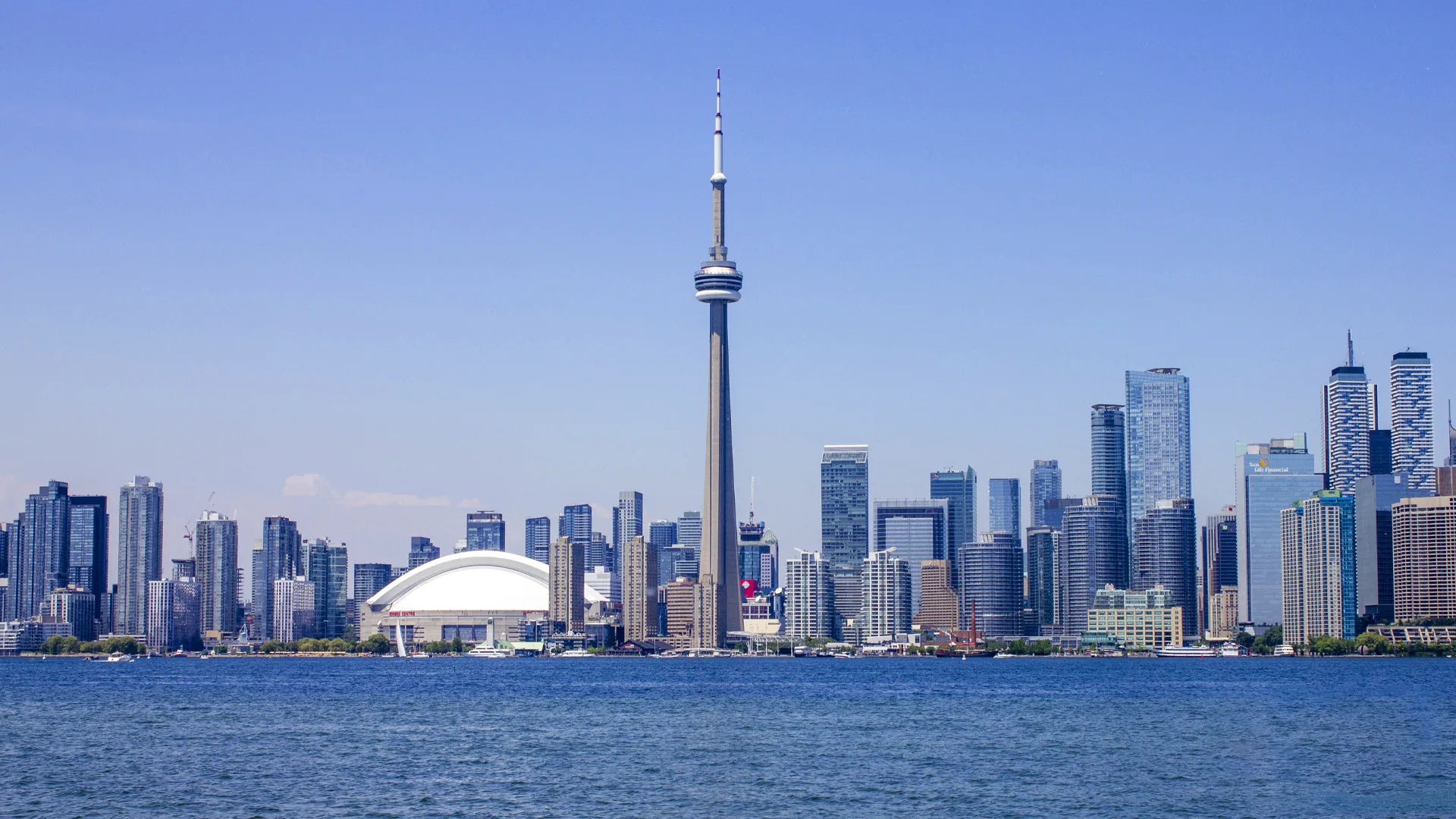
Neighbourhoods & finding a home
Find your area in Toronto & the GTA
Explore North York, Scarborough, Etobicoke and the neighbourhoods within them, or look farther out to surrounding cities and suburbs. Drag to move, zoom for street detail, and select an area to learn more.
Select a place to explore
Toronto’s six districts appear first. Zoom in to see the city’s 158 neighbourhoods, or choose any area above. The surrounding municipalities are separate cities and towns.
Map coverage & sources
Toronto district outlines follow the six former municipalities. Neighbourhood outlines are the City’s 158 social planning areas; familiar local names can cover a smaller area or cross these boundaries. They are not school catchments. Surrounding municipal boundaries come from Statistics Canada’s 2025 dataset. Hamilton is outside the GTA.
Toronto neighbourhood boundaries · Former municipality boundaries · Toronto Open Data Licence · Statistics Canada boundaries · Statistics Canada Open Licence. Adapted from Statistics Canada; this does not constitute an endorsement.
Street map: OpenStreetMap contributors. Fallback lakes: Natural Earth, public domain. Area notes are starting points for comparing locations; check the actual home, transport connection and services.
Websites to find a home
| Website | Search for | Coverage |
|---|---|---|
| REALTOR.ca | Rent / Buy | Toronto |
| Rentals.ca | Rent | Toronto and nearby areas |
| Viewit | Rent | Toronto and other Canadian cities |
| Condos.ca | Rent / Buy | Toronto and other Canadian markets |
About these links
Property-search websites help you find listings; individual properties and agents have not been vetted by Offshore Capitalist. Confirm availability, the legal right to let or sell, and payment instructions before committing.
- REALTOR.ca · Checked 2026-10-14
Toronto search with sale and rental options; narrow the map to the neighbourhoods you are considering.
- Rentals.ca · Checked 2026-10-14
Filter apartments, condos, houses or rooms. Check the address: results can include neighbouring municipalities.
- Viewit · Checked 2026-10-14
Useful for comparing rental buildings and individual listings. Choose Toronto, or a specific area such as North York or Scarborough.
- Condos.ca · Checked 2026-10-14
A condo-focused search for rentals and purchases. Some additional property information requires an account.
Six neighbourhoods, six different daily routines
| Area | Daily-life attraction | Travel anchor | Home and household checks |
|---|---|---|---|
| Harbourfront / Queens Quay | Waterfront walking and cycling; Harbourfront Centre, Music Garden and island ferries. | Test the walk or surface connection to Union and the final journey to work. | Compare tower layouts and storage. Check event-night noise, lifts, grocery route and the school run across busy streets. |
| The Annex | University setting, older residential streets, Bloor shops and nearby museums/music. | Bathurst, Spadina or St George stations, depending on the address. | Inspect older-house insulation, stairs and sound transmission; compare the main street with the residential blocks. |
| Roncesvalles | Independent shops, Polish heritage and access to High Park. | Dundas West at the northern end; test the extra journey from a home farther south. | Measure the station walk and school/childcare circuit. Check condition and usable space instead of treating all west-end houses alike. |
| Bloor West Village | Independent food shops, established residential streets and a strong local main street. | Jane and Runnymede stations along Bloor. | Check distance north or south of the subway, outdoor space and the repeated trip to eastern or downtown commitments. |
| Riverside / Queen East | Victorian side streets, food businesses, live music and access to neighbouring east-end districts. | Surface transit along Queen East; check the current TTC routing. | Compare a quiet side street with a venue-facing home; test the commute and route to the designated school during ordinary traffic. |
| Yonge & Eglinton | Shopping, restaurants and nearby Eglinton Park recreation. | Eglinton station: subway Line 1 and Eglinton light rail Line 5. | Compare busy-intersection and side-street homes; inspect lifts, construction around the property, play space and school access. |
How to use this neighbourhood comparison
This shortlist compares daily-life settings, not school quality or investment returns. The travel anchors are starting points for testing a specific address; they are not door-to-door commuting promises. For every area, use the school-board address locator before committing, then confirm the required programme and childcare separately.
Look at the home as carefully as the area: stairs and room dimensions in an older house; lifts, storage, visitor rules and maintenance in a condo; the actual walk to transit in either. The checks in the final column are questions for your scouting visit, not claims that every street has the same problem.
Renting: the lease and the application
Lease and deposit
Ontario’s standard lease applies to most private residential tenancies. For a covered monthly tenancy, the rent deposit is limited to one month and pays the last rental period; it is not a damage deposit.
Applying without Canadian credit
Prepare proof of income or funds and references. Ask which alternative evidence the landlord accepts before paying an application-related charge or deposit.
Condo or divided house?
A condo may have a move-in booking and building rules. In a divided house, confirm the entrance, laundry, outdoor space and utility meters included in the lease.
Definitions & details
Provincial tenancy coverage and exceptions affect deposits and rent-increase protection. Shared living arrangements may fall outside the usual rules. See the Ontario sources below.
Sources for this section
Buying: check the complete purchase position
Two land-transfer taxes
Toronto municipal land transfer tax is additional to Ontario land transfer tax. Toronto’s marginal rates above CAD 3 million changed on 1 April 2026 for properties containing one or two single-family residences.
Foreign-buyer costs
Toronto’s municipal non-resident speculation tax is 10% for qualifying acquisitions by foreign buyers. Federal restrictions, Ontario taxes and each measure’s exemptions require a separate eligibility check.
Ownership and closing-cost details
Before comparing purchase prices, confirm your eligibility to buy, mortgage terms and intended ownership structure with qualified advisers. National and provincial restrictions need a separate assessment for your status.
Toronto municipal land transfer tax is additional to Ontario land transfer tax. For properties containing one or two single-family residences, marginal rates above CAD 3 million changed on 1 April 2026. Toronto also has a municipal non-resident speculation tax of 10% for qualifying acquisitions by foreign buyers, introduced on 1 January 2025, with its own definitions and exceptions. Ask for a transaction-specific closing calculation; a property’s advertised price excludes these acquisition costs.
For a condominium, have the status certificate, financial position, fees, rules and planned work reviewed alongside the unit. For a house, investigate condition, permitted use and the costs of the work you expect to do. Federal purchase restrictions and Ontario buyer rules belong in the wider ownership assessment, not a neighbourhood recommendation.
Sources for this section
Cost of living
Rent: from a room to a family home
Housing is the first number to settle. These Toronto metropolitan-area asking rents show the scale of the choice, from a room in shared accommodation to a three-bedroom house.
| Home type | Average asking rent / month | Period & area |
|---|---|---|
| Room | CAD 840 | Q2 2026 · Toronto metro |
| Studio apartment | CAD 1,750 | Q2 2026 · Toronto metro |
| One-bedroom apartment | CAD 2,090 | Q2 2026 · Toronto metro |
| Two-bedroom apartment | CAD 2,650 | Q2 2026 · Toronto metro |
| Three-or-more-bedroom apartment | CAD 3,270 | Q2 2026 · Toronto metro |
| Two-bedroom house | CAD 2,710 | Q2 2026 · Toronto metro |
| Three-or-more-bedroom house | CAD 3,630 | Q2 2026 · Toronto metro |
Rent definitions & coverage
Statistics Canada Quarterly Rent Statistics, table 46-10-0092-01. Asking rents are advertised rents for available accommodation, not a prediction for a particular address. These averages cover the Toronto census metropolitan area, including municipalities beyond the City of Toronto. Furnishing and included utilities are not separated here.
Room, apartment and house are separate source categories. Three-or-more-bedroom figures are not three-bedroom-only prices. The published Q2 2026 selected cells have no suppression flag.
Sources for this section
What different households would spend on rent and transit
Choose the home and household that match your plans. The figures below cover rent and regular public transport; food and other spending remain separate.
| Household example | Home | Rent + transit / month |
|---|---|---|
| One adult sharing | Room | CAD 995.10 |
| One adult living alone | Studio | CAD 1,905.10 |
| A couple | One-bedroom apartment | CAD 2,400.20 |
| Two adults + children aged 8 and 14 | Two-bedroom apartment | CAD 3,070.65 |
| The same family with more space | Three-or-more-bedroom house | CAD 4,050.65 |
Calculations & what is included
Derived examples use the asking rents above plus the Toronto Transit Commission’s eligible 47-fare monthly cap: CAD 155.10 per adult (47 × 3.30), CAD 110.45 per youth (47 × 2.35) and free travel for children 12 and under. A couple uses two adult caps; the stated family uses two adult caps plus one youth cap. Fewer paid trips cost less.
These are selected-cost subtotals, not full household budgets. Utilities, groceries, internet, mobile plans, insurance, leisure, healthcare extras, childcare, cars and savings are excluded. Rent is a metropolitan benchmark; fares are for the city transit system.
Sources for this section
Food, childcare and education
The food basket plus the two-bedroom family rent-and-transit example totals CAD 4,312.65 a month for those three categories. Childcare, private schooling or a car can change the budget substantially.
- Family groceries
- CAD 1,242
- Participating childcare
- Up to CAD 22
- Private day schools
- CAD 44,940+
Per month · Toronto nutritious food basket, 2026; two adults and children aged 8 and 14.
Base fee per chargeable day for an eligible child under six in a participating programme.
Annual 2026–27 tuition at the named school examples below; entry fees extra.
Household assumptions & fee scope
The nutritious food basket is for the specified family, not a single adult or a restaurant budget. The childcare base-fee cap only applies to eligible places in participating providers and does not guarantee availability. The quoted private-school starting price is Upper Canada College’s junior day-school example; it is not a Toronto-wide school minimum.