
City at a glance
Choosing your Toronto base
- Downtown and the waterfront put major employers, theatres and sports venues close together. The Annex and Bloor West offer shopping streets and residential neighbourhoods along the subway. Compare the areas in the neighbourhood table below.
- Pearson Airport is in Mississauga, outside the City of Toronto. A Toronto-area address does not necessarily use Toronto’s municipal services or school boards.
- Toronto Public Library offers newcomer settlement support and connections to English classes, employment resources and services in other languages.
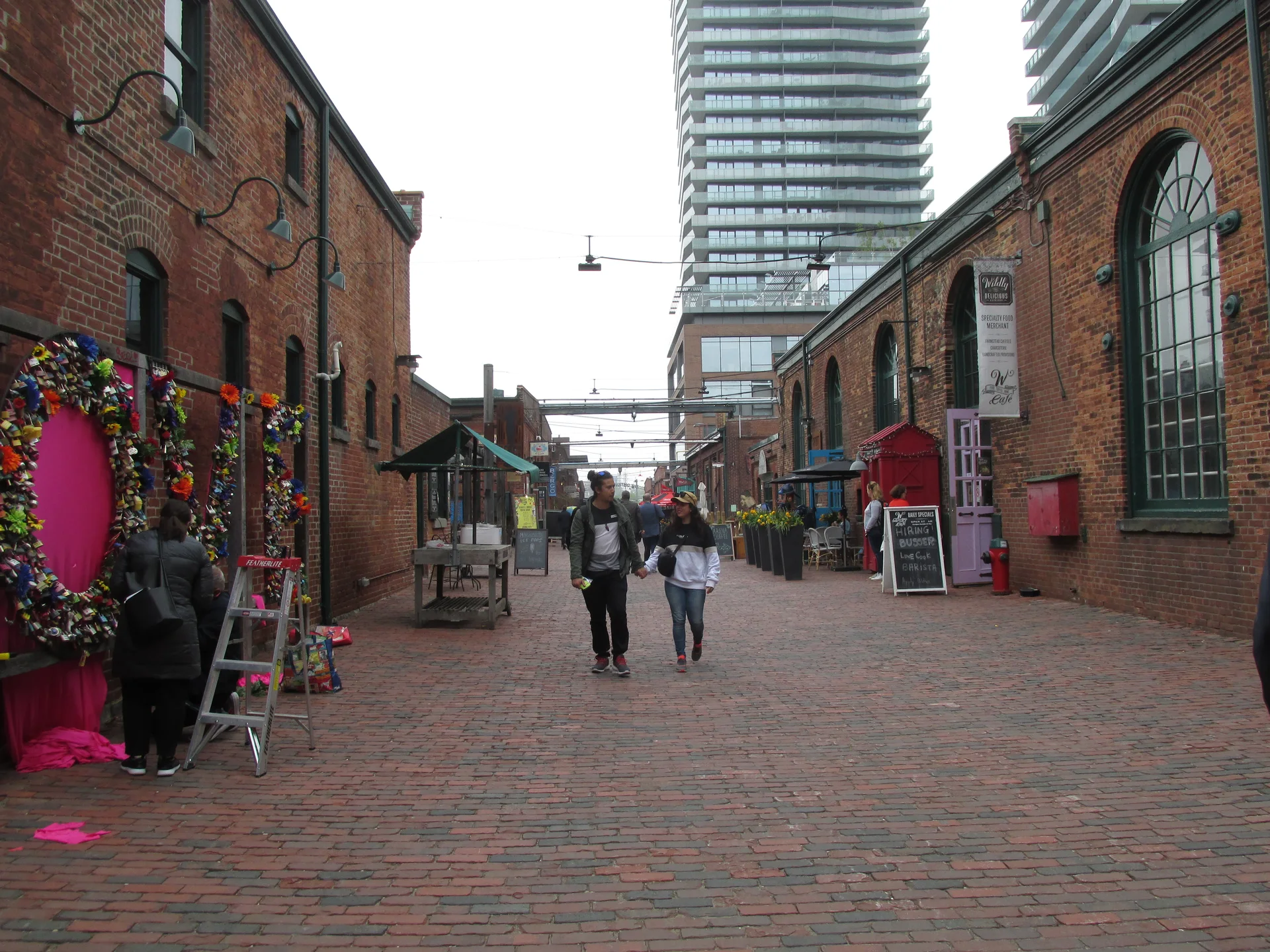
What may appeal
- Different neighbourhood routines around universities, local shopping streets and the waterfront.
- Finance, healthcare, research, technology and screen-industry networks with identifiable local employers.
- Two distinct international airport gateways and extensive cultural and municipal facilities.
What to weigh up
- Housing and private education can dominate a household budget; affordable childcare still depends on a place.
- A cross-city commute, school run or airport journey can outweigh a lower advertised rent.
- Cold, heat, heavy rain and occasional wildfire smoke make building condition and indoor comfort consequential.
Time zone & clock changes
America/Toronto · UTC−05:00 / UTC−04:00
- 1 November 2026: clocks back 60 minutes, to UTC−05:00
- 14 March 2027: clocks forward 60 minutes, to UTC−04:00
Rules for 2026-10-14 to 2027-10-13. IANA time-zone rules
Work, business & opportunities
Minimum wage and local earnings
The median is the middle worker’s income; the mean is pulled upward by high earners. The CAD 22,700 gap shows why the mean alone gives a distorted picture of a typical full-time income.
- General minimum wage
- CAD 17.95 / h
- Median employment income
- CAD 74,600
- Mean employment income
- CAD 97,300
Ontario · from 1 October 2026
Per year · Toronto metro, 2024; full-year, full-time workers
Per year · same workers and period
Income measure & minimum-wage rules
Employment income is before deductions and includes wages, salaries and net self-employment income. Statistics Canada’s full-year, full-time group worked 52 weeks and usually at least 30 hours a week; these are 2024 amounts for people aged 15 and over in the Toronto census metropolitan area. They are neither 2026 job offers nor household incomes. Both selected estimates carry source quality flag B.
Ontario’s general minimum applies to covered provincially regulated employment. Special rates and exemptions exist, including a CAD 16.90 student rate subject to the statutory conditions. Federally regulated employment follows the federal wage rules; this is not a universal wage for every Toronto worker.
Sources for this section
Find the local market for your skills
| Field | Local organisations / ecosystem | Useful next step |
|---|---|---|
| Finance and professional services | The City identifies Royal Bank of Canada, Toronto-Dominion Bank, Bank of Montreal, Canadian Imperial Bank of Commerce and Scotiabank and investment/insurance organisations. | Use the employer’s career site and Job Bank; confirm office location and required in-person days. |
| Health, research and operations | Discovery District universities, hospitals and MaRS Discovery District, an innovation hub; University Health Network recruits clinical, data and operational roles. | Filter University Health Network vacancies by site: its listings include locations outside Toronto too. Check registration requirements for clinical roles. |
| Technology and startups | MaRS Discovery District links talent with technology ventures; its programmes also support founders. | Use the MaRS job board, then verify the role’s city, employment terms and remote-work conditions. |
| Film and screen production | The City’s screen-industry guide covers production, post-production, visual effects and animation. | Follow the role-specific training and union/guild pathways; project work and location patterns differ from an office job. |
For founders and internationally distributed teams
MaRS Discovery District is a Toronto innovation hub that helps science and technology startups with commercialization, investor connections, customers and talent. Its College Street and waterfront hubs also offer office, lab and event space.
For an overseas business, location also changes the questions about management, staff, contracts and your personal tax position. Work through the Canada corporate tax guide and international structuring service. Assess the household move and the business operating plan together.
Climate & environment
Toronto through the seasons
Freezing winter nights, warm summers and a pronounced change in sunshine. Explore what each month feels like.
Monthly values
| Month | Daily high (°C) | Daily low (°C) |
|---|---|---|
| January | -0.3 | -6.7 |
| February | 0.6 | -6.0 |
| March | 5.1 | -1.8 |
| April | 11.7 | 3.9 |
| May | 18.8 | 10.0 |
| June | 24.2 | 15.3 |
| July | 27.0 | 18.1 |
| August | 26.1 | 17.7 |
| September | 22.0 | 13.8 |
| October | 14.6 | 7.7 |
| November | 8.1 | 2.3 |
| December | 2.6 | -2.7 |
Sources & measurement periods
Temperature elements carry source code A (the WMO 3-and-5 missing-data rule); total precipitation carries code C (at least 20 years). These are ECCC codes, not NOAA flags.
The source reports a code for each element, not a separate available-year count for every displayed month. No exact count is inferred.
Additional humidity observations use Toronto City, 2002–2020 (19 available years), completeness code D. Morning and afternoon values refer to 0600 and 1500 local standard time.
The 1991–2020 Toronto source leaves several rain-day and snow-day months blank. To offer complete separate monthly series, this explorer explicitly uses the older Toronto 1981–2006 record published in the 1981–2010 normals (26 years, code C). It does not fill the newer blanks with zero.
Sunshine is from Toronto 1981–2001 (21 available years, code D), published in the 1981–2010 normals. Daily sunshine is derived from monthly bright-sunshine hours divided by calendar days (February 28.25). It is an older reference, not current weather or a daylight calculation.
An urban Toronto composite, not Pearson Airport or Toronto Island. Lakefront exposure, outer neighbourhoods and indoor conditions can differ.
A four-season housing decision
Winter: insulation and entryways
Heating, window insulation and a clear entrance matter during freezing weather. Check where wet boots and coats will dry.
Summer: cooling and exposure
A south- or west-facing upper-floor apartment can need more cooling. Check air conditioning and ventilation before signing a lease.
Flooding and wildfire smoke
Basement flooding
Heavy rain and snowmelt can overwhelm drainage. A basement rental needs specific checks for water ingress, drainage and insurance.
Smoke and air quality
Wildfire smoke can reach Toronto even when fires are far away. Use the Air Quality Health Index and Toronto’s cleaner-air advice during an event.
Sources for this section
Planning your move
Plan the Canadian side of your move
We can help connect a move with international tax planning, business structuring and banking. Any application or implementation support is agreed for the specific services we provide. Start with the Canada relocation guide or discuss your plans.
Sources for this section
Your move, step by step
A suggested household sequence, not a statutory timetable. Immigration, school and housing dependencies can change the order.
01Confirm the legal and financial planBefore committing to the move
Establish immigration and work rights, departure and arrival tax consequences, and how your income or company will be managed. Set the household budget and identify school and healthcare requirements.
Documents & evidence
- Identity and immigration records
- Income, employment or business information
- Children’s school records and relevant medical history
02Shortlist and test neighbourhoodsBefore signing a long lease or purchase
03Secure the home and local setupAround arrival and possession
Verify the lease or purchase arrangements, utilities, insurance and payment instructions. Apply for OHIP if eligible and begin the local primary-care search.
Documents & evidence
- Lease or purchase and possession documents
- Utility and insurance confirmations
- Documents required for OHIP registration
04Review the routineDuring the first few months
Check whether the actual budget and journeys match the plan. Finish outstanding registrations, establish healthcare and community contacts, and revisit any business or tax assumptions affected by the move.
Documents & evidence
- Actual household spending
- Outstanding registration and appointment records