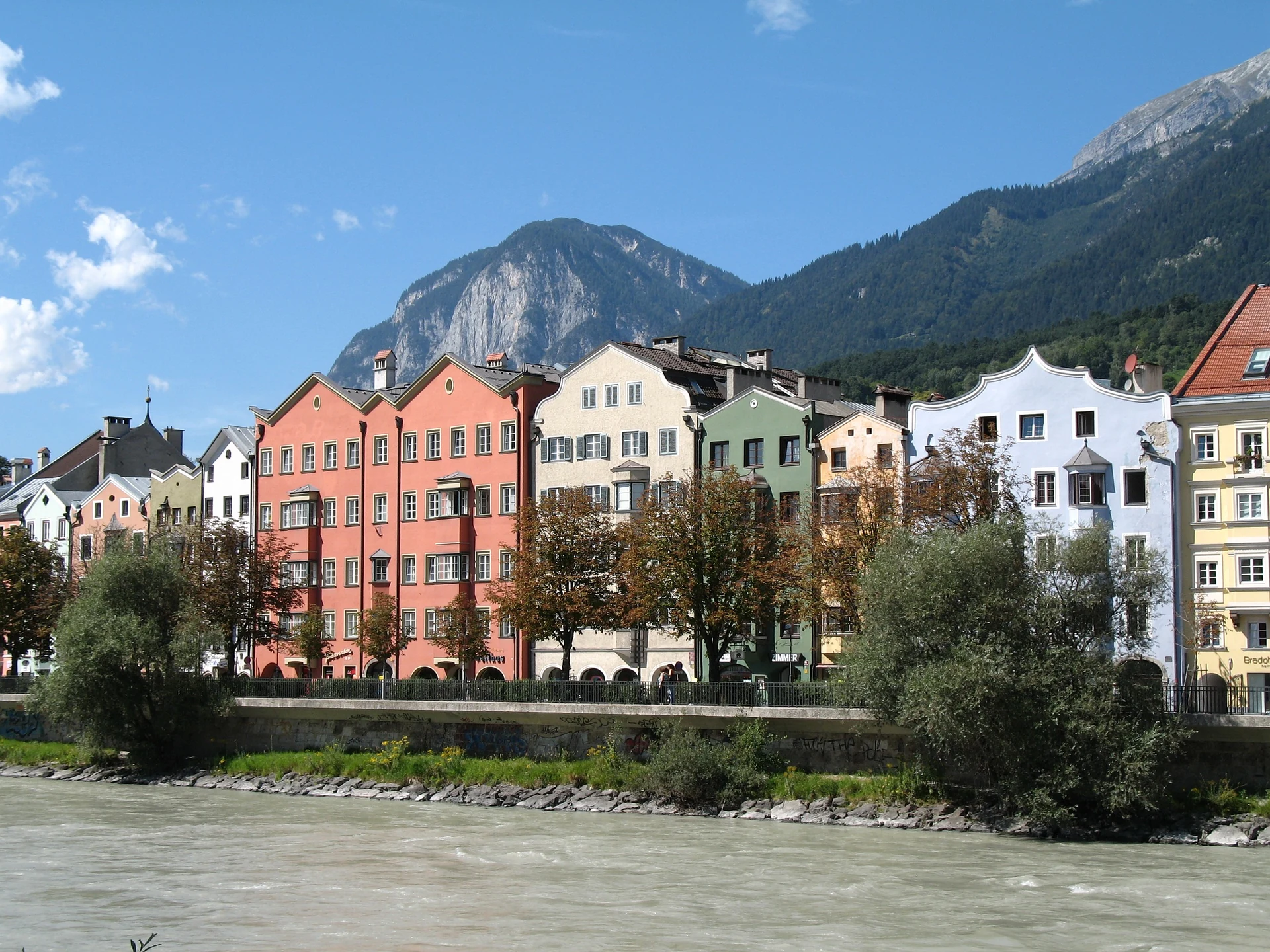
City at a glance
Choose the city for daily life as well as mountain access
Innsbruck offers an unusually direct relationship between an urban routine and the mountains. The attraction is not only a weekend outing: a household can use city shops, schools and public transport while living within sight of the surrounding slopes. It remains a working and university city, with the housing and transport decisions that come with that role.
Valley-floor living and a hillside address are different propositions. A short distance on the map may conceal an uphill walk, a specific bus dependency or a different amount of winter sunlight. Choose the daily destinations first, especially if one parent travels or if the family will rely on public transport.
An exploratory visit should include a normal weekday rather than only the old town and a mountain excursion. Test the entrance with luggage, walk the proposed school route and inspect the room intended for remote work. If outdoor access is central to the decision, check the actual connection to the activities you prefer; a city-wide mountain image does not tell you which route starts near the home.
Sources for this section
What may appeal
- Urban services with direct mountain access
- Different valley and hillside ways of living
- City transit and a local airport
What to weigh up
- Housing search can require flexibility
- Slope and winter light change daily convenience
- Flight and outdoor connections need seasonal checking
Neighbourhoods & finding a home
Websites to find a home
| Website | Search for | Coverage |
|---|---|---|
| willhaben Immobilien | Rent / Buy | Austria |
About these links
Property-search websites help you find listings; individual properties and agents have not been vetted by Offshore Capitalist. Confirm availability, the legal right to let or sell, and payment instructions before committing.
- willhaben Immobilien · Checked 2026-10-14
Choose the municipality or postcode and the rental or purchase category. Separate an apartment’s advertised price from operating charges.
Allow time to find an ordinary home
The University of Innsbruck’s incoming-student guidance warns that furnished and short-duration accommodation can be difficult to secure. That is student-specific evidence, not a citywide vacancy statistic, but it is a useful reason to start the search early. A relocating family should not assume access to student residences or build its budget from student-only offers.
Ask for the lease, full running-cost breakdown, deposit terms and registration cooperation before paying. Verify the person offering the home and avoid treating an attractive listing or an unexplained payment request as sufficient proof. At handover, photograph existing marks and fixtures, record meter readings and establish who is responsible for repairs and utility accounts.
A covered new 2026 fixed-term apartment lease generally needs five years where the landlord acts as a business, or three for the relevant non-business exception. The tenant’s covered early-termination right and its notice formalities remain a separate question. Do not assume a furnished flat is automatically exempt or that every fixed term can be ended by a casual message.
Inspect comfort in the season you will live through. For a hillside apartment, ask about winter access and daylight; for a valley-floor apartment, consider summer sun and ventilation. Space for wet equipment, a bicycle or a pushchair can change daily convenience. If the property is marketed for holidays, confirm that its contract and permitted use match an ordinary main residence before using it for a relocation plan.
Schools & childcare
Start with the catchment and the child’s previous schooling
Innsbruck’s primary-school information uses school catchments, or Sprengel. Contact the city or receiving school with the proposed address before assuming a choice of any nearby school. The regular 2026/27 registration window was in February 2026. A family arriving later should ask for the newcomer procedure, not wait for the next published annual registration period.
Bring recent school reports, identity and registration documents, and explain the child’s teaching language and completed curriculum. Ask how placement and German-language support are assessed. For the transition to middle school, the municipality’s information distinguishes schools and their educational focus; a preferred theme is not a guarantee of a particular seat.
Check care outside lessons, meals and holiday arrangements at the same time as admission. For a private or international option, obtain the current age range, curriculum and vacancy directly from the school. A name on a municipal list is not proof that a specific English-language place is available for the child and intended start date.
Sources for this section
Getting around
The river, slope and transport corridor shape the choice
These comparisons are editorial viewing guidance using municipal and transport geography. They are not measured price, safety or school-quality rankings.
| Area | Why consider it | What to test |
|---|---|---|
| Innenstadt / Altstadt | Central shops, the historic core and short access to many city activities. | Visitor streets, deliveries, sound and stairs. A photogenic façade does not establish a quiet bedroom. |
| Wilten | A southern inner-city option useful for central and main-station-oriented routines. | Check the exact rail or road frontage and the crossing to the school, rather than relying on the district label. |
| Saggen | A northeastern inner-city option around established residential streets and city connections. | Match the building to the actual tram or bus route, and inspect storage and heating in older housing. |
| Pradl | An eastern urban alternative with transport corridors and access toward local parks. | The district spans different settings. Test the correct stop, evening connection and school route. |
| Hötting / Höttinger Au | Choices ranging from the slope above the river to flatter western neighbourhoods. | Distinguish elevation from the district name. Inspect winter light, the uphill return and airport or road exposure at the address. |
| Arzl / outer hillside choices | A more village-like setting for people willing to plan around the local connection. | Check the door-to-door journey after work and in winter; nearby green space may come with more travel. |
Sources for this section
Plan the household and the business together
Choosing Innsbruck answers where you want to live. It does not settle how your foreign business should operate after the move. Document where the owner will work, who will make company decisions, how salary or dividends will be paid and which obligations remain in the departure country. Review investments and future disposals before moving assets or changing arrangements.
Offshore Capitalist can help assess the international structure alongside relocation and define the implementation work required. An inquiry is more productive with a simple ownership chart, family nationalities, intended dates and the activities that will genuinely take place in Austria. The country guides below explain the tax and residence questions to bring into that conversation.
Sources for this section
Airports & international connections
The airport bus and mountain routes serve different needs
Innsbruck Airport (INN) is connected to the main station by Line F; the airport indicates approximately twenty minutes. That is a route-planning reference, not a guaranteed door-to-door transfer. Check the actual flight date, bus departure and final walk, especially for an early flight or late arrival.
IVB’s current network includes city trams and buses, with regional routes coordinated through VVT. The Line J connection toward Nordkette and Patscherkofel and the tram toward Igls illustrate how the city reaches its surrounding landscape. These routes do not remove the need to check the particular stop, operating time and any seasonal or construction changes.
For a home outside the central valley floor, test the return journey when tired, carrying shopping or accompanying a child. A downhill morning walk can give a misleading impression of convenience. If a car is necessary, confirm the parking arrangement and the practical winter access at the building. Treat the airport’s seasonal route network separately from year-round access to the destinations needed by your business.
Sources for this section
Gateway options
Compare gatewaysInnsbruck AirportINN
InternationalWestern Innsbruck; Line F links the airport with the main station ·  Austria
Primary gateway Line F connects Innsbruck Airport with the main station. Check the departure and last service for your flight date, and include the final walk with luggage.
International access to Innsbruck includes Amsterdam services. Check the operating season against your travel dates.
Sources & connectivity notes
International passenger services. Check current routes and seasonal schedules.
Research checked 2026-10-13. Routes can vary by season.
Munich AirportMUC
InternationalNortheast of Munich, Bavaria ·  Germany
Cross-border gateway Cross-border option: Northeast of Munich, Bavaria. Compare the complete onward journey to Innsbruck with your flight times, luggage and arrival hour. Check entry requirements for the airport country as well as your destination.
International gateway for Munich. Compare the current destinations, operating season and ground transfer for your itinerary.
Sources & connectivity notes
International passenger services. Check current routes and seasonal schedules.
Research checked 2026-10-13. Routes can vary by season.
Climate & environment
Choose the home for winter and summer
Innsbruck’s airport normal describes the valley floor, not a ski resort or a home high above the city. Cold winter nights and warm summer days both matter for the lease inspection. Check heating, shade and ventilation, and ask when direct sunlight reaches a hillside property in winter. Summer precipitation is substantial in the station normal, so year-round outdoor life still needs wet-weather alternatives.
GeoSphere Austria’s 1991–2020 normal at Innsbruck Airport (578 m) provides the seasonal reference below. The station figures describe a historical climate period, not this year’s weather or every hillside and courtyard.
| Station normal | January | July |
|---|---|---|
| Mean daily high | 3.9 °C | 24.7 °C |
| Mean daily low | -4.5 °C | 13.1 °C |
| Monthly precipitation | 46.6 mm | 121.4 mm |
What residents say
These are attributed public experiences, not client testimonials. Housing, neighbourhood and household circumstances affect the experience.
Planning your move
Prepare the documents before the first appointments
Innsbruck’s March 2026 guidance requires residence registration within three days of taking accommodation. Each person, including a child, needs a separate Meldezettel with the accommodation provider’s signature. Prepare original identity documents or the specifically accepted certified documents. An ordinary email does not constitute valid registration, and first-time newcomers should check the eligibility conditions before relying on an online route.
The separate EU/EEA/Swiss certificate for qualifying stays exceeding three months is generally due within four months. The address-registration confirmation does not replace that step, and neither document should be confused with a non-EU work or residence permission.
Arrange health coverage on the correct employment, self-employment or other basis, and bring a concise medical summary. When selecting a doctor, distinguish contracted care from an elective or fully private service; confirm billing before booking. For ongoing treatment, ask about the relevant specialty and continuity rather than assuming that being in a university city guarantees an immediate appointment.
Your move, step by step
Follow the dependencies below. Statutory deadlines are stated explicitly; housing availability, school placement and authority appointments determine the rest of the timetable.
01Establish the household’s residence and work routeBefore booking the permanent move
Confirm the route for each family member before committing to Innsbruck. Align the expected work location, insurance position and company arrangements with the intended residence. Start school enquiries with age, curriculum and language records.
Documents & evidence
- Passports and family-status records
- Actual employment or business activity summary
- School reports and relevant medical information
- Treating a visitor stay as permission to work
- Assuming all family members follow the same procedure
02Test the neighbourhood and review the leaseBefore paying security or shipping possessions
Walk the real school, transport and grocery routes. Confirm the lessor’s authority, contract scope, full costs, permitted use and provider’s cooperation with address registration. Record the inventory and condition at key handover.
Documents & evidence
- Draft lease and cost breakdown
- Provider identity or authority evidence
- Inventory, meter readings and signed handover record
- Signing around an unconfirmed school place
- Confusing advertised rent with total household cost
03Register the address and complete separate residence stepsAddress: within three days of taking accommodation; other deadlines depend on route
Use the city’s accepted channel with a signed Meldezettel for each person. For a qualifying EU/EEA/Swiss stay over three months, prepare the separate certificate application within four months of arrival. Other nationalities must follow the conditions and timing of their own permission.
Documents & evidence
- Provider-signed Meldezettel for each person
- Identity documents in the accepted form
- Employment, resources and insurance evidence for the applicable residence route
- Using an address record as a work permit
- Forgetting that children need individual records
04Complete school, healthcare and household setupBegin before arrival; complete when the necessary evidence is available
Confirm school placement, language support and care outside lessons. Establish the insurance basis and treatment contact, then finalise utilities, internet and routine payments. Keep receipts and copies of the records needed across services.
Documents & evidence
- School admission and collection arrangements
- Insurance confirmation and medical summary
- Signed utility and internet orders
- Assuming childcare funding guarantees a place
- Booking private care without understanding reimbursement
05Review the first ordinary monthAfter testing the weekday routine
Compare actual transport, bills and care arrangements with the plan. Resolve recurring access or noise issues before extending temporary commitments. Keep a calendar for residence, tax and tenancy dates, and review the business’s actual work and decision-making arrangements alongside the household.
Documents & evidence
- Actual recurring costs and commute notes
- Residence and tenancy deadline calendar
- Work-location and business decision records
- Letting a temporary solution become permanent by accident
- Assuming incorporation abroad makes the Austrian work irrelevant
Sources & research notes17 references
Sources supporting this guide. Research draft awaiting editorial review.
- Austrian government — renting a home
- RIS — Mietrechtsgesetz section 29, effective 1 January 2026
- Austrian government — tenant termination
- Austrian government — EU/EEA/Swiss residence certificate
- Austrian health portal — e-card
- Austrian health portal — contracted, elective and private doctor costs
- Austrian government — self-employed social insurance
- GeoSphere Austria — climate normals 1991–2020
- GeoSphere Austria — original station-normal workbook
- City of Innsbruck — city map
- Innsbruck tourism — Danijel Jovanovic’s district photo essay
- University of Innsbruck — organising an incoming stay
- City of Innsbruck — residence registration
- City of Innsbruck — primary schools
- City of Innsbruck — middle schools, 2026 registration
- IVB — current lines and 2026 network
- Innsbruck Airport — public transport
Photographer Danijel Jovanovic identifies Arzl as home and describes the different character of Innsbruck’s districts through familiar streets and landmarks. His essay encourages looking beyond the old town and finding a neighbourhood that becomes part of an everyday routine.
An attributed historical resident perspective. Its observations do not establish current rent levels, transport schedules or universal newcomer experiences.