City at a glance
Choose a district around the life you will actually lead
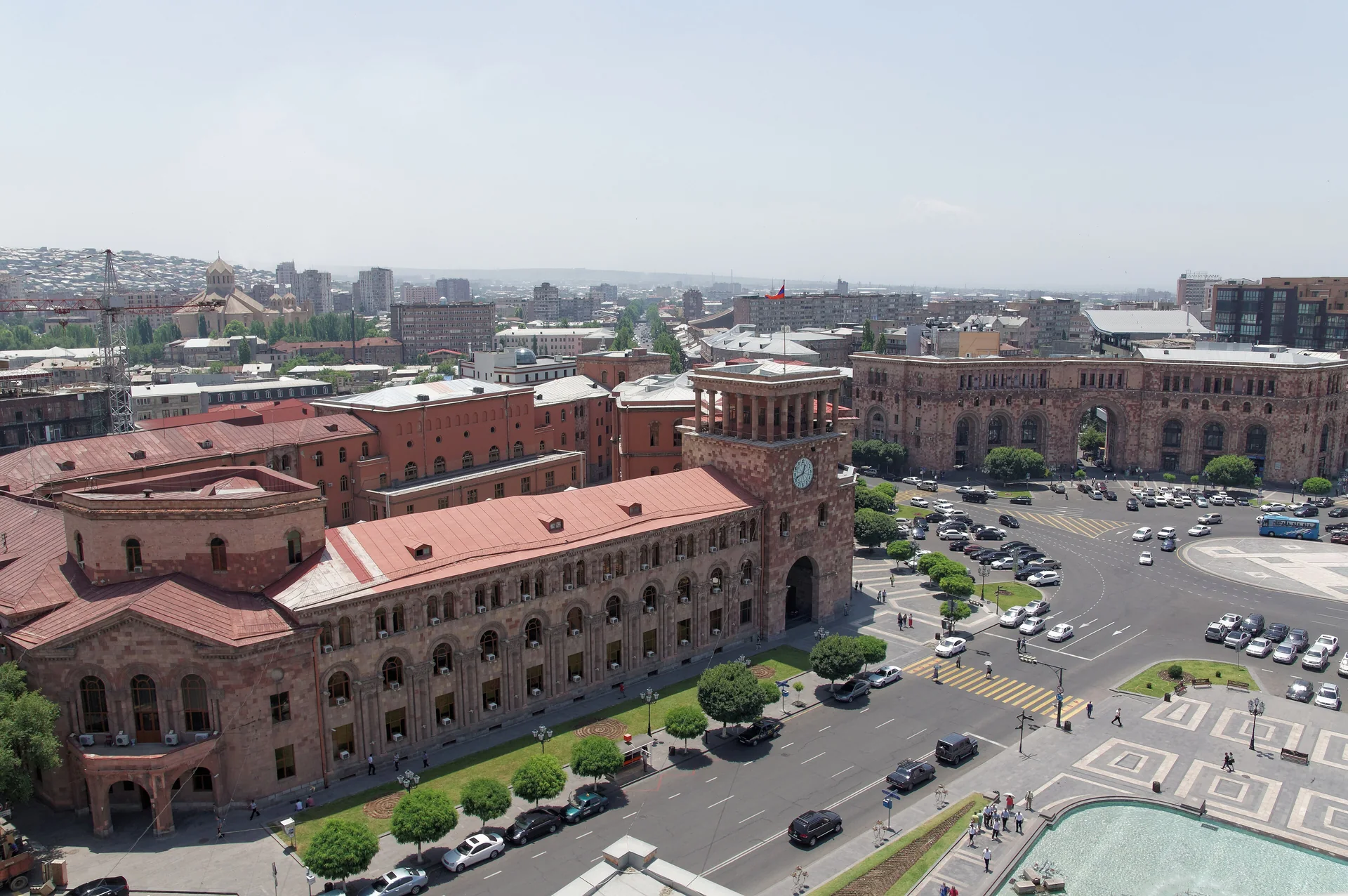
Yerevan is Armenia’s principal administrative, commercial and cultural base. The municipality divides it into twelve districts, so “living in Yerevan” can mean a central walking routine or a much longer bus-and-road commute. It is the strongest starting point for a household needing frequent international flights, a choice of private or international education and access to specialist services.
Armenian is important for public administration and deeper local relationships. Russian can be useful in some settings and English in parts of business and education, but a landlord, clinic or school should be asked about the language actually available. Do not choose a home from a central-city visitor itinerary alone.
What may appeal
- Broadest concentration of Armenian administrative, professional and specialist services.
- Metro and municipal transport can support carefully chosen car-light routines.
- International education and cultural options with distinct admissions and costs.
What to weigh up
- Housing quality, noise and the commute vary greatly within a district.
- Summer cooling, winter heating and building condition require inspection.
- Foreign-language support and insurance eligibility need explicit arrangements.
Cost of living
Use actual housing, transport and education choices
For a household budget, separate rent, utilities, internet, groceries, transport and healthcare from the initial deposit, agent payment and furniture. Foreign-currency asking prices are common in the verified listings, so state the contract currency and any conversion mechanism explicitly. A USD listing is not a guarantee of a fixed AMD cost.
The municipality’s transport information lists an ordinary 150 AMD single fare and a 9000 AMD thirty-day product. The pass should be compared with your expected journeys and current eligibility rules, not automatically bought for everyone. School fees, private health cover and a car can change the budget far more than a single bus fare. Request current school and property quotations rather than use an unexplained “expat monthly average”.
Neighbourhoods & finding a home
Websites to find a home
| Website | Search for | Coverage |
|---|---|---|
| Estate.am | Rent / Buy | Armenian property portal with Yerevan district and street filters. |
About these links
Property-search websites help you find listings; individual properties and agents have not been vetted by Offshore Capitalist. Confirm availability, the legal right to let or sell, and payment instructions before committing.
- Estate.am · Checked 2026-10-14
Choose Yerevan and a district, then select Sale or Rent. Short Term is a separate option; compare monthly rather than daily prices when looking for a home, and note whether the advert uses AMD or USD.
Central walkability, established districts and outer-area trade-offs
Use Estate.am and List.am to compare location, size, floor, heating, lift and lease duration. Confirm whether a “room” count includes the living room, whether the pictures show the available unit and whether the agent has authority to act. Listing duplicates and different currencies can make a raw result count or lowest advertised price misleading.
Before payment, verify ownership or authority, the written lease, deposit-return terms, repairs, utility balances and inventory. For buying, obtain a cadastral/title review and assess the building’s condition, not just its renovated interior. An engineer’s view of an older building can be more useful than a description such as “European renovation”.
| District | Character | Potential fit | What to test |
|---|---|---|---|
| Kentron | Central civic and cultural area | Walking to central offices, cafés and museums | Compare noise, parking and space against the higher central convenience |
| Arabkir | Established residential and commercial district | Komitas/Barekamutyun-oriented routine | Proximity to a station or main corridor matters more than district name |
| Davtashen | A different residential scale beyond the central core | Families comparing larger living space | Test the river-crossing and work/school journey |
| Ajapnyak | Western district with varied housing | Possible fit for western work or activities near TUMO | Not every address has the same public-transport connection |
| Shengavit | Southern district with metro-served areas | A home close to a useful station | Measure the last walk and building quality, not only distance from Kentron |
| Nor Nork | Higher residential areas | Households prioritising a particular school or local network | Elevation and road commute change winter and daily travel |
Work, business & opportunities
An ecosystem does not replace a realistic employment plan
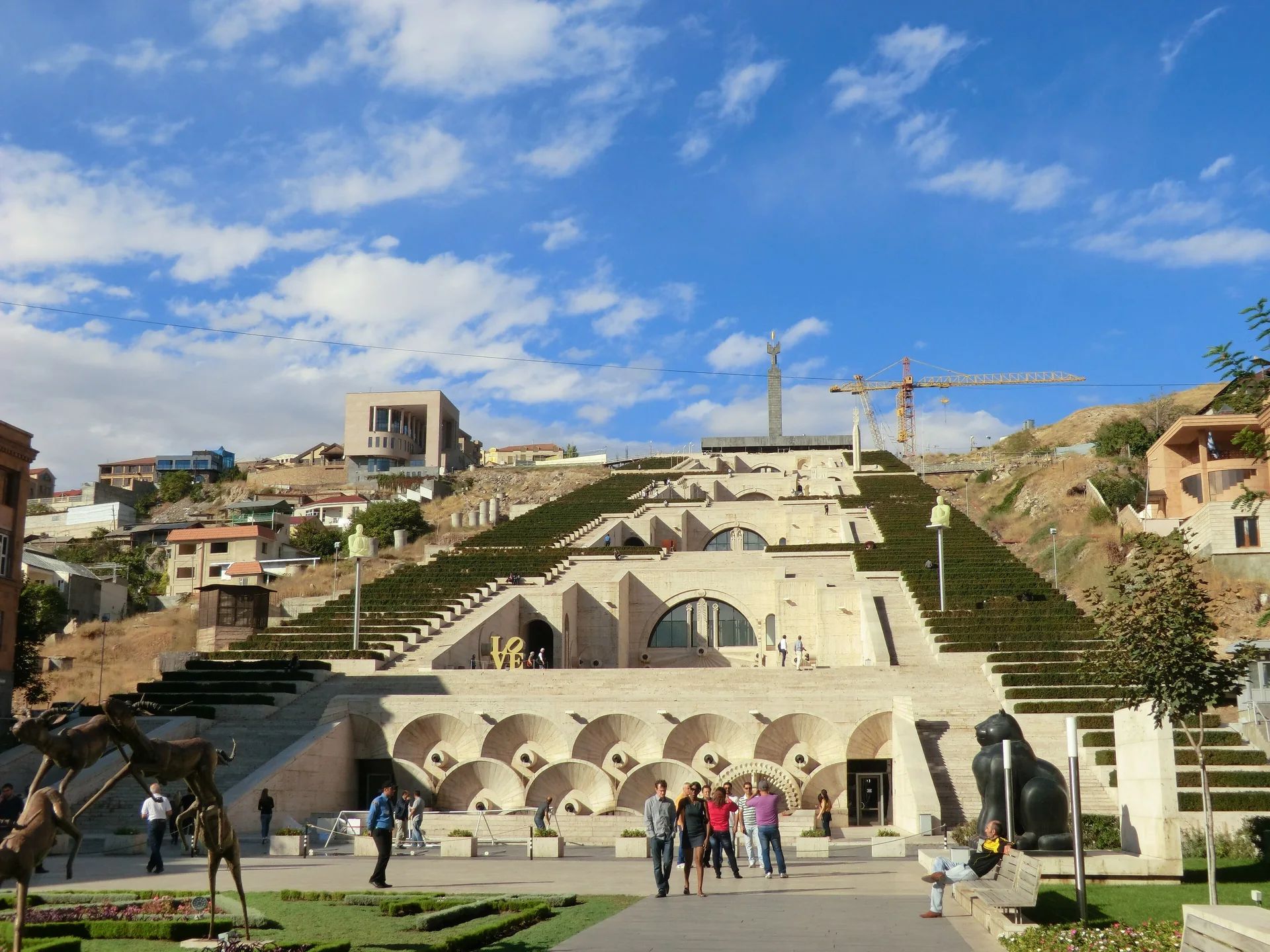
Yerevan offers national business services, technology and creative-learning organisations and a larger professional network than Armenia’s smaller cities. TUMO’s Yerevan base and its adult learning initiatives illustrate part of that ecosystem, while Repat Armenia provides newcomer connections and practical orientation. These resources do not promise a job or a salary level.
For a locally employed move, obtain the role, language expectations and work-permission basis before committing to housing. A remote founder should examine the company’s Armenian activity and personal tax residence, including the country’s whole-year residence rule. Verify internet in the actual apartment and arrange a backup for work that cannot tolerate interruption.
Schools & childcare
Language of instruction is different from a foreign-language class
The municipal education page lists schools and kindergartens and explains first-grade registration through the enrolment system. A school teaching English or French as a subject is not necessarily an English- or French-medium school. Obtain the actual admission, language-support and grade-placement rules for the child.
QSI International School of Yerevan is a separate international option with its own admissions process. The existence of an international school does not establish a vacancy, school-bus service or affordable place for every family. Ask for the full fee schedule, learning support, transport and calendar. TUMO’s free programme is for residents aged 12–18 who register; it supplements schooling rather than replacing a school curriculum.
Healthcare
Find the local clinic before you need a specialist
The municipality lists local health facilities, including polyclinics and centres by district. Start with a routine-care provider near the proposed home and determine how appointments, referrals and prescriptions work. A hospital list alone does not solve a child’s recurring care or an adult’s chronic medication needs.
Armenia’s 2026 insurance transition is governed nationally and should be read in the country guide. The presence of a municipal clinic does not prove that every foreign newcomer receives all care without charge. Confirm insurance eligibility, the provider’s participation and out-of-pocket items separately. Transfer records and medicine names, and establish language assistance for appointments if required.
Sources for this section
Getting around
A metro or direct bus route can change the housing shortlist
The city’s ticketing system covers the relevant municipal transport products, with a 150 AMD ordinary single fare and a 9000 AMD thirty-day pass in the current published information. Airport journeys have a separate product. Concessions can require identity and relationship verification; foreign-issued child records may need Armenian translation for the relevant validation.
For a viewing, take the actual bus or metro journey at the time you would commute. Include the walk to the stop, interchange and return service. Central destinations can be walkable, but assuming every district supports the same car-free routine will produce an unrealistic housing comparison.
Sources for this section
Airports & international connections
Zvartnots is the normal international gateway
Zvartnots (EVN) is the main airport serving Yerevan. Its operator provides transport information, and the municipal ticketing page identifies a separate airport fare product. Check the operating hours for a late arrival instead of assuming a normal city pass covers every airport transfer.
For a business itinerary, compare available flights on the actual dates and the door-to-terminal road leg. An apartment on the other side of the city may add a meaningful transfer even though both addresses are labelled Yerevan. Shirak near Gyumri can be useful for a particular route but requires an intercity journey; it is not a second airport in Yerevan.
Gateway options
Compare gatewaysZvartnots International AirportEVN
InternationalYerevan area ·  Armenia
Primary gateway Zvartnots serves Yerevan. Use the terminal’s official ground-transport information to arrange the final city transfer; a flight to Shirak instead entails an intercity journey.
Armenia’s main international gateway, with a broader choice of foreign services than the smaller Shirak gateway. Compare actual operating dates and the onward road journey.
Sources & connectivity notes
Operator reports document operating international passenger routes from Yerevan in 2026.
Research checked 2026-10-14. Routes can vary by season.
Shirak AirportLWN
InternationalGyumri · Armenia
Alternative gateway An alternative only if the Shirak flight suits your itinerary; the airport is near Gyumri, not Yerevan, and requires an intercity road transfer.
A smaller international gateway serving Gyumri. The operator documents cross-border service, but its route range and operating days are more limited than those of Zvartnots; a blank live board is not proof the airport has closed.
Sources & connectivity notes
The airport operator confirms a foreign passenger route began operating in August 2026.
Research checked 2026-10-14. Routes can vary by season.
Climate & environment
Summer cooling and winter heating are both housing decisions
Yerevan’s comparatively low setting has a different seasonal experience from highland Gyumri. Hot summer periods make shade, cooling and ventilation relevant; winter makes heating and the condition of windows important. Ask to see how the actual apartment is heated and cooled and who pays the bills.
Before buying or signing a long lease, inspect the building and access as well as the interior. Consider road noise and dust when opening windows, a safe place for children to play and whether the rooms receive direct sun. A bright summer listing photograph is not evidence of year-round comfort.
Sources for this section
Safety & everyday risks
Use current advice and property-level checks
The official travel advice distinguishes everyday crime precautions, demonstrations, road risks and regional security restrictions. It does not justify treating every Yerevan district as identical or assigning unsupported “safest neighbourhood” scores. Avoid gatherings that could become confrontational and keep travel plans responsive to current advice.
At home, review entrance security, fire exits, gas/heating safety and building condition. For children, inspect crossings and the route to the school or bus. Earthquake preparedness and road safety belong in a relocation plan even when a visitor feels comfortable walking around the centre.
Sources for this section
Public services & practical setup
Make the first month’s administration manageable
Use the appropriate district and municipal contacts for local services. Repat Armenia’s first-steps guidance can help newcomers organise documents and find the right office, but the issuing authority determines the actual requirement. Keep identity, address and residence documents in a single accessible file.
Electric Networks of Armenia and Veolia provide official customer-service information for electricity and water. Establish whose name the account is in, how meters and bills are identified, whether arrears exist and how interruptions are reported. Check the exact internet installation and the landlord’s responsibility before moving in.
Culture, community & daily life
Make the city more than a base for paperwork
The museum and cultural network gives Yerevan a strong reason to be more than an administrative stop. Select recurring activities near home rather than planning only tourist visits. TUMO’s public events and the community orientation offered by Repat Armenia are additional ways to meet people around a shared interest.
For families, connect cultural choices to the ordinary weekly schedule: a class after school, a museum visit at the weekend and an accessible outdoor space. A central location can make this easier, but it should be balanced with noise, apartment size and the school run.
What residents say
Family opportunity and the adjustment it requires
Anahide Pilibossian’s 2024 account describes moving from the UK in 2022, selecting a French school and valuing a family-oriented environment. She also discusses adjustment to a different professional landscape. This is a named family’s experience, not a guarantee of admission or a universal description of local working life.
A public 2023 discussion by a self-described parent who had relocated with a spouse and young child offers a different, less curated set of experiences and responses. Such anonymous accounts can help identify questions about housing and daily life, but their identities and circumstances are not independently verified and their claims should not be treated as statistics.
These are attributed public experiences, not client testimonials. Housing, neighbourhood and household circumstances affect the experience.
A self-described parent’s 2023 discussion provides questions to investigate about housing and family adjustment.
Anonymous public self-report; identity and individual factual claims unverified.
Planning your move
Resolve school and status before committing to a district
Before arrival, choose the applicable residence system and prepare authenticated documents. Confirm any employment and school conditions that constrain the move. During a scouting visit, compare several actual properties and take the school, work and airport journeys from each.
After arrival, complete the required registration and residence steps, establish healthcare and utilities, and arrange tax/payroll access. The November 2026 residence-system transition makes the real filing date important. Keep a first-month reserve for document corrections and practical setup rather than spending the entire budget on the initial apartment.
Your move, step by step
Planning stages; actual legal deadlines and eligibility are in the linked country route. Preparation times depend on the household and issuing authorities.
01Confirm the legal and household constraintsBefore making nonrefundable commitments
Choose the residence route and settle work, school and medical requirements that determine where the household can live.
Documents & evidence
- Passports and family civil records
- Work/business evidence
- School and medical records as applicable
- A home purchase or lease does not guarantee residence approval.
- A school or hospital’s presence does not establish admission or coverage.
02Inspect the home and the real daily journeyDuring the scouting visit
Compare written full-cost proposals, inspect heating and access, and take the actual school/work trip from each shortlisted address.
Documents & evidence
- Draft lease or purchase terms
- Inventory and utility information
- Address and landlord/agent authority evidence
- A listing photograph is not a building inspection.
- Account for slopes or winter conditions rather than only straight-line distance.
03Complete status and local setupOn arrival and according to the actual official procedure
Use the relevant residence and municipal channels, transfer services and confirm healthcare arrangements.
Documents & evidence
- Approved status or application documents
- Signed housing evidence
- Service and insurance records
- Municipal registration and immigration approval are separate.
- Avoid assuming someone else’s nationality or family category gives the same rights.
04Maintain the records that keep the move workingDuring the first months and before each renewal
Retain travel, address, payroll and tax records. Reassess costs and access after an ordinary working month and the first cold season.
Documents & evidence
- Permit expiry calendar
- Travel history
- Tax/payroll records
- Actual household bills
- A temporary holiday routine can conceal commuting or heating costs.
- A move abroad does not automatically end tax residence in the origin country.
Sources & research notes24 references
Sources supporting this guide. Research draft awaiting editorial review.
- Yerevan Municipality — administrative districts
- Yerevan Municipality — education
- Yerevan Municipality — health services
- Zvartnots airport — transport
- Estate.am — sale and rental listings
- Yerevan Municipality — ticketing and transport
- QSI International School of Yerevan
- List.am — apartment purchase search including Yerevan and Gyumri
- TUMO — eligibility and free learning
- Repat Armenia — first steps after a move
- ARLIS — current consolidated Tax Code
- ARLIS — Law on Foreigners
- ARLIS — universal health insurance law
- Armenia International Airports — Shirak Airport
- Armenia Tourism — climate
- UK FCDO — Armenia safety and security
- Electric Networks of Armenia — customer services
- Veolia Armenia — water customer services
- Armenia Tourism — museums
- Repat Armenia — Anahide Pilibossian,7 March 2024
- Reddit — a parent’s account after a year in Armenia,2023
- ARLIS — HO-11-N residence reform and subsequent effective-date amendments
- MFA — residence status and application documents
- List.am — Gyumri long-term apartment listings
Anahide Pilibossian valued family life and French schooling while describing professional adjustment after her 2022 move.
Named interview published 7 March 2024; a family’s experience, not a representative survey.