City at a glance
Choose the city around the life you will lead
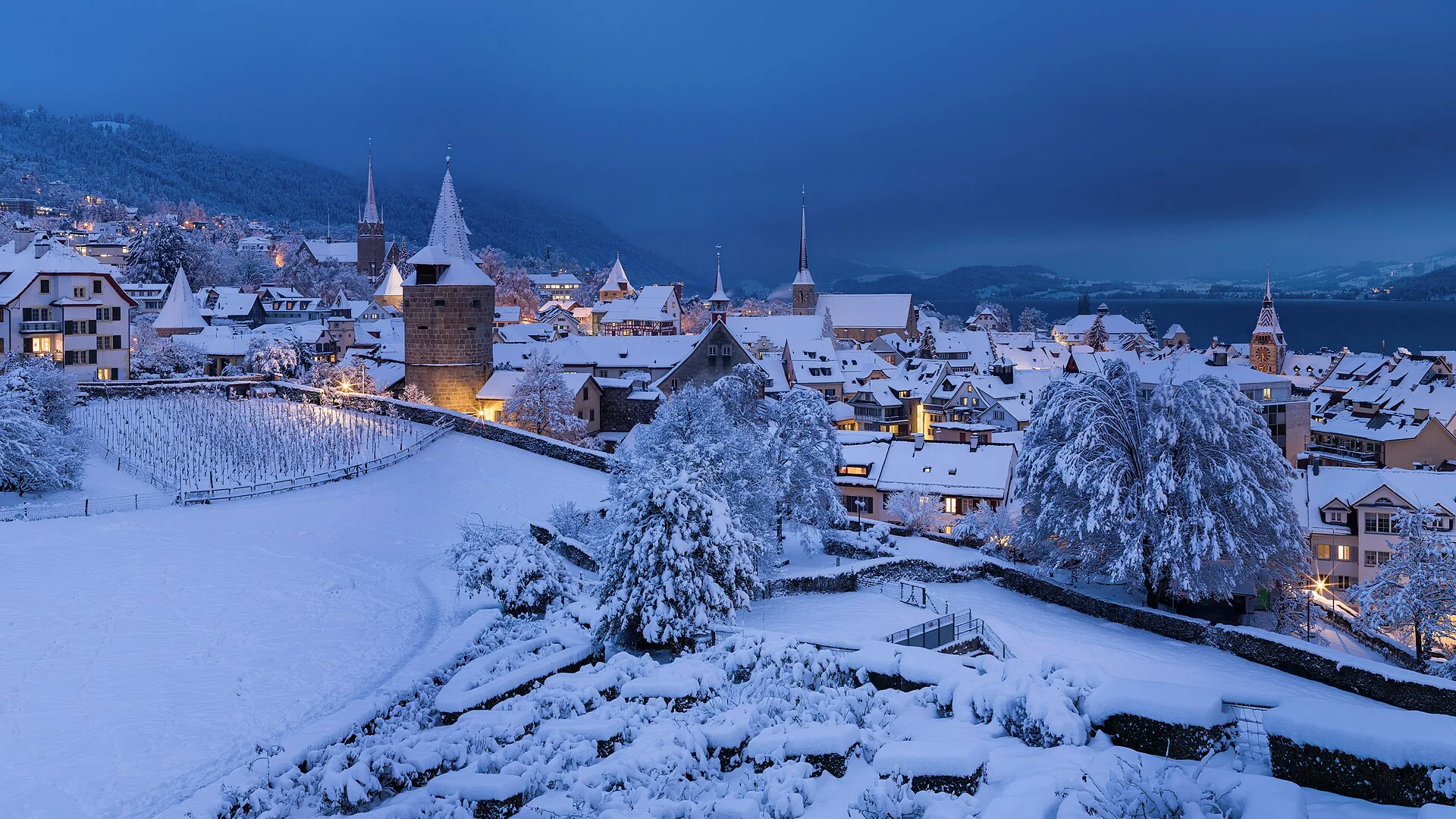
Zug deserves a housing decision as careful as its financial decision. The old town, lake, station area, Herti and Oberwil offer different routines, while an office may be in another municipality or in Zurich. Start by defining where you will spend a normal week, not by selecting a canton from a tax table and assuming the rest will fall into place.
Walk the old town and a residential alternative, then make the actual journey to work. A rail connection can be appealing on paper while the two walks at either end dominate the day. If social activities will mostly happen in Zurich, try a late return as well as the morning commute. If your routine will be in Zug, inspect the local services and spaces you will use repeatedly.
Distinguish the city from the canton. Baar, Cham and Risch/Rotkreuz are separate municipalities with their own local responsibilities and tax multipliers. A company registered in “Zug” does not identify your home municipality or establish personal residence. Choose the address and real-life arrangement first, then model the applicable household position.
Sources for this section
What may appeal
- Old-town, lakefront, station-side and residential alternatives support different household routines.
- Rail connections can make both local and out-of-city working patterns possible.
- The site includes a narrow Zug city ordinary-assessment salary scenario with explicit inputs.
What to weigh up
- City and canton labels can hide different municipal tax and school arrangements.
- Tax comparisons omit important living costs unless the household adds them deliberately.
- A Zurich-centred work and social life can create repeated travel that should be tested in person.
Cost of living
Set up the home and its running costs
WWZ provides a moving notification procedure and recommends reporting an internet, television or fixed-line move about a month ahead where possible. That is a service-planning recommendation, not an immigration deadline or a guaranteed activation time. Confirm what is available at the exact building and which account belongs to the tenant.
Compare the full household budget: rent, building-service advances, heating, electricity, internet, parking, commuting and insurance. A tax difference is not automatically an equal improvement in disposable cash. Ask for written explanations of charges and any year-end reconciliation, and keep cash available for the deposit and overlapping move costs.
At handover, document meter readings, appliances, keys and existing damage. Inspect winter access, window seals and shading in any elevated or upper-floor home. Test the workroom’s actual connection and noise before committing to regular international calls. A property advertised for professionals does not establish permission for client visits, signage or company registration; check the planned use explicitly.
Sources for this section
Neighbourhoods & finding a home
Websites to find a home
| Website | Search for | Coverage |
|---|---|---|
| Homegate | Rent / Buy | Switzerland |
About these links
Property-search websites help you find listings; individual properties and agents have not been vetted by Offshore Capitalist. Confirm availability, the legal right to let or sell, and payment instructions before committing.
- Homegate · Checked 2026-10-14
Choose Rent or Buy and the city/postcode. Check ancillary costs, housing type and exact municipality; sale listings do not establish foreign-buyer eligibility.
Five areas to compare in person
Use these areas to organise a scouting visit. The tradeoffs are practical questions to investigate at the property; they are not safety scores, rent forecasts or assurances that a particular household will be accepted. Baar, Cham and Risch/Rotkreuz are separate municipalities; the Zug city salary result is not a canton-wide result.
| Area to explore | Why it may fit | What to test |
|---|---|---|
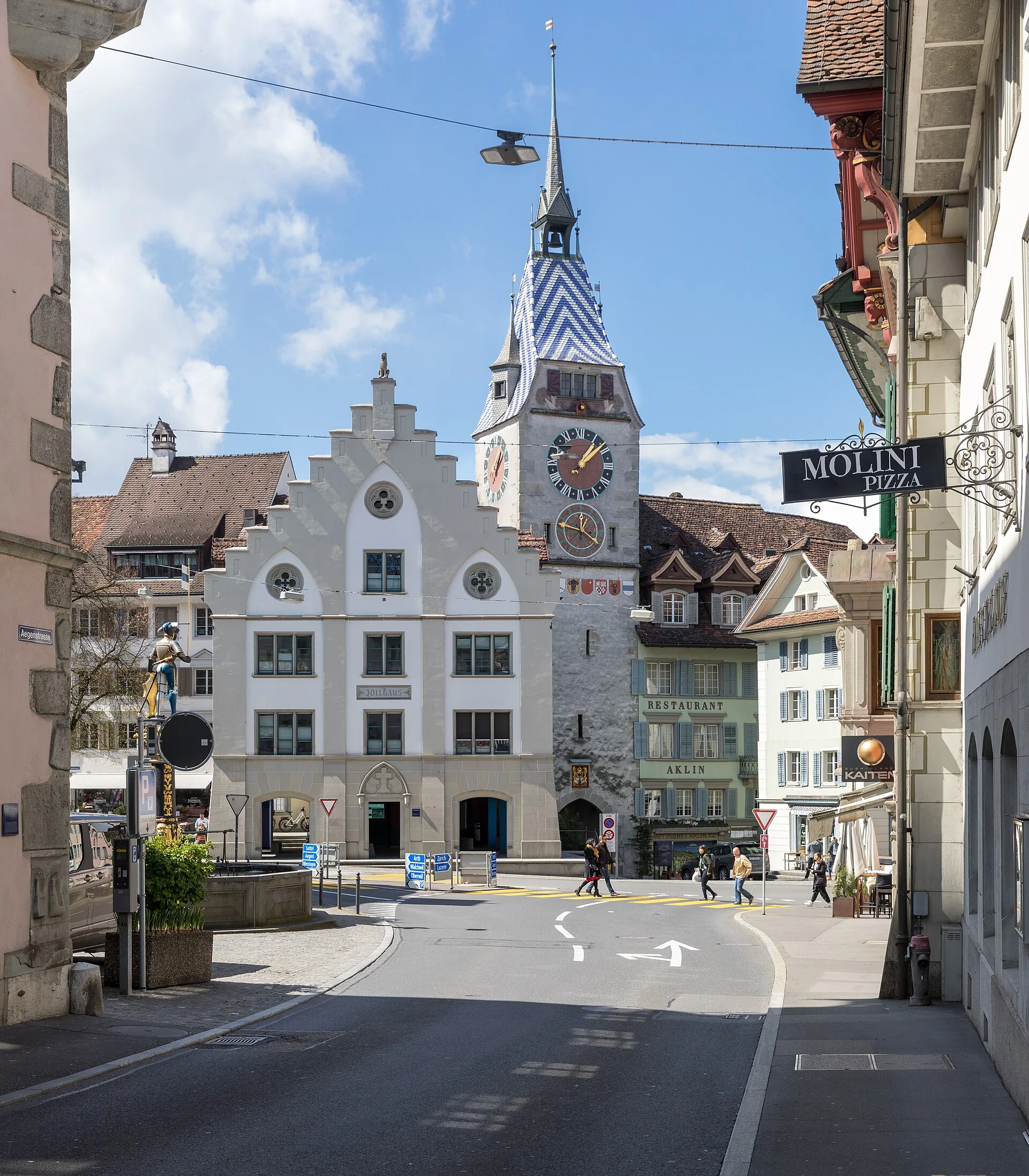
| Altstadt and the lakefront | A historic setting centred on the old town, lake and local activities. | Inspect access, stairs, delivery restrictions, evening activity and the walk to the station. A heritage setting may limit alterations. |
| Neustadt and the station surroundings | A rail-oriented search for someone whose work or travel regularly leaves the city. | Time both ends of the commute; inspect the apartment’s exact exposure to railway, road and commercial activity. |
| Herti | A residential alternative west of the central station area. | Compare the precise transit stop, school and shopping route. Event activity and main-road frontage vary by street. |
| Oberwil bei Zug | A separate part of Zug city to explore for a lakeside residential routine. | Check train or bus frequency at your hours and the actual hill or lakeside access. Confirm the address rather than confusing it with another Oberwil. |
| Loreto and the slopes above the centre | An alternative for someone who values an elevated residential setting within the city. | Walk gradients and assess winter access, sunlight and the trip with children or groceries. A view should not be the only criterion. |
Sources for this section
Secure a workable tenancy, not just an attractive listing
For a residential cash security deposit, the federal housing guidance describes a maximum of three monthly rents and a bank account in the tenant’s name. Distinguish that security from rent paid in advance or a guarantee product with separate fees and terms.
Before applying, organise an honest dossier showing identity, income or employment and the residence position you can document. Ask what evidence the landlord requires from someone without a Swiss rental or debt-enforcement history. Do not manufacture local records or send money merely to make an application look stronger. Verify the property manager and payment instructions through an independently checked channel.
Read the full lease and attachments: term, notice, permitted occupants, pets, home-office use, service charges and any promised work. A fixed commitment needs an explicit plan if permission, employment or the move date changes. Ask which documents form part of the agreement and keep a signed copy. If language or a special clause is unclear, obtain an explanation before signing rather than relying on a summary from an intermediary.
Compare two homes using the same complete budget, including recurring charges and the cash needed at move-in. A furnished temporary stay can provide useful flexibility while you inspect long-term options; confirm whether that accommodation can support the administrative evidence your particular route needs. Neither a booking nor a lease guarantees immigration approval.
Sources for this section
Schools & childcare
Plan schooling before finalising the home
Zug’s kindergarten rules differ from the age-four starting rule used in several other cantons. The canton says children who turn five by the end of February must start the compulsory kindergarten year in the following school year; those who turn five by the end of May are entitled to enter. Earlier or later admission in special cases requires the prescribed decision. There is also a preceding voluntary year with municipal admission criteria.
Give the school authority the exact birth date, home address and previous schooling. For a child arriving later in their education, ask about placement, German-language support and any assessments. Do not infer a Zug city school place from a Baar or Cham address, and do not confuse a voluntary kindergarten enquiry with the compulsory registration obligation.
Map the complete care day, including lunch, afternoons and holidays. Confirm availability and fees separately where applicable. For a private or international programme, obtain its admissions decision and transport arrangements before choosing a home around it. The best location for a parent’s train to Zurich is not necessarily the best location for two children attending different campuses.
Sources for this section
Healthcare
Arrange healthcare and continuity of treatment
For an ordinary Swiss resident, mandatory basic insurance normally needs arranging within three months; on-time cover and premiums start from residence. Check exceptions against your own situation.
Zuger Kantonsspital is in Baar, not in Zug’s old town. Its visitor guidance identifies access from Baar station and nearby bus stops. Confirm the correct clinic and appointment entrance, and organise a primary-care practice rather than treating the hospital name as a complete healthcare plan.
Check the first-contact and referral rules of the selected insurance model, and arrange continuity for medication or ongoing treatment. Build premiums and cost sharing into the household budget separately from tax and salary deductions. The site’s salary tool cannot establish medical entitlement, reimbursement, appointment capacity or the cost of a particular treatment.
Getting around
Test the commute and the airport journey
ZVB and the Tarifverbund Zug cover local journeys, while SBB explains how Zug-zone tickets connect with Z-Pass products under the applicable stopping and zone conditions. A local pass and a Zurich commute should not be priced as if they were automatically the same ticket. Check the full route and the actual train used.
For international flights, compare the rail journey to Zurich Airport with your departure time and luggage needs. Do not substitute a fast station-to-station time for the entire trip from home to check-in. An apartment convenient for Zug station can reduce one part of the journey while creating a different school or childcare detour.
Test how you will spend evenings and weekends. If most friends, classes or clients will be in Zurich, include those repeated journeys in the decision. A household whose leisure is centred on the lake and Zug may reasonably choose a different home. The right result depends on the pattern of life, not a general claim that either city is better.
Sources for this section
Airports & international connections
Gateway options
Compare gatewaysZurich AirportZRH
InternationalKloten, serving Zürich ·  Switzerland
Primary gateway Kloten, serving Zürich. Compare the complete onward journey to Zug with your flight times, luggage and arrival hour.
International gateway for Zürich, Bern and Zug. Compare the current destinations, operating season and ground transfer for your itinerary.
Sources & connectivity notes
International passenger services. Check current routes and seasonal schedules.
Research checked 2026-10-13. Routes can vary by season.
Climate & environment
Month by month
Cham · 1991–2020 averages
Source: MeteoSwiss · CC BY 4.0
January averages
- Mean daily high
- Mean daily low
- Monthly precipitation
°F and inches are converted from the metric values and rounded for display.
These historical monthly averages show the seasonal pattern at the named station. They are not forecasts, extreme temperatures or a measure of conditions inside a particular home.
Nearby Cham precipitation station only; temperature normals were absent from this archive. No substitute temperature series is supplied.
All monthly values
| Month | Mean daily high | Mean daily low | Monthly precipitation |
|---|---|---|---|
| January | Not available | Not available | 54.1 mm |
| February | Not available | Not available | 54.4 mm |
| March | Not available | Not available | 66.4 mm |
| April | Not available | Not available | 85.7 mm |
| May | Not available | Not available | 138.1 mm |
| June | Not available | Not available | 145.8 mm |
| July | Not available | Not available | 144.0 mm |
| August | Not available | Not available | 141.6 mm |
| September | Not available | Not available | 92.8 mm |
| October | Not available | Not available | 86.3 mm |
| November | Not available | Not available | 73.3 mm |
| December | Not available | Not available | 77.1 mm |
Sources, station & data quality
MeteoSwiss · Cham. These averages describe the stated period; they are not a forecast. Temperatures are average daily highs and lows, not extremes. Precipitation is an average monthly total, not a count of wet days.
Nearby Cham precipitation station only; temperature normals were absent from this archive. No substitute temperature series is supplied.
Source publishes normal reference period but no per-value year counts or NOAA flags. Missing series remain null.
Normals are historical reference averages, not forecasts, extremes or a property-level climate assessment.
Original Celsius and millimetres retained to one decimal; Fahrenheit = C×1.8+32 and inches = mm/25.4, rounded half-up to one and two decimals respectively.
Completeness flags and available-year counts are not supplied in this source. No station identifier has been assigned where the cited source does not identify one.
Check the home in more than one season
MeteoSwiss’s 1991–2020 precipitation table includes nearby Cham, at 443 metres, with an annual normal of 1,159.6 mm. The downloaded archive does not supply a corresponding Cham high/low temperature series. Those temperatures remain unavailable here; Zurich values are not substituted. The station is outside Zug city and does not describe the higher Zugerberg slopes.
Use the seasonal evidence to ask better building questions: heating control, glazing, ventilation, external shading and summer comfort in the room where you will sleep or work. Inspect drainage, storage and access individually. A monthly rainfall average does not establish flood risk at a particular address, and a city-level climate description cannot replace an assessment of an exposed hillside or lower-ground apartment.
Public services & practical setup
Follow the right arrival and permit procedure
Zug city routes foreign nationals arriving from abroad or another canton to the cantonal Amt für Migration, which transmits the registration to the city. Foreign moves within Zug canton follow a different notification chain. Swiss arrivals have a separate city procedure. Do not send the Swiss citizen form simply because it is the first online arrival form you find.
The cantonal EU/EFTA arrival form requires submission within fourteen days of entering Switzerland or changing canton and before starting employment. Other status groups must use their own applicable permission and document route. Prepare identity, housing, employment or other qualifying evidence and family records, and retain the submission acknowledgement. The deadline is not a guarantee that all processing ends within two weeks.
Resolve the actual working arrangement before arrival, especially if you will manage an overseas business or work remotely for a foreign employer. A residence address in Zug and a company elsewhere do not by themselves answer tax residence, payroll, social-security or management questions. If the final apartment is in Baar or Cham, make sure every application uses that municipality consistently.
What residents say
These are attributed public experiences, not client testimonials. Housing, neighbourhood and household circumstances affect the experience.
Planning your move
Connect the move to your financial and business plan
An international move works better when the home, permission and operating arrangements tell the same story. Document where you will actually live and work, how a foreign business will be managed, what income streams continue and what remains in the departure country. Resolve the sequence before changing registrations or signing several long commitments.
For a useful inquiry, include citizenships, current residence, household members, intended activity, company ownership and the target municipality. We can help assess the structure and coordinate the appropriate implementation, with housing and school decisions fitted around the agreed plan.
The Swiss salary tool includes a research-preview scenario for Zug city, alongside Zurich and Basel. It models only its declared ordinary annual-assessment profile and requires the specified deductions and household assumptions. It is not a withholding-payroll result, a certified tax calculation or a result for every municipality in the canton. Insurance, housing and other living costs still need a separate budget.
Sources for this section
Your move, step by step
Five planning stages. Administrative deadlines below are specific; the preparation and settling periods are suggested working windows, not approval promises.
01Confirm the lawful residence and work routeBefore committing to the move
Identify the route for every household member, the intended activity and the authority responsible for the exact municipality. Align any employer, foreign company and departure-country obligations before setting a start date.
Documents & evidence
- Identity and citizenship evidence
- Family and custody records where relevant
- Employment, activity or resources evidence for the chosen route
- Using another household’s permit checklist
- Treating a Swiss lease as work permission
02Scout areas and make the tenancy reviewableBefore paying or signing
Visit at least two areas, test the real commute and discuss the child’s school route. Obtain the entire lease and cost breakdown, verify the counterparty and agree the deposit and handover process.
Documents & evidence
- Draft tenancy and attachments
- Written running-cost breakdown
- Landlord’s actual application checklist
- Comparing rent without recurring charges
- Assuming a nearby municipality uses the same administration
03Report arrival through the correct channelEU/EFTA cantonal form: within 14 days and before employment; other routes separately
Foreign arrivals from abroad or another canton go to the cantonal migration office; Swiss arrivals use their separate city route. Keep the employer start condition separate from card production.
Documents & evidence
- Applicable arrival form and identity
- Tenancy or required accommodation evidence
- Permission and family attachments for the selected branch
- Assuming every Swiss municipality uses 14 days
- Mistaking submission for completed permission
04Activate the home, insurance and school arrangementsAt handover and through the first weeks
Complete the signed condition report and supplier notifications. Confirm insurance enrolment and any exception, school placement, care hours and the primary-care pathway. Set up essential services using the same address details.
Documents & evidence
- Handover report and readings
- Insurance confirmation
- School and care correspondence
- Supplier account confirmations
- Missing a separate utility notice
- Assuming school registration secures all childcare
05Review the routine and maintain the recordAfter settling, then when circumstances change
Check the first bills and workplace arrangements against the plan. Keep a calendar for renewals and filings, and reassess before moving canton, changing employment or adding regular cross-border work. Update each relevant record rather than assuming one notification updates all systems.
Documents & evidence
- Permit and renewal calendar
- Bills and actual work-pattern records
- Tax and social-insurance correspondence
- Leaving an old address on an important account
- Applying a different municipality’s tax assumptions
Sources & research notes14 references
Sources supporting this guide. Research draft awaiting editorial review.
- Federal Housing Office: Living in Switzerland—rental agreement
- Federal Office of Public Health: insurance obligation for Swiss residents
- State Secretariat for Migration: Working in Switzerland
- MeteoSwiss: climate normals documentation and official archive
- MeteoSwiss station climate normals, published 27 May 2025
- City of Zug: Registering arrival
- Canton Zug: Entry into compulsory kindergarten
- City of Zug: Urban planning and neighbourhood architecture handbook
- WWZ: Moving and address changes
- Zuger Kantonsspital: Visitor access and Baar location
- SBB: Tarifverbund Zug and adjoining Z-Pass validity
- r/zurich: Living in Zug while working in Zurich
- Canton Zug: EU/EFTA arrival and canton-change form
- Canton Zug: Third-country work authorisation
A June 2024 r/zurich discussion about living in Zug while working in Zurich produced differing views on commuting and social life, including a participant offering their own experience of Zug. The useful point is that priorities differ. The thread’s dramatic tax-saving and travel-time claims are not adopted as verified figures.
Anonymous discussion about a mixed Zug/Zurich routine; self-reported experience, not a representative resident survey or financial calculation. Retrieved 12 October 2026; publication dates are retained only to the precision verified.