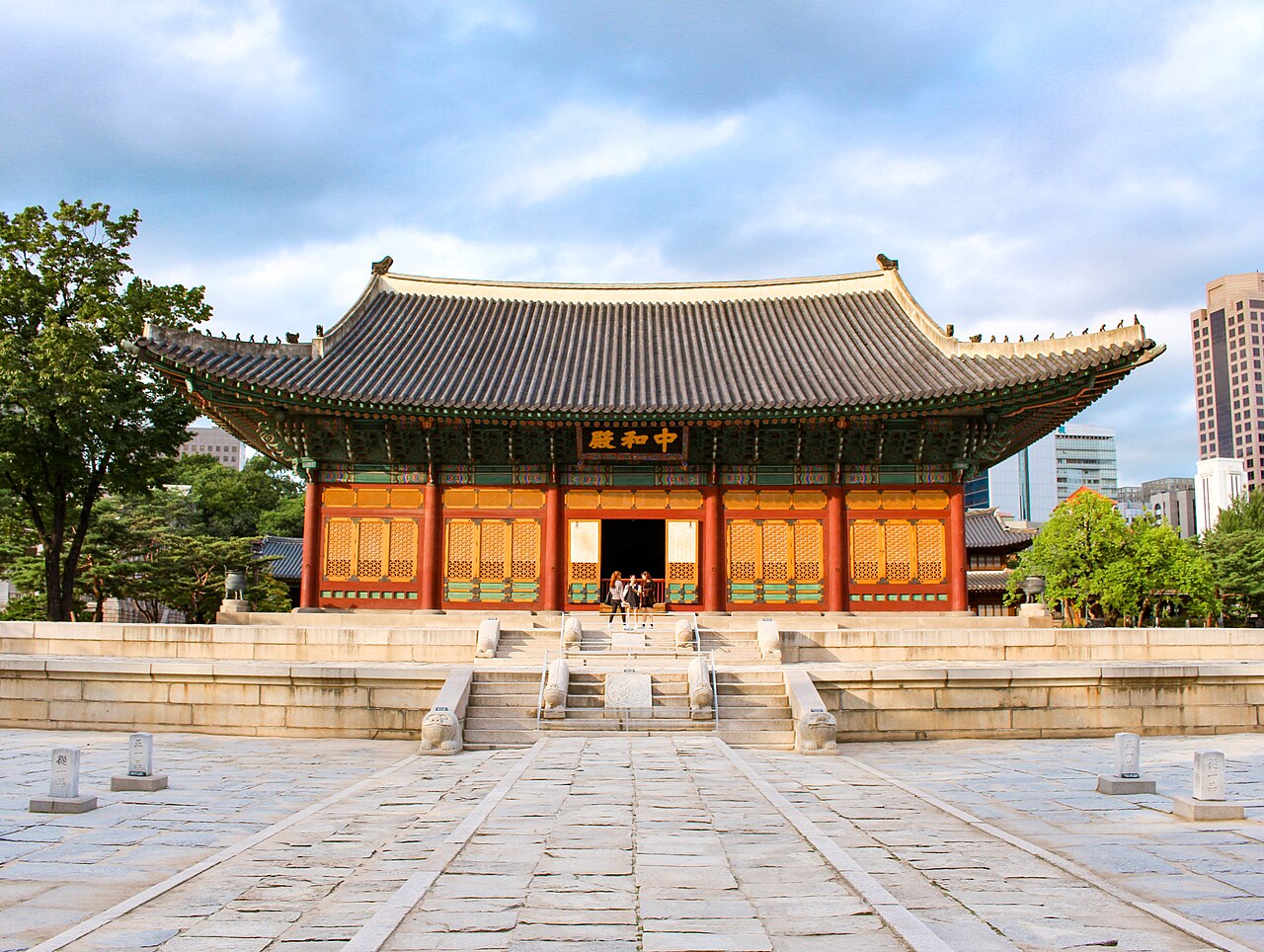
City at a glance
A connected city whose neighbourhood choice matters
Seoul suits people who enjoy dense urban life: restaurants and cafés near home, substantial business districts, museums and performances, and a daily routine built around rail and walking. Its contrasts are useful. You can spend the working day among Gangnam offices, walk through older Jongno streets in the evening, or choose a western neighbourhood around a university or research campus. The most attractive place on a weekend is not necessarily the best place for your household to live.
This guide covers Seoul Special City, whose official population page reports 9,579,449 residents in the first quarter of 2026. The surrounding capital region includes Incheon and Gyeonggi Province; an apartment marketed to a Seoul audience may be in another municipality. The city figure should not be presented as the population of that wider region. Check the actual district and road-name address before comparing school access, transport benefits or a commute.
Korean is important for ordinary administration, housing documents and many workplaces. English-language schools, clinics and support services provide useful entry points, but they do not remove every language barrier. A household prepared to learn practical Korean and arrange translation for consequential documents will have more options than one restricting every interaction to English. The largest trade-offs are often the lease deposit, the school journey, the room available at home and the work needed to establish local services.
Sources for this section
- Seoul Metropolitan Government — population, first quarter 2026
- Seoul Metropolitan Government — districts and local-government links
- Seoul Tourism Organization — 2026 city guide and neighbourhood map
- Seoul Metropolitan Government — education for foreign residents and local placement contact
- Seoul Metropolitan Government — employment support for foreign residents
What may appeal
- Several distinct employment and cultural districts connected by public transport.
- Named international schools, clinics and municipal support routes provide practical entry points.
- A wide choice of neighbourhood routines, museums and outdoor spaces.
What to weigh up
- Lease deposits, paperwork and separate building charges require careful preparation.
- School fees, admission and travel can sharply narrow a family’s housing choices.
- Summer humidity, winter heating and air quality need year-round planning.
Cost of living
A real advertised home, with the deposit kept separate
A furnished Seocho-dong unit advertised by Mindset Real Estate Agency on SeoulHomes was checked on 14 October 2026: 34 m², KRW 1,600,000 monthly rent and KRW 2,000,000 deposit. The description lists KRW 40,000 monthly for internet and TV, with utilities separate; the displayed broker fee is KRW 648,000. Maintenance needs a written amount. The advertisement’s studio and loft descriptions differ, so obtain a floor plan rather than assuming a separate bedroom. It describes a three-month minimum. This is one compact marketed unit, not a Seoul rental average.
For that example, deposit + first rent + displayed brokerage equals KRW 4,248,000 before utilities, maintenance, moving and any other invoiced items. Confirm the fee’s tax treatment and the payment schedule with the agent. The deposit is tied-up capital subject to the contract and recovery risk, not a monthly expense. A larger deposit can make another listing’s monthly rent look attractive while requiring substantially more cash at arrival.
Compare homes using three separate figures: money needed before keys, recurring monthly charges, and money expected back after departure. Add the cost of furnishing an empty unit and removing unwanted items. Request the previous year’s utility bills and the maintenance statement, with personal details removed. A rent-only comparison misses heating, cooling, management and differences between a short furnished arrangement and an ordinary longer lease.
| Housing cash item | Observed amount | How to use it |
|---|---|---|
| Monthly rent | KRW 1,600,000 | Single furnished 34 m² Seocho-dong advertisement |
| Deposit | KRW 2,000,000 | Separate cash requirement; verify return terms |
| Displayed brokerage | KRW 648,000 | One-time quotation; confirm final invoice |
| Initial selected cash | KRW 4,248,000 | Deposit + first rent + brokerage; not all arrival costs |
A selected monthly budget for two adults
Statistics Korea’s 2025 household expenditure release reports KRW 449,000 per month for food and non-alcoholic beverages, for a national household averaging 2.19 people. It is a historical spending reference across the country, not a Seoul supermarket basket or a nutritional minimum. Use it as a starting comparison for a two-adult household, then price your own groceries. Imported preferences, eating out and frequent delivery can change the result; restaurant spending is not included in this figure.
The illustration below combines that reference with the advertised home and two adults each making 44 basic-fare subway journeys monthly: 22 return workdays at KRW 1,550 per journey. It deliberately does not assume a rebate, unlimited pass or employer allowance. The arithmetic is KRW 1,600,000 + 449,000 + 136,400 + 40,000 = KRW 2,225,400 for the selected components.
You must still add the building’s maintenance charge, electricity, gas or heating, water, phones, health insurance and treatment, restaurants, household purchases and leisure. These amounts have not been established for the advertised unit. Neither the food reference nor the compact apartment establishes a suitable budget for a family with children. For an actual decision, replace the illustration with a specific lease, recent bills and the household’s own insurance and school invoices.
Education can be a separate major cash commitment. Keep fees invoiced in different currencies separate until you select an exchange-rate assumption. A monthly equivalent can help saving, but it does not change an annual or termly payment deadline. The school table below shows actual published charges; childcare subsidies have their own eligibility and do not make every centre or extra service free.
| Selected component | Monthly illustration | Assumption |
|---|---|---|
| Rent | KRW 1,600,000 | Observed unit, subject to availability and layout check |
| Groceries | KRW 449,000 | 2025 national household food reference; not a Seoul quote |
| Two adults on the subway | KRW 136,400 | 2 × 44 × KRW 1,550; no extra distance or other travel |
| Internet and TV | KRW 40,000 | Advertised property package |
| Selected subtotal | KRW 2,225,400 | Utilities, maintenance, health, phones and other costs remain to add |
Sources for this section
- Statistics Korea — 2025 household income and expenditure, national household table
- Mindset Real Estate Agency on SeoulHomes — furnished Seocho-dong listing 341
- Seoul Metropolitan Government — current subway fares
- Seoul Foreign School — current 2026–27 tuition and fees
- Seoul Childcare Portal — 2026 support for registered foreign children, 26 January 2026
Neighbourhoods & finding a home
Websites to find a home
| Website | Search for | Coverage |
|---|---|---|
| Naver Pay Real Estate | Rent / Buy | South Korea — select Seoul and its district |
| SeoulHomes — rental search | Rent | Seoul and surrounding capital region — filter district and verify address |
| SeoulHomes — purchase search | Buy | Seoul and surrounding capital region — filter district and verify address |
About these links
Property-search websites help you find listings; individual properties and agents have not been vetted by Offshore Capitalist. Confirm availability, the legal right to let or sell, and payment instructions before committing.
- Naver Pay Real Estate · Checked 2026-10-14
Korean-language search. Select 매매 for purchase, 월세 for monthly rent or 전세 for deposit-based tenancy; compare the deposit and monthly payment separately.
- SeoulHomes — rental search · Checked 2026-10-14
English-language agent listings. Compare deposit, rent, management charges and final invoice; listings are not independently endorsed.
- SeoulHomes — purchase search · Checked 2026-10-14
Asking listings include locations outside Seoul. Check foreign-buyer permit requirements for the actual property before committing.
Compare districts around work, school and the final walk
The table is a practical shortlist, not a price or safety ranking. District names cover different streets and buildings. Use the official neighbourhood guide to orient yourself, then test each actual address at the hour you would leave for work, return from school and go shopping. A convenient rail line can still leave an awkward hill, interchange or long final walk.
For households with children, compare the confirmed school and bus stop before narrowing the home search. Yeonhui may be worth inspecting for Seoul Foreign School; Seocho may be relevant to a school in Banpo. Neither neighbourhood name confers admission or guarantees a school-bus place. For adults working at different ends of the city, compare the combined daily travel burden rather than giving all the weight to one person’s commute.
| Area | Reasons to investigate | Trade-off to test |
|---|---|---|
| Jongno / Gwanghwamun / Seochon | Central offices, palace-area streets and older neighbourhood character | Inspect the individual building, hills and evening visitor activity. |
| Hongdae / Hapjeong / Yeonnam | Cafés, social life and a western-city base | Walk the street late; a nightlife address may be less comfortable for sleep. |
| Sinchon / Yeonhui | University surroundings; practical starting area for SFS families | Test the school journey and the last bus or walk, not only proximity on a map. |
| Sangam / Digital Media City | A work-oriented choice for media and nearby business campuses | Check whether your off-duty destinations remain convenient. |
| Hannam / Itaewon / Yongsan | International dining and access to central Seoul cultural facilities | Examine slope, street noise and the actual station approach. |
| Seongsu / Seoul Forest | Park access, cafés and a busy mixed-use neighbourhood | Compare a quiet residential block with a commercially active frontage. |
| Yeouido | A finance-district base and Hangang park access | Test peak-hour travel and the school journey across the river. |
| Gangnam / Yeoksam | Office and service concentration, with many compact housing options | Compare usable floor area and management charges, not just building presentation. |
| Seocho / Banpo | Relevant to south-of-river workplaces and some international schools | School placement, bus coverage and river crossings need separate checks. |
| Magok / Gangseo | Research-campus employment and western airport access | Check regular trips to eastern Seoul before committing. |
Sources for this section
- Seoul Tourism Organization — 2026 city guide and neighbourhood map
- Seoul Metropolitan Government — districts and local-government links
- Seoul Metropolitan Government — Seochon Hanok Area
- Invest Seoul — industrial clusters and business districts
- Seoul Foreign School — admissions and supporting records
- Dulwich College Seoul — admissions documents and fee schedule links
Secure the lease and investigate a purchase separately
Naver Pay Real Estate provides Korean-language filters: 매매 for purchase, 월세 for monthly rent and 전세 for deposit-based tenancy. SeoulHomes offers separate English rental and purchase searches, but includes places outside Seoul. Filter the actual municipality and verify the listing directly. Neither portal substitutes for an inspection or establishes that the counterparty may legally receive your deposit.
The Seoul Foreigner Portal advises checking the owner and property register, including mortgages and other prior claims. Use a registered agent, obtain the contract in a form you understand and verify the recipient of each transfer. Ask about a deposit-return guarantee before signing: availability and coverage depend on the particular property and contract. The city also describes appointment-based contract support for one-person households. Request help early rather than after a deposit has been sent.
For covered residential contracts in Seoul, the city’s reporting guidance identifies a deposit over KRW 60 million or monthly rent over KRW 300,000 as the reporting threshold, with reporting within 30 days of signing. Submission of the contract through that process can also confer a fixed date. Lease reporting, immigration address reporting and the conditions protecting a deposit are distinct; ask the local office which filings your situation requires.
Buying requires a separate legal review. The national government’s August 2026 notice extended the foreign-buyer land-transaction permit zone covering all of Seoul from 26 August 2026 through 25 August 2027, for the specified residential property and area categories. Do not sign on the assumption that foreign ownership is unrestricted. Ask the district about the exact address, transaction, approval and occupancy conditions, and obtain advice on finance and taxes through the country-level resources. An agent’s willingness to show a home is not an approval.
Sources for this section
- Naver Pay Real Estate — district, property and tenure search
- SeoulHomes — rental search
- SeoulHomes — purchase search
- Seoul Foreigner Portal — checking the counterparty, register and housing contract
- Seoul Foreigner Portal — finding housing and registered agents
- Seoul Foreigner Portal — rental contract reporting, 19 November 2025
- Ministry of Land, Infrastructure and Transport — foreign-buyer permit-zone extension, 21 August 2026
Work, business & opportunities
Match your work to the right part of the city
Invest Seoul identifies distinct employment centres: Yeouido for finance, Gangnam for business and technology, Sangam’s Digital Media City for media, Magok for research and development, and G Valley for technology-related businesses. Magok includes the LG Sciencepark ecosystem; media employers are concentrated around Sangam. These are useful starting points for location research, not promises that a particular employer is recruiting or will sponsor a foreign applicant.
The Seoul Talent Hub was introduced to connect international candidates with employers in fields including AI, biotechnology, fintech, gaming and creative industries. Check the actual vacancy’s language, qualification and work-status requirements. A role with international clients can still require Korean for internal meetings, administration or relationships. Bring evidence of qualifications and a CV tailored to the position, and use the city’s employment-support resources for practical orientation.
For founders and remote workers, test the operational details before selecting housing: a room where calls will not disturb others, a reliable wired connection, access to clients and a backup workspace. Ask a coworking operator for a written address-specific quotation and whether meeting rooms, after-hours access and business-address use are included. Do not treat a café’s Wi-Fi as a substitute for a confidential working environment.
Time-zone fit should be tested against the actual overseas team’s calendar, including its seasonal clock changes. Keep national work permission, business registration and tax questions in the South Korea guides. A local lease or coworking membership does not answer them. The most suitable base is one where the legal arrangement and the ordinary working week both function.
Sources for this section
Schools & childcare
Choose the school route before the permanent home
Foreign children can attend Korean schools. The city advises families to consult the local Office of Education about placement and language adjustment; its education contact is 1396. Public elementary tuition is free, while meals and other charges need confirmation. For international-school applications, prepare passports, prior reports, health records and evidence relevant to the school’s nationality or overseas-residence rules. A vacant home near a campus does not establish admission.
Seoul Foreign School in Yeonhui offers IB and English National Curriculum pathways. Its admissions team should confirm the appropriate year, language support, eligibility and available place. Dulwich College Seoul in Seocho is another English-medium option with published admissions documents. Compare the child’s current curriculum and intended next move, as well as the journey, when selecting a school.
For a child with learning or therapy needs, send assessments before accepting a place or lease. SFS describes learning-support specialists, counseling, psychology and speech-language support, but evaluates whether it can meet each child’s needs. Ask which services are available to that child, which carry additional charges and how outside clinicians can coordinate. A general support page is the beginning of this conversation, not a personalized commitment.
The school run can decide the neighbourhood. Test the morning pickup and afternoon return with realistic traffic and family working hours. Ask about late activities, holiday provision and who can collect the child. A school bus that works for normal dismissal may not solve clubs or a younger sibling’s childcare. Obtain the current route and seat confirmation directly from the school.
| Education route | What to compare | Decision before housing |
|---|---|---|
| Korean public school | Korean-medium learning and local placement | Contact the education office about address, grade and language support. |
| Seoul Foreign School · Yeonhui | IB / English National Curriculum options; child-specific admission | Confirm year, support needs and bus arrangements. |
| Dulwich College Seoul · Seocho | English-medium international option | Request current admissions, fee and transport documentation. |
| Local childcare centre | Age, hours, language, meals and holiday care | Confirm a place and the exact net invoice after any eligible subsidy. |
Sources for this section
- Seoul Metropolitan Government — education for foreign residents and local placement contact
- Seoul Foreign School — admissions and supporting records
- Seoul Foreign School — learning, language and therapy support
- Dulwich College Seoul — admissions documents and fee schedule links
- Seoul Foreign School — current 2026–27 tuition and fees
Published school fees and childcare support
Seoul Foreign School’s 2026–27 charges consist of both KRW and USD; they are added, not alternative payment currencies. The current webpage lists KRW 450,000 application, KRW 650,000 registration and KRW 5,500,000 entrance charges for new students. Its linked February PDF still shows a lower application figure, so obtain the current invoice. Annual school-bus service is listed at KRW 4,200,000. Optional and individual charges require confirmation.
For perspective, kindergarten–Grade 5 tuition plus the published bus fee has a saving equivalent of KRW 2,623,750 plus USD 1,125 per month when divided by twelve. That calculation does not turn the school’s billing schedule into monthly payments. It also excludes the initial charges, meals and any additional services.
Seoul’s January 2026 childcare notice provides support for qualifying registered foreign children at participating childcare centres: 50% of the applicable age-based fee ceiling for ages 0–2 and eligible disabled children, and 70% for ages 3–5. The remaining share of that recognized amount is paid through the required card arrangement; the notice requires foreign-registration documentation. Do not read these percentages as a discount on every item of a centre’s invoice. Ask the centre and district to confirm eligibility, the applicable cap, extras and attendance conditions before budgeting the subsidy.
| SFS 2026–27 programme | Annual tuition | Scope |
|---|---|---|
| Full-day pre-kindergarten 3–4 | KRW 26,740,000 + USD 12,960 | Tuition; additional fees separate |
| Kindergarten–Grade 5 | KRW 27,285,000 + USD 13,500 | Tuition; both currencies payable |
| Grades 6–8 | KRW 27,930,000 + USD 14,625 | Tuition; extras separate |
| Grades 9–12 | KRW 33,370,000 + USD 14,955 | Tuition; extras separate |
Healthcare
Use the correct appointment and insurance route
Begin with the National Health Insurance Service’s assessment of your status and any employer enrollment. The commonly cited six-month rule concerns relevant locally insured foreign residents; it should not be treated as a universal waiting period for every worker or dependent. Ask NHIS which route applies, what documents it needs and when coverage begins. Arrange a bridge policy or other appropriate cover for any actual gap. The national eligibility decision belongs with the South Korea healthcare and relocation guidance.
For local access, Severance Hospital in Sinchon has an International Health Care Center publishing support in English, Japanese, Russian and Chinese. Contact it about the relevant specialty, records and a cost estimate. Its guidance distinguishes NHIS referral requirements from private international insurance arrangements. Bring a clinic referral when required for tertiary specialist care, rather than assuming an international desk removes the requirement.
Seoul National University Hospital in Jongno explicitly separates appointment routes. Its international patient page directs NHIS users to the regular appointment service, with a Korean-speaking companion where needed; international coordination follows a different route. Confirm that the booking pathway matches your coverage and language needs before traveling across the city.
An overseas insurer’s logo or policy card does not ensure cashless treatment. Severance offers direct billing for patients whose insurer or institution has a partnership contract with the hospital; check coverage and exclusions before visiting. Keep coverage approval, itemized invoices and translated records where needed. For routine needs, find a nearby clinic, dentist and pharmacy and ask about language and charges before the visit. For emergency medical help use 119. Bring the Korean address, medication list, allergies and a contact person; an online appointment request is not an emergency service.
| Need | Concrete local starting point | Check first |
|---|---|---|
| Routine care | A clinic near home; ask the hospital or city support service for suitable options | Language, appointment availability and insurance billing |
| International coordination | Severance International Health Care Center, Sinchon | Specialty, referral, estimate and insurer authorization |
| University-hospital care | Seoul National University Hospital, Jongno | NHIS versus international booking route |
| Emergency | 119 | Give the location and symptoms; follow dispatcher instructions |
Sources for this section
- National Health Insurance Service — foreign residents and enrollment categories
- Severance Hospital — international clinic appointments and languages
- Severance Hospital — appointment and referral requirements
- Seoul National University Hospital — international and NHIS appointment routes
- Severance Hospital — international insurance and payment
- Seoul Foreigner Portal — emergency and everyday support contacts, 2026
Getting around
Plan the route and use current fare rules
The city’s current adult subway card base fare is KRW 1,550; additional distance and particular services can cost more. Forty-four basic journeys cost KRW 68,200 before any eligible rebate. Use a route planner for the actual origin and destination and tap correctly at entry and exit. The useful comparison is door to door, including the station entrance, transfers, stairs or lifts and the final street.
The old 30-day prepaid Climate Card stopped accepting recharges after 31 August 2026. Short-duration products remain, while the Climate Pass was launched in September. The city’s notice describes applying through a participating issuer, registering with K-Pass and residence-based eligibility for Seoul residents; foreign-registration numbers can be used for signup. New benefits take effect according to the programme’s registration rules. Check those rules for your case rather than using an old KRW 62,000 monthly-pass budget.
A direct line is valuable, but test crowding, transfers and the trip home after an evening activity. Parents should try the journey with the child; anyone with limited mobility should verify the specific accessible entrance and interchange. The route that is quickest on a map may be less usable with a stroller, luggage or a painful knee.
You can investigate a car after living through a normal transit week. Price parking at the actual building and workplace, insurance and the intended driving pattern before buying. Walking, local buses and cycling may solve some final legs, but hills, crossings, weather and storage matter. A riverside leisure ride is a different proposition from every-day commuting through an unfamiliar junction. Keep licence and national driving requirements in the country guide.
Airports & international connections
Compare Incheon and Gimpo from the front door
Incheon International Airport, ICN, is the principal long-haul gateway serving Seoul but is located in Incheon. Gimpo International Airport, GMP, is within western Seoul and has domestic and international services. Check both where relevant to your destination, and check the actual airport code and terminal before booking a transfer. Do not treat a change between the two airports as a connection within one terminal.
AREX’s current Express service page gives approximately 43 minutes between Seoul Station and Incheon Terminal 1, and 51 minutes to Terminal 2. It displays an adult fare of KRW 13,000 alongside higher normal-fare references; confirm the fare at purchase. Those times are the train leg only. Add the home-to-station journey, waiting, the walk inside the airport and the airline’s check-in requirement.
The all-stop airport railway connects different stations and serves Gimpo; the Express is not a substitute for every local airport-rail trip. An airport bus can be useful when its stop is close to home, but road conditions affect the journey. Compare the service that actually operates at the required time, particularly for an early departure or late arrival. The shared airport records and operator links provide the starting point for current flight and terminal information; no fixed route count is promised here.
Gateway options
Compare gatewaysIncheon International AirportICN
InternationalIncheon, serving Seoul ·  South Korea
Primary gateway Incheon International Airport, ICN, serves Seoul from Incheon. It is a separate location from the city itself. Check the terminal and the current ground connection for each itinerary, and do not assume that a flight to the Seoul region uses the same airport or transfer.
International gateway for Seoul. Compare the current destinations, operating season and ground transfer for your itinerary.
Sources & connectivity notes
International passenger services. Check current routes and seasonal schedules.
Research checked 2026-10-13. Routes can vary by season.
Gimpo International AirportGMP
InternationalWestern Seoul · South Korea
Alternative gateway Alternative gateway. Western Seoul. Compare the complete onward journey to Seoul with your flight times, luggage and arrival hour.
International access from western Seoul, including Osaka Kansai services. Gimpo and Incheon are separate airports with different ground connections.
Sources & connectivity notes
International passenger services. Check current routes and seasonal schedules.
Research checked 2026-10-13. Routes can vary by season.
Climate & environment
Month by month
Seoul weather station · 1991–2020 averages
WMO Member Nations (2023), SEOUL 1991–2020 normals. NOAA NCEI, doi:10.25921/800j-vn07. Accessed 14 October 2026. · Dataset citation conditions
January averages
- Mean daily high
- Mean daily low
- Monthly precipitation
°F and inches are converted from the metric values and rounded for display.
January averages a 2.1°C daytime high and a −5.5°C overnight low, while August averages 30.0°C and 22.9°C. Rain is strongly concentrated in summer: July and August average 414.4 mm and 348.2 mm respectively. Winter heating, summer cooling and a building’s wet-weather performance all deserve inspection.
This urban station describes a single Seoul observation location. Hills, river exposure, basement units and building insulation can create different conditions within the city.
All monthly values
| Month | Mean daily high | Mean daily low | Monthly precipitation |
|---|---|---|---|
| January | 2.1°C | -5.5°C | 16.8 mm |
| February | 5.1°C | -3.2°C | 28.2 mm |
| March | 11.0°C | 1.9°C | 36.9 mm |
| April | 17.9°C | 8.0°C | 72.9 mm |
| May | 23.6°C | 13.5°C | 103.6 mm |
| June | 27.6°C | 18.7°C | 129.5 mm |
| July | 29.0°C | 22.3°C | 414.4 mm |
| August | 30.0°C | 22.9°C | 348.2 mm |
| September | 26.2°C | 17.7°C | 141.5 mm |
| October | 20.2°C | 10.6°C | 52.2 mm |
| November | 11.9°C | 3.5°C | 51.1 mm |
| December | 4.2°C | -3.4°C | 22.6 mm |
Sources, station & data quality
WMO / NOAA NCEI station 47108 · Seoul weather station. These averages describe the stated period; they are not a forecast. Temperatures are average daily highs and lows, not extremes. Precipitation is an average monthly total, not a count of wet days.
Source units are degrees Celsius and millimetres. Fahrenheit = Celsius × 1.8 + 32; inches = millimetres ÷ 25.4. Display conversions do not change stored source values.
The source reports 30 contributing years for each displayed month and variable. Monthly averages do not capture individual cold spells, heatwaves or downpours.
Choose a home that works in both humid summer and cold winter
Seoul has a strong seasonal contrast: hot, humid summer conditions and a summer rainy period, followed by cold winter weather. A pleasant autumn viewing does not test either extreme. Ask how the apartment’s heating and cooling are controlled, whether each room is served, and who pays. In the example listing, gas floor heating and individual electric cooling are described; another building may use a different arrangement.
Inspect glazing, drafts, condensation, ventilation and space to dry laundry. Ask to see winter and summer bills with consumption, rather than accepting a single annual average. Look at afternoon sun on the room where you would work and at the route to the station in heavy rain. A hillside home and a sheltered courtyard can feel different from the city’s outdoor weather-station record.
Air quality needs its own decision. Seoul reports a 2025 annual mean PM2.5 concentration of 18 micrograms per cubic metre and an intensified summer ozone programme in 2026. An annual mean does not tell you the conditions on the day you plan to exercise. Use current local advisories, particularly for children or a household member with respiratory illness, and discuss individual precautions with a clinician.
Flood exposure is another address-level check. The city’s summer-disaster programme specifically addresses vulnerable basements and heat risk. Ask about past water intrusion, the route out of lower-level rooms, drainage and building emergency arrangements. Do not substitute a broad district reputation for the inspection. The monthly climate chart describes an identified station and historical period; it does not predict the comfort or flood exposure of an individual home.
Safety & everyday risks
Consider the risks that change daily decisions
This guide does not rank Seoul neighbourhoods by safety: no comparable current district crime-rate series has been established for the shortlist. Residents’ impressions can help identify questions, but they do not measure the risk at an address. On a scouting visit, inspect building access, the route after dark, crossings, delivery traffic and where a child would wait for transport.
The financial risk in a housing search deserves particular attention. Check the register and counterparty before transferring money, retain the advertisement and contract versions, and seek help if an agent presses for payment before basic documents are available. A well-presented listing and an English-speaking intermediary are not substitutes for those checks.
For immediate police assistance use 112; fire, rescue and medical emergencies use 119. The city’s foreign-resident support contacts distinguish these from 120 for municipal information and 1345 for immigration questions. Save the Korean address and building entrance instructions on every household member’s phone. For children and young people, Seoul’s Safety ON programme addresses online sexual exploitation and related support; discuss online contact and image-sharing risks alongside street safety.
Choose a late-night return plan before going out and keep a way to contact someone if a phone is lost. These are household planning steps, not claims that a particular entertainment district is inherently unsafe. A routine that feels comfortable to a single adult may need adjustment for a teenager, an older relative or someone with mobility limitations.
Public services & practical setup
Set up the address, bills and practical support
Use the exact road-name address, building and unit consistently. Ask the relevant office about immigration address reporting independently of rental-contract reporting; the latter is not a substitute for the former. Keep the signed lease and identification accessible for service applications. When a form is unclear, the Seoul Foreigner Portal and 120 can help identify the responsible office instead of relying on a social-media answer.
At handover, record meters and the condition of appliances, identify the electricity, gas and water arrangements, and obtain the manager’s contact for faults. Determine which bills arrive directly and which are collected through maintenance. Ask how heating is operated safely, whether cooling units need cleaning, and which charges continue during an absence. For a packaged internet connection, test it in the room where calls will be made and obtain written fault-reporting instructions.
Waste handling is building-specific in practice. Seoul’s multilingual guidance separates food waste from items such as bones and eggshells, which belong in the appropriate general-waste route. Your building may use designated bags, containers or a collection system: have the manager demonstrate it and confirm the district’s collection rules. Ask separately about recycling and bulky items before buying furniture.
Libraries and recurring neighbourhood programmes can help turn the address into a home. The 2026 Seoul Outdoor Library programme is a seasonal option; check its current site and schedule rather than assuming it operates every day. For indoor library membership, children’s activities or accessible local facilities, ask the district or the relevant provider about documentation and booking. Keep a short local contact list for the building, school, clinic and district office.
Sources for this section
- Seoul Foreigner Portal — rental contract reporting, 19 November 2025
- Seoul Foreigner Portal — emergency and everyday support contacts, 2026
- Mindset Real Estate Agency on SeoulHomes — furnished Seocho-dong listing 341
- Seoul Metropolitan Government — multilingual food-waste sorting guidance
- Seoul Metropolitan Government — 2026 Outdoor Library season
- Seoul Metropolitan Government — districts and local-government links
Culture, community & daily life
Make room for ordinary pleasures as well as major sights
The National Museum of Korea in Yongsan currently offers free general admission, with charges for special exhibitions. The National Folk Museum is another accessible introduction to local history and everyday culture. Check the particular exhibition, reservation requirements and temporary closures before going; a museum’s general admission rule does not describe every event.
For neighbourhood life, try contrasting routines rather than making every outing a major attraction: a walk around Seochon and its older streets, a café and shopping trip in Seongsu, or time in one of the Hangang parks. The official guide maps these areas, but your preferred pace matters more than their popularity. Inspect how busy the immediate street is when you actually expect to be at home.
Build repeated activities into the first months: language learning, a sports session, a reading group or a volunteering enquiry relevant to your interests. Ask the provider about the working language and whether a beginner can join. Repetition is more likely to produce familiar faces than an ambitious list of one-off sightseeing trips.
Food and late-evening social life can make Seoul enjoyable, while also stretching the budget and the week. Decide how often you want to cook, meet friends and travel across the city. The resident accounts below illustrate why a workable kitchen, a manageable commute and an existing friendship network can matter as much as proximity to a fashionable café street.
Sources for this section
- National Museum of Korea — current admission and programme information
- National Folk Museum of Korea — visitor information
- Seoul Tourism Organization — 2026 city guide and neighbourhood map
- Seoul Metropolitan Government — Seochon Hanok Area
- Seoul Metropolitan Government — 2026 Outdoor Library season
- mochike — dormitory and off-campus food spending, r/Living_in_Korea
- Anonymous Seoul office worker — homes around the commute, DCInside ROOM, 24 October 2018
What residents say
Three first-person accounts, three different priorities
These are attributed paraphrases of public accounts, not client testimonials or a representative sample. They were checked on 14 October 2026. The two Reddit pages did not establish an absolute publication date in the retrieved text; the student describes earlier years explicitly. The Korean-language commuter account is dated 24 October 2018. Historical prices and travel times from these accounts are not used as current benchmarks.
The practical lesson is to test your own version of the city. A temporary resident’s documentation problem, a student’s food routine and an office worker’s preference for particular connections can all be valid without describing the experience of every newcomer. Use the links to read the context and compare it with your household.
These are attributed public experiences, not client testimonials. Housing, neighbourhood and household circumstances affect the experience.
mochike describes university-dormitory life in Seoul in 2022–23, when an inconvenient kitchen made eating out more attractive, followed by off-campus cooking in 2024–25. They found food spending could fall while hobbies and meeting friends added other costs.
Retrospective student experience for specified earlier years; the thread’s absolute publication date was not established. No historical price is treated as a 2026 estimate.
An anonymous Korean office worker writing as ㅇㅇ compares homes in Sillim, Noryangjin and Dangsan before moving to Gongdeok. They value the connections from Gongdeok and describe crowded commuting as an important reason to reconsider where to live.
Historical first-person account by an office worker describing successive Seoul homes. Translation is paraphrased; old prices and journey times are excluded.
Planning your move
Five stages from a workable shortlist to a settled home
Begin with the decisions that constrain everything else: legal status, actual work location, school place and continuing healthcare. Then choose a temporary base that gives you time to inspect homes and understand the documents. Keep the country’s residence, tax and banking questions alongside the local plan, rather than trying to settle them through a housing agent.
The sequence below is a planning aid, not a promised processing timetable. Several steps can overlap, but avoid committing a large deposit before confirming the counterparty and the household’s non-negotiable services. After arrival, replace the selected-components example with actual invoices and reassess the journeys that consume more time than expected.
Sources for this section
- Seoul Foreigner Portal — checking the counterparty, register and housing contract
- Seoul Metropolitan Government — education for foreign residents and local placement contact
- National Health Insurance Service — foreign residents and enrollment categories
- Seoul Metropolitan Government — employment support for foreign residents
- Seoul Foreigner Portal — rental contract reporting, 19 November 2025
Your move, step by step
Five practical stages with documents and common pitfalls; timing describes planning order rather than official processing periods.
01Set the household’s fixed destinationsBefore the scouting visit
Confirm work location, school applications and continuing treatment. Keep national permission and insurance decisions separate from the home search.
Documents & evidence
- Passports and status records
- School reports and learning assessments
- Medical history and insurer details
- An English-language service listing is not a confirmed place or appointment.
- Do not choose housing around an unconfirmed school offer.
02Test several addresses during an ordinary weekDuring the scouting visit
Compare the commute, evening street, grocery routine and usable room layout. Ask for bills and maintenance statements before comparing total costs.
Documents & evidence
- Address shortlist and route plans
- Draft household budget
- Property floor plans and fee schedules
- A marketed Seoul property may lie in a different municipality.
- A low monthly rent can require a much larger deposit.
03Verify the contract and secure the homeBefore transferring the deposit
Check ownership and prior claims, agent registration, recipient details, the understood contract and any proposed deposit guarantee. Confirm the relevant reporting duties.
Documents & evidence
- Property register and owner/agent identification
- Signed contract and payment receipts
- Written maintenance and utility terms
- Guarantee availability must be checked for the actual property.
- Lease reporting and immigration address reporting are different tasks.
04Complete handover and connect essential servicesAt arrival
Photograph condition, record meters, arrange connectivity and learn heating, waste and emergency procedures. Activate the confirmed school and care arrangements.
Documents & evidence
- Inventory and condition photographs
- Meter and account references
- Clinic, school and emergency contacts
- The initial rent payment is not the full moving budget.
- Insurance authorization and specialist referrals may still be needed.
05Replace assumptions with actual bills and routinesDuring the first months
Review the budget, check transport-benefit eligibility and build recurring activities. Record school, insurance and lease renewal dates together.
Documents & evidence
- Actual invoices and spending record
- Transport registration details
- Renewal calendar
- An old Climate Card price is not a current resident-pass quotation.
- One comfortable season does not establish year-round housing comfort.
Sources & research notes48 references
Sources supporting this guide. Research draft awaiting editorial review.
- Seoul Metropolitan Government — population, first quarter 2026
- Seoul Metropolitan Government — districts and local-government links
- Seoul Tourism Organization — 2026 city guide and neighbourhood map
- Seoul Metropolitan Government — Seochon Hanok Area
- Mindset Real Estate Agency on SeoulHomes — furnished Seocho-dong listing 341
- SeoulHomes — rental search
- SeoulHomes — purchase search
- Naver Pay Real Estate — district, property and tenure search
- Statistics Korea — 2025 household income and expenditure, national household table
- Seoul Foreigner Portal — checking the counterparty, register and housing contract
- Seoul Foreigner Portal — finding housing and registered agents
- Seoul Foreigner Portal — rental contract reporting, 19 November 2025
- Ministry of Land, Infrastructure and Transport — foreign-buyer permit-zone extension, 21 August 2026
- Invest Seoul — industrial clusters and business districts
- Seoul Metropolitan Government — Seoul Talent Hub and targeted industries
- Seoul Metropolitan Government — employment support for foreign residents
- Seoul Metropolitan Government — education for foreign residents and local placement contact
- Seoul Foreign School — current 2026–27 tuition and fees
- Seoul Foreign School — February 2026 fee PDF, application-charge discrepancy
- Seoul Foreign School — admissions and supporting records
- Seoul Foreign School — learning, language and therapy support
- Dulwich College Seoul — admissions documents and fee schedule links
- Seoul Childcare Portal — 2026 support for registered foreign children, 26 January 2026
- National Health Insurance Service — foreign residents and enrollment categories
- Severance Hospital — international clinic appointments and languages
- Severance Hospital — appointment and referral requirements
- Severance Hospital — international insurance and payment
- Seoul National University Hospital — international and NHIS appointment routes
- Seoul Metropolitan Government — current subway fares
- Seoul Metropolitan Government — public transport and route planning
- Seoul Metropolitan Government — 30-day Climate Card discontinuation notice
- Seoul Metropolitan Government — Climate Pass September 2026 launch
- Seoul Metropolitan Government — airport rail and bus connections
- AREX — current Express service, travel times and fare display
- Incheon International Airport — official passenger information
- Korea Airports Corporation — Gimpo International Airport
- Korea Tourism Organization — seasonal climate guidance
- Seoul Metropolitan Government — 2025 particulate results and 2026 ozone programme
- Seoul Metropolitan Government — summer flood and heat measures
- Seoul Foreigner Portal — emergency and everyday support contacts, 2026
- Seoul Metropolitan Government — Safety ON support for online sexual exploitation, February 2026
- Seoul Metropolitan Government — multilingual food-waste sorting guidance
- Seoul Metropolitan Government — 2026 Outdoor Library season
- National Museum of Korea — current admission and programme information
- National Folk Museum of Korea — visitor information
- domsolanke — short-term housing search in Seoul, r/Living_in_Korea
- mochike — dormitory and off-campus food spending, r/Living_in_Korea
- Anonymous Seoul office worker — homes around the commute, DCInside ROOM, 24 October 2018
domsolanke, a Danish working-holiday resident staying temporarily in Seoul, describes difficulty finding a suitable short furnished lease and obtaining the housing documents needed for registration. The account makes the paperwork and permitted lease term part of the search, not just the advertised price.
Self-described temporary resident; exact publication date unverified. The account concerns a particular search and documentation need.