City at a glance
Choose a daily routine across a city of rivers
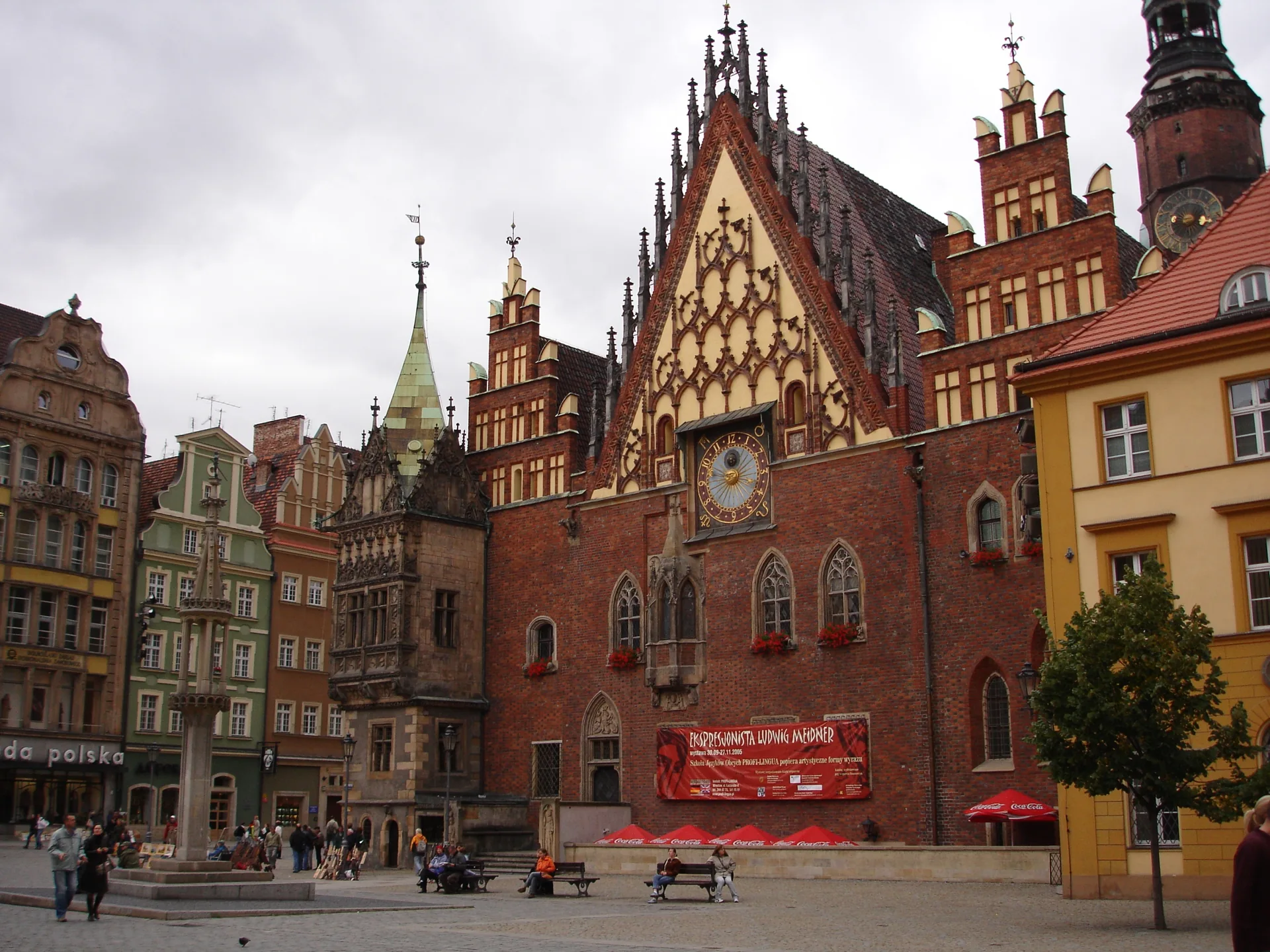
Wrocław’s appeal is easy to see around the Market Square and the cathedral islands, but a lasting move is about the streets between home, work, school and ordinary errands. The river network and bridges shape those journeys. Two apartments with similar distances from the centre can produce very different commutes.
Use the city’s neighbourhood map rather than treating every property described as Krzyki or Śródmieście as equivalent. Those broad former districts are not today’s administrative neighbourhood units. The municipal geoportal identifies the osiedla; a street-level search helps distinguish a well-connected address from a superficially nearby development.
The comparisons below favour practical checks over sweeping claims. There is no universal “best expat area”, and attractive architecture does not tell you about maintenance, accessibility or evening noise. Spend part of a scouting stay doing the journeys you expect to repeat, not only visiting the Old Town.
What may appeal
- Distinct neighbourhood choices around a recognisable historic centre
- Parks, river paths and local cultural venues can shape an appealing routine
- Official neighbourhood and school maps help make an address-specific plan
What to weigh up
- Bridges and transfers make straight-line distances misleading
- River-adjacent properties need specific flood and insurance checks
- Public-service eligibility and lease documentation are separate from simply renting a flat
Neighbourhoods & finding a home
Websites to find a home
| Website | Search for | Coverage |
|---|---|---|
| Morizon | Rent / Buy | Poland |
About these links
Property-search websites help you find listings; individual properties and agents have not been vetted by Offshore Capitalist. Confirm availability, the legal right to let or sell, and payment instructions before committing.
- Morizon · Checked 2026-10-14
Choose sale or rental listings and the city. Compare the property’s asking rent with any separate administrative and utility charges.
Five areas for different daily lives
These search areas are deliberately specific. Biskupin and Sępolno are discussed together as a useful eastern scouting area, not as a claim that all homes there share identical transport or flood conditions. Verify the individual address in municipal maps.
| Area to explore | Why consider it | What to test before signing |
|---|---|---|
| Stare Miasto, around Rynek and the centre | A base for cultural venues and a central walking routine, with the Market Square as a clear orientation point. | Listen for evening activity and deliveries; check moving access, stairs and where the nearest useful transit stop actually sits. |
| Nadodrze | Older urban streets north of the central islands, worth exploring for a dense neighbourhood routine rather than a new-build setting. | Inspect the particular courtyard, stairwell, heating and sound insulation. Historic reputation and attractive renovated frontage are both poor substitutes for a building inspection. |
| Plac Grunwaldzki | A transport and university-area reference point east of the centre, useful for households whose work or study is nearby. | Compare junction-facing and side-street homes. Test tram changes, traffic noise and the walk from the stop after a late return. |
| Biskupin and Sępolno | An eastern option for access to the wider park-and-river landscape; Biskupiński Park sits by the Oder walking route. | Check the time to your actual workplace, the distance from home to a stop, evening groceries and property-specific flood mapping. Green surroundings do not remove practical transport needs. |
| Borek | A focused southern search area instead of an undifferentiated listing for “Krzyki”. | Locate the school, groceries and useful transport corridor before viewing. A quiet residential street may trade convenience for a longer walk to everyday services. |
Ordinary, occasional and institutional leases
The first rental question is which legal contract you are being offered. Under the Tenant Protection Act, ordinary leases are distinct from occasional leases made by qualifying non-business individual landlords and institutional leases offered in a rental business. Read the proposed category, duration, attachments and termination grounds before transferring money.
An occasional lease generally requires a notarial enforcement statement and genuine alternative-accommodation documentation. This can be a significant dependency for an international arrival. Institutional leasing has its own enforcement declaration and rules. Do not treat a notarial appointment as a harmless identity check or sign an address declaration you cannot support.
The statutory residential deposit ceiling is twelve monthly rents in the ordinary regime and six in the occasional or institutional regimes. These are legal maximums, not market averages. Applicable provisions require return within a month of vacating after permitted deductions, with revaluation rules also relevant. Record the payment and agree how the move-out inventory and final bills will be handled.
For a fixed-term agreement, identify when either side may end it early. Check rent adjustment, guests, pets, subletting and the precise business activity permitted in the home. A translated draft is useful, but make sure it matches the document and attachments being signed.
Sources for this section
Inspect the building and document what you receive
Compare the complete monthly obligation: owner’s rent, administration, heating and water advances, electricity, internet and parking. Ask how consumption is measured and reconciled. A headline rent cannot be compared fairly with another listing until included and excluded charges are written down.
Older buildings around central neighbourhoods can require particular attention to ventilation, windows, common areas and stairs; newer flats still require checks of sound insulation, summer heat and service charges. Record any damp or damage, promised repairs and who is responsible for arranging them. Private contracts may alter parts of the statutory maintenance allocation, so read those clauses rather than assuming a simple landlord-versus-tenant split.
Take and sign opening meter readings and an inventory, with photographs of appliances, floors and existing defects. Keep the owner’s service contact and a written reporting trail. Where electricity needs transferring, the actual supplier’s process and handover protocol matter; TAURON publishes one such process, but supplier and application conditions must be checked for the address.
A home office needs building-level checks
Look up the building on the government fixed-broadband map, then ask the operator to confirm the apartment’s connection and installation date. Provider-reported or planned coverage is not a promise that a particular socket is ready. Test mobile service inside and check whether the router can reach the actual workspace.
Inspect the room at the times you would work, including neighbour noise, road or tram frontage, summer sun and winter drafts. Ask about electrical capacity and permission for any equipment, staff visits or customer-facing activity. The right to occupy a residential flat should not be interpreted as approval for every business use.
Agree the account arrangements and bills at handover. Electricity transfer, water and heating advances, building settlements and broadband contracts can involve different parties. Keep their records separate so that a landlord’s service charge is not confused with a direct utility bill. Before managing a foreign company from the apartment, address the Polish tax and employment consequences as well.
Schools & childcare
Use the city school map before choosing a street
The municipal education map shows schools and catchment information; confirm the current allocation with the school for the exact address and entry year. A letting advert saying “near a school” is not evidence of a place, language support or a manageable school-day timetable.
The compulsory year of preschool preparation begins at the start of the school year in the calendar year a child turns six. Primary school normally starts at the beginning of the school year in the calendar year the child turns seven; education remains compulsory until eighteen. The Office for Foreigners describes free public primary and secondary education for foreign children and provides an English-language enrolment guide. Obtain the school’s document list and discuss previous records, grade placement and Polish-language support.
If considering private or international education, ask for admissions timing, curriculum, the full fee schedule, transport and withdrawal terms directly. In either route, rehearse the morning journey. Crossing a bridge and changing transport may be acceptable for one family and a poor fit for another. WroMigrant’s newcomer resources can help orient you to local services; older guides should not be used as current immigration legislation.
Healthcare
Confirm public cover and choose a clinic
Before relying on NFZ-funded care, establish the actual insurance or coordination basis. Employment, eligible family-member registration, an available voluntary arrangement and cross-border entitlement are different routes. NFZ explains that missing registrations or mistakes can make electronic entitlement checks fail; a PESEL and a Wrocław tenancy do not prove cover by themselves.
Choose a POZ primary-care provider and complete the declaration of choice. Contact the practice about language, access for children, ongoing prescriptions and accepting patients. A private membership should be assessed by its contract: which services, diagnostics and exclusions it includes, and how it interacts with public cover. This guide makes no promise about a clinic’s current capacity.
For someone using an EHIC, confirm the distinction between a temporary stay and a settled move. Necessary treatment during a visit, planned treatment and S1 coordination are not interchangeable. Bring medical summaries and a written plan for continuing essential treatment rather than leaving that to the first available appointment.
Airports & international connections
Airport buses and the journeys across town
Wrocław Airport (WRO) is west of the city. Its official ground-transport page lists bus 106 linking the airport with the main railway/bus-station area, 129 on a different route towards the north of the city, and night route 206. Do not assume every airport bus goes to your central destination. Check the current timetable, stop and ticket before arrival, especially for a late flight.
For a rental decision, test the stop nearest the apartment rather than measuring only a straight line to Rynek. Include bridges, interchange time, the final walk and any current route works. Biskupin’s park access or a quieter Borek street may be worth a longer journey, but that tradeoff should be deliberate.
If you will drive, check the property’s parking arrangement and the road access you need. A space advertised by a landlord may be a separate paid agreement. Avoid carrying assumptions from Warsaw or Kraków about vehicle-access rules, parking permits or resident discounts into Wrocław.
Gateway options
Compare gatewaysWrocław AirportWRO
InternationalStrachowice, Wrocław ·  Poland
Primary gateway Wrocław Airport (WRO) is west of the city. Its official ground-transport page lists bus 106 linking the airport with the main railway/bus-station area, 129 on a different route towards the north of the city, and night route 206. Do not assume every airport bus goes to your central destination. Check the current timetable, stop and ticket before arrival, especially for a late flight.
International gateway for Wrocław. Compare the current destinations, operating season and ground transfer for your itinerary.
Sources & connectivity notes
International passenger services. Check current routes and seasonal schedules.
Research checked 2026-10-13. Routes can vary by season.
Climate & environment
River living, winter heating and summer shading
IMGW’s Wrocław station normals for 1991–2020 show a January mean temperature of 0.0°C and July mean of 19.7°C. These are day-and-night monthly means, not limits: they do not rule out frost, snow or hot summer spells. Inspect heating control and ventilation as well as shading and the practicality of a top-floor workspace.
For river-adjacent homes and below-ground storage or parking, use the official Polish Waters flood-hazard maps at property scale. Ask the owner about past water entry, equipment location and insurance scope. A reassuring district label or a resident’s memory is not a substitute for mapping and the building’s own history.
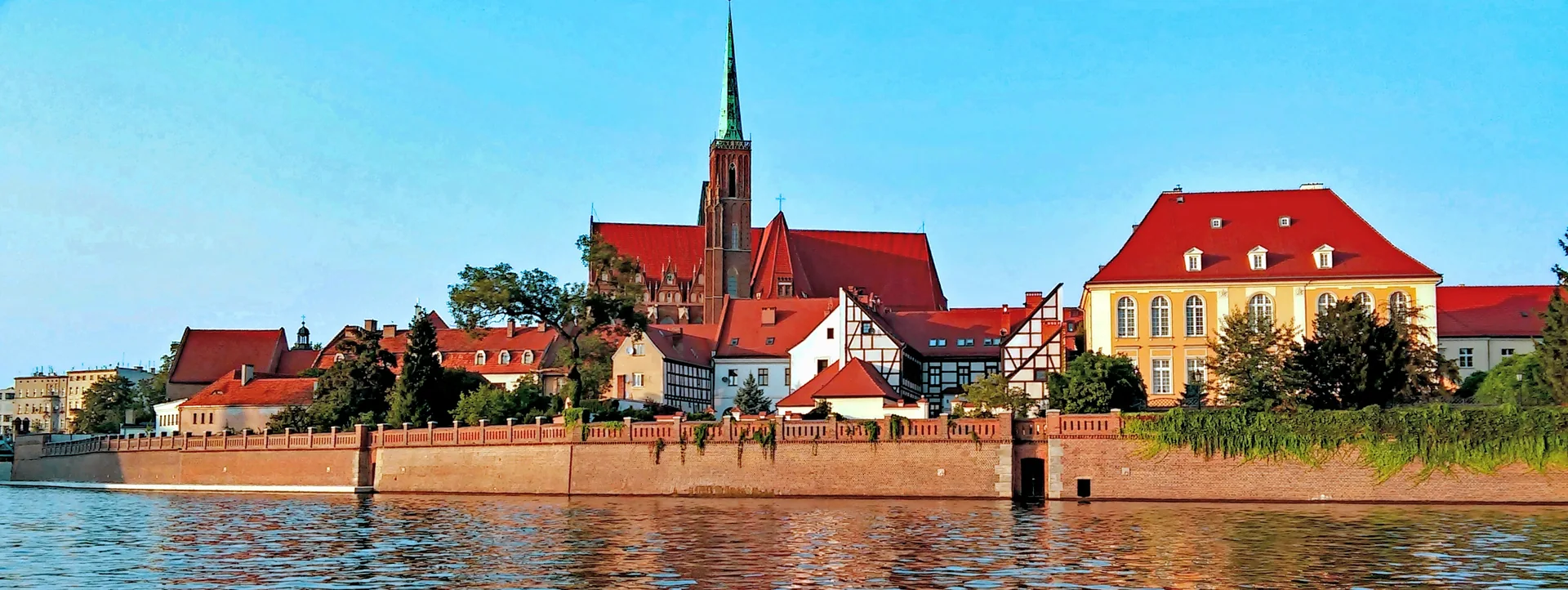
The Oder paths and parks can be a major part of daily life. Visit them from the actual apartment and check lighting, access and the return route. Use the official current air-monitoring map when planning outdoor activity; this guide does not rank entire neighbourhoods by health or flood risk.
Public services & practical setup
Address registration is not a residence permit
Use the national foreigner registration wizard to establish the applicable meldunek requirements. Its EU/EFTA and qualifying-family branches use a thirtieth-day deadline after moving into the address, while other foreign-national branches use the fourth day; short-stay and temporary-stay conditions also matter. Do this at the beginning of the move, not after several weeks of apartment hunting. Wrocław’s municipal registration page links the local services.
A PESEL is normally assigned through address registration for a stay longer than thirty days. A separate application can be made where a legal basis requires the number and address registration is not possible. Neither an address entry nor the number grants a right to work or replaces a residence application.
EU/EEA/Swiss residence registration for stays beyond three months is a separate voivode procedure, with conditions and particular exceptions. Non-EU citizens follow their own immigration routes. Tax residence, social insurance and the position of an overseas business require their own analysis; keep the dates and evidence across these processes consistent.
What residents say
These are attributed public experiences, not client testimonials. Housing, neighbourhood and household circumstances affect the experience.
Planning your move
Make the move fit the business and the family
For an international business owner, compare Wrocław on more than housing. Consider where work is performed, where company decisions are made, whether a Polish payroll or other registration is needed and how banking will operate after the move. For a family, healthcare continuity and the school route may determine which otherwise attractive housing options remain realistic.
We can help connect the relocation with tax, banking and implementation. An inquiry should describe citizenships, existing residence, business ownership and operations, intended work in Poland, family needs and timing. Those facts allow the team to identify dependencies before you commit to a long lease or reorganise a business.
Sources for this section
Your move, step by step
Planning windows below describe a workable sequence, not official decision times. Status-specific statutory deadlines take priority; some preparations must run in parallel.
01Confirm the legal and household planBefore travel
Identify your residence and work route, insurance basis and tax questions before treating Wrocław as a settled move. Map the school or workplace, obtain the relevant document lists and choose temporary accommodation that leaves room for proper viewings.
Documents & evidence
- Passports and status documents
- Employment or business description
- School and medical records
- Assuming visa-free entry authorises the intended work
- Arriving with no plan for healthcare continuity
02Test the neighbourhood routineFirst scouting days
Compare Nadodrze, Plac Grunwaldzki or your preferred southern or eastern area and at least one alternative. Travel at working and school hours, inspect at different times and confirm fixed broadband at the building. Establish the applicable address-registration deadline immediately rather than waiting until the scouting stay ends.
Documents & evidence
- Shortlist with exact addresses
- Work and school route map
- Broadband and apartment questions
- Using district names as commute estimates
- Overlooking a four-day address-registration branch
03Review the lease and take possessionBefore payment and at key handover
Identify the lease regime, understand any notarial and fallback-address documents, agree the complete charges and check early-ending terms. Record keys, condition and meter readings in a signed protocol; retain a copy of the contract and payment evidence.
Documents & evidence
- Contract and attachments
- Occupancy evidence for registration
- Signed inventory and readings
- Signing an inaccurate alternative-address declaration
- Comparing headline rent without building or utility charges
04Complete registrations and essential servicesFrom move-in; follow your legal deadlines
Complete the appropriate municipal address process and PESEL step, keep immigration procedures separate, verify health entitlement and choose POZ care. Confirm school placement and utility responsibilities. Check the actual airport-to-home route for your arrival time.
Documents & evidence
- Registration receipts and PESEL record
- Health entitlement and POZ declaration
- School confirmation and utility account records
- Treating PESEL as a work permit or proof of NFZ cover
- Assuming a preferred school or clinic has immediate capacity
05Review the first bills and the ongoing structureAfter the first billing cycle, then periodically
Check rent and utility settlements against the agreement, address any documented defects and review whether the daily routine works. Keep a calendar for residence documents, tax and business filings, insurance and the lease. Reassess the work arrangement if your role or time in Poland changes.
Documents & evidence
- First bills and meter evidence
- Renewal and filing calendar
- Updated work and residence records
- Ignoring variable consumption settlements
- Letting actual company management drift from the documented plan
Sources & research notes23 references
Sources supporting this guide. Research draft awaiting editorial review.
- Get a PESEL ID — service for foreigners
- Registration of residence — EU/EEA/Swiss citizens
- Register permanent residence — foreigners; status-dependent wizard
- Tenant Protection Act — official consolidated text, Articles 5–6f, 19a–19j
- NFZ — health insurance and proof of entitlement
- NFZ — treatment of EU/EFTA insured visitors in Poland
- Patient portal — choosing or changing primary-care provider
- Office for Foreigners — school education
- Office for Foreigners — education guide in English
- IMGW — 1991–2020 mean temperature normals
- Polish Waters — flood hazard and risk maps
- Chief Inspectorate for Environmental Protection — current air monitoring
- Visit Wrocław — official destination guide
- City of Wrocław — Biskupiński Park and riverside location
- Wrocław municipal geoportal — education/catchment map
- Wrocław Airport — public transport connections
- City of Wrocław — address registration
- WroMigrant — map for new inhabitants
- r/wroclaw — Which neighbourhoods are best to live in? (30 September–7 October 2026)
- Government broadband map — coverage and its limits
- TAURON — online electricity meter handover
- Wrocław municipal geoportal — neighbourhoods and former districts
- Ministry of Finance — company seat/management and Polish CIT scope
A late-September 2026 neighbourhood discussion produced conflicting preferences: some commenters favoured Biskupin and Sępolno, while others valued the older architecture and connections around Nadodrze. Replies disagreed about the convenience of nearby services and the walk to transit. Treat that variation as a reason to inspect the exact street, not a reliable safety, price or flood-risk ranking.
Anonymous self-selected comments dated 30 September–7 October 2026, viewed through search-rendered thread text; direct downloaded page exposes only a Reddit shell. The claims are subjective and nonrepresentative.