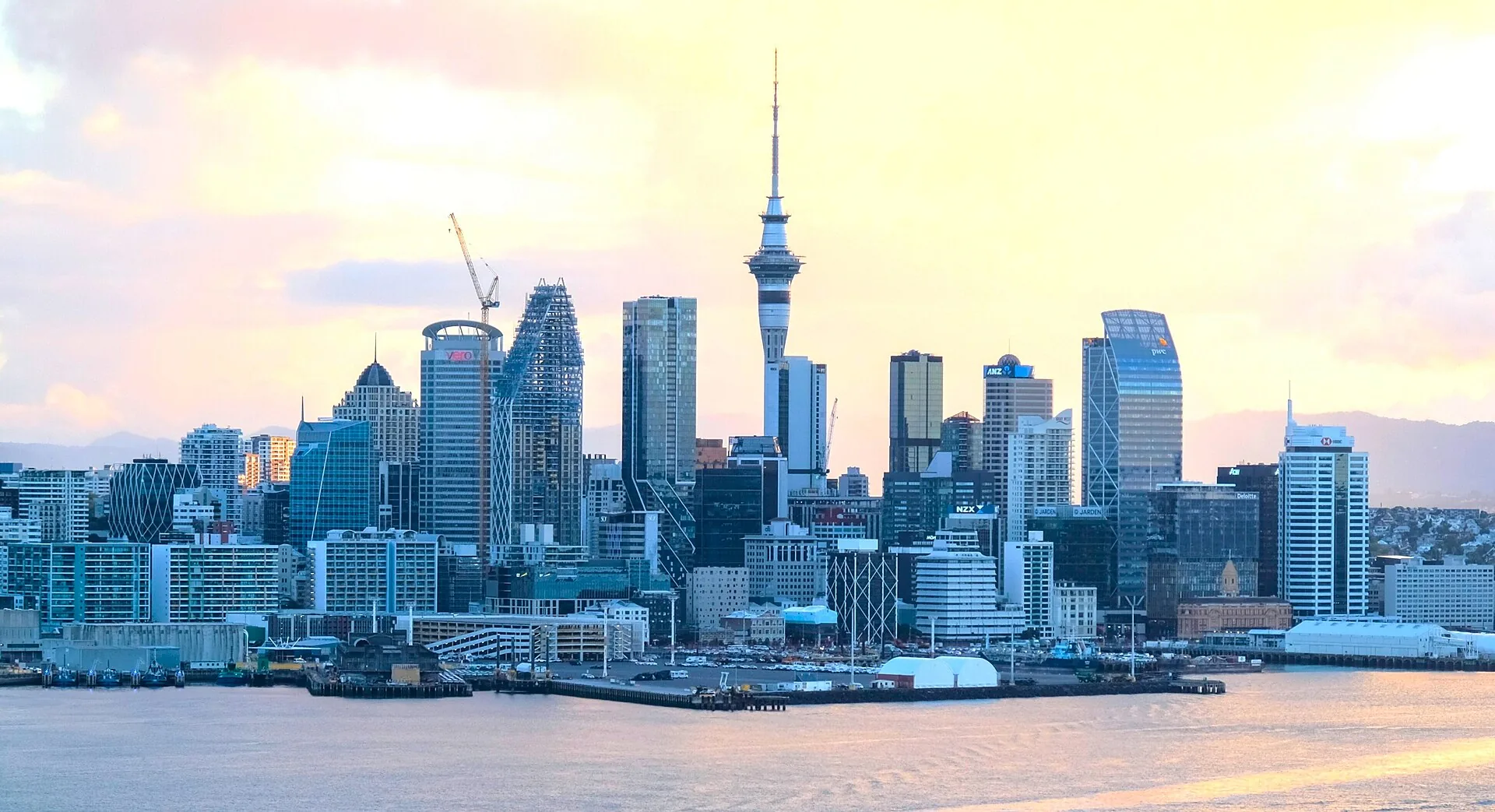
City at a glance
A harbour city made up of very different daily routines
Auckland offers a large employment market, a central waterfront and residential areas that range from apartment districts to coastal suburbs and semi-rural communities. The appeal is strongest when work, school and everyday services fit the same part of the region. A harbour view can be wonderful; crossing the city several times every weekday is a separate proposition.
Stats NZ recorded 1,656,486 people in the Auckland region at Census 2023. That boundary includes rural land, outlying settlements and islands as well as the continuous urban area. It is not the population of the CBD, and a region-wide housing average cannot describe a particular inner-city apartment. This guide covers useful urban bases and clearly identifies alternatives farther from the centre.
Start with the actual workplace and the household’s non-negotiable journeys. An airport-area job, a North Shore school and a central office create different shortlists. If both adults commute, compare their combined routine. The national residence, employment and tax questions belong in the New Zealand guides; local housing and transport decisions cannot resolve them.
What may appeal
- Harbour, parks and coastal settings can be part of city life when the home location supports them.
- A broad employment base and distinct local centres offer more than one way to build a routine.
- The September 2026 rail connection expands the usefulness of current central rail journeys.
- Free general Art Gallery admission and local library access support affordable regular activities.
What to weigh up
- Housing costs and the difference between asking listings and existing portfolio averages require careful comparison.
- Cross-region journeys and excluded ferry routes can change the transport budget substantially.
- School-fee classification, zones and available places can constrain the housing shortlist.
- Humidity, heavy rain and address-specific flood conditions make building quality important.
Cost of living
Rental evidence and the household costs behind it
Barfoot & Thompson reported an average weekly rent of NZD 699.40 across its managed Auckland portfolio in September 2026. This is one agency’s stock of managed homes, not an official citywide median or the average price of available new lets. Its mixture of dwelling sizes and locations matters. Use it as context alongside actual listings, not as a promise that a particular household can rent for that amount.
The two asking examples below were checked on 14 October 2026 and are in the same Mount Wellington development. They show a real one-bedroom versus two-bedroom choice, not the spread of Auckland neighbourhood rents. Both advertise whiteware; a furniture package is optional and parking costs extra. A floor-area figure was not provided in the retrieved listings. Availability and the final lease terms can change.
For connectivity, Skinny’s published undiscounted fibre base price is NZD 93/month. Its lower advertised price depends on specific mobile and modem discounts; the examples use the base recurring amount. Address eligibility, minimum term, delivery and installation conditions still matter. Electricity, groceries, mobile service, insurance and medical costs are excluded from the subtotals that follow. In particular, a water calculation must not be mistaken for a complete utilities allowance.
| Observed home / benchmark | Weekly amount | What it does and does not include |
|---|---|---|
| A13/27 Lynton Road, Mount Wellington — one bedroom, one bathroom | NZD 635 asking | Whiteware included; optional furniture and parking extra. One identified apartment, not a district average. |
| A27/27 Lynton Road, Mount Wellington — two bedrooms, two bathrooms | NZD 770 asking | Same development and extra-cost cautions; the larger home is a separate listing. |
| Barfoot managed Auckland portfolio, September 2026 | NZD 699.40 average | Existing managed stock of varying sizes and areas; not a comparable available apartment. |
Three transparent monthly planning scenarios
Weekly rent is converted using 52/12, not four weeks per month. For transport, each adult is assumed to reach the eligible AT HOP NZD 50 rolling seven-day cap every week: NZD 216.67/month for one or NZD 433.33 for two. Actual use may cost less; excluded ferry routes or a car can add more. Each row sums rounded component amounts so the arithmetic is reproducible.
The water assumptions use Watercare’s GST-inclusive 2026/27 tariff: NZD 2.46 per cubic metre of water and NZD 4.28 per cubic metre of wastewater. Apartments generally use a 95% wastewater factor, rather than the ordinary-house 78.5%. At an assumed 15 cubic metres, the apartment variable charge is NZD 97.89; at 20 it is NZD 130.52. These are tariff illustrations, not measured consumption or confirmation of either listed apartment’s billing arrangement. The fixed NZD 355.90 annual charge is excluded from the tenant examples.
The school scenario adds a first-year international Year 1–6 ACG Parnell example divided by 12 for planning. It is not a monthly payment offer, and the apartment does not establish school eligibility or availability. Before selecting a home, replace every assumption with the actual contract, including whether water is separately metered and recoverable from the tenant.
Food deserves its own household budget. The University of Otago publishes a food-cost survey with defined household and nutritional assumptions; it is a useful method for comparing a shopping list. These scenarios leave food visibly outside the total rather than attach a single unsupported grocery allowance to every family.
| Illustrative household | Monthly component arithmetic | Partial monthly subtotal |
|---|---|---|
| One adult, one-bedroom asking example | 2,751.67 rent + 97.89 variable water + 93 fibre + 216.67 capped travel | NZD 3,159.23; excludes electricity, food, mobile, healthcare, insurance, parking and leisure. |
| Two adults, two-bedroom asking example | 3,336.67 rent + 130.52 variable water + 93 fibre + 433.33 capped travel | NZD 3,993.52; same exclusions, before any children’s costs. |
| That household plus one first-year international primary pupil | 3,993.52 + (40,320 annual school example ÷ 12) | NZD 7,353.52; still excludes the child’s transport, uniform, extras and other household costs. |
Sources for this section
- Resido: A13/27 Lynton Road, one-bedroom asking rental observed 14 October 2026
- Resido: A27/27 Lynton Road, two-bedroom asking rental observed 14 October 2026
- Watercare: residential water and wastewater charges, 1 July 2026–30 June 2027
- Watercare: residential charges and apartment wastewater percentage
- Tenancy Services: allocation of water and wastewater charges
- Skinny: current fibre broadband plans and conditions
- Auckland Transport: AT HOP seven-day fare cap, updated 20 July 2026
- ACG Parnell College: 2026 domestic and international school fees
- University of Otago: food-cost survey methodology and reports
Neighbourhoods & finding a home
Websites to find a home
| Website | Search for | Coverage |
|---|---|---|
| Trade Me Property | Rent / Buy | Auckland region — narrow by district and suburb |
About these links
Property-search websites help you find listings; individual properties and agents have not been vetted by Offshore Capitalist. Confirm availability, the legal right to let or sell, and payment instructions before committing.
- Trade Me Property · Checked 2026-10-14
Choose For sale or To rent. The Auckland region includes widely separated suburbs and islands; check the address and journey, price basis and listing conditions.
Neighbourhoods to compare before narrowing the search
Use the areas below to build contrasting shortlists rather than a league table. The important unit is often the street and the walking route to a stop, school or shop. In a large region, a familiar Auckland address can still mean an entirely different transport pattern.
The practical trade-offs are a viewing framework. Travel to the specific office or school on an ordinary weekday, including the last connection after an evening out. A ferry can be central to an enjoyable routine, but different wharves have different services and fare-cap treatment. Do not assume that every coastal location has the same access.
Choose a dwelling as well as a neighbourhood. An apartment with reliable lifts, storage and good acoustic separation may suit frequent travel. A house can provide outdoor space but adds a different maintenance and heating footprint. Remote workers should test the room used during the day, not only the living room shown in the photographs.
| Area | Reasons to investigate | Viewing and journey priorities |
|---|---|---|
| CBD / Wynyard Quarter / Viaduct — central waterfront | Central offices, apartment living and harbour access. | Check bedroom noise, lifts, parcel arrangements and the actual walking route after dark. |
| Ponsonby / Grey Lynn — inner west | Local shopping and an established residential setting near the centre. | Compare bus access and older-home heating; proximity on a map need not mean a flat walk. |
| Parnell / Newmarket — inner east | Local services, shopping and access to central employment. | Match the school and station entrance to the property, and assess traffic-facing rooms. |
| Mount Eden / Kingsland — inner south and west | Neighbourhood centres and access to rail corridors. | Test the current rail service after the September network change and inspect hillside access. |
| Mount Wellington / Sylvia Park — southeast urban area | Apartment and other housing choices near a major shopping area. | Separate station-adjacent addresses from homes requiring another bus or drive. |
| Takapuna / Devonport — North Shore alternatives | Coastal settings with distinct local centres. | A harbour crossing becomes part of the routine; Devonport ferry access is not the same as every North Shore address. |
| Hobsonville / Henderson — northwest and west | Different suburban housing environments and local centres. | Check the entire commute; Hobsonville’s ferry is outside the NZD 50 inner-harbour cap. |
| Howick / Botany and Manukau / Māngere — east and south alternatives | Useful starting points when daily destinations are in their respective areas. | These are separate districts, not one neighbourhood; compare local work and school access before a CBD commute. |
Read the tenancy, building and flood records together
Trade Me’s Auckland residential search already provides sale and rental modes, suburb filters and separate flatmate listings. A weekly whole-home rent, a room in a shared home and a short stay are different products. Keep the advertisement and the agreed tenancy documents, because amenities or inclusions shown during a search can change.
For an ordinary residential tenancy, a general bond can be up to four weeks’ rent and advance rent up to two weeks. The landlord must lodge the bond with Tenancy Services within 23 working days. If both amounts were at those maxima, the one-bedroom example would require NZD 3,810 and the two-bedroom NZD 4,620 in initial bond and rent. These are cash-flow examples, not compulsory charges; any applicable pet bond and moving expenses are outside them.
Private rentals have been required to meet the Healthy Homes standards since 1 July 2025, subject to specific exemptions. Ask for the compliance statement and inspect the actual heating, insulation evidence, extraction, draughts and drainage. A statement does not replace an inventory: photograph existing defects and record how repairs should be reported.
For a purchase, examine the title, building information, survey and insurance position before treating the asking price as the total commitment. Auckland Council’s Flood Viewer and LIM information are useful screening tools, but its regional models are not a property-specific engineering assessment. The terrain, floor level and any mitigation work require attention. Apartment buyers also need the body corporate’s financial, maintenance and insurance records.
Council’s 2026/27 rates illustration is NZD 4,378 annually for a property at the stated average capital value of NZD 1.28 million, including standard waste services. It is an example, not the bill for an advertised home, and a rating valuation is not a purchase valuation. Ask for the exact current rates and other recurring charges before comparing ownership with renting.
- Obtain the written agreement, inventory, payment instructions and verified landlord or agent contact.
- Confirm exclusive versus shared meters, parking, storage and any pet terms.
- Inspect extraction, window condensation, evidence of leaks and the route for water around the building.
- Check the broadband address before relying on an installation date.
Sources for this section
- Trade Me Property: Auckland residential sale and rental search
- Tenancy Services: information for new tenants and bond lodgement
- Tenancy Services: charging rent and maximum advance payment
- Tenancy Services: Healthy Homes compliance and required statements
- Tenancy Services: official guide to good renting
- Auckland Council: regional flood-map limitations, 20 March 2026
- Auckland Council: 2026/27 average-property rates illustration, updated July 2026
Work, business & opportunities
Choose an employment base before a lifestyle postcode
Auckland’s economic-development agency identifies technology, screen and creative work, food and beverage, construction and infrastructure among its key sectors. Healthcare, education and public services offer additional paths. Sector strength is a starting point for employer research, not a guarantee of a vacancy or a particular salary.
Use the agency’s economic place profiles to understand that jobs are distributed around the region. A role described as Auckland may be in the centre, a suburban commercial district, an industrial area or the airport corridor. Ask where you will normally report, how often, and whether the hybrid arrangement is contractual or simply the current team’s practice.
The official jobs.govt.nz site supports public-service searches by location and category. For other roles, go from a sector shortlist to the employer’s own vacancy page and verify the employing entity, work location and recruitment contact. Regulated professions may require a separate registration process; plan that nationally before relying on a local job offer.
For remote workers, the time-zone relationship to clients is as important as broadband speed. A spare room that can support evening calls without disturbing the household is a real housing requirement. Set a maximum recurring commute and decide how often a coworking or office location is needed before choosing a distant lifestyle address. Country guides cover work permission and personal tax; a local address or an advertised role does not confer either.
Schools & childcare
School status, zones and real fee examples
First establish whether the child is treated as a domestic or international student. Citizenship, residence and certain dependent-child circumstances can matter; not every family holding a visa has the same fee status. Then choose the educational setting and confirm places. National eligibility and a local school’s enrolment process are separate questions.
For state schools operating an enrolment scheme, the home address can determine the in-zone route. Education Counts provides school and zone information. Do not rely on an agent’s phrase such as “good school zone”: compare the address with the school’s own current boundary and evidence requirements.
Auckland Grammar, a boys’ secondary school, illustrates the timing issue. Its 2027 out-of-zone ballot is closed, while its in-zone process remains available. The school requires genuine residence in zone with a parent or guardian before submission and a statutory declaration. Its published late Term 1 2027 guideline is 8 January; this is a school timetable, not a nationwide deadline or a substitute for satisfying its conditions.
The private-school examples below are 2026 published charges, checked in October. Confirm the category directly and request the full first-year invoice. Fees for a later start year, school transport, uniform, examinations or other activities can differ. A rental address near a school does not create an accepted place.
| ACG Parnell 2026 example | Annual tuition | First-year charges shown separately |
|---|---|---|
| Domestic Years 1–6 | NZD 25,595 | NZD 300 application + 1,200 acceptance = NZD 27,095 with tuition, before extras. |
| International Years 1–6 | NZD 38,640 | NZD 1,260 annual administration + 420 registration = NZD 40,320 with tuition. |
| International Years 7–10 / Years 11–13 | NZD 44,090 / 51,980 | Annual administration and registration are additional; obtain the category-specific total. |
Sources for this section
- Ministry of Education: enrolling students from overseas
- Ministry of Education: eligibility to enrol in New Zealand schools
- Education Counts: school enrolment and zones
- Auckland Grammar School: current enrolment notices
- Auckland Grammar School: in-zone evidence and 2027 timing
- ACG Parnell College: 2026 domestic and international school fees
Childcare hours and the way fees are collected
For a younger child, compare the whole day: opening hours, funded hours, meals, holidays and the journey from work. The national 20 Hours ECE rules distinguish funded hours from additional hours and optional charges. A programme label does not mean a full working week of care is free or that a particular centre has a place.
Kristin’s 2026 kindergarten schedule provides a local private example for 8am–4pm care. The listed term total is NZD 5,608 with 20 Hours ECE or NZD 7,264 without it. Its monthly instalments are collected over ten months, February–November, rather than twelve; do not multiply a displayed monthly charge by twelve and call it the annual tuition.
The same schedule lists an annual development contribution of NZD 1,150, an entrance fee of NZD 200, a NZD 500 alumni contribution on entry and a NZD 500 bond with its own refund conditions. Uniform and transport need separate attention. Those extras explain why a headline term fee and the first invoice are not interchangeable.
Collect the child’s birth and identity documents, immigration evidence where relevant, school reports and support information early. Discuss language and additional-learning needs with the school before selecting housing. A parent’s preferred commute may become secondary when a school or childcare place is confirmed in another part of the region.
- Ask the provider to state which hours and services the quoted fee covers.
- Keep refundable bonds separate from recurring tuition and non-refundable entry charges.
- Confirm holiday care and the collection deadline against the adults’ work routine.
- Use the child’s actual documentary category when requesting a quotation.
Healthcare
Find primary care and establish the correct patient category
Publicly funded healthcare eligibility follows national rules; living in Auckland by itself is not enough. Eligible access also does not mean every GP visit is free. Confirm the current position for every family member and arrange insurance for gaps. New eligibility regulations announced for 1 December 2026 are future rules at this guide’s 14 October review date.
Enrol with a general practice accepting patients, provide its required identity and eligibility evidence, and transfer useful medical records. Ask about appointment length, ongoing prescriptions, laboratory charges and after-hours arrangements. A practice may charge differently for enrolled patients, casual users and visitors, so a single “GP price” can mislead.
CityMed’s CBD schedule, effective 1 May 2026, is a concrete example: a usual 15-minute consultation for an adult aged 18–64 is NZD 88 enrolled, NZD 135 casual, or NZD 200 for a non-resident visitor. Longer visits and other services can add charges. Its enrolled under-14 consultation is listed at NZD 35, demonstrating why families should read the actual provider’s fees rather than assume all children’s visits are free.
For urgent after-hours care, CityMed directs patients to White Cross Ascot at 90 Greenlane East, Remuera. For emergencies, call 111; Auckland City Hospital is on Park Road in Grafton. Save a suitable local urgent-care option before needing it, particularly if living far from the centre. Routine dental care and elective private treatment need their own provider and funding plan.
Getting around
Use the current rail network and the right fare medium
City Rail Link passenger services began on 13 September 2026. A pre-opening guide can therefore give the wrong impression of today’s central rail connections. Use AT’s current timetable and journey planner for the actual station pair, especially when comparing a western or southern suburb with a central destination. Planned engineering work can still change a particular day’s service.
AT HOP has a NZD 50 rolling seven-day cap for eligible bus, train and inner-harbour ferry travel. The included ferry destinations are Devonport, Bayswater, Birkenhead and Te Onewa Northcote Point. Hobsonville and other mid- or outer-harbour services are outside this cap. Contactless bank-card travel instead has a NZD 20 daily cap and does not receive the HOP weekly cap.
Zoned bus and train journeys have a maximum four-zone fare. Eligible transfers must begin within 30 minutes and the whole journey fit within four hours. Use the same payment card or device throughout: a physical card and its phone-wallet version should not be treated as interchangeable for a connected journey.
For housing comparisons, calculate a door-to-door trip with waiting and walking, not only time on the train. With a car, add parking and the destination’s access constraints before concluding that an outer home saves money. For cycling or walking, inspect the actual route and crossings. The most useful transport choice is the one the household can repeat comfortably in ordinary weather.
Airports & international connections
Auckland Airport requires a separate ground-transfer plan
Auckland Airport is at Māngere and handles the main international gateway alongside domestic services. It is not on a rail line. AirportLink connects with trains at Puhinui and runs every ten minutes between 4:30am and 12:40am according to the airport’s current transport page. Route 38 provides another option towards Onehunga via Māngere. Use the whole itinerary from the front door, especially for early departures.
SkyDrive links SkyCity in central Auckland with the airport, advertising a half-hourly service. It is a separate coach product; check its ticket and timetable for the flight date. A taxi or booked vehicle may be simpler with substantial luggage or children, but road traffic still affects arrival time. Keep the cost of repeated airport trips visible when comparing neighbourhoods.
Domestic and international terminals are separate. The airport currently describes a roughly 950-metre walking route, taking about 10–15 minutes, or a free inter-terminal bus every 15 minutes between 5am and 11pm. For an international-to-domestic connection it recommends allowing around three hours for entry procedures and delays. That guidance is not a guarantee: baggage collection, Customs and Biosecurity, airline check-in cut-offs and separate-ticket risks still govern the journey.
If frequent regional travel is important, compare real flight dates and the door-to-door connection, rather than counting airlines on a destination map. A convenient airport route during daytime may be unavailable after a late arrival; retain a fallback and check the correct terminal pick-up point.
Gateway options
Compare gatewaysAuckland AirportAKL
InternationalMāngere, Auckland ·  New Zealand
Primary gateway Auckland Airport, AKL, is at Māngere. Check current airport transport information and plan from the candidate home. Frequent business travel makes the final leg after a long flight a meaningful part of the housing decision.
International gateway for Auckland, with direct Gold Coast services among its connections. Compare direct flights with connecting itineraries.
Sources & connectivity notes
International passenger services. Check current routes and seasonal schedules.
Research checked 2026-10-13. Routes can vary by season.
Climate & environment
Month by month
Auckland Aero AWS · 1991–2020 averages
WMO Member Nations (2023), AUCKLAND AERO AWS 1991–2020 normals. NOAA NCEI, doi:10.25921/800j-vn07. Accessed 14 October 2026. · Dataset citation conditions
January averages
- Mean daily high
- Mean daily low
- Monthly precipitation
°F and inches are converted from the metric values and rounded for display.
February has the highest average daytime maximum, 24.4°C; July has the lowest, 14.6°C. July precipitation averages 136.9 mm compared with 58.1 mm in January. The winter housing question is therefore as much about keeping a home dry and comfortable as the outside temperature.
This is the airport-area station, south of central Auckland. Coastal exposure, hills and different parts of the urban region can vary. It is not a property-level damp, flood or overheating assessment.
All monthly values
| Month | Mean daily high | Mean daily low | Monthly precipitation |
|---|---|---|---|
| January | 23.9°C | 16.1°C | 58.1 mm |
| February | 24.4°C | 16.6°C | 63.1 mm |
| March | 22.9°C | 14.9°C | 75.0 mm |
| April | 20.4°C | 12.8°C | 87.1 mm |
| May | 17.7°C | 10.8°C | 119.8 mm |
| June | 15.5°C | 8.7°C | 119.4 mm |
| July | 14.6°C | 7.7°C | 136.9 mm |
| August | 15.2°C | 8.3°C | 117.2 mm |
| September | 16.5°C | 9.7°C | 100.1 mm |
| October | 17.9°C | 11.3°C | 91.6 mm |
| November | 19.6°C | 12.8°C | 68.9 mm |
| December | 22.0°C | 15.0°C | 81.7 mm |
Sources, station & data quality
WMO / NOAA NCEI station 93110 · Auckland Aero AWS. These averages describe the stated period; they are not a forecast. Temperatures are average daily highs and lows, not extremes. Precipitation is an average monthly total, not a count of wet days.
The archived CSV longitude is 171°48′13″E, which conflicts with JMA’s station 93110 metadata at approximately 174.81°E. The approximate station coordinates here use JMA; the raw CSV metadata is preserved in the structured record. The monthly climate values remain exactly those in the WMO archive.
Monthly rows omit the WMO number; they belong to the single Auckland Aero AWS station identified in the file header.
The archived CSV longitude is 171°48′13″E, which conflicts with JMA’s station 93110 metadata at approximately 174.81°E. The approximate station coordinates here use JMA; the raw CSV metadata is preserved in the structured record. The monthly climate values remain exactly those in the WMO archive.
Source units are degrees Celsius and millimetres. Fahrenheit = Celsius × 1.8 + 32; inches = millimetres ÷ 25.4. Display conversions do not change stored source values.
This station file supplies the 1991–2020 monthly averages but no monthly contributing-year counts. Unreported counts remain unknown; the chart does not imply 30 complete observed years.
Build a comfortable routine for humidity and wet weather
Auckland’s regional climate combines warm, humid summers with generally mild winters, rainfall throughout the year and occasional heavy falls. Summer dry spells and ex-tropical storm effects are also part of the local pattern. Mild outdoor temperatures do not establish that an older home will be warm or dry inside.
At a viewing, inspect the rooms used in winter: heating coverage, bathroom and kitchen extraction, condensation marks and where laundry will dry. Consider sunlight, shaded slopes and the building’s exposure rather than treating a regional average as a description of every property. The monthly station chart is a climate reference, not an indoor-comfort guarantee.
Flood information belongs in both the housing decision and the household plan. Council’s regional flood maps are a screening tool; a LIM is a snapshot of recorded information. Ask about prior water ingress and the drainage route around the home. Keep weather alerts accessible and secure loose outdoor items before severe weather.
For harbour and beach recreation, use Safeswim’s current water-quality and hazard information rather than assuming a familiar beach is suitable every day. Heavy rain can change conditions. Plan an indoor exercise, library or cultural alternative so a wet week does not suspend the social routine entirely.
Sources for this section
- Earth Sciences New Zealand / NIWA: Auckland regional climatology
- Earth Sciences New Zealand / NIWA: northern New Zealand climate
- Tenancy Services: Healthy Homes compliance and required statements
- Auckland Council: regional flood-map limitations, 20 March 2026
- Auckland Emergency Management: severe-weather preparation
- Safeswim: current Auckland beach water quality and safety information
Safety & everyday risks
Practical security, weather readiness and emergency contacts
Use local evidence for specific precautions, not to rank entire neighbourhoods by reputation. A March 2024 Auckland Police warning to apartment residents focused on secure shared entrances and garages, tailgating and belongings left in vehicles. It is a historical prevention notice, not a current crime-rate estimate, but the building-management questions remain useful at a viewing.
Check how visitors, deliveries and tradespeople enter the building; ask who repairs faulty entry doors and how residents report problems. Look at the route from the late bus or station and the lighting around the entrance. Discuss concrete incidents and maintenance records with the manager instead of relying on a blanket statement that an area is safe.
Call 111 for immediate danger or an emergency; Police 105 is for non-emergency reporting. Save the landlord’s urgent repair number separately. For severe weather or infrastructure interruption, Auckland Emergency Management recommends supplies for at least three days, including at least three litres of water per person per day, medicines, lighting and ways to receive information.
Where someone depends on powered medical equipment, make an outage plan with the relevant provider. Keep important documents and contacts accessible away from a single device. These steps are useful across Auckland and should complement, rather than replace, the building and address-specific checks.
Public services & practical setup
Sort out bills, library access and everyday household services
Watercare billing and tenancy responsibility are separate. Tenancy Services says tenants can be charged for water only when the home is separately metered, the charge is based on usage and it is exclusively attributable to them. Fixed charges that apply regardless of occupancy remain the landlord’s responsibility. In a shared-meter building, obtain the written allocation rather than applying the illustrative tariff yourself.
At handover, record meter readings, account references, the rubbish and recycling arrangements and any building-specific collection room rules. The property manager should identify which services are included and which you arrange. Confirm the exact address and unit when ordering electricity and fibre; an existing connection does not prove that your chosen retail plan is active.
Auckland Libraries offers membership for local residents and eligible property owners. Take the required identification and address evidence; under-18 membership involves a parent or guardian. A nearby branch provides more than borrowing: it can be a practical place to discover local activities and create a regular connection to the neighbourhood.
Keep batteries out of ordinary household bins. Council’s September 2026 notice lists dedicated drop-off options, including participating supermarket locations. Check the current location and accepted battery types before making a trip. For larger items or an apartment move, arrange disposal with the building or collection provider rather than leaving goods beside communal bins.
Sources for this section
- Tenancy Services: allocation of water and wastewater charges
- Auckland Libraries: joining and membership eligibility
- Auckland Libraries: identification and membership terms
- Auckland Council: household battery collection points, 24 September 2026
- Skinny: current fibre broadband plans and conditions
- Tenancy Services: official guide to good renting
Culture, community & daily life
Make the city’s public spaces part of ordinary life
Auckland Art Gallery’s general collection is free to visit; special exhibitions may be ticketed. Its usual hours are 10am–5pm, with Christmas Day closure. That creates a regular central-city option that is not dependent on an expensive evening out.
Auckland Museum uses different admission categories: Auckland residents can enter free with evidence, while other New Zealand visitors and international visitors have different arrangements. Check its current gallery notices before a visit. At the October review, the Marae Atea Māori Court and Pacific galleries were listed as closed until further notice; a general admission ticket should not be read as a promise that every gallery is open.
The waterfront, neighbourhood centres and local libraries provide other ways to build a week around repeated contact. Join something reachable after work—a class, sports group or volunteer activity—rather than assume occasional sightseeing will create a community. Harbour outings and regional walks can then supplement a local routine instead of replacing it.
Auckland’s scale means cultural access is partly a transport decision. Before choosing a distant home for more space, work out whether you will realistically attend the activities that attracted you. Parents may prefer a nearby library and an easy weekend outing to repeated trips across the region; someone working centrally may value staying for an evening event and returning by public transport.
What residents say
Three different experiences of the same city
These are short paraphrases of self-described residents in one public r/auckland discussion. They are not verified client accounts, a representative survey or evidence of average costs. Publication dates are omitted because the retrieved display used relative dates; the accounts were checked on 14 October 2026.
The contributors emphasise different circumstances. shoo035 describes walking, cycling and using public transport regularly, making road congestion less central to daily life. ThrowRA-Thuggy values the water, hills, parks and existing personal network, while saying that without those personal ties they would prefer another part of New Zealand with a remote corporate job. cez801, who says they have lived locally most of their life apart from seven years abroad, is more critical of housing and transport constraints.
The useful comparison is between routines, not a vote for or against Auckland. A central worker with transport choices, a person anchored by friends and family, and a household needing repeated cross-region trips can experience the same place very differently. Use a scouting stay to test the version of Auckland your own circumstances would create.
Sources for this section
These are attributed public experiences, not client testimonials. Housing, neighbourhood and household circumstances affect the experience.
ThrowRA-Thuggy values the water, hills, parks and existing friends and family, and says that without those personal ties they would favour living elsewhere in New Zealand with a remote corporate job.
First-person account connecting attachment to Auckland with work and personal relationships; identity unverified.
cez801 describes living in Auckland for most of their life apart from seven years abroad and sees housing costs, traffic and public transport as significant compromises.
Self-described long-term resident’s comparative opinion, not a current affordability measure or neighbourhood ranking.
Planning your move
Resolve the dependencies before committing to a long lease
Start with the national permission and work position, then resolve school status, workplace geography and health coverage. These are dependencies, not tasks that always fit a fixed number of weeks. The stages below identify the few actual deadlines separately from suggested planning order.
Use temporary accommodation to inspect homes and test the ordinary week. Once the address is secure, complete the providers’ registrations and keep a small record of contracts, dates, meter readings and contacts. Replace the planning assumptions with the first bills and journeys; a good relocation plan remains useful after the boxes are unpacked.
Your move, step by step
Five suggested stages. Legal or provider deadlines are identified where sourced; search and appointment durations are not guaranteed.
01Resolve work, school and healthcare categoriesBefore choosing a long-term address; school applications follow their own notices.
Confirm the national right-to-live/work position and each child’s domestic or international classification. Locate the actual workplace and identify healthcare eligibility before relying on a local service.
Documents & evidence
- Identity and relevant immigration documents
- Employment location, school reports and health records
- Not every dependent visa produces the same school-fee category.
- An advertised job or rental address does not establish residence permission.
02Inspect contrasting neighbourhoods and homesDuring a scouting stay or a verified viewing process; no fixed search duration.
Compare the full weekday journey and inspect the building’s condition, Healthy Homes statement and relevant flood information. Reconcile the lease with the actual inclusions and payment terms.
Documents & evidence
- Draft agreement, compliance statement and itemised charges
- References, identity documents and inspection notes
- The two published asking examples are in one development, not an Auckland market range.
- Regional flood mapping is not a building-specific assessment.
03Complete the tenancy and record handoverAt handover; the landlord must lodge a general bond within 23 working days of receiving it.
Keep the signed agreement, payment receipts, inventory and meter readings. Obtain the bond record and repair contacts, and distinguish usage bills from fixed owner charges.
Documents & evidence
- Signed agreement and bond receipt
- Inventory photographs, meters and landlord or manager contact
- The general four-week bond and two-week advance rent limits are not automatic mandatory amounts.
- Shared-meter water costs need their actual contractual and legal treatment.
04Activate household and care servicesOnce the address and required evidence are available; providers determine appointment and connection dates.
Arrange electricity and fibre, enrol with an available GP and complete confirmed school or childcare processes. Join the library and understand the building’s waste collection arrangements.
Documents & evidence
- Address evidence and service-account references
- GP eligibility evidence and relevant medical records
- School admission evidence and emergency contacts
- A broadband promotional price may require a term, a mobile plan or your own modem.
- Enrolled, casual and visitor medical fees are different categories.
05Test transport and prepare for disruptionsFirst weeks; use current timetables rather than pre-September 2026 rail guides.
Set up the appropriate fare medium, trial the commute and airport transfer, save emergency contacts and keep household supplies. Recalculate costs from actual invoices rather than leaving estimates unchanged.
Documents & evidence
- AT HOP or chosen payment method
- Flight and terminal details, local contact list
- Copies of service agreements and essential documents
- Contactless payment does not provide the NZD 50 HOP weekly cap.
- A connecting domestic flight needs time for international arrival procedures and terminal transfer.
Sources & research notes54 references
Sources supporting this guide. Research draft awaiting editorial review.
- Stats NZ: Auckland region, Census 2023 infographic
- Tātaki Auckland Unlimited: Auckland region guide
- Tātaki Auckland Unlimited: planning around Auckland
- Barfoot & Thompson: September 2026 managed rental portfolio report
- Resido: A13/27 Lynton Road, one-bedroom asking rental observed 14 October 2026
- Resido: A27/27 Lynton Road, two-bedroom asking rental observed 14 October 2026
- Trade Me Property: Auckland residential sale and rental search
- Watercare: residential water and wastewater charges, 1 July 2026–30 June 2027
- Watercare: residential charges and apartment wastewater percentage
- Tenancy Services: allocation of water and wastewater charges
- Skinny: current fibre broadband plans and conditions
- University of Otago: food-cost survey methodology and reports
- Tenancy Services: information for new tenants and bond lodgement
- Tenancy Services: charging rent and maximum advance payment
- Tenancy Services: Healthy Homes compliance and required statements
- Tenancy Services: official guide to good renting
- Tātaki Auckland Unlimited: key local industries
- Tātaki Auckland Unlimited: economic place profiles
- New Zealand Government Jobs: official public-service vacancy search
- Ministry of Education: enrolling students from overseas
- Ministry of Education: eligibility to enrol in New Zealand schools
- Education Counts: school enrolment and zones
- Auckland Grammar School: current enrolment notices
- Auckland Grammar School: in-zone evidence and 2027 timing
- ACG Parnell College: 2026 domestic and international school fees
- Kristin School: 2026 kindergarten fees, instalments and entrance charges
- Ministry of Education: 20 Hours ECE fees and optional charges
- New Zealand Government: publicly funded health-service eligibility
- Ministry of Health: eligibility rules and 1 December 2026 change
- Health New Zealand: general practices and enrolment
- CityMed Auckland: 15-minute GP fees effective 1 May 2026 and urgent-care contacts
- Auckland Transport: AT HOP seven-day fare cap, updated 20 July 2026
- Auckland Transport: zoned bus/train fares and transfer conditions
- Auckland Transport: City Rail Link passenger services begin 13 September 2026
- Auckland Transport: current bus, train and ferry timetables
- Auckland Airport: public transport, AirportLink and route 38
- SkyDrive: Auckland city–airport coach service
- Auckland Airport: terminal transfer routes and connection advice
- Earth Sciences New Zealand / NIWA: Auckland regional climatology
- Earth Sciences New Zealand / NIWA: northern New Zealand climate
- Auckland Council: regional flood-map limitations, 20 March 2026
- Safeswim: current Auckland beach water quality and safety information
- New Zealand Police: Auckland apartment-security warning, 11 March 2024
- New Zealand Police: 105 non-emergency reporting and 111 emergencies
- Auckland Emergency Management: household emergency supplies
- Auckland Emergency Management: severe-weather preparation
- Auckland Libraries: joining and membership eligibility
- Auckland Libraries: identification and membership terms
- Auckland Council: household battery collection points, 24 September 2026
- Auckland Council: 2026/27 average-property rates illustration, updated July 2026
- Auckland Art Gallery: opening hours and admission
- Auckland Museum: admission categories and resident evidence
- Auckland Museum: tickets and current gallery closures
- r/auckland: three attributed first-person accounts of living in Auckland
shoo035 describes using walking, cycling and public transport regularly and therefore experiencing road congestion less directly than people who depend on driving.
Self-described local user in a public discussion; personal routine, not a claim about network performance for everyone.