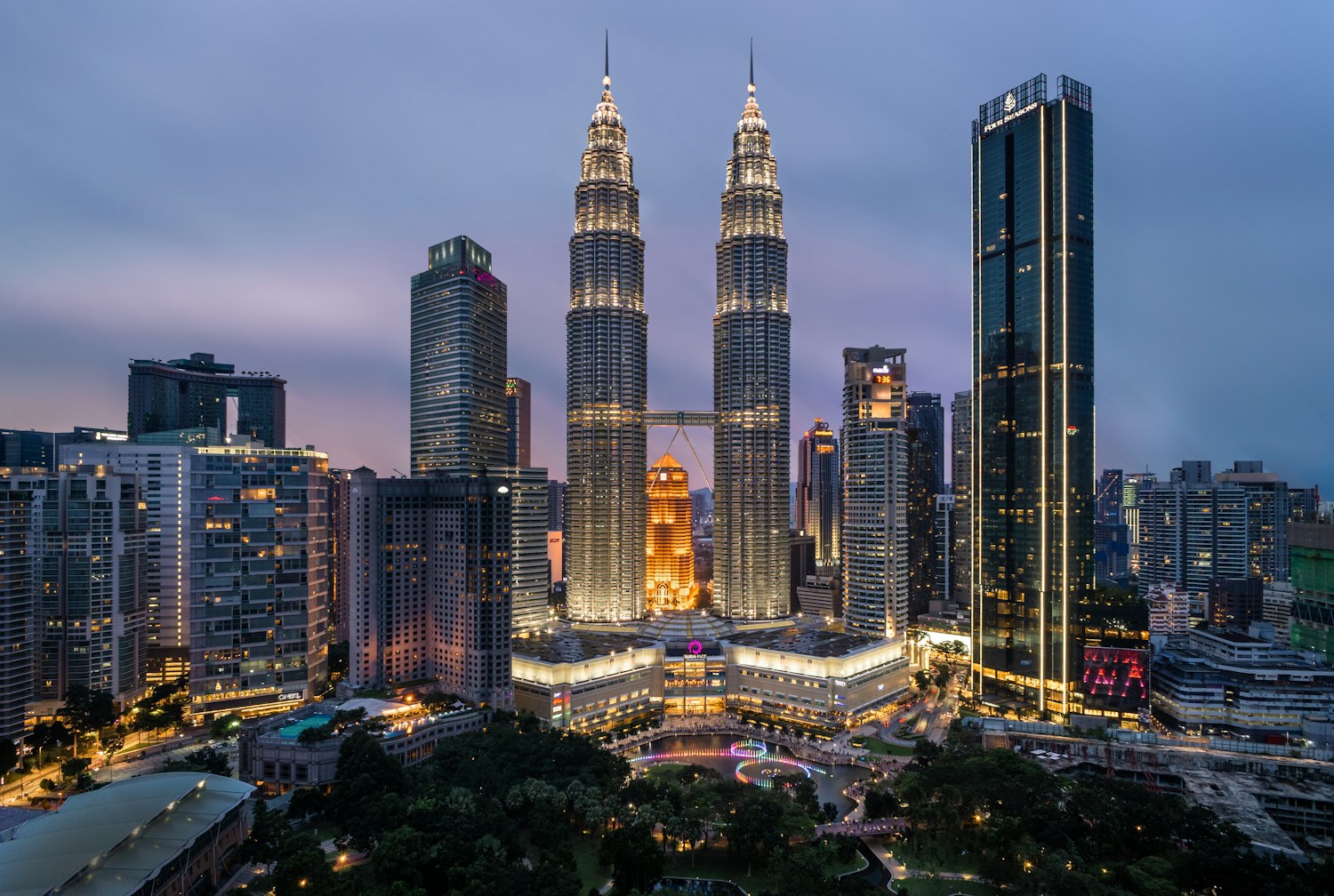
City at a glance
Choose the Kuala Lumpur you will use every day
Kuala Lumpur offers several versions of city life: a central apartment close to offices and rail, an established residential neighbourhood with local shops, or a condominium community whose school and amenities matter more than the skyline. The best fit depends on where you need to be on an ordinary weekday. A spacious home can be a poor choice if each family member needs a different long road journey.
This guide concerns the Federal Territory of Kuala Lumpur. DOSM’s dashboard reports a rounded 2.1 million people for its 2026 estimate, updated on 31 July 2026. That is not the population of Greater Kuala Lumpur or the Klang Valley. Petaling Jaya, Subang Jaya and other frequently suggested alternatives are outside the federal territory, with different local councils and journeys into the city.
Start by locating the actual office, potential school campuses and recurring medical appointments. Then shortlist homes around a workable combination of those destinations. Use the national guides for permission to live or work, taxation and banking; choosing a condominium does not resolve those questions. For families, an available school place and manageable school run often narrow the housing search more effectively than a long list of fashionable areas.
What may appeal
- A range of apartment sizes and neighbourhood routines, with meaningful rail-linked choices.
- Regional business and service-sector networks alongside specific international-school options.
- Parks, galleries, libraries and varied food traditions can support an active local life.
- A direct airport railway provides a useful option when the home-to-KL Sentral connection works.
What to weigh up
- The last mile, traffic and school geography can outweigh an attractive home or rent.
- International-school entry charges and tuition can dominate a family budget.
- Heat, humidity, thunderstorms and occasional poor air quality require adaptable routines.
- Utility account categories, building management and furnishing vary enough to require unit-level inspection.
Cost of living
Dated rental examples and a household spending worksheet
The advertisements below were visible in PropertyGuru’s Kuala Lumpur rental search on 14 October 2026. They are individual asking prices, not completed transactions, neighbourhood medians or a promise that the unit remains available. The examples deliberately span different sizes and locations; compare equivalent homes before drawing conclusions about value.
A monthly rental quotation should be supplemented with parking, utilities, internet, household food, transport, healthcare and school costs. Keep deposits, moving expenses and initial furnishing separate. A furnished listing still needs an inventory: it may not include the cooking equipment, bedding or work furniture needed for immediate occupation.
| Advertised home; checked 14 October 2026 | Size and layout as advertised | Asking rent per month |
|---|---|---|
| Sentral Suites, KL Sentral | 650 sq ft; 1 bedroom, 1 bathroom; fully furnished | MYR 3,200 |
| South View, Kampung Kerinchi / Bangsar South | 823 sq ft; 2 bedrooms, 2 bathrooms; fully furnished | MYR 2,800 |
| Residensi Bintang, Bukit Jalil | 1,009 sq ft; 3 bedrooms, 2 bathrooms; fully furnished | MYR 2,800 |
| Kiaramas Ayuria, Mont Kiara | 2,002 sq ft; 3+1 bedrooms, 4 bathrooms | MYR 5,800 |
Sources for this section
Water, commuting and the expenses still to add
Air Selangor’s individually billed domestic tariff from 1 September 2025 charges MYR 0.65 per m³ for the first 20 m³ each month, then MYR 1.62 for the next 15 m³. A selected 25 m³ month therefore costs MYR 21.10 for water. This is a consumption illustration, not a typical household bill. Condominium bulk accounts have a different tariff; establish the meter and billing arrangement before applying an individual-account calculation to an apartment.
For illustration, MYR 2,800 rent plus one MYR 150 Rapid Bulanan pass and MYR 21.10 water totals MYR 2,971.10. The water calculation applies only if the selected home has the stated domestic billing arrangement; it is not a reported bill for the advertised South View unit. This subtotal excludes electricity, sewerage, food, communications, parking, road transport, insurance and school costs, so it cannot be read as an all-in cost of living.
Electricity depends on the account category, consumption and the current adjustment components. TNB’s tariff schedule separates energy, capacity, network and retail charges and includes applicable incentives. Ask for the unit’s recent bills and identify which meter and tariff will apply. Air-conditioning hours, water heating and whether you work at home can make a large difference; a quoted base energy rate alone is not the final bill.
For food, use the official PriceCatcher dataset to compare the actual items, units, premises and observation dates relevant to your shopping. Build your own recurring basket rather than importing a national average into an urban household with different dietary needs. Add delivered meals and restaurant spending separately; imported groceries and a local-market routine are different choices.
| Selected item | Illustrative monthly amount | Boundary |
|---|---|---|
| Rent | MYR 2,800 | One advertised unit, not an area average. |
| Water: 25 m³ | MYR 21.10 | 20 × 0.65 + 5 × 1.62; individual domestic account only; sewerage excluded. |
| One Rapid Bulanan pass | MYR 150 | 30 consecutive days on covered Rapid KL services, not every regional operator. |
| Selected subtotal | MYR 2,971.10 | Three items only; the exclusions above must be budgeted separately. |
Sources for this section
- Air Selangor: tariffs from 1 September 2025, Appendix A
- Air Selangor: current tariff information
- Rapid KL: Rapid Bulanan FAQ, updated 31 December 2025
- TNB: electricity tariff schedule, 1 July 2025–31 December 2027
- data.gov.my: KPDN/DOSM PriceCatcher premises and item-price data
- PropertyGuru: Kuala Lumpur rental advertisements checked 14 October 2026
Neighbourhoods & finding a home
Websites to find a home
| Website | Search for | Coverage |
|---|---|---|
| PropertyGuru Malaysia | Rent / Buy | Malaysia — Kuala Lumpur and surrounding areas |
| PropertyGuru — Kuala Lumpur rentals | Rent | Kuala Lumpur city search; verify the actual address, property type and neighbourhood. |
| PropertyGuru — Kuala Lumpur homes for sale | Buy | Kuala Lumpur city search; verify the actual address, property type and neighbourhood. |
About these links
Property-search websites help you find listings; individual properties and agents have not been vetted by Offshore Capitalist. Confirm availability, the legal right to let or sell, and payment instructions before committing.
- PropertyGuru Malaysia · Checked 2026-10-14
Use the Kuala Lumpur search, then narrow to the neighbourhood or building. Check whether the address is in Kuala Lumpur or surrounding Selangor, and compare whole homes separately from rooms.
- PropertyGuru — Kuala Lumpur rentals · Checked 2026-10-14
Advertiser listings, not completed transaction prices. Confirm the exact unit, furnishing, charges and availability; city labels can include broad marketing descriptions.
- PropertyGuru — Kuala Lumpur homes for sale · Checked 2026-10-14
Advertiser listings, not completed transaction prices. Confirm the exact unit, furnishing, charges and availability; city labels can include broad marketing descriptions.
Neighbourhoods and the journeys they create
Use these areas as a first shortlist, then assess the individual building. A development name containing “Bangsar”, “KLCC” or “near MRT” does not establish its exact location or walkability. Plot the entrance on the transit map and inspect the entire route to the platform, including crossings, shade and access when it rains.
Mont Kiara and Sri Hartamas may be convenient for particular schools and amenities, while a rail-linked home can suit a different work pattern. Neither is universally better. If considering Petaling Jaya or Subang Jaya, treat that as a separate wider-metropolitan option rather than relabelling it central Kuala Lumpur. Time the actual school run and office return journey before committing.
| Area within Kuala Lumpur | Why it may suit | Decision that matters |
|---|---|---|
| KLCC / Jalan Ampang | Central offices, shops and an urban routine around rail stations | Compare KLCC, Ampang Park and the exact building exit; major-road crossings can change the walk. |
| Ampang Hilir | A practical shortlist for ISKL’s Ampang Hilir campus and Jalan Ampang healthcare | It is a distinct residential setting from the towers around KLCC; test the campus and office journeys separately. |
| Bukit Bintang / TRX | Retail, dining and rail connections for a central lifestyle | Visit after dark and at weekend peak times; confirm noise and visitor activity in the building. |
| Brickfields / KL Sentral | Useful for rail transfers and repeated airport travel | Distinguish station-adjacent access from a route across busy roads or through a long concourse. |
| Bangsar | Established neighbourhood services and dining | The residential streets are not all beside Bangsar LRT; check the exact last mile. |
| Kerinchi / Bangsar South | Office and residential developments with Kelana Jaya Line options nearby | Station access varies by development; inspect the route to Kerinchi or Universiti. |
| Mont Kiara / Sri Hartamas | Condominium choices and specific international-school campuses | Plan school and work transport explicitly; the estate name does not provide a direct rail connection. |
| Bukit Jalil / TTDI | Different outer-city alternatives with rail-linked parts and established amenities | These are separate areas on different parts of the network, not one interchangeable suburban zone. |
A good condominium needs more than an attractive lobby
Use the city-specific rental and purchase searches below, then confirm that the photographs, floor plan and viewing refer to the exact unit. Record the advertiser, asking price, date, furnishing and parking allocation. An advertisement is the start of due diligence, not evidence of ownership, permission to sublet or the condition of a home you have not inspected.
At the viewing, test cooling and hot water, look for moisture marks and open the built-in cupboards. Check mobile reception and the available fixed-broadband service inside the unit. Ask building management about visitor access, deliveries, refuse, parcel collection, move-in bookings and the rules for pets or renovation work. A pool or gym photograph does not tell you whether facilities are working or accessible at the times you will use them.
Have the lease spell out rent, deposit return, notice, repairs, air-conditioner servicing, parking and the allocation of utility and management charges. Confirm who is entitled to let the home and keep a signed inventory with dated photographs. Do not assume an informal promise about leaving early overrides the written contract. For a purchase, obtain property-specific advice on title, financing, buyer eligibility and transaction costs through the national property and relocation context before paying a reservation sum.
- View during a likely workday and check the return journey, not just a quiet weekend visit.
- Ask for recent bills showing the utility account category and any landlord or management rebilling.
- Clarify which items are landlord-owned and who replaces a failed appliance.
- Keep payment instructions, letting authority, the agreed inventory and all receipts together.
Work, business & opportunities
Match the role to the actual employment location
InvestKL’s remit concerns Greater Kuala Lumpur, and its investment material describes regional and global-services activities spanning technology, professional functions, energy, healthcare and financial services. These are useful sectors to investigate, not a count of vacancies inside the municipality. An announced investment or planned job total is not an open position.
Use employer careers pages and MYFutureJobs to identify concrete roles, then check the location, language requirements, regulated qualifications and work-permission position. A regional headquarters may serve overseas markets while the particular role still requires local professional knowledge or on-site client work. Ask which office you will attend and how frequently; hybrid arrangements can change the value of living next to a station.
Compare the full employment package with the household plan. Medical insurance for dependants, temporary accommodation, school support and a relocation allowance can affect the decision more than a small difference in base pay. For remote work, confirm the permitted activity under the relevant national residence route and the technical needs of the job. A reliable desk setup, private calls and a backup connection deserve consideration before choosing a home largely for its leisure facilities.
Schools & childcare
Choose the campus and admission route before the home
School names can obscure meaningful geography. ISKL is in Ampang Hilir. Garden International School’s main campus is in Mont Kiara, while its Early Years Centre is in Desa Sri Hartamas. Compare the actual campus your child would attend, the year group, learning support, calendar and travel plan rather than assuming all sections of a school share one location.
ISKL reviews complete applications and may require assessment or further evidence. Its checklist includes recent academic records, passports, health information and the relevant Malaysian work or residence evidence. A qualified applicant may enter a wait pool when there is no place. English-entry requirements differ by age: the school states no minimum for Prep Reception through Grade 2, with a minimum from Grades 3–12. Discuss learning needs before making a housing commitment.
Early-years tuition should be compared with the service you need: full or part day, term-time dates, meals, late collection and holiday cover. Nursery is not automatically year-round childcare for a parent working office hours. Ask about settling-in arrangements and the practical handover process; a programme that fits the child but conflicts with both parents’ work timetable can require another care arrangement.
Published school prices and first-year cash flow
These selected annual tuition figures are for 2026/27 and were checked on 14 October 2026. They compare published year groups, not equivalent curricula or a citywide range. The schools state fees before applicable service tax in these schedules; ISKL also notes that exemptions may apply. Obtain the actual invoice for the family’s circumstances rather than treating one tax-inclusive illustration as universal.
At ISKL, a new Grade 1 example is MYR 115,600 tuition + MYR 59,000 registration + MYR 1,800 application = MYR 176,400 before applicable tax. If all three amounts attract 6%, the arithmetic total is MYR 186,984. The tuition deposit is credited into annual tuition, so it must not be counted twice. Bus, meals, uniform and other additional items remain outside this example.
Garden’s nursery entry registration is MYR 10,000, compared with MYR 20,000 for Year 1 onward. Its nursery deposit is MYR 17,480 and Year 1 deposit MYR 28,530. These deposits affect cash needed at entry and have notice/refund conditions. Ask how progression, withdrawal and tax affect your particular invoice; refundable cash and annual education expense are different budget categories.
| 2026/27 tuition example | Annual amount before applicable tax | Location / stage |
|---|---|---|
| ISKL Prep Reception | MYR 70,200 | Ampang Hilir; early years |
| ISKL Prep Senior–Grade 5 | MYR 115,600 | Ampang Hilir; selected elementary band |
| ISKL Grades 6–8 | MYR 130,600 | Ampang Hilir; middle school |
| Garden Nursery | MYR 52,440 | Early Years Centre, Desa Sri Hartamas |
| Garden Year 1 | MYR 85,590 | Main campus, Mont Kiara |
| Garden Years 7–8 | MYR 118,170 | Main campus, Mont Kiara |
Healthcare
Plan routine care as well as a hospital
Start with the kind of care the household needs repeatedly: a nearby primary-care practice, prescriptions, dentistry, childhood care or a known specialist. Obtain a medical summary, current medicines with their generic names, allergy details and immunisation records before departure. Ask the chosen provider how records, referrals and follow-up appointments are handled; proximity to a large hospital does not by itself solve routine care.
Hospital Kuala Lumpur publishes separate citizen and foreigner charging information. Do not apply a prominently displayed citizen price to a foreign patient or treat a consultation fee as the total cost of tests, medicines and treatment. Establish the applicable category, appointment route and any deposit with the hospital. National entitlement rules remain a separate question from which local provider is convenient.
Gleneagles Hospital Kuala Lumpur on Jalan Ampang is one private option with a 24-hour accident and emergency service. Compare the employer or personal insurer’s actual network, direct-billing arrangements, exclusions and dependant cover with the providers you are likely to use. A hospital being nearby does not mean it is in network or that every specialist bills on the same terms.
For an emergency call 999. Save the building name, access gate and full address so a caller can describe the location clearly. For non-urgent care, arrange a normal clinic appointment and ask for an itemised estimate when treatment is planned. Keep insurance authorisation and receipts accessible; do not postpone urgent help while trying to optimise a routine healthcare budget.
| Local service | Useful location or access detail | Arrange before relying on it |
|---|---|---|
| Klinik Kesihatan Kuala Lumpur | Jalan Temerloh, Titiwangsa; primary care, maternal/child and chronic-condition services | Confirm the appointment and applicable charges. Published weekday core hours are 08:00–17:00, with an extended service; specific clinics may differ. |
| Klinik Pergigian Kuala Lumpur | First floor of the Kuala Lumpur health-clinic building; primary dental and specialist services | The official schedule separates outpatient/appointment sessions from referral-based specialist care. |
| Gleneagles Hospital Kuala Lumpur | Jalan Ampang; private hospital with 24-hour accident and emergency service | Confirm the relevant doctor, insurance network and planned-care authorisation; emergencies use 999. |
Sources for this section
- Hospital Kuala Lumpur: charges and separate citizen/foreigner schedules
- Health Department: Klinik Kesihatan Kuala Lumpur services and hours
- Health Department: public dental clinic locations and appointments
- Gleneagles Hospital Kuala Lumpur: accident and emergency service
- Gleneagles Hospital Kuala Lumpur: location and contacts
- Royal Malaysia Police: emergency 999 and scam-response 997 contacts
Getting around
Make rail useful by solving the last mile
The Rapid KL network includes LRT, MRT, Monorail, BRT and buses, but the practical trip still depends on the route to and from the station. Use the current transit map to compare the exact home and workplace. Major roads, station entrances and the absence of a comfortable covered walk can matter more than the straight-line distance shown in a listing.
Rapid Bulanan is MYR 150 for 30 consecutive days and is available to Malaysian and non-Malaysian passengers. It covers the specified Rapid KL rail, BRT, bus and feeder services in the Klang Valley; it does not include KTM Komuter or ERL airport trains. My50 is a different, citizenship-restricted product, so a foreign resident should not use MYR 50 as the default monthly commuting allowance.
For an occasional commuter, compare pay-as-you-go journeys with a pass rather than buying solely because “monthly” sounds cheaper. The pass FAQ specifies the supported Touch ’n Go arrangements; keep the required purse balance and the correct card separate from the pass price. Check service alerts before a time-critical journey.
If a car or ride-hailing service will bridge the last mile, include that expense and test pickup access in the actual building. Examine parking ramps and the assigned bay at a viewing. Do a trial journey when you will normally travel and repeat it during rain if possible. The resident accounts below illustrate why an appealing apartment and an awkward road approach can coexist.
Airports & international connections
KUL terminals and the real door-to-door journey
Kuala Lumpur International Airport uses separate Terminal 1 and Terminal 2 facilities. Check the terminal on the airline’s current booking and airport information, including for a return flight. KL Sentral is an urban railway station; it is not the airport, and reaching it is only the first part of the journey for many households.
KLIA Ekspres publishes a 28-minute journey between KL Sentral and Terminal 1, with a further three minutes between the airport terminals. The adult standard one-way fare was MYR 55 when checked on 14 October 2026. That time excludes the journey to KL Sentral, waiting, terminal walking and airline check-in. The airport train is not included in Rapid Bulanan.
Compare a rail journey with the complete road trip for the number of passengers, luggage and departure time involved. For late arrivals, verify the service operating at the time you will actually clear the airport, not simply the flight’s landing time. A road transfer can be convenient but does not have one reliable citywide duration.
Subang Airport, when shown as SZB on a booking, is a different airport from KUL. Do not substitute the KLIA rail plan for an SZB flight. The linked airport records provide the gateway distinction; check the operator and airline for the actual dated flight and access instructions. For separate-ticket connections, allow for the practical consequences of changing terminal or airport and collecting luggage.
Gateway options
Compare gatewaysKuala Lumpur International AirportKUL
InternationalSepang, serving Kuala Lumpur ·  Malaysia
Primary gateway Kuala Lumpur International Airport, KUL, is at Sepang. The official tourism material describes rail and bus links; it is a separate journey from local travel within central Kuala Lumpur. Confirm the correct terminal and the full transfer for your itinerary.
International gateway for Kuala Lumpur, with Osaka Kansai services among its connections. Check the terminal and onward itinerary.
Sources & connectivity notes
International passenger services. Check current routes and seasonal schedules.
Research checked 2026-10-13. Routes can vary by season.
Climate & environment
Month by month
Subang airport station · 1991–2020 averages
WMO Member Nations (2023), SUBANG 1991–2020 normals. NOAA NCEI, doi:10.25921/800j-vn07. Accessed 14 October 2026. · Dataset citation conditions
January averages
- Mean daily high
- Mean daily low
- Monthly precipitation
°F and inches are converted from the metric values and rounded for display.
Average daily highs stay between 32.0°C and 33.7°C throughout the year; average lows stay between 23.8°C and 25.0°C. Even June, the lowest-rainfall month in this series, averages 145.8 mm. November averages 355.8 mm. Plan for cooling, laundry drying and rain-protected daily journeys in every season, rather than expecting a reliably dry winter.
Subang is a low-elevation airport station in Selangor, west of Kuala Lumpur, at 17 metres. It is not KLIA or the city centre. Dense streets, shaded gardens and hillside homes can feel different. Monthly totals do not describe an individual property's drainage or flash-flood exposure.
All monthly values
| Month | Mean daily high | Mean daily low | Monthly precipitation |
|---|---|---|---|
| January | 32.6°C | 23.8°C | 226.7 mm |
| February | 33.3°C | 24.0°C | 192.8 mm |
| March | 33.7°C | 24.5°C | 270.4 mm |
| April | 33.7°C | 24.7°C | 301.5 mm |
| May | 33.6°C | 25.0°C | 229.9 mm |
| June | 33.3°C | 24.8°C | 145.8 mm |
| July | 32.8°C | 24.4°C | 165.2 mm |
| August | 32.8°C | 24.5°C | 174.3 mm |
| September | 32.7°C | 24.2°C | 220.3 mm |
| October | 32.6°C | 24.2°C | 283.8 mm |
| November | 32.3°C | 24.1°C | 355.8 mm |
| December | 32.0°C | 24.0°C | 280.6 mm |
Sources, station & data quality
Malaysian WMO submission / NOAA NCEI station 48647 · Subang airport station. These averages describe the stated period; they are not a forecast. Temperatures are average daily highs and lows, not extremes. Precipitation is an average monthly total, not a count of wet days.
NCEI converted the Malaysian member's original Excel station file to CSV. The same station and reference period supply temperature and rainfall.
The chart reports monthly daily-high and daily-low means and rainfall-total normals; it does not substitute recorded extremes for average conditions.
Source units are degrees Celsius and millimetres. Fahrenheit = Celsius × 1.8 + 32; inches = millimetres ÷ 25.4. Display rounding does not change the stored source values.
All 36 selected monthly values are published at one decimal place, with 30 contributing years reported for each. Year counts appear as 30.0 in the source and are stored as integer counts. No daily completeness flags are supplied.
Heat, rain and the home’s ability to dry out
Kuala Lumpur’s heat and humidity affect ordinary decisions: when to walk, how long to cool a room, where clothes dry and how moisture is kept out of cupboards. At a viewing, look beyond whether an air conditioner switches on. Ask about cleaning and maintenance, examine seals and drainage, and consider whether the bedroom remains noisy when cooling runs at night.
MET Malaysia identifies the inter-monsoon periods around April–May and October–November as particularly relevant for thunderstorms. Heavy rain, lightning and localised flooding can interrupt a school run or outdoor plan even when the morning looks clear. Save official warnings and use the Department of Irrigation and Drainage’s flood information for current conditions; it is not a substitute for examining a property’s past water ingress and drainage.
The monthly chart uses Subang station in neighbouring Selangor as a regional reference, not a sensor at a city-centre condominium or KLIA. Local building exposure, shade, elevation and ventilation still matter. Prefer a practical covered route and a place to dry wet shoes over a slightly shorter exposed walk.
Consult the Department of Environment’s Air Pollutant Index when planning strenuous outdoor activity or responding to haze. The live station reading is more useful for that decision than assuming every day in a named season has the same air quality. Keep an indoor alternative for exercise or children’s activities and understand the home’s ventilation and filtration setup.
Safety & everyday risks
Useful precautions without a neighbourhood ranking
Assess the places you will actually use: the final walk from a station, building access, pickup areas, car parks and stairwells. Visit after dark and ask management how visitors and maintenance workers are admitted. A neighbourhood’s reputation or a guarded entrance does not establish the condition of every shared area or guarantee safety.
Be particularly careful when paying deposits from overseas. Verify the unit and the party entitled to receive money, retain written terms, and independently confirm any change to bank details. Pressure to pay before a viewing or without a clear agreement is a reason to stop and resolve the facts. A listing platform does not remove the need to verify the transaction.
The police identify 999 for emergencies and 997 for the National Scam Response Centre. If a financial scam is suspected, contact the bank promptly and use the official reporting channels; preserve transaction records and messages. Keep emergency numbers distinct from the municipal complaint service.
Heavy rainfall creates another practical risk. Check basement access, drains and the route out of the development, and avoid driving or walking into floodwater. Use official weather and flood alerts for present conditions. This guide does not turn a citywide crime count or an isolated anecdote into a safety score for individual neighbourhoods.
Public services & practical setup
Set up the accounts and find the right local authority
At handover, photograph electricity and water meters and record who holds each account. TNB provides a change-of-tenancy route; its document checklist includes identity and evidence of occupation. Prepare the relevant passport or identity document and signed tenancy details, then use the supplier’s current application process. For condominium water, confirm whether billing comes directly from Air Selangor or through management before opening or transferring an account.
Arrange internet installation for the exact unit and establish how technicians enter the building. Keep a mobile connection that works indoors while installation is pending. Ask management about refuse and recycling, deliveries, access cards, parking, move-in lift bookings and the procedure for reporting a leak. These small arrangements often determine whether the first week functions smoothly.
DBKL’s AduKL system and local call centre handle municipal complaints in Kuala Lumpur. A precise address, photographs and a description of the issue help route the report. A property in Petaling Jaya or another neighbouring municipality may belong to a different council, even when an advertisement calls the wider area “KL”.
Kuala Lumpur Library offers reading facilities and library services at its central site and branches. Its membership information distinguishes eligibility and asks for identity evidence; foreign-resident borrowing should be confirmed with the library rather than assumed for every visitor. Choose a branch near your routine and check its current service hours before planning around it.
Sources for this section
- TNB: manage an electricity account and change tenancy
- TNB: Electricity Supply Application Handbook, document checklist
- Air Selangor: current tariff information
- DBKL: local service complaints and call centre
- DBKL: AduKL complaint portal
- Kuala Lumpur Library: services, membership and evidence
- Kuala Lumpur Library: locations and borrowing-service FAQ
Culture, community & daily life
Make room for a local routine
A useful social life does not have to depend on crossing the city for every event. Start with a regular park, a nearby library, a class or a place to meet people after work. DBKL’s public parks include Perdana Botanical Garden, Titiwangsa and Bukit Jalil; choose the one that fits your home and the weather rather than treating all green space as equally accessible.
ILHAM Gallery in ILHAM Tower on Jalan Binjai offers free admission and a programme focused on art. Check the current exhibition and opening notice before travelling. It can be combined with an Ampang Park-area outing, but recurring activities closer to home may be easier to sustain than occasional central-city visits.
Libraries can be useful for more than borrowing: a quiet place to read, local events and a way to establish a regular neighbourhood habit. Markets, food streets and cultural venues provide different ways to explore the city; use the Tourism Malaysia guide as an introduction, then revisit places that fit your own interests. Plan outdoor time around heat and storm forecasts rather than a fixed sightseeing timetable.
For families, compare what is usable without a long drive: a safe place to play, an activity the child enjoys and a practical place for a parent to wait. For someone moving alone, a repeat commitment such as a class or volunteering enquiry can be more effective than relying on one-off networking. The aim is a week you can repeat comfortably, not a checklist of landmarks.
What residents say
Residents’ accounts: amenities, access and a real parking ramp
These public first-person accounts are paraphrased under the authors’ displayed usernames. They describe individual homes and priorities, not a representative survey or a guarantee about current conditions. Publication dates have not been inferred from relative timestamps; the threads were checked on 14 October 2026.
Two accounts favour Bangsar South for daily amenities and rail access, while another highlights a difficult vehicle approach at a particular development. Their practical lesson is to examine the part of life an advertisement cannot show well: the last walk, the turn into the building and the ordinary errands you will repeat.
These are attributed public experiences, not client testimonials. Housing, neighbourhood and household circumstances affect the experience.
albabouds reports nearly a year at Savvy Riana and describes the home as acceptable but the sharp approach and parking arrangement as awkward to drive. This highlights why inspecting the access ramp and assigned bay is part of choosing a unit.
One resident’s building-specific driving experience, not a general rating of an area.
ylou3 says they live in Bangsar South and value nearby restaurants, cafés, groceries and LRT access. Their preference illustrates the appeal of a routine built around local amenities rather than a view or a larger distant apartment.
Self-described resident; exact walking access remains specific to the home.
Planning your move
Sequence the move so that one decision does not undo another
Confirm the national residence and work position, the actual work location and realistic school options before signing a long lease. A temporary base can be useful for viewings and trial journeys, but give it a clear cost and end date. Keep a shared file of addresses, contacts, documents and payment commitments so the household can see which decisions are still conditional.
The arrival stages below are a practical dependency order, not government processing estimates. School admission, a tenancy, utility arrangements and insurance each have their own evidence and availability. Once those are functioning, spend the first ordinary week testing the routine before adding optional commitments.
Your move, step by step
Set the legal and family requirements first, then secure a home and make the daily routine work.
01Set the work and school constraintsBefore a permanent housing commitment
Confirm the relevant national residence/work route and the actual workplace. Start school enquiries with the specific campus and year group.
Documents & evidence
- Passport and relevant residence/work evidence
- Employer office and attendance details
- School reports, learning-support records and health information
- An application or waiting-pool position is not an available school place; a vacancy does not grant work permission.
02View homes and test the journeysAfter a realistic workplace and school shortlist exists
Inspect the exact unit, walking route, road approach and parking. Compare the proposed lease and total upfront cash before paying.
Documents & evidence
- Draft tenancy and letting-authority information
- Inventory and condition photographs
- Itemised rent, deposit, parking and utility responsibilities
- An attractive asking rent does not establish the building’s utility tariff or the right to leave the lease early.
03Complete handover and essential accountsAt the agreed possession date
Record meters, obtain access cards, confirm utility account holders and schedule internet installation through management.
Documents & evidence
- Signed tenancy and identity document
- Meter readings and existing account references
- Management and installation appointments
- Bulk water billing differs from an individual domestic account; an old occupant’s bill is not automatically your account.
04Arrange healthcare and the school runBefore ordinary work and school commitments begin
Confirm insurance networks and routine providers, complete the school’s remaining health and admission requirements, and test the journey.
Documents & evidence
- Medical history, prescriptions and insurance authorisation
- School offer and fee invoice
- Emergency contacts and pickup arrangements
- Public citizen tariffs cannot be assumed for a foreign patient; school deposits and annual fees must not be double-counted.
05Run an ordinary week and keep renewal datesDuring the first weeks after essential setup
Try shopping, the return commute and a local activity. Record notice dates and review spending using actual bills rather than the initial worksheet.
Documents & evidence
- Transport card and intended journeys
- Lease, school and insurance notice dates
- Supplier bills and municipal service contacts
- A weekend visit does not test rainy weekday travel; a pass does not cover every operator or the airport railway.
Sources & research notes42 references
Sources supporting this guide. Research draft awaiting editorial review.
- Tourism Malaysia: Kuala Lumpur city guide
- MET Malaysia: Malaysian climate and regional differences
- Malaysia Airports: KL International Airport, Terminal 1
- Official Kuala Lumpur practical information
- Reddit: ConfuseKouhai on living in Bangsar South
- DOSM: W.P. Kuala Lumpur population, 2026 estimate; updated 31 July 2026
- PropertyGuru: Kuala Lumpur rental advertisements checked 14 October 2026
- PropertyGuru: Kuala Lumpur homes for sale
- Air Selangor: tariffs from 1 September 2025, Appendix A
- Air Selangor: current tariff information
- TNB: electricity tariff schedule, 1 July 2025–31 December 2027
- TNB: manage an electricity account and change tenancy
- TNB: Electricity Supply Application Handbook, document checklist
- data.gov.my: KPDN/DOSM PriceCatcher premises and item-price data
- Rapid KL: Rapid Bulanan FAQ, updated 31 December 2025
- Rapid KL: integrated transit map, October 2025
- Rapid KL: journey planning and service notices
- InvestKL: agency remit and Greater Kuala Lumpur investment focus
- InvestKL: global-services activities and 1H 2025 investment announcements
- MYFutureJobs: employment search and services
- ISKL: 2026/27 fees and additional charges
- ISKL: 2026/27 fee schedule approved 10 February 2026
- ISKL: application steps, documents and admission conditions
- Garden International School: 2026/27 fees, deposits and campus addresses
- Hospital Kuala Lumpur: charges and separate citizen/foreigner schedules
- Health Department: Klinik Kesihatan Kuala Lumpur services and hours
- Health Department: public dental clinic locations and appointments
- Gleneagles Hospital Kuala Lumpur: accident and emergency service
- Gleneagles Hospital Kuala Lumpur: location and contacts
- Royal Malaysia Police: emergency 999 and scam-response 997 contacts
- KLIA Ekspres: fares and journey times
- MET Malaysia: weather phenomena and inter-monsoon thunderstorms
- Department of Irrigation and Drainage: flood warnings
- Department of Environment: Air Pollutant Index Management System
- DBKL: local service complaints and call centre
- DBKL: AduKL complaint portal
- Kuala Lumpur Library: services, membership and evidence
- Kuala Lumpur Library: locations and borrowing-service FAQ
- DBKL: municipal parks with extended access
- ILHAM Gallery: free admission and location
- Reddit: albabouds on living at Savvy Riana
- Reddit: ylou3 on everyday amenities in Bangsar South
ConfuseKouhai says they previously lived in Bangsar South and found everyday needs nearby with a walk to public transport. The comment is useful as an account of their own routine, not evidence that every building has the same pedestrian access.
Paraphrase limited to the first-person amenities and transport account; unrelated tenancy advice in the discussion is not adopted.