City at a glance
Build your week around the city you will actually use
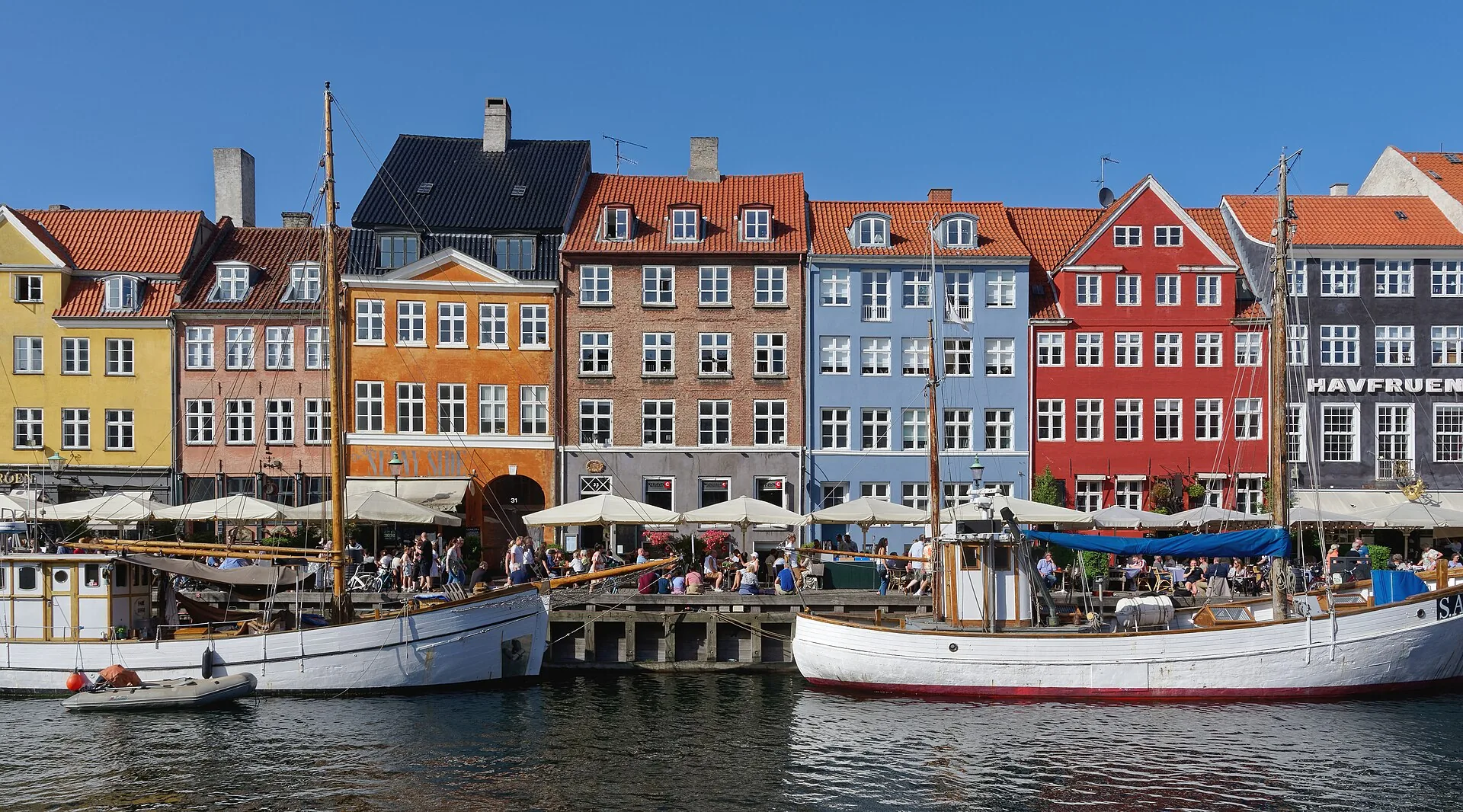
Copenhagen offers several quite different versions of city life: the harbour and older centre, busy residential streets with cafés below the apartments, and newer districts where a modern building may matter more than a historic address. The best starting point is your actual week: where you work, where your children study and how often you leave Denmark.
For a founder, the useful comparison is between complete routines. A quieter apartment farther from the centre can be a better base if the school run and airport trip work. A waterfront address can be the wrong choice if you dislike wind, depend on late-night deliveries or expect a busy street outside the door all winter. Treat the table below as a shortlist for visits, not a ranking of neighbourhoods.
Sources for this section
What may appeal
- CPH combines Metro and rail access, useful for a business owner who travels regularly.
- Distinct neighbourhoods let you compare older urban living with newer waterfront housing.
- Several schooling routes exist, with separate admissions and language-support arrangements.
What to weigh up
- Central housing can be difficult to secure; a short visit does not resolve a registration-capable lease.
- Waterfront and lively inner-city addresses have different winter, noise and family tradeoffs.
- A desired school or favourable flight time must be checked before choosing the home.
Neighbourhoods & finding a home
Websites to find a home
| Website | Search for | Coverage |
|---|---|---|
| Boligsiden | Rent / Buy | Denmark |
| BoligPortal | Rent | Denmark |
About these links
Property-search websites help you find listings; individual properties and agents have not been vetted by Offshore Capitalist. Confirm availability, the legal right to let or sell, and payment instructions before committing.
- Boligsiden · Checked 2026-10-14
Search by city, area or street and choose Til salg or Leje. Keep ownership type and recurring charges separate when comparing results.
- BoligPortal · Checked 2026-10-14
Rental homes, apartments and rooms; choose København, Aarhus or Odense. Review the current contact and subscription terms before signing up.
Six neighbourhood choices
| Neighbourhood | Why put it on the shortlist | What to test before committing |
|---|---|---|
| Indre By / Christianshavn | Historic streets, cultural institutions and canals; attractive if being in the older city is central to your plans. | Visit the exact street after dinner. Check tourist traffic, deliveries, stairs, bicycle storage and whether the bedroom faces a courtyard. |
| Vesterbro | A neighbourhood to consider for restaurants, cultural activity and a busy urban routine. | Check late-evening noise and the actual station route. An upper-floor walk-up and a late restaurant below it are practical issues, not details to settle after signing. |
| Nørrebro | A varied district with cafés, shops and a strong street life. | Compare individual blocks rather than relying on the district name. Test school journeys, the workspace inside the apartment and the route home after dark. |
| Østerbro / Nordhavn | Compare established residential streets and green space with newer harbour living. | These are different housing products: inspect older-building access versus new-building ventilation, waterfront exposure and any adjacent construction. |
| Amager / Ørestad | Options close to beaches or open land, alongside newer development and established residential areas. | Check the precise rail or Metro branch. A short-looking route on the map may need a change; test the school trip and the walk in bad weather. |
| Valby / Vanløse | Useful alternatives when a residential routine, local shops and green space matter more than the inner-city setting. | Measure the door-to-door commute, not just the train segment. Confirm the municipality and school office for the address. |
Sources for this section
Schools & childcare
School choice can determine the housing search
Copenhagen’s public-school enrolment guidance for children who do not speak Danish requires a registered local address and a stay longer than six months. The area office uses the address to arrange an assessment of the child’s language and learning needs. Prepare prior school records and explain any support already in place rather than assuming age alone determines the best class.
The resulting offer may be an ordinary class with language support or a reception class. The municipality describes reception classes by age groups, with a transition into ordinary classes as the child becomes ready and a maximum reception period of two years. Ask where the class will actually be: the nearest school to the apartment may not provide the relevant offer.
The public European School Copenhagen has limited places and manages its own admissions. Private international schools must also be approached directly, and fees and waiting lists differ. Establish the likely place and daily journey before paying a premium to live near a school whose admission is still uncertain.
| Route | How to approach it | Decision to resolve |
|---|---|---|
| Danish public school | Local enrolment and language assessment | Ask about the actual school, reception arrangements and after-school provision. |
| European School Copenhagen | Public international option with limited places | Read its own admission criteria; living nearby does not establish admission. |
| Private international school | Direct school application and separate fees | Check curriculum continuity, learning support, fee increases and withdrawal notice. |
Healthcare
CPR, health coverage and the first administrative steps
International House Copenhagen handles CPR registration for Copenhagen and participating municipalities. The city’s general guidance is for people planning more than three consecutive months in Denmark; registration also requires an actual place to live and the applicable lawful residence basis. Follow the nationality-specific instructions rather than treating a rental contract as permission to reside or work.
When registered, arrange MitID and start checking Digital Post. The yellow health card records your registered doctor and address. Copenhagen’s health-card page gives a usual delivery estimate of two to four weeks; put your name on the mailbox and follow up if it has not arrived after four weeks. That delivery estimate is not a promise that every healthcare entitlement begins on the same date.
Keep any necessary interim cover in place until your coverage position is settled. Establish how your registered practice takes appointments and handles ongoing prescriptions. Cross-border workers may use a different insurance document, so do not assume a Danish employer always means the ordinary resident-card route.
Airports & international connections
Airport access and everyday transport
Copenhagen Airport places its Metro station at Terminal 3. The airport gives about 15 minutes to Nørreport as the train journey; it is not the time from your apartment to the departure gate. The airport also has a railway station, so compare Metro and rail against the neighbourhood you are considering.
Run three journeys before choosing a home: an ordinary school or office morning, your earliest likely flight and the trip home after a late arrival. Include the walk to the platform, changes, luggage and any lift requirement. This is particularly useful when comparing Amager addresses: an airport-facing district does not mean every Metro service goes directly to the terminal.
A bicycle can simplify short trips, but a relocation plan also needs a wet-weather option. Check storage at both ends, a practical route with your children and whether the transport ticket you choose covers every leg. Recheck the operator’s live journey planner when booking travel; timetable and engineering changes can invalidate a remembered connection.
Sources for this section
Gateway options
Compare gatewaysCopenhagen AirportCPH
InternationalKastrup / Greater Copenhagen; rail station at Terminal 3 ·  Denmark
Primary gateway Kastrup / Greater Copenhagen; rail station at Terminal 3. Compare the complete onward journey to Copenhagen with your flight times, luggage and arrival hour.
International gateway for Copenhagen and Odense. Compare the current destinations, operating season and ground transfer for your itinerary.
Sources & connectivity notes
International passenger services. Check current routes and seasonal schedules.
Research checked 2026-10-13. Routes can vary by season.
Climate & environment
See the home in a different season
The photographs show the attractive outdoor city, but winter changes how you use a waterfront balcony, a cycle route and the room where you work. DMI publishes climate normals by reference period; these are background climate evidence, not a forecast for a particular week or a city-apartment temperature.
Our practical recommendation is to view daylight, ventilation and heating as housing features. Look at where sunlight enters the workspace, ask for the home’s available energy information and try the nearest everyday errand in rain. A covered bicycle store and a nearby indoor activity may make more difference to your routine than another few square metres of outdoor terrace.
If the decision is being made during a summer visit, price a short return visit in the colder part of the year before committing to a long lease. You are testing your own preferences, not proving that everyone must like the same season.
Sources for this section
Public services & practical setup
A lease should solve housing and registration together
The municipality recommends verifying who controls the property and receiving a signed rental contract before transferring money. A place where you cannot register your address creates a problem far beyond the housing search. Ask explicitly whether the agreement permits you and every family member to live and register there.
Use the viewing to check the working parts of the home: heating, ventilation, laundry arrangements, storage, lift access and mobile signal where calls will happen. Ask which utilities are included and which you must contract yourself. Compare the amount needed to obtain the keys with the recurring monthly cost; deposit, prepaid rent and the first rental payment serve different purposes.
For an international move, write down what happens if your permit or move date changes. The landlord’s cancellation and notice provisions will not automatically match your immigration timetable. Keep the signed agreement, payment evidence, inventory and dated photographs together so the move-out comparison is based on records.
Sources for this section
What residents say
These are attributed public experiences, not client testimonials. Housing, neighbourhood and household circumstances affect the experience.
In a March 2026 discussion about a Copenhagen waterfront location, contributors contrasted lively summer use with a quieter winter environment. Some regarded that calm as an advantage. It is a useful prompt to visit the same address in another season, rather than treating summer photographs as a full account of living there.
Anonymous, self-selected discussion. Used for preferences only, not safety, housing prices or immigration guidance.
Planning your move
A useful reconnaissance visit
Spend one day around the work or school location, one around two contrasting residential areas and one dealing with practical services. Visit a grocery shop, check the evening route, and ask a landlord to explain the full first-payment schedule. Keep the enjoyable city-centre day, but do not let it replace these checks.
For business owners, keep the Danish tax and company-management review alongside the lifestyle decision. The location where you work and make decisions can matter to the business as well as your personal tax position. Our linked country guides explain those questions; a pleasant neighbourhood is not itself a tax strategy.
- Two candidate homes compared on total initial cash and recurring cost.
- School place or enrolment route checked before a location-dependent lease.
- Airport journey tested for the flights you actually use.
- Housing address, residence documents and registration appointment aligned.
- Foreign income, shareholdings and company decision-making reviewed before the move.
Your move, step by step
An order of work for planning the move. Time labels identify dependencies and useful planning windows; they are not authority processing guarantees.
01Resolve the right to live and workBefore making non-refundable commitments
Identify the residence basis for each family member, then align the intended start date with housing and schooling. Use the Denmark relocation guide for the national route analysis.
Documents & evidence
- Passports and route-specific residence evidence
- Employment or business plan where relevant
02Secure an address that worksBefore arrival / before CPR registration
Inspect the lease, permitted occupancy and registration position. Keep the inventory and evidence of every payment.
Documents & evidence
- Signed housing agreement
- Landlord or letting-agent verification
- Move-in condition record
03Register and establish digital accessAfter arrival, when registration requirements are met
04Put the family’s services in placeAlongside registration and confirmed housing
Sources & research notes13 references
Sources supporting this guide. Research draft awaiting editorial review.
- DMI — Danish climate normals and reference periods
- Copenhagen municipality — neighbourhoods
- Copenhagen municipality — renting and fraud precautions
- Copenhagen municipality — CPR registration
- International House Copenhagen — registration and guidance
- Copenhagen municipality — enrolling your child in school
- Copenhagen municipality — reception classes
- Copenhagen municipality — international schools
- Copenhagen municipality — yellow health card
- Copenhagen Airport — Metro connection
- DSB — Copenhagen Airport railway station
- University of Copenhagen — researchers on moving to Copenhagen, 21 June 2022
- Residents discuss Copenhagen waterfront life, 15 March 2026
In a 2022 university interview, researcher Malin Jessen described central housing as the difficult part of moving, while digital services and English use helped once settled. Chris Kedong Wang valued the flexibility and expectation that staff take their holidays. These are accounts of a particular research workplace, not evidence that every Danish employer or move works that way.
Named newcomers interviewed by their university employer; selected experiences, not Offshore Capitalist testimonials.