City at a glance
A compact city still needs a precise location choice
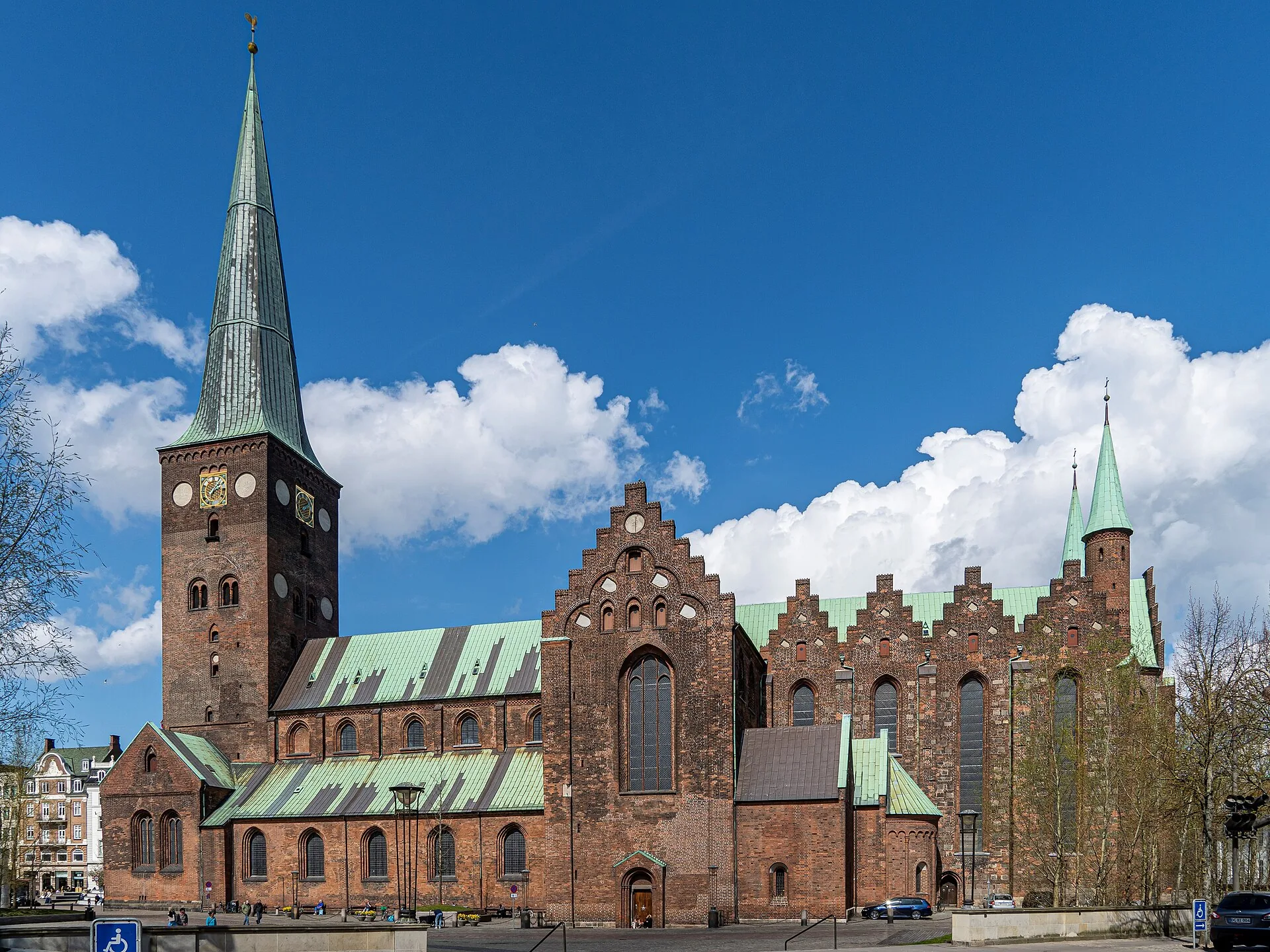
Aarhus brings together an older centre, a university community and newer waterfront development. It can suit someone who wants an urban base without making the capital the centre of every decision. The real test is where your week takes place: a city-centre apartment, a school farther out and a workplace across town can still produce a complicated routine.
For an internationally mobile owner, compare the airport journey with the rest of the week. Saving time on daily errands may be more valuable than a particular flight connection; frequent travel can reverse that calculation. Build the housing shortlist around actual work and school destinations, then test Aarhus Airport and Billund separately.
Sources for this section
What may appeal
- Distinct historic, residential and waterfront settings within one urban area.
- Primary municipal guidance gives a practical route through registration and reception schooling.
- AAR and BLL offer two airport options to assess against specific journeys.
What to weigh up
- Airport transfers must be built into travel plans; the bus is not an on-demand service.
- School placement and language transition can change the preferred housing location.
- Modern waterfront living and a sheltered established street have different seasonal tradeoffs.
Cost of living
Renting: separate the first payment from the monthly cost
Aarhus municipality advises viewing the home, checking the landlord and obtaining a written agreement. Where an occupier is subletting, establish that the sublet is permitted. A contract that forbids address registration is a problem for a person intending to live there; do not assume you can fix it after paying.
Deposit and prepaid rent are different. The deposit secures obligations such as damage; prepaid rent is intended for rent at the end of the agreement under its terms. Add the first rental payment and moving expenses to understand the cash required to obtain the keys. A low advertised monthly rent is not a complete arrival budget.
Take a room-by-room record at handover. Include existing marks, appliances, keys and meter readings, then follow the contract’s procedure for reporting defects. Ask how notice, repainting, cleaning and any move-out inspection work. These questions are particularly important when your assignment may end earlier than the lease.
Sources for this section
A practical budget before the move
Use your shortlisted lease and service quotations to prepare two totals: cash needed before the first normal month, and recurring costs after settling. Keep refundable security, prepaid rent and consumption charges in separate lines. Add school or childcare fees where applicable, airport trips, furnishings and the work setup.
If your income or business remains international, also settle the Danish tax review before arrival. Payroll, foreign investments and company decisions need their own assessment; a comparison of Aarhus and Copenhagen living costs does not answer those questions. The linked Denmark tax guides explain what to collect for that review.
- Signed rental terms, landlord verification and registration-compatible address.
- Full initial payment schedule, plus a recurring budget with utilities identified.
- Written school plan and realistic collection schedule.
- AAR and BLL journeys tested against real flights.
- Documents ready for the applicable residence and Dokk1 appointments.
Neighbourhoods & finding a home
Websites to find a home
| Website | Search for | Coverage |
|---|---|---|
| Boligsiden | Rent / Buy | Denmark |
| BoligPortal | Rent | Denmark |
About these links
Property-search websites help you find listings; individual properties and agents have not been vetted by Offshore Capitalist. Confirm availability, the legal right to let or sell, and payment instructions before committing.
- Boligsiden · Checked 2026-10-14
Search by city, area or street and choose Til salg or Leje. Keep ownership type and recurring charges separate when comparing results.
- BoligPortal · Checked 2026-10-14
Rental homes, apartments and rooms; choose København, Aarhus or Odense. Review the current contact and subscription terms before signing up.
Five neighbourhoods with different advantages
The tourism authority’s neighbourhood descriptions are useful for established geography and character. The practical checks here are our viewing prompts. They are not current rent estimates or safety ratings, and older restaurant recommendations or airline schedules should not be treated as live information.
| Neighbourhood | Why consider it | What to verify at the address |
|---|---|---|
| Latin Quarter | Older streets, cafés and shops around the historic centre. A candidate for someone who wants daily activity close to home. | Check evening sound from the street and courtyard, access with luggage or a pushchair, and whether the apartment has a genuinely separate work area. |
| Frederiksbjerg | Established urban streets, food shopping and cafés around Jægergårdsgade and the area south of the central station. | Walk the exact route to the platform rather than measuring to the station building. Compare busy commercial streets with the quieter blocks behind them. |
| Trøjborg | A residential district north of the centre with local shops and access toward Riis Forest. | Test the journey to your own workplace and school. A convenient neighbourhood centre does not automatically put the rest of the family’s destinations nearby. |
| Aarhus Ø | Newer waterfront architecture and harbour living, attractive if outdoor space and a modern home are priorities. | Inspect wind exposure, construction next door, the walk to transport and what remains convenient in winter. Check bicycle storage and the apartment’s ventilation. |
| Godsbanen / Aarhus K | A former industrial area associated with workshops, arts and cultural activity. | Check the particular building and its surroundings at working and evening hours. Compare cultural appeal with quiet, parking needs and any live development works. |
Sources for this section
Schools & childcare
Schools: plan the language transition explicitly
Aarhus explains that children arriving with little or no Danish normally enter a reception class before an ordinary public-school class. Where a child already has some Danish, language screening determines the placement. Reception teaching is free, available for ages 6–17 and can begin during the school year.
The specific reception-class guidance allows children to start before a CPR number has been issued, with the required evidence of their residence application or permit. Location depends on age, previous schooling, home address and available places. Ask about the proposed school and transport assessment rather than assuming all siblings will be at the closest school.
The municipality also lists Aarhus International School, which follows the IB curriculum and covers ages 3–16. Contact the school for admission, fees and support for your child. An international curriculum may ease the next move; a Danish-language route may support a longer stay. Neither consideration settles the decision without looking at the child’s needs.
Children’s schedules and adults’ routines
Ask about after-school care when arranging the school place. The end of lessons and the end of a working day are different times; an apparently easy school commute can become difficult if collection must happen during an international call. Check holidays, adaptation days and who can collect the child.
Aarhus’s newcomer events and the communities listed by the city are useful places to ask practical questions. Choose a recurring activity that fits the week rather than assuming a busy arrival calendar will turn into friendships by itself. For a partner accompanying the principal applicant, language learning and professional contacts deserve their own time in the relocation plan.
Sources for this section
Airports & international connections
Two airports, two ground journeys
Midttrafik’s 925X connects Aarhus Airport with Banegårdspladsen beside the central railway station. Its schedule is coordinated with flights and can change. Check the departure for your specific flight rather than assuming a repeating city-bus frequency.
For Billund, route 912X starts at Aarhus Rutebilstation and also serves Banegårdspladsen. This is a separate airport journey, so compare the total time, onward flight, checked luggage and return arrival time. A lower airfare may not be the cheaper overall trip if it requires an overnight stay or a taxi.
Within Aarhus, use Midttrafik’s bus and light-rail journey information to test addresses. Run a weekday school journey, a late return and a rainy-day alternative to cycling. The endpoint matters: the city, university and suburbs are not a single walkable destination. Check the airport-bus fare separately from any local commuter product.
| Journey | Connection | Planning implication |
|---|---|---|
| Aarhus Airport — AAR | 925X to/from Banegårdspladsen | Flight-linked timetable; recheck before travel. |
| Billund Airport — BLL | 912X via Aarhus bus station and Banegårdspladsen | Compare longer ground travel with your actual flight options. |
| Daily urban travel | Buses and Letbanen, with cycling where it suits the route | Verify address-to-address travel, ticket coverage and the backup in poor weather. |
Gateway options
Compare gatewaysAarhus AirportAAR
InternationalTirstrup / Djursland; road connection to Aarhus ·  Denmark
Primary gateway Tirstrup / Djursland; road connection to Aarhus. Compare the complete onward journey to Aarhus with your flight times, luggage and arrival hour.
International gateway for Aarhus. Compare the current destinations, operating season and ground transfer for your itinerary.
Sources & connectivity notes
International passenger services. Check current routes and seasonal schedules.
Research checked 2026-10-13. Routes can vary by season.
Billund AirportBLL
InternationalBillund, serving central and southern Jutland · Denmark
Alternative gateway Alternative gateway. Billund, serving central and southern Jutland. Compare the complete onward journey to Aarhus with your flight times, luggage and arrival hour.
An alternative international gateway for Aarhus and Odense. Compare the current destinations, operating season and ground transfer for your itinerary.
Sources & connectivity notes
International passenger services. Check current routes and seasonal schedules.
Research checked 2026-10-13. Routes can vary by season.
Climate & environment
Compare seasons and buildings, not just views
DMI’s national climate records are useful background, but a sunny harbour photograph does not tell you what it is like to work beside that window in winter. Treat exposure, daylight and the walk to transport as part of the viewing. A sheltered older street and an open waterfront balcony can produce quite different daily preferences.
Our suggested test is a normal weekday outside the summer holiday period. Do a food shop, try the school route and spend time in the neighbourhood after work. Then compare how much indoor community and activity your household wants when outdoor routines are less appealing. A city can be compact without every part of it suiting the same lifestyle.
Sources for this section
Public services & practical setup
Utilities and the home office
The city identifies Aarhus Vand as the usual water supplier and wastewater provider, and Kredsløb as the district-heating supplier for much of the Aarhus area. Some surrounding settlements use other water suppliers. Read the lease to establish which accounts remain with the landlord and which you need to activate.
Electricity supply can be chosen separately, while internet availability must be checked at the address. Before signing, ask for a connection check, installation lead time and the location of the socket or fibre point. For someone taking calls across time zones, test sound transfer, mobile reception and whether the working room can be heated and ventilated independently enough for comfortable use.
Keep a first-month reserve rather than treating all utilities as fixed monthly charges. The budget should show advances and later reconciliations separately, as well as one-off furniture, connection and transport costs. The purpose is to compare homes on the same basis, not to produce an unsourced citywide cost-of-living figure.
Sources for this section
Dokk1, registration and access to services
Citizen Service is at Dokk1 and requires an appointment. Aarhus’s relocation guidance distinguishes Nordic, EU/EEA and other residence routes. For CPR registration, it describes lawful residence, a stay exceeding three months and having moved into an address where you will live for at least a month. Follow the route-specific instructions, especially for accompanying family.
At registration, residents choose a GP and receive temporary health-card documentation while the physical card is arranged. Put your name on the mailbox. Establish MitID and read Digital Post: the ability to receive a school offer, tax message or request for further documents is part of settling in, not a final optional task.
The municipal health-insurance pages distinguish the yellow resident card, European health-insurance card and special cross-border card. Confirm which applies to you and what covers the period before registration. Prepare existing clinical and prescription information for the GP, and ask the practice how to access routine appointments.
What residents say
These are attributed public experiences, not client testimonials. Housing, neighbourhood and household circumstances affect the experience.
In the same university article, Niculina Musat explained that international schooling gave her children continuity after moving from Germany in 2023. She valued its parent community but felt classroom Danish alone would not produce the proficiency needed for later Danish-language study. The contrast helps make the curriculum and integration tradeoff concrete.
University-selected account, not a representative survey or an Offshore Capitalist client story.
Planning your move
Your move, step by step
An order of work for planning the move. Time labels identify dependencies and useful planning windows; they are not authority processing guarantees.
01Map work, school and travel needsBefore choosing a neighbourhood
02Verify the home and budgetBefore signing and paying
03Prepare the route-specific appointmentBefore arrival and once housing is confirmed
04Resolve the school placementStart before the school term or arrival where possible
Sources & research notes15 references
Sources supporting this guide. Research draft awaiting editorial review.
- DMI — Danish climate normals and reference periods
- VisitDenmark — established Aarhus neighbourhood context (2019)
- Aarhus municipality — before renting a home
- Aarhus municipality — renting costs
- Aarhus municipality — utilities and home setup
- Aarhus municipality — relocation guide
- Aarhus municipality — Citizen Service at Dokk1
- Aarhus municipality — before your child starts school
- Aarhus municipality — reception class eligibility and application
- Aarhus municipality — international, private and public schools
- Aarhus municipality — health insurance
- Midttrafik — Aarhus Airport bus 925X
- Midttrafik — Billund Airport bus 912X
- Midttrafik — plan your journey
- Aarhus University — two parents explain their school choices, 23 October 2023
Maria Bokari described choosing reception classes after her family moved from Greece in 2020 because they expected a long stay. She initially worried about the unfamiliar teaching style, then reported that her daughters developed Danish friendships and thrived in public school. The account illustrates one family’s adjustment rather than guaranteeing another child’s pace.
A named parent interviewed by Aarhus University. Historical family experience; current school rules are sourced separately.