City at a glance
A capital-city base that rewards a short daily journey
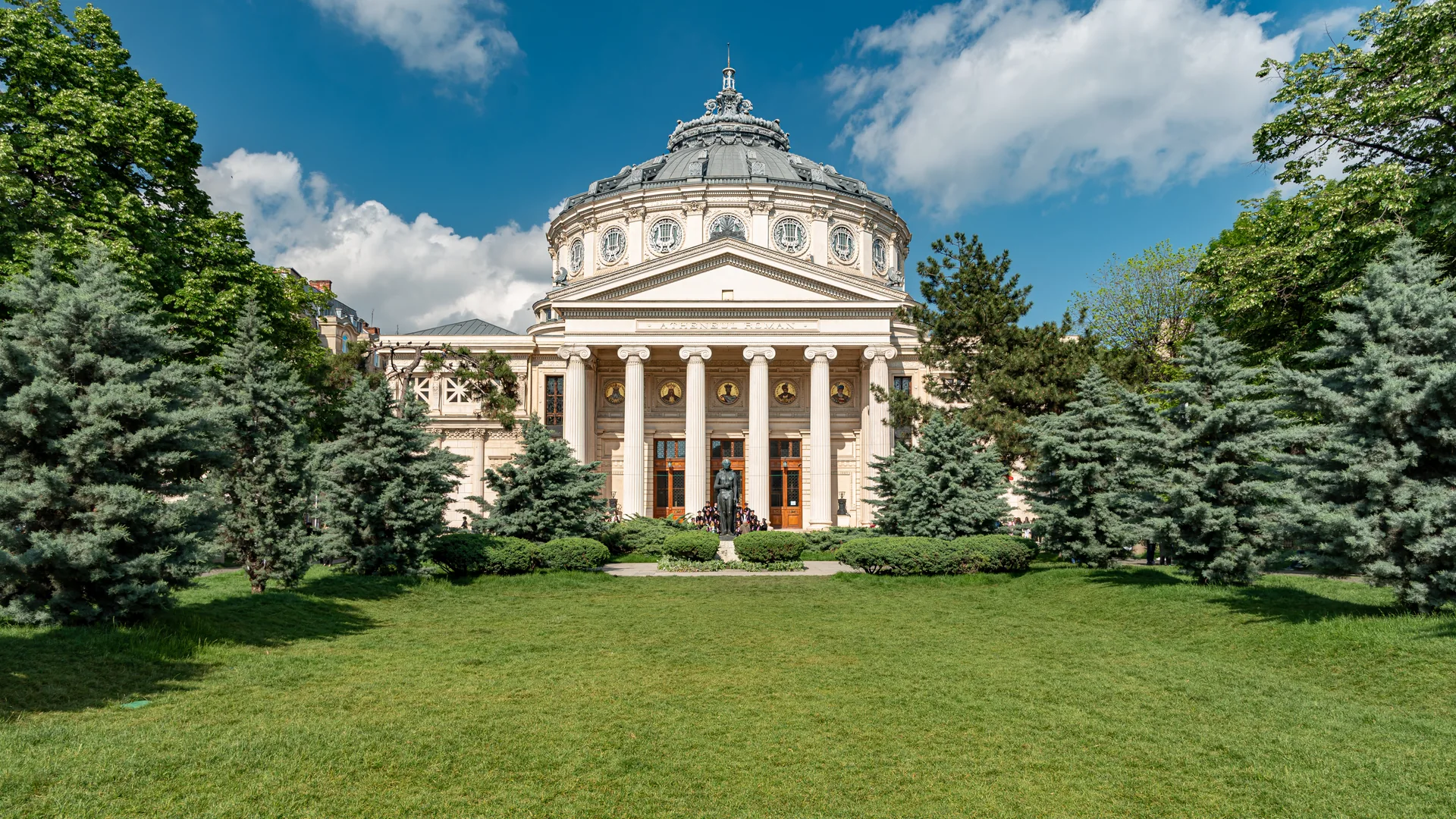
Bucharest makes sense when your Romanian life needs several things at once: a business base, a wide choice of cultural activities, frequent flights and different schooling or medical options to investigate. The central area around the Athenaeum and Calea Victoriei feels very different from the office districts in the north or the residential streets around Tineretului. Choose the version of the city you will actually use on an ordinary Tuesday.
The most consequential decision is often the relationship between home, school and work. A polished apartment on the other side of town can leave you managing two difficult journeys every day. Start with those fixed destinations, then shortlist homes within a realistic walk or a simple public-transport connection. A first visit should include a working day, an evening and a grocery trip—not only the historic centre.
What may appeal
- Metro-based choices across very different neighbourhoods
- National-capital cultural life and air connections
- Scope to compare several education and medical arrangements
What to weigh up
- Cross-city journeys can undermine an attractive apartment choice
- Building-level assessment and heating checks matter
- Large-city costs must be priced to the household, not a headline budget
Cost of living
Build the budget around the actual household
Compare properties on total recurring cost and the cash needed before the first normal month. Keep an agent’s fee separate from a refundable deposit and from advance rent. If the quotation is in euros but you pay in lei, agree the exchange-rate mechanism in the contract. None of these numbers should be inferred from a citywide “expat budget”.
A family using private education, a self-employed person arranging their own insurance and an employee with an agreed benefits package will have different spending patterns. Ask each provider for an itemised written quotation. For a business owner, company accounting, residence applications and tax advice belong in a separate operating and relocation budget so the apartment comparison remains intelligible.
| Budget layer | Include | Decision check |
|---|---|---|
| Before move-in | Deposit, initial rent, any disclosed agency fee, translations and travel | Clarify which sums are refundable and the conditions. |
| Monthly home cost | Rent, building charges, utilities, connectivity and parking if needed | Use the actual apartment’s bills and written inclusions. |
| Family services | School, transport, meals, childcare and healthcare arrangements | Confirm availability and eligibility before treating a quotation as a place. |
| Cross-border obligations | Business administration and both countries’ tax work | Budget separately from household living costs. |
Neighbourhoods & finding a home
Websites to find a home
| Website | Search for | Coverage |
|---|---|---|
| Imobiliare.ro | Rent / Buy | Romania |
About these links
Property-search websites help you find listings; individual properties and agents have not been vetted by Offshore Capitalist. Confirm availability, the legal right to let or sell, and payment instructions before committing.
- Imobiliare.ro · Checked 2026-10-14
Choose Vânzare or Închiriere and the city or neighbourhood. Confirm the property address, lease term and agency costs.
Five areas to test against your routine
These are starting areas for viewings, not a ranking of safety or a claim that every property has the same character. Walk from the actual entrance to the transport stop: a neighbourhood name can cover a much larger area than an agent’s description suggests.
| Area to explore | Why consider it | What to test |
|---|---|---|
| Calea Victoriei / Piața Romană | Central museums, the Athenaeum and walkable café streets suit people who use the city frequently. | Check evening activity, the building’s assessment and whether the bedroom faces a busy street or courtyard. |
| Cotroceni | Consider residential streets and cultural surroundings when you want a neighbourhood feel near the centre. | Metro access varies by address. Test the complete school or office route and inspect older-building maintenance. |
| Tineretului / Timpuri Noi | A useful shortlist for combining park access with metro-based commuting. | Do not conflate the two stations or their lines. Walk the route at your actual departure time. |
| Aviatorilor / Dorobanți / Floreasca | Worth exploring if daily commitments are in the north or park access is a priority. | Some addresses are less convenient to the metro than the broad area label implies. Price the last part of the journey. |
| Titan / neighbourhoods around established eastern metro stops | A way to compare ordinary residential streets and local shopping with a central address. | Test the necessary transfer, evening return and building-specific heating before trading journey time for more space. |
Check the building before negotiating the furniture
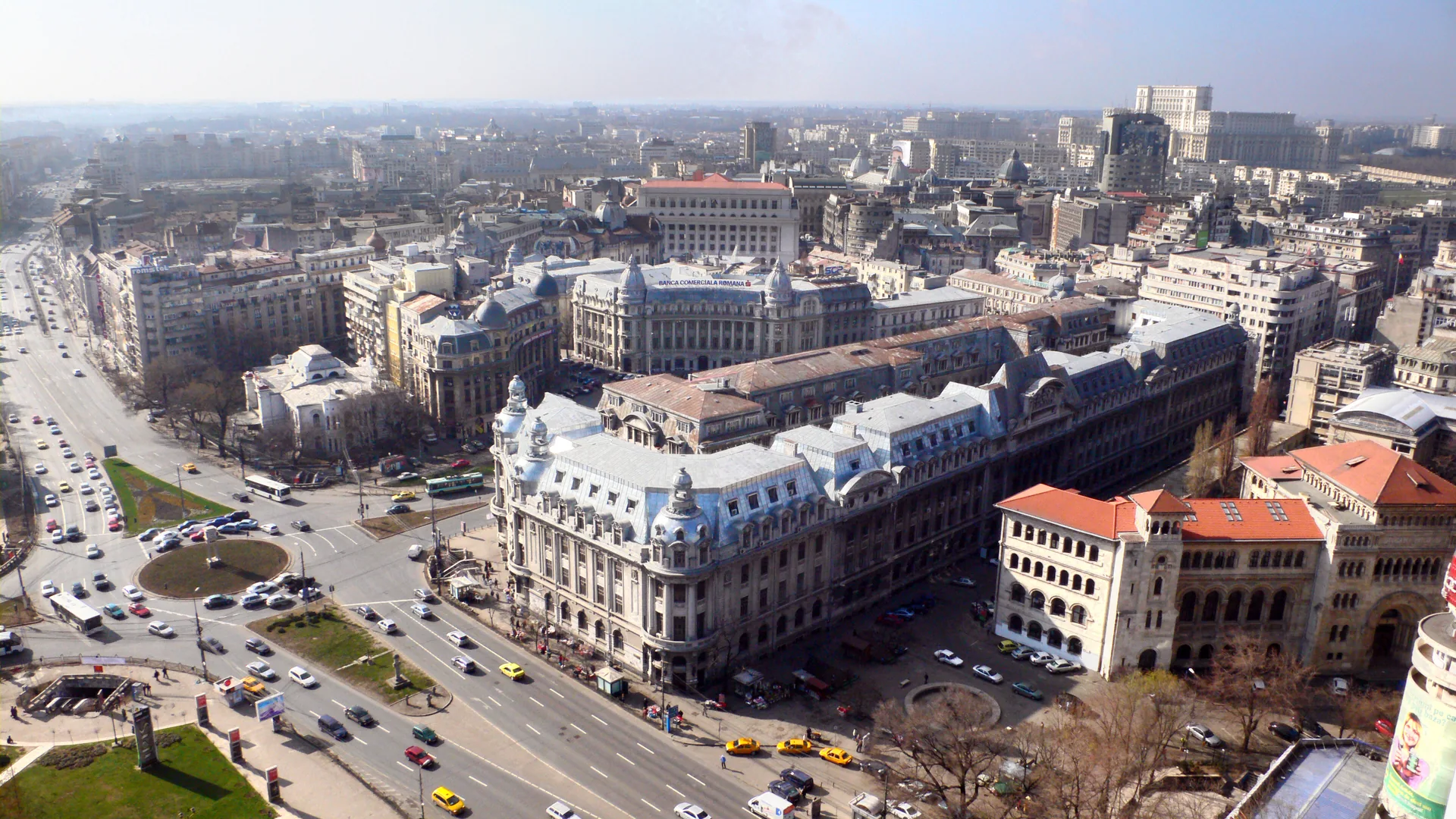
Bucharest’s AMCCRS register records technically assessed buildings. Use the exact address and ask for the actual assessment and any completion evidence for strengthening work. Absence from a published list is not a structural inspection. A renovated kitchen or a recent façade does not establish the condition of the whole building.
Article 5 of Law 212/2022 restricts residential letting and granting residential use in buildings formally classified RsI until completion acceptance of the relevant safety works. Do not treat this as a restriction on every older building or as proof that all other buildings are safe. An uncertain or conflicting classification needs independent professional clarification before money changes hands.
For the tenancy itself, record the permitted occupants, currency and payment method, deposit deductions, notice, repairs and inventory. Ask for recent winter utility statements and identify the heating/hot-water arrangement. Inspect pressure, ventilation, damp, lift condition and access after dark. Agree who arranges internet and whether the owner will supply the housing evidence required for your specific residence application.
Schools & childcare
Let the school decision shape the address
For 2026–27, the Ministry’s preparatory-class guidance uses age six by 31 August 2026; children turning six from September through December have the recommendation/evaluation route. The same guidance distinguishes the relevant assessments for children returning from abroad. These are school-year rules, not permission to enrol every child on arrival at any chosen school.
For older pupils, CNRED directs recognition of school periods abroad to the county inspectorates or Bucharest inspectorate. Contact the school and inspectorate before signing a long lease. Send the child’s age, completed years, transcripts, language background and support needs; obtain the correct current document list. If comparing international schools, ask which curriculum and qualification the particular campus delivers, whether a place is confirmed, and what the full daily transport and after-school arrangements cost.
The county equivalence methodology covers Romanian, EU/EEA/Swiss citizens and people seeking or holding international protection. Other third-country families should confirm the applicable admission and recognition procedure with the school and education authorities; do not assume every nationality follows the same route.
Healthcare
Arrange access before you need an appointment
Confirm insured status and enrolment with a family doctor; a Romanian address alone does not establish funded care. CNAS distinguishes services by coverage and provider contract. A private clinic subscription is a separate product.
Before moving, list ongoing treatment, prescriptions and any specialist appointments that cannot wait. Ask prospective practices about language, records transfer, appointment booking and how referrals work. For private cover, read hospitalisation, maternity, pre-existing-condition and reimbursement terms. Keep transition cover until the relevant insurer confirms when the new arrangement actually starts, including for each family member.
Sources for this section
Getting around
Use the metro as an anchor, then check the surface journey
Metrorex is the source for the operational network and service notices. Put the nearest usable station—not simply the nearest station on a diagram—into your housing comparison. Stairs, interchange walks and the final street crossing matter when travelling with children, shopping or limited mobility. Ask the station operator about the access you need instead of inferring step-free travel from a map symbol.
For a route involving buses or trams, test it at the time you would commute. Keep an alternative for maintenance or disruption. If you plan to drive, identify a lawful parking arrangement in the lease and its exact location; space visible on the street during a viewing is not a reserved parking right. A car can be useful for trips outside the city without being the simplest solution for the everyday school run.
Sources for this section
Airports & international connections
OTP is an airport trip, not a city-centre address
Henri Coandă Airport is in Otopeni. STB lists bus 100 between Piața Unirii 2 and Henri Coandă, while rail connects the airport with București Nord. CFR confirmed restoration of the airport railway on 7 September 2026 after a temporary interruption. STB also announced airport stop changes from 22 April 2026 during terminal works. Check both the current timetable and boarding point before travelling.
Compare the whole chain: flight arrival, baggage, transfer to your neighbourhood and access to the apartment. A railway connection can work particularly well if Nord is convenient to your destination; a central bus may involve less onward travel elsewhere. For late arrivals, agree a lawful backup transfer and a key handover that does not depend on the last advertised connection. Check the airport code on every ticket because Bucharest also has Băneasa Airport.
Gateway options
Compare gatewaysBucharest Henri Coandă International AirportOTP
InternationalOtopeni, Bucharest metropolitan area ·  Romania
Primary gateway Otopeni, Bucharest metropolitan area. Compare the complete onward journey to Bucharest with your flight times, luggage and arrival hour.
International gateway for Bucharest. Compare the current destinations, operating season and ground transfer for your itinerary.
Sources & connectivity notes
International passenger services. Check current routes and seasonal schedules.
Research checked 2026-10-13. Routes can vary by season.
Climate & environment
Month by month
Bucharest — WMO city climatological series · 1981–2010 averages
January averages
- Mean daily high
- Mean daily low
- Monthly precipitation
°F and inches are converted from the metric values and rounded for display.
These 1981–2010 averages show the seasonal pattern of daily highs, daily lows and precipitation. They are historical climate normals, not a current forecast or limits on the weather you may experience.
The source identifies a city climate series but does not confirm a specific observation station. Use it as city-level context; elevation, neighbourhood and building conditions may differ.
All monthly values
| Month | Mean daily high | Mean daily low | Monthly precipitation |
|---|---|---|---|
| January | 2.8°C | -4.8°C | 33.2 mm |
| February | 5.5°C | -4.0°C | 33.3 mm |
| March | 11.4°C | 0.1°C | 39.2 mm |
| April | 18.0°C | 4.9°C | 48.8 mm |
| May | 24.0°C | 9.6°C | 56.4 mm |
| June | 27.7°C | 13.6°C | 79.1 mm |
| July | 29.8°C | 15.4°C | 64.3 mm |
| August | 29.8°C | 14.9°C | 51.3 mm |
| September | 24.6°C | 10.5°C | 53.3 mm |
| October | 17.9°C | 5.4°C | 47.4 mm |
| November | 9.8°C | 0.6°C | 43.0 mm |
| December | 3.8°C | -3.4°C | 44.4 mm |
Sources, station & data quality
WMO World Weather Information Service · Bucharest — WMO city climatological series. These averages describe the stated period; they are not a forecast. Temperatures are average daily highs and lows, not extremes. Precipitation is an average monthly total, not a count of wet days.
Use the published city series. The city JSON also carries stationName and city coordinates; the climate object does not independently establish that these identify the observation station for these normals.
The published series uses 1981–2010. It is not directly period-matched to the 1991–2020 series shown for some other cities.
Monthly mean temperatures are not published and remain unknown. No mean is estimated by averaging daily highs and lows.
The source supplies no completeness flags or available-year counts. Its city-record coordinates are not treated as a verified climate-station location.
The downloadable data also preserves rainy-day counts, defined as days with at least 0.1 mm of precipitation.
Celsius and millimetres are transcribed from the WMO city series. Fahrenheit and inches are calculated as °F = °C × 9/5 + 32 and inches = mm / 25.4, then rounded for display. Converted units do not add measurement precision.
Completeness flags and available-year counts are not supplied in this source. No station identifier has been assigned where the cited source does not identify one.
Plan for summer heat and a real heating season
WMO’s published Bucharest 1981–2010 normals give January mean daily high/low temperatures of 2.8/−4.8°C and July 29.8/15.4°C. They are historical climate averages, not maximum possible temperatures or a 2026 forecast. The monthly series also includes precipitation through the year, so “summer” does not mean rain-free.
At a viewing, ask how the bedroom performs in hot weather and whether cooling is installed, working and authorised. Test shading and ventilation as well as heating. A top-floor home, a shaded courtyard and a street-facing apartment can feel very different. Keep a rainy-day and cold-weather version of your planned commute; a route that is pleasant during a spring visit may be less comfortable with luggage in winter.
Sources for this section
Culture, community & daily life
Make the first month about ordinary life
ARCUB’s 2026 Străzi Deschise programme brings pedestrian and cultural activity to Calea Victoriei on designated weekends. It offers a useful way to see public life beyond offices and apartment listings, but an event closure is not a promise that the street is permanently pedestrianised. Check the current calendar before arranging access or parking.
Build repeatable habits close to home: a grocery shop, a language class, a regular activity and a route to a park. For a remote business owner, test the actual home connection, a backup mobile connection and a place for confidential calls. Keep Romanian residence planning connected to where you work and make company decisions; neither an overseas customer base nor a foreign bank account determines the tax outcome.
Sources for this section
What residents say
These are attributed public experiences, not client testimonials. Housing, neighbourhood and household circumstances affect the experience.
Planning your move
Your move, step by step
These are planning stages, not authority processing promises. Visa validity, registration requirements and school deadlines take priority over the suggested sequence.
01Set the legal route and daily anchorsBefore booking the move
Resolve each person’s residence basis, employer or business implications and schooling priorities. Put work and school on the same map before selecting an apartment.
Documents & evidence
- Passports and civil-status records
- Employment/business summary
- School transcripts and required support
- Assuming a lease grants residence
- Choosing housing before the school route
02Inspect the address and buildingBefore paying the tenancy deposit
Check ownership/authority to let, address evidence, seismic assessment and utility arrangements. Visit the street at commuting and evening hours.
Documents & evidence
- Draft lease and inventory
- Assessment/strengthening records where relevant
- Recent bills and meter details
- Equating cosmetic renovation with structural assessment
- Treating an unlisted building as assessed safe
03Arrive and establish the evidence trailOn arrival; follow applicable reporting deadlines
Confirm required accommodation reporting with the host for third-country arrivals. Preserve entry and housing evidence and arrange the appropriate territorial IGI procedure.
Documents & evidence
- Travel and arrival records
- Signed occupancy evidence
- Insurance and route-specific application records
- Confusing host reporting with a residence application
- Using the third-country reporting procedure as an EU registration substitute
04Activate household servicesAs eligibility and appointments allow
Confirm insured status, doctor access, school placement and connectivity. Rehearse the actual daily journey before work or school begins.
Documents & evidence
- Insurance confirmation
- School decision and transport details
- Utility and internet contracts
- Assuming benefits start when the lease starts
- Leaving special medical needs until the first illness
05Review the first operating monthAfter the first complete cycle of work and bills
Reconcile housing costs, check the tax-residence calendar and review where company decisions are being made. Keep contact details current with the relevant institutions.
Documents & evidence
- Actual household invoices
- Travel-day log
- Employer/accountant action list
- Ignoring foreign-company management while focusing on personal residence
- Losing evidence needed for renewal
Sources & research notes18 references
Sources supporting this guide. Research draft awaiting editorial review.
- IGI — residence registration for EU/EEA/Swiss citizens
- OUG 194/2002 — current foreigners law
- IGI — third-country accommodation reporting; EU/EEA/Swiss distinction
- CNAS — insured person guide, January 2025 edition, access and provider workflow
- Education Ministry — 2026–27 primary enrolment questions and answers
- CNRED — school-period recognition through county/Bucharest inspectorates
- ANAF — tax-residence guidance
- Law 212/2022 — seismic-risk reduction, Article 5 residential letting restriction
- Bucharest AMCCRS — assessed buildings register
- Metrorex — official network map, operating and planned lines distinguished
- STB Digital — line 100, Piața Unirii 2–Henri Coandă
- STB — airport stop changes from 22 April 2026
- CFR — airport rail service restored 7 September 2026
- ARCUB — Străzi Deschise București,2026 edition
- ARCUB — Calea Victoriei, Cotroceni and sector 3 community programme
- WMO WWIS — Bucharest city 200,1981–2010 climatological series
- r/bucuresti — Prima mutare in Bucuresti,14 April 2025
- Education Ministry — OMEC 7303/2024 methodology, consolidated November 2025, published by Timiș inspectorate
In an April 2025 r/bucuresti relocation discussion, respondents stressed proximity to the actual workplace and having more than one transport option. A contributor who described living locally favoured Tineretului/Timpuri Noi for park and metro access. The useful lesson is to test the precise journey; their rent figures and personal preferences are not current market evidence.
Published, self-selected forum comments; identities and residence were not independently verified. Anecdotal viewing prompts, not a representative survey, current price benchmark or our client testimony.