
City at a glance
A harbour city where the hills shape everyday life
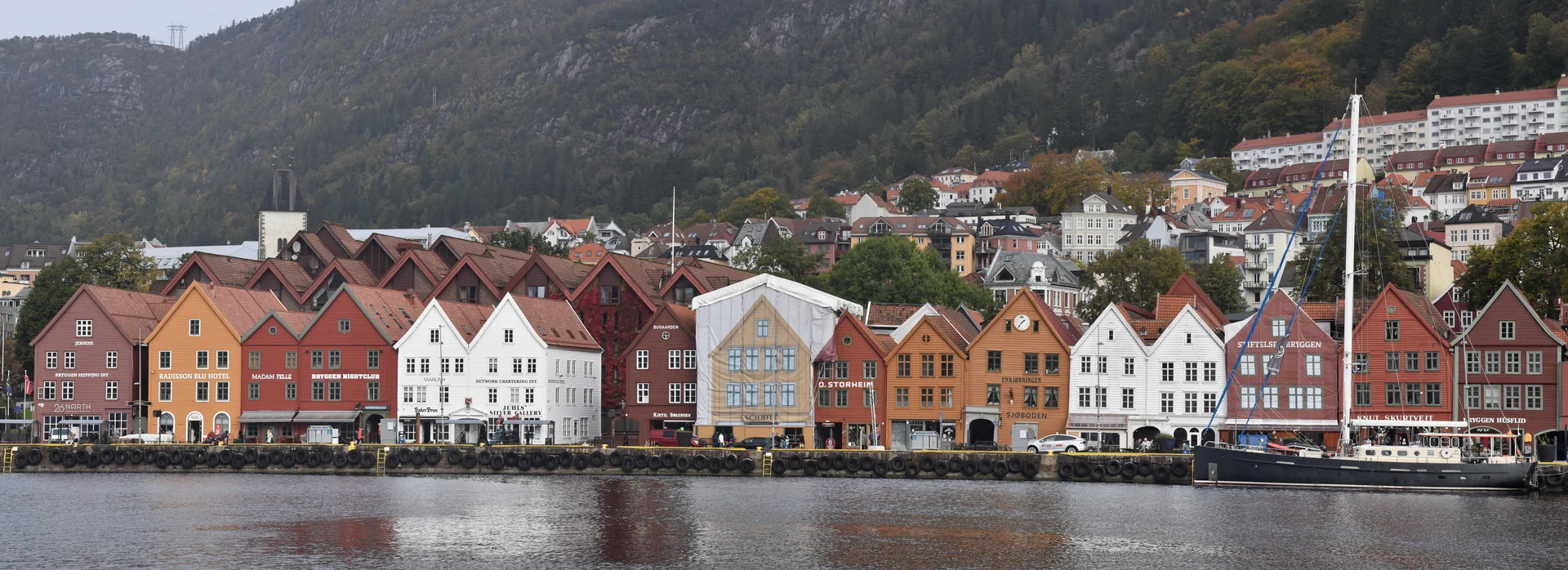
Bergen puts old waterfront streets, university life and steep wooded hills close together. The attraction is easy to see from Fløyen; the important question is which part of that landscape you want to live in every working day. A central home can make errands and evening plans straightforward, while an uphill address can add a substantial climb to the same short-looking map distance.
For an international business owner, Bergen can make sense when access to trails and a compact urban routine matter more than being in the capital. Start with a real working week: calls, a quiet room, school collection, exercise and flights. The city centre, the southern light-rail corridor and the northern waterfront offer different answers. A station location alone will not tell you how difficult the last walk home is.
What may appeal
- Distinct central neighbourhoods with the hills and waterfront close by
- Direct light-rail connection between the centre and airport
- Clear municipal newcomer-school and language-support starting points
What to weigh up
- Steep last-mile walks can change the value of an otherwise central address
- Frequent rain makes the building’s ventilation and drying space consequential
- The temporary introduction-school route may differ from the eventual local-school commute
Neighbourhoods & finding a home
Websites to find a home
| Website | Search for | Coverage |
|---|---|---|
| FINN Eiendom | Rent / Buy | Norway |
About these links
Property-search websites help you find listings; individual properties and agents have not been vetted by Offshore Capitalist. Confirm availability, the legal right to let or sell, and payment instructions before committing.
- FINN Eiendom · Checked 2026-10-14
Choose Kjøpe or Leie and the municipality. Distinguish ordinary homes from the separate holiday-property and commercial categories.
Four areas with different daily rhythms
The useful shortlist is specific enough to walk. These districts are geographic starting points; the questions in the final column are our viewing suggestions, not claims that one area is universally better or less expensive.
| Area | What it offers | A practical tradeoff |
|---|---|---|
| Nordnes | A peninsula beside the centre, with older streets and housing between Vågen and Puddefjorden. | Walk the whole route with groceries or a pushchair. In an older building, look closely at stair access, storage and the room’s usable light. |
| Sandviken | Wooden-house streets northeast of the centre, with the waterfront and rising terrain close together. | A low waterside address and an uphill address are different propositions. Test the actual bus stop, slope and school route rather than the district label. |
| Møhlenpris / Marineholmen | The university-facing area below Nygårdshøyden, with housing and the research/business environment around Marineholmen. | Compare ordinary residential streets with development and activity around the waterfront. Ask where deliveries, waste collection and evening noise reach the flat. |
| Nesttun / the southern light-rail corridor | An alternative to the inner-city districts, linked to the centre and airport by Line 1. | The rail connection is useful, but the home may still require a feeder trip. Time school collection and the station walk before accepting a longer daily commute. |
Renting: understand the building as well as the agreement
A bright photograph of a wooden house does not answer the practical questions. At a viewing, inspect ventilation, signs of moisture, bathroom extraction and places to dry wet coats. Ask how the property is heated, whether electricity or heating is included, and how utility costs are evidenced. In a basement or hillside flat, look at daylight and the external ground level rather than relying on the listing’s room count.
Norwegian deposit protection matters from the first payment. The deposit belongs in a separate blocked bank account in the tenant’s name; it should not be sent to the landlord’s everyday account. A guarantee is a different product. Get its cost and conditions in writing, alongside the rent, notice provisions and inventory.
Prepare a compact application pack with identification, income explanation and references. If your income comes from a company abroad, show how you personally receive it rather than expecting a corporate bank balance to explain household affordability. This is preparation for the landlord’s assessment, not a claim that every landlord must accept a particular income source.
Sources for this section
Schools & childcare
The local school is the starting point
Use Bergen’s school-catchment map for the actual address, then contact the local school. Newly arrived families have a welcome conversation and can request an interpreter where needed. Bring prior school records and explain the child’s Norwegian level and any learning or medical support.
Bergen’s August 2026 guidance distinguishes years 1–2, where adapted provision can be arranged at the local school, from years 3–10, where a newcomer may apply for an introduction class. The introduction offer can last up to two years; it is a route to ordinary teaching, not a promise of two years in a preferred school. The school assesses language needs and handles the application with parental consent.
Ask separately about school-hours coverage, after-school care and the journey to an introduction school. An address that suits the adults can produce a different school trip during the language transition. For younger children, obtain a confirmed kindergarten place and schedule before treating full working days as available.
Sources for this section
Healthcare
Establish care and payments without making one depend on the other
The regular-GP scheme is linked to qualifying registered residence; an ordinary D number does not, by itself, give the same entitlement. Check your healthcare basis and GP registration with Helsenorge, and bring a medication and treatment summary so an administrative transition does not interrupt ongoing care.
Bank onboarding is another separate process. Ask the bank which identity and address evidence it needs and what it can accept while registration is being completed. Keep a working payment method and access to funds during the move. An approved account does not automatically mean BankID is issued at the same appointment.
Airports & international connections
Light rail, airport travel and the last uphill kilometre
Skyss runs Bergen’s public transport network. Light Rail Line 1 connects the centre with Bergen Airport at Flesland (BGO); Line 2 connects the centre and Fyllingsdalen. That makes the two lines useful anchors for a housing search, but they are not interchangeable airport routes. Check the particular station, interchange and final walk for a candidate address.
Ordinary Skyss tickets and the commercial airport express are separate products. Before buying a pass, check its zones and modes; before booking an early flight, check the first departure and terminal arrival time. Rail journey time is only one part of the trip when you have luggage, children or an uphill walk.
For a car-based household, compare the full cost of parking and the route you would actually drive with a transit-based home. For a cyclist, test the gradient and bicycle storage. These choices are especially consequential if one adult travels often and the other needs to manage the whole school routine alone.
Gateway options
Compare gatewaysBergen AirportBGO
InternationalFlesland, Bergen ·  Norway
Primary gateway Skyss runs Bergen’s public transport network. Light Rail Line 1 connects the centre with Bergen Airport at Flesland (BGO); Line 2 connects the centre and Fyllingsdalen. That makes the two lines useful anchors for a housing search, but they are not interchangeable airport routes. Check the particular station, interchange and final walk for a candidate address.
International gateway for Bergen. Compare the current destinations, operating season and ground transfer for your itinerary.
Sources & connectivity notes
International passenger services. Check current routes and seasonal schedules.
Research checked 2026-10-13. Routes can vary by season.
Climate & environment
Living with rain, slopes and changing light
Bergen’s position among mountains brings frequent rain, and the municipal climate description connects rainfall to that topography. The city’s wet-weather routine is part of its character: waterproof outerwear, an entryway for boots and a dependable place to dry clothing make a bigger difference than they would on a short visit.
A sunny week in spring or summer is a good way to explore the trails, but a second visit in autumn gives a different view of the home. Notice how much daylight reaches the working room and how the path behaves when wet. On an exposed or steep route, a small distance can be inconvenient with shopping, luggage or a tired child. Indoors, assess ventilation and warmth together rather than simply choosing the strongest heater.
Nature can still be part of an ordinary weekday. Decide which routes you will use close to home, and build a social routine around recurring activities rather than reserving all outdoor time for occasional major hikes.
Sources for this section
What residents say
These are attributed public experiences, not client testimonials. Housing, neighbourhood and household circumstances affect the experience.
Planning your move
Fit the Bergen move into the business plan
The neighbourhood decision sits inside a broader move. Norway’s personal tax system can bring overseas income and wealth into the reporting picture, while a foreign company needs a separate examination of work performed and decisions made from Norway. Sorting the household move alone is not enough for an owner who continues to run an international business.
Offshore Capitalist can help you assess the cross-border questions and define a coordinated scope before you commit. Start with citizenships, current residence, ownership, activities and intended move date, then compare the Norway plan with realistic alternatives.
Sources for this section
Your move, step by step
Start with the residence basis and household needs, then work through the steps that depend on the address and identity registration. These are planning stages rather than promised processing times.
01Choose a practical addressBefore signing a long lease
Walk Nordnes, Sandviken or Møhlenpris, and compare a southern rail-corridor address if airport access matters. Test the actual gradient and school journey rather than straight-line distance.
Documents & evidence
- Candidate addresses and actual work locations
- Household residence and work basis
- School or childcare requirements
- Treating visitor accommodation as an adequate long-term address without checking
- Choosing a home before testing the family commute
02Put the tenancy and deposit in orderBefore paying the deposit or taking possession
Confirm the person entitled to let, the written agreement, included services and any guarantor arrangement. Agree an inventory and dated photographs. Arrange the protected deposit account rather than paying a deposit into the landlord’s ordinary account.
Documents & evidence
- Tenancy agreement and identity of the parties
- Deposit account documentation
- Inventory, meter readings and condition photographs
- Paying before verifying the landlord and property
- Confusing a non-refundable guarantee product with money held in a deposit account
03Complete the applicable arrival and identity stepsFollowing the official route for your intended stay
Follow Skatteetaten’s move and identity instructions. Some residence-permit cases trigger population registration through the immigration process; establish whether a separate move notification or identity appointment is needed for your case. Keep the actual address current.
Documents & evidence
- Original identity documents
- Evidence of residence/work basis and planned stay
- Lease and family/custody documents where applicable
- Assuming a D number and registered resident status are interchangeable
- Assuming population registration itself creates immigration permission
04Start school and essential servicesSchool enquiries can begin before every administrative step is finished
Contact the catchment school for the welcome conversation and language assessment. For years 3–10, discuss whether an introduction-school application is appropriate, and plan the resulting commute.
Documents & evidence
- School reports and previous language/support information
- Relevant medical information and coverage evidence
- Identity, address and source-of-funds evidence for banking
- Waiting silently for a digital login while school placement needs attention
- Treating a bank account and BankID issuance as the same decision
05Review how the move works in practiceAfter your first ordinary working weeks; before filing and renewal deadlines
Reconcile the budget with actual heating, transport and school hours. Keep work-location and asset records for the Norwegian tax review, and calendar the next tenancy, immigration and reporting deadlines. Address recurring travel or childcare problems before extending a temporary arrangement.
Documents & evidence
- Actual household spending and transport routine
- Work-location, ownership and remuneration records
- Deadline calendar
- Letting a relocation plan become outdated when the business changes
- Assuming foreign accounts or company income fall outside Norwegian reporting
Sources & research notes15 references
Sources supporting this guide. Research draft awaiting editorial review.
- Husleietvistutvalget — deposit and guarantee
- Skatteetaten — notifying a move to Norway
- Skatteetaten — national identity number
- Helsenorge — right to a regular GP
- Helsenorge — healthcare services
- Finanstilsynet — identity and anti-money-laundering requirements
- Skatteetaten — global tax liability
- Visit Bergen — city-centre districts and neighbourhoods
- Skyss — Bergen Light Rail lines and timetables
- Skyss — airport connections
- Skyss — ordinary single-ticket coverage
- Bergen municipality — school catchments
- Bergen municipality — special language education
- Bergen municipality — climate
- University of Bergen — Asia Alsgaard’s archaeological journey
In a May 2025 University of Bergen profile, archaeologist Asia Alsgaard describes the nearby mountains as an important part of her weekly life and mentions joining running and indoor-bouldering activities. Her experience illustrates one route into local life through recurring interests. It is an individual researcher’s account, not evidence that every newcomer will have the same social experience.
Paraphrased institutional interview; no client relationship or representative survey implied.