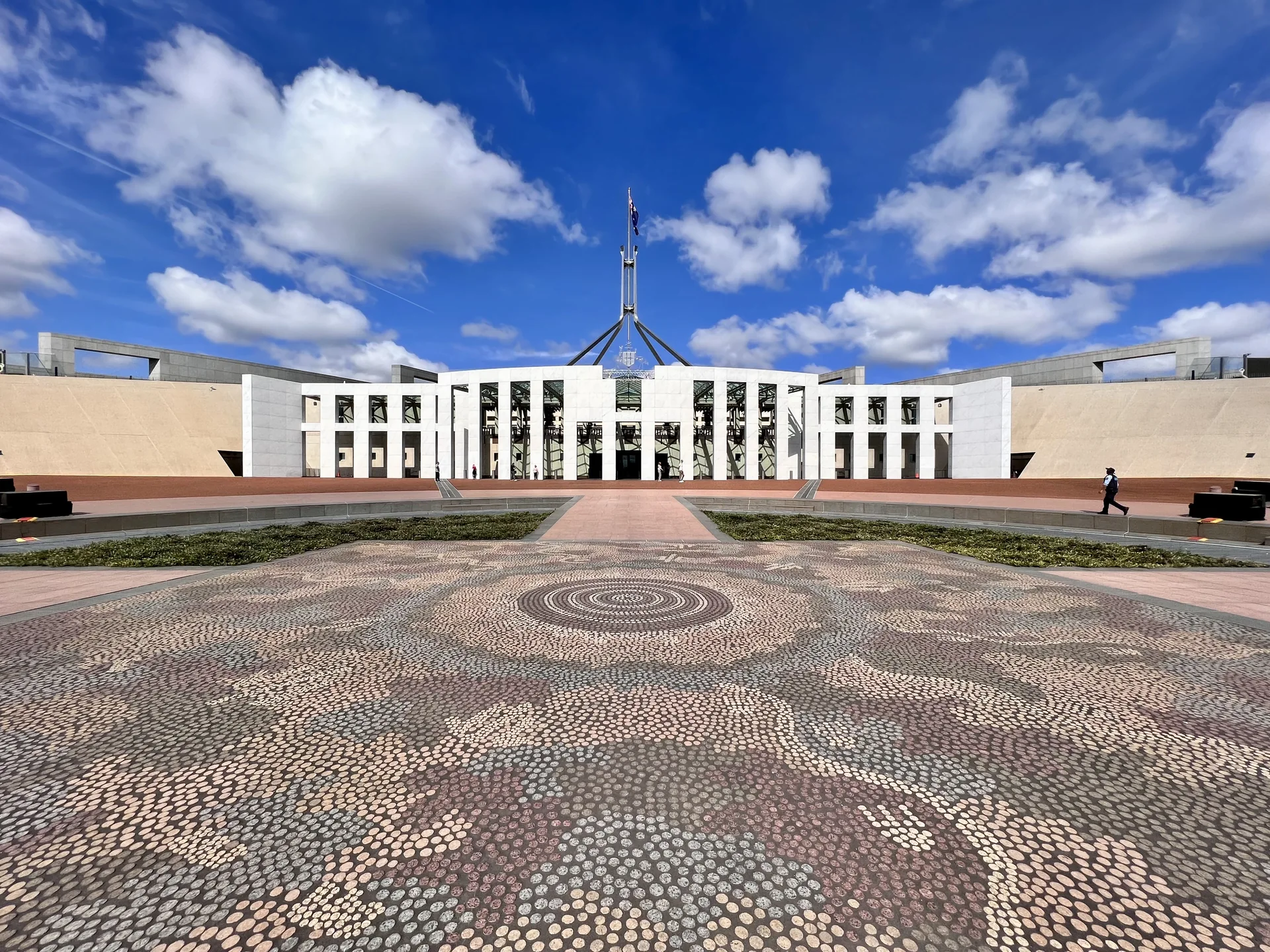
City at a glance
A planned city that works best with a deliberate daily base
Canberra can be attractive to a household seeking space, national cultural institutions and a routine built around work, school and outdoor activity. Its districts are spread across a planned landscape; the right place to live is often the one that reduces the number of separate journeys, rather than the one described as most central.
Someone working in an office precinct on one side of the lake may need a different shortlist from a remote worker who values a local shopping centre and walking routes. Think through weekday meals, school pickup and medical appointments. A green setting is an advantage only if the home is comfortable and the practical connections fit. Visit in cool conditions if possible, and do not choose solely from a warm holiday weekend.
Sources for this section
What may appeal
- Distinct town centres allow several different daily routines
- National cultural institutions and outdoor space
- A useful light-rail corridor and established rapid-bus connections
What to weigh up
- Trips between districts can dominate a poorly chosen routine
- Winter comfort and insulation status need close attention
- ACT and nearby NSW addresses cannot be treated as one administrative system
Cost of living
Price the complete routine, including warmth
A home that is less expensive to rent can still require more heating, driving or paid care. Compare a small set of realistic homes using the same household routine: school start and finish, weekly shopping, work appointments and regular travel. Keep refundable bond cash separate from expenditure and reserve money for initial accommodation while inspecting in person.
| Item | What to compare |
|---|---|
| Lease and bond | Rent-payment frequency, security bond and the handover inventory. |
| Comfort | Insulation status, heating arrangement and the rooms you will actually occupy all day. |
| Transport | Car use, parking and the alternative bus/light-rail route for each recurring destination. |
| Education | Visa-specific tuition position, school documents and before/after-school care. |
| Travel and services | Airport transfers, appointment locations and any regular trips outside Canberra. |
Sources for this section
Neighbourhoods & finding a home
Websites to find a home
| Website | Search for | Coverage |
|---|---|---|
| realestate.com.au | Rent / Buy | Australia — choose the city, metro area or suburb |
About these links
Property-search websites help you find listings; individual properties and agents have not been vetted by Offshore Capitalist. Confirm availability, the legal right to let or sell, and payment instructions before committing.
- realestate.com.au · Checked 2026-10-14
Choose Buy or Rent, then narrow by suburb and commuting area. Confirm the rental payment period, property type and total move-in costs.
Five Canberra bases to investigate
These districts offer different combinations of shops, housing and transport. The comparisons are practical viewing suggestions, not a claim that every property has the same access. Canberra's wider commuting area reaches New South Wales; a home there must be checked under that state's rental and school rules, rather than the ACT rules in this guide.
| Area | Potential fit | What to test |
|---|---|---|
| City, Acton and Braddon | A more central apartment routine with dining, shopping and cultural destinations nearby. | Bedroom noise, parking costs and the walk to the actual bus or light-rail stop; proximity to a map label is not enough. |
| Kingston and the inner south | Foreshore activities and established local centres may suit people whose regular destinations are south of the lake. | The work trip to northern districts, weekend activity near venues and how everyday shopping differs between the foreshore and older Kingston. |
| Dickson and the inner north | A local shopping base and access to the north–city corridor can reduce some daily travel. | The exact distance to light rail or a rapid bus, plus older-home insulation and shade. |
| Belconnen | A separate town-centre routine can work for people whose offices, study or family activities are in the west and north-west. | Do not treat every surrounding suburb as a walk from the interchange. Compare the actual bus connection and evening return. |
| Gungahlin | A northern town centre with a light-rail connection to the city can suit a household organised around that corridor. | Trips away from the rail route, school pickup and how much time a south-side destination adds to the week. |
ACT lease cash and paperwork
Under the ACT's ordinary residential tenancy guidance, the bond cannot exceed four weeks' rent and a landlord can ask for up to two weeks' rent in advance. The bond is a separate security payment held through the ACT Revenue Office process. Keep its receipt and a copy of the signed agreement.
Before committing, confirm occupants, start date, rent frequency, included appliances, parking and any garden obligations. A unit may have building rules or specific utility arrangements worth reading before you accept. Ask for a written answer where an advertised feature matters to you, such as a usable study, accessible entry or a particular internet connection.
The entry condition report is more useful with dated photographs and specific comments than with a series of unticked boxes. Record window seals, heating operation, damp marks and the condition of appliances. Save repair agreements and the landlord or agent's contact process so that an urgent fault does not become a search for the correct person after hours.
Sources for this section
The insulation transition is particularly relevant in 2026
The ACT ceiling-insulation standard distinguishes existing insulation rated at least R2 from a home with none or below R2, where an upgrade to at least R5 is generally required. Exemptions exist. The phase-in reaches 30 November 2026 for existing tenancies, with the official Renting Book explaining separate deadlines for new leases and properties entering the market after the transition.
Ask whether the property complies, the basis of any claimed exemption and when planned work will occur. Do not assume that every rental already had R5 insulation when this guide was checked in October 2026. The legal classification and the home's comfort are also different questions: inspect heating, draughts, bedroom temperature and morning sun. A compliant unit can still require a carefully considered household heating budget.
Sources for this section
ACT address and temporary-resident eligibility are separate checks
ACT public-school enrolment uses residential-address evidence and Priority Enrolment Areas. A temporary-resident dependant has a separate visa-specific route that can include fees or exemptions. Do not substitute a school-zone map for confirmation of the child's eligibility and charging position.
The official process asks for documents supporting the child, parents and visa circumstances. Assemble these alongside school reports, support plans and evidence of where the child will genuinely live. Ask the Directorate and proposed school about year placement and when the child may start. If considering nearby Queanbeyan or another New South Wales address, obtain that state's assessment rather than assuming access to an ACT school on the same terms.
Sources for this section
Healthcare
Organise regular care before it becomes urgent
Medicare eligibility depends on the relevant status rules, so verify your position with Services Australia rather than relying on an ACT address.
For a household requiring continuing treatment, contact an appropriate general practice and ask how referrals and repeat prescriptions can be managed. Bring medical summaries and records that a new clinician can use. Insurance should be checked for the treatments you need and any waiting periods. Include travel to appointments in the neighbourhood decision, particularly if a member of the family has mobility needs or cannot drive; a short line on a map may still involve several connections.
Sources for this section
Airports & international connections
Use the north–city rail corridor and the actual airport bus
Transport Canberra links the city and Gungahlin by light rail, with local and rapid buses connecting other destinations. MyWay+ supports the public-transport network's current payment options. Check the planned trip door to door rather than treating the entire city as equally rail-connected.
Canberra Airport and Transport Canberra identify Rapid 3 as the airport bus, serving the city and continuing towards Belconnen and Spence. It is a bus connection, not a light-rail station at the terminal. Verify the timetable for a late flight and consider the luggage walk from the final stop. If you keep a car, still test whether a useful bus or walking routine can cover school, shopping and occasional appointments.
Sources for this section
Gateway options
Compare gatewaysCanberra AirportCBR
InternationalServing Canberra ·  Australia
Primary gateway Serving Canberra. Compare the complete onward journey to Canberra with your flight times, luggage and arrival hour.
International departures from Canberra include direct flights and itineraries with an onward connection. Check which applies to your destination.
Sources & connectivity notes
International passenger services. Check current routes and seasonal schedules.
Research checked 2026-10-13. Routes can vary by season.
Climate & environment
Winter mornings and summer heat both shape the home
Canberra has a more pronounced cool season than Australia's warmer coastal cities. Winter mornings can be frosty, while summer still calls for shade and effective heat management. Plan for layers, comfortable indoor work space and safe early-morning travel rather than relying on a general impression of Australian weather.
The Bureau of Meteorology’s current Canberra Airport station began in 2008. Its shorter station record is useful context rather than a full thirty-year normal, and the airport setting does not measure every residential district. Use current forecasts and warnings when planning a journey or outdoor activity.
Sources for this section
What residents say
These are attributed public experiences, not client testimonials. Housing, neighbourhood and household circumstances affect the experience.
Planning your move
Keep the jurisdiction and immigration questions clear
A rental in Canberra does not grant a visa or permission for every kind of work. Review your conditions through Home Affairs. For international business owners, Australian personal tax residence and the management of overseas companies need separate analysis before everyday business decisions begin to be made from the new home.
The linked country guides give that wider context. An inquiry should explain both the intended family routine and the business activity: current country, visa position, planned arrival and where employees, clients and decision-makers remain. The practical move can then be coordinated around the decisions that carry the greatest consequences.
Sources for this section
Your move, step by step
A dependency-based sequence: the timing depends on your visa, school assessment and housing search. These are planning stages, not authority processing promises.
01Confirm jurisdiction and family eligibilityBefore the housing commitment
Decide whether the intended home is in the ACT or NSW. Check visa conditions and the relevant school route, then build the search around the fixed work and family destinations.
Documents & evidence
- Visa grants, proposed address area, school reports and work-location details.
- Nearby NSW homes do not automatically use ACT school or rental rules.
02Inspect comfort and the complete journeyDuring a reconnaissance stay
Test the bus or light-rail trip and inspect heating, draughts and the stated insulation position. Ask for the basis and timing of any compliance or exemption claim.
Documents & evidence
- Viewing notes, insulation correspondence and a door-to-door route plan.
- The October 2026 transition should not be simplified to every rental already having R5 insulation.
03Review and sign the ACT tenancyOnce the home and terms are verified
Confirm rent, bond, included utilities, parking, occupants and garden obligations. Preserve repair agreements and follow the ACT bond process rather than treating the bond as extra rent.
Documents & evidence
- Agreement, bond receipt, inventory and repair correspondence.
- A pleasant inspection does not replace a written record of important promised features.
04Complete handover and essential care and school stepsAt possession and in the first working days
Photograph the condition and test the heating. Finalise school admission, household services and healthcare continuity, and save the airport-bus plan for future travel.
Documents & evidence
- Condition report, address evidence, school approval and medical records.
- Confirm the child’s approved start and charging status before assuming attendance can begin.
05Reassess after a normal working weekOnce the household is operating locally
Check heating costs, pickup routes and appointment travel. Record outstanding repairs and calendar visa and school tasks. Review any change in company management or working location against the international plan.
Documents & evidence
- Running-cost record, household calendar and actual work/arrival details.
- A good town-centre choice should reduce repeated cross-city journeys.
Sources & research notes14 references
Sources supporting this guide. Research draft awaiting editorial review.
- Services Australia: Medicare enrolment
- Home Affairs: check visa conditions through VEVO
- ACT: starting a tenancy
- ACT: child dependants of temporary residents
- ACT: prove your residential address for education
- Transport Canberra: visitor and airport transport
- VisitCanberra: neighbourhoods
- VisitCanberra: City, Acton and Braddon
- VisitCanberra: Kingston and foreshore
- r/canberra: Most walkable suburbs
- Bureau of Meteorology: Canberra named-station statistics (all available years)
- ACT: ceiling insulation standard and transition
- ACT Renting Book, January 2026
- Canberra Airport: public transport
A May 2025 discussion about walkable Canberra suburbs included a resident describing Kingston as workable on foot with buses for occasional city trips. Other suggestions concentrated on local centres and the exact location within a suburb.
Anonymous forum contributions rather than a transport-performance survey; use the theme to test your own destinations and accessibility needs.