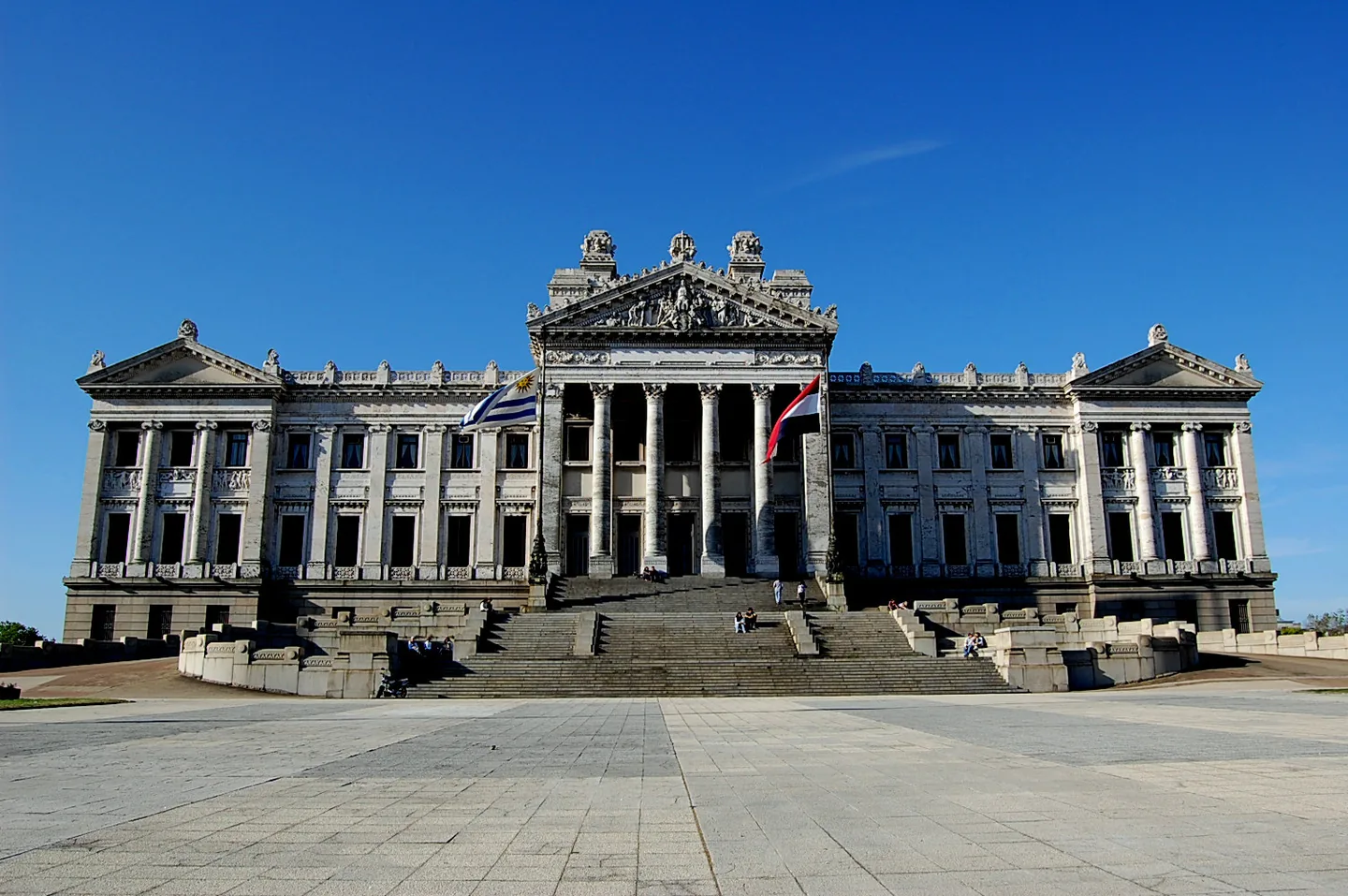
City at a glance
A waterfront capital with a neighbourhood rhythm
Montevideo suits people who want capital-city services, cultural life and a waterfront that can become part of an ordinary day. A walk on the Rambla, a neighbourhood food market and a familiar café are a more useful picture of settling here than a long list of tourist attractions. The trade-off is that living beside the water does not necessarily put you beside your job or your child’s school. Choose the recurring journeys first.
The official census profile estimates 1,302,950 residents in the department of Montevideo at 31 May 2023. The department includes the city and land beyond its dense urban neighbourhoods; it is not a total for the wider metropolitan area extending into Canelones and elsewhere. This guide concentrates on the urban neighbourhoods most relevant to a newcomer’s home search. It does not substitute the departmental figure for an independently verified city-proper or metropolitan count.
Spanish is the most useful investment in everyday independence: understanding a building administrator, a medical appointment or a school message matters even if your income comes from an English-speaking team. Test the city through a working week, including a wet evening and a routine grocery trip. Someone seeking constant big-city novelty may respond differently from a family seeking familiar local activities and a manageable social circle.
What may appeal
- Distinct central, park-side and coastal neighbourhoods allow different routines without choosing a different capital.
- The Rambla, food markets and arts venues can be part of ordinary weekly life.
- Published bus, utility and school schedules make important costs possible to compare before arrival.
What to weigh up
- Building charges, winter electricity and school payment schedules can materially change an attractive headline rent.
- An eastern school, a central home and a Ruta 8 office may form an inconvenient daily triangle.
- A small professional market or a quieter cultural rhythm may not suit every income plan or lifestyle.
Cost of living
What actual rental advertisements include
These asking prices were observed on 14 October 2026. They are three individual apartments, not average achieved rents or a claim that equivalent homes are always available. Gastos comunes are building charges added to the rent unless the advertisement says otherwise. Their inclusions matter: water, a caretaker or shared facilities can appear in that charge, while electricity and municipal bills may remain separate.
The listings do not clearly establish the furnishing supplied, so treat that as a question for the agent rather than assume furniture in a photograph is included. Compare stairs, lift access, internal light and the work room as carefully as bedroom count. An interior apartment and a street-facing one can offer quite different daylight and noise conditions at similar prices.
| Observed apartment | Monthly advertised charges | Practical detail |
|---|---|---|
| Buceo, Rivera and Luis Alberto de Herrera: one bedroom, 60 m² | UYU 25,000 rent + 2,850 building charges = 27,850 | Second floor by stairs; renovated, with a private terrace. |
| Pocitos, Baltasar Vargas and Timbó: two bedrooms, 55 m² | UYU 28,000 rent + approximately 4,000 building charges = approximately 32,000 | Interior apartment, first floor by stairs; insurer guarantees specified. |
| Punta Carretas, near Ellauri and Bulevar España: one bedroom, 50 m² | UYU 35,000 rent + 6,500 building charges = 41,500 | Garage and balcony; shared facilities and lifts. Confirm exactly what the building charge covers. |
Two monthly starting points, before food and healthcare
These scenarios cover selected recurring commitments only, using the advertised homes, Antel’s 2026 basic fibre plan and the 2026 STM one-hour electronic fare. They are not complete household budgets. Transport is the amount paid upfront, before any STM frequent-user rebate. Both assume 22 travel days with two separately charged journeys per adult each day. Rent availability, accepted guarantees and fibre coverage must be confirmed before relying on either address.
Add groceries, electricity, water or sewerage not included in building charges, healthcare, phones, household supplies, clothing and leisure. A car, pets, overseas trips or private schooling changes the total substantially. Initial furnishing, a guarantee charge, an agent’s commission and moving costs belong in a separate cash-to-arrive calculation. Do not present a potentially refundable deposit as money spent every month.
For food, the Ministry of Economy’s PreciosGub compares shop prices, while the municipality publishes neighbourhood feria locations. Build the same weekly basket at stores near the actual home, including quantities and dietary preferences. The guide does not attach a food allowance derived from another household’s forum comment or a national price series to these examples.
| Household assumption | Monthly calculation in UYU | Included |
|---|---|---|
| One adult in the Buceo advertisement | 25,000 + 2,850 + 1,650 + (44 × 52) = 31,788 | Rent, advertised building charge, basic fibre and 44 urban one-hour STM journeys. |
| Two adults in the Pocitos advertisement | 28,000 + approximately 4,000 + 1,650 + (88 × 52) = approximately 38,226 | The same categories, with 44 journeys for each adult. No child’s fares or school charges included. |
Sources for this section
- Advertiser — one-bedroom Buceo rental, listing 194387012
- Advertiser — Baltasar Vargas and Timbó rental, listing 194388888
- Montevideo — urban fares effective 5 January 2026
- Antel — fixed-data prices for 2026
- Ministry of Economy and Finance — PreciosGub grocery comparisons
- Montevideo — neighbourhood food-market directory
- Montevideo — STM frequent-user benefits
Electricity and internet: understand the contract
UTE’s residential simple tariff effective 1 January 2026 charges UYU 6.744 per kWh for the first 100 kWh and 8.452 for the next band through 600 kWh. It also charges UYU 83.2 per contracted kW and a UYU 324.9 monthly fixed amount. UTE identifies electricity consumption and contracted power as subject to 22% VAT, while the residential fixed charge is not. That is why adding 22% to the entire subtotal would be wrong.
At 3.7 kW of contracted power, 200 kWh produces approximately UYU 2,554.38, and 400 kWh approximately UYU 4,616.66, including that VAT treatment but before discounts, arrears or other bill items. These are consumption illustrations, not estimates of what one or two people necessarily use. Obtain winter and summer bills for the property; electric heating and hot water can make the difference.
Antel’s 2026 Fibra Básico is UYU 1,650 monthly including taxes, with advertised 400/30 Mbps service and a 500 GB allowance before a reduction to 3/0.5 Mbps. Its stated contract is two years. Confirm coverage, installation, equipment, any connection charge and early-termination conditions. A long internet commitment deserves attention if your first rental is temporary.
Neighbourhoods & finding a home
Websites to find a home
| Website | Search for | Coverage |
|---|---|---|
| InfoCasas — sales | Buy | Montevideo |
| InfoCasas — rentals | Rent | Montevideo |
About these links
Property-search websites help you find listings; individual properties and agents have not been vetted by Offshore Capitalist. Confirm availability, the legal right to let or sell, and payment instructions before committing.
- InfoCasas — sales · Checked 2026-10-14
City-wide purchase search. Separate residential property from offices and land, and account for building common expenses alongside the asking price.
- InfoCasas — rentals · Checked 2026-10-14
Compare the advertised rent with gastos comunes, the lease guarantee and furnished status. Use ordinary alquiler rather than alquiler temporal when seeking a long-term home.
Seven areas to compare around your daily routine
The official neighbourhood guide is useful for geography and local character. The comparisons below are practical prompts, not a ranking of safety or a forecast of property appreciation. Walk from the prospective front door to the bus stop and the shops. If a school or office is already decided, do that journey at the relevant hour before choosing a fashionable neighbourhood.
| Area | What may appeal | What to test |
|---|---|---|
| Ciudad Vieja and Centro | Historic streets, central services and cultural venues. | Building entrance, activity after office hours, evening return and delivery access. |
| Cordón, Barrio Sur and Palermo | Central urban life; Barrio Sur and Palermo connect strongly with candombe. | Noise at the actual address and how easily work, shopping and recreation fit on foot. |
| Parque Rodó and Punta Carretas | Park or waterfront routines and a broad range of apartment buildings. | Building charges, coastal exposure and the school journey rather than only distance to the Rambla. |
| Pocitos and Buceo | An established residential search area with coastal and commercial destinations. | Street versus interior rooms, parking, rush-hour buses and proximity to the specific office. |
| Malvín and Punta Gorda | Eastern waterfront neighbourhoods with a different relationship to the centre. | The full commute west, wind exposure and access to daily shops without a car. |
| Carrasco | A starting point for families whose school or regular destinations are in the eastern city. | Whether dispersed errands require driving and whether the chosen address is in Montevideo or adjoining Canelones. |
| Prado and Aguada | Prado’s green spaces and historic setting; Aguada for Parliament-area destinations and nearby schools. | The exact transport link to coastal offices and the condition of older houses or apartments. |
Searching, guarantees and the handover
InfoCasas has separate Montevideo rental and purchase searches. Set the neighbourhood, bedrooms and property type, then read the full description rather than compare headline prices alone. Ask whether the advertised floor area includes a terrace or garage. For a purchase, obtain professional advice on title, condominium obligations and any pending building work; a portal does not verify those matters for you.
A landlord’s accepted guarantee can decide whether a listing is realistic. The checked Pocitos advertisement names insurer guarantees; other listings name ANDA or the Contaduría General de la Nación. Acceptance by the landlord and approval by the guarantor are separate questions. Before paying an application fee, explain your residence position, where your income is earned and which records you can supply. Do not assume overseas income qualifies automatically.
Request a written schedule of entry cash and recurring charges. It should separate first rent, any deposit or guarantee premium, agent’s commission and its tax, building charges and utilities. Where an advertisement quotes one month plus VAT as commission, obtain the exact invoice and payment trigger. That is an advertiser’s term, not a universal rule requiring every tenant to hire an agent.
At the viewing, examine window seals, signs of damp, the hot-water system, heating and the electrical panel. Ask who deals with roof or common-pipe repairs. Before handover, record meter readings, keys, appliance condition and photographs with the landlord. Agree how repairs are reported and how the inventory and deposit will be reconciled at departure. Put any promise to repaint, repair or provide furniture into the contract.
Sources for this section
Work, business & opportunities
Local opportunities and the real office commute
Uruguay XXI describes a technology sector spanning software and specialised services, and its Smart Talent platform covers opportunities in technology, global services and other professional fields. These are national resources, not a vacancy guarantee or a city salary survey. Use them to identify employers and skills demanded, then check the actual place of work. English can matter for international teams; Spanish remains valuable for local clients and administration.
Zonamerica’s Montevideo campus is on Ruta 8 at kilometre 17.5. A job there should not be planned as though it were an office beside a central waterfront apartment. Ask about attendance days, company transport, the final stop or gate and the return after late meetings. A smaller distance on a map may still involve an awkward connection. For other employers, get the street address before agreeing to a lease.
Remote workers should compare upload requirements and usage with the fibre plan, test a mobile backup and arrange a quiet call space. A national business or residence route does not by itself settle your right to perform a particular activity or the tax treatment of overseas income. Keep those decisions in the country-level review. Regulated professionals should check recognition and registration rather than assume an overseas qualification is sufficient.
Schools & childcare
Start with placement and the school day
For the public system, ANEP publishes a migrant-enrolment guide and has a dedicated advice point. Contact it with the child’s age, previous year completed, residence address and available documents. Ask which local school can receive the child and how previous studies are assessed. Missing a document should prompt an enquiry about the appropriate provisional process, not an assumption that the child must remain out of school.
Prepare identity and birth records, school reports, relevant health information and the parent or guardian’s details. Ask which originals, translations or certifications are needed for that case. ANEP also describes Spanish support for enrolled migrant pupils through the educational system; discuss the child’s language needs with the school rather than assume an immediate individual course is included.
Compare more than curriculum names. Ask about learning support, collection times, lunch, holiday cover and transport. The extended day can be as important as tuition for working parents. Visit the school first and try the route with the child: a Carrasco campus and a central Aguada school lead to different housing shortlists. An offer of a place and the invoice should be confirmed before paying for a home chosen solely around that school.
Published fees for the coming school year
Sagrada Familia in Aguada publishes the following 2027 schedule. These are prospective 2027 tuition amounts, not current-year charges or a 2026 household-budget addition. They use twelve instalments; registration and unlisted extras are separate. The school’s admissions process includes family documents, interviews and administrative confirmation.
The British Schools publishes a different payment structure, with an entrance fee and ten fee instalments from January to October. Request its current grade-specific quotation. Compare the full year and the cash due before attendance, alongside transport, meals, uniform and learning support, rather than comparing a single monthly payment across schools.
| Sagrada Familia 2027 option | Monthly tuition in UYU | Twelve-instalment total |
|---|---|---|
| Ages 2–3, four-hour day | 15,680 | 188,160 |
| Ages 2–3, six-hour day | 20,190 | 242,280 |
| Primary, 7.5-hour day | 28,250 | 339,000 |
| Secondary, Educación Media Básica | 29,030 | 348,360 |
Healthcare
Register for care before you need an appointment
ASSE registration depends on the applicant’s position and household income. Its current procedure accepts specified foreign identity documents and residence or pending-residence evidence, alongside the relevant income records. Registration itself is free, but that does not mean every newcomer receives all care without charge: the procedure distinguishes eligible free or FONASA-linked affiliation from monthly paid affiliation. Resolve your category before relying on a clinic.
Once affiliation is established, find the local primary-care team and how to book follow-up appointments. Montevideo’s municipal polyclinics describe free access for ASSE users. Take medication lists, recent results and useful translated clinical summaries. Ask how prescriptions, referrals, dentistry and after-hours advice work at that location; a building near your home is not proof of the exact service or appointment you need.
Hospital Británico offers coordination for non-members, self-paying patients and people using insurance arrangements. Its facilities include the hospital on Avenida Italia and a Carrasco clinic on Avenida Bolivia. Ask which site handles the appointment, whether an insurer has authorised it, and whether the quote includes tests. No universal private GP or specialist price has been verified for this guide, so healthcare is not silently entered as zero in the budget.
Before the first night, save the emergency instructions for your actual health provider and establish which service to use outside normal hours. An insurance card alone may not explain the authorisation or payment procedure. For an ongoing condition, arrange continuity before moving rather than make the first prescription renewal an urgent problem.
Getting around
Urban bus fares and the STM card
From 5 January 2026, Montevideo’s electronic STM one-hour fare is UYU 52 and the two-hour fare UYU 78. The comparable cash fares are UYU 64 and 97. Forty-four one-hour electronic journeys cost UYU 2,288 upfront, compared with UYU 2,816 paid in cash. With at least 40 eligible trips of your own in a month paid electronically on an ordinary STM card, the frequent-user programme returns UYU 2 per trip. For 44 qualifying trips that is UYU 88 back, making the eventual transport cost UYU 2,200. The credit becomes available from the following month’s 10th day and is transferred at recharge; postpay users receive a statement credit. Trips paid for other people do not count towards your eligibility. These are ordinary urban fares; do not assume the same amount covers every suburban trip into Canelones or an airport transfer.
The first ordinary STM card is free, with a recognised identity document such as a passport. Tell the driver which journey product you need and check the ticket. Plan transfers against the product’s rules, not only against an app’s suggested connection. Keep enough balance for the return and learn the recharge arrangements before a time-critical school or work journey.
Use the municipality’s route and timetable tool for the exact day. Try the stop, crossing and final walk, including with a pushchair or reduced mobility if relevant. A neighbourhood can be pleasant to walk within while two regular destinations remain awkward to connect. If you choose to drive, confirm a usable garage space, parking at work and the school’s collection arrangements before treating a car as a solution to every journey.
Airports & international connections
Carrasco access from the home you choose
Carrasco International Airport, MVD, serves Montevideo from neighbouring Canelones. Its international role is central to an overseas household, but living “in Montevideo” does not imply one standard airport transfer. An eastern address and a home in Ciudad Vieja place different journeys before the same flight. Compare the whole door-to-terminal trip, including collection time and luggage.
The airport’s bus page names COPSA, COT, CUTCSA and TURISMAR and links to the operators. Check which service reaches your address and whether it stops at the terminal; these include services beyond the city, not one interchangeable urban bus network. Compare them with a booked transfer or taxi using the airport’s current ground-access information. Confirm the service’s operating hours and the fare for the actual group; the urban STM illustration above is not an airport quote. For an early departure or a late arrival, decide in advance where you will meet the driver and how delays are handled.
If regular international travel is part of your work, test the destinations you actually need on likely travel dates. A route appearing on an airport map does not establish daily service, a year-round schedule or a protected connection. The linked airport directory provides the shared airport record; use live airline information before committing to a work pattern built around a particular flight.
Gateway options
Compare gatewaysCarrasco International AirportMVD
InternationalCanelones, serving Montevideo ·  Uruguay
Primary gateway Carrasco International Airport, MVD, is in Canelones and serves Montevideo. Use the airport’s current ground-transport information and the real address when comparing homes. A property near the eastern side of the urban area may create a different balance from one chosen mainly for central-city access.
International access to Montevideo, including Asunción connections. Carrasco is in Canelones; include the ground transfer to your address.
Sources & connectivity notes
International passenger services. Check current routes and seasonal schedules.
Research checked 2026-10-13. Routes can vary by season.
Climate & environment
Month by month
Prado, Montevideo · 1991–2020 averages
WMO Member Nations (2023), Prado 1991–2020 normals. NOAA NCEI, doi:10.25921/800j-vn07. Accessed 14 October 2026. · Dataset citation conditions
January averages
- Mean daily high
- Mean daily low
- Monthly precipitation
°F and inches are converted from the metric values and rounded for display.
January averages 27.8°C by day and 18.8°C overnight; July averages 14.7°C and 7.3°C. Precipitation is distributed across the year, with no nearly rain-free season in these averages. Check a property’s winter comfort as carefully as its summer proximity to the Rambla.
Prado is an urban Montevideo station, not Carrasco Airport. A home on the waterfront can have a different exposure from an inland street; indoor damp, wind and insulation need a separate inspection.
All monthly values
| Month | Mean daily high | Mean daily low | Monthly precipitation |
|---|---|---|---|
| January | 27.8°C | 18.8°C | 95 mm |
| February | 27.0°C | 18.6°C | 94 mm |
| March | 25.3°C | 17.1°C | 106 mm |
| April | 22.0°C | 14.1°C | 111 mm |
| May | 18.5°C | 11.0°C | 83 mm |
| June | 15.6°C | 8.2°C | 89 mm |
| July | 14.7°C | 7.3°C | 93 mm |
| August | 16.7°C | 8.5°C | 90 mm |
| September | 17.9°C | 9.8°C | 92 mm |
| October | 20.7°C | 12.4°C | 102 mm |
| November | 23.7°C | 14.7°C | 96 mm |
| December | 26.4°C | 17.1°C | 91 mm |
Sources, station & data quality
WMO / NOAA NCEI station 86585 · Prado, Montevideo. These averages describe the stated period; they are not a forecast. Temperatures are average daily highs and lows, not extremes. Precipitation is an average monthly total, not a count of wet days.
The station file contains separate mean and extreme-temperature calculations, each followed by a year-count row. Only the counts attached to the mean calculations are used.
The published annual precipitation has a decimal place while monthly values are whole millimetres. Monthly values have not been adjusted to force a match with the annual figure.
Source units are degrees Celsius and millimetres. Fahrenheit = Celsius × 1.8 + 32; inches = millimetres ÷ 25.4. Display conversions do not change stored source values.
The source reports 30 contributing years for all displayed monthly values except the September mean daily low, which uses 29. Monthly precipitation is published to whole millimetres; the chart retains that precision.
Choose a home for winter as well as summer
Montevideo’s southern-hemisphere seasons make summer a year-end experience and winter a mid-year one. A sunny Rambla visit is only part of the picture. INUMET describes Uruguay’s variable, wind-exposed climate; a waterfront apartment, an interior room and a sheltered house can feel quite different. The climate chart uses the identified Prado station and reference period, not a promise about the temperature inside a particular flat.
Ask to see heating, hot-water equipment and utility history during a viewing. Look for condensation, water marks and ventilation rather than judge indoor comfort by freshly painted walls. Assess the room where you will work for several hours, not only the balcony. The electricity examples show how consumption changes a bill, but do not establish how much energy the building will require to remain comfortable.
For swimming, check the municipality’s live beach conditions. A red flag with a green cross is a sanitary warning: do not enter the water when it is displayed. Outside the lifeguard season, the absence of a staffed post is not reassurance about water quality or sea conditions. The Rambla can still be a useful walking or exercise route on a day when entering the Río de la Plata is inappropriate.
Safety & everyday risks
Assess the address and know how to report a problem
Neighbourhood reputation is a starting point for questions, not a guarantee. Inspect the building entrance, lighting, locks and how visitors or deliveries are admitted. Walk the route from your actual evening bus stop and ask how the caretaker or administrator handles faults. A resident’s years without an incident and another person’s worrying experience are both individual accounts; neither supplies a comparable crime rate for every area.
Keep the home search verifiable: visit the property, establish who is entitled to let it, obtain the proposed contract and keep payment records. Be cautious if a supposed bargain requires money before an inspection or if the recipient’s identity changes. These are transaction checks, not evidence that a particular portal or district is unusually unsafe.
For a police emergency, use 911. The Ministry of the Interior separately lists formal reporting channels for incidents that require a complaint. Record the address, time and relevant details without putting yourself at risk to obtain evidence. Keep medical-provider instructions alongside those contacts; a police reporting procedure is not a substitute for your healthcare plan.
Public services & practical setup
Water, municipal charges and the first bills
Obtain the account identifiers for UTE, water and municipal services at handover. Montevideo’s sewerage charge is billed every two months and combines fixed and water-related components. It is distinct from the OSE water bill. “Water included in gastos comunes” therefore does not by itself establish that every sewerage or municipal charge has been covered.
Ask the owner or administrator for recent bills and a written allocation of responsibilities. Use the municipality’s household-charge enquiry with the correct property or account details rather than infer a future invoice from a neighbour’s payment. Check whether the lease makes you responsible for a particular charge and when it falls due. A bimonthly bill should be reserved for in the budget without being mistaken for a monthly amount.
Montevideo Más Verde accepts waste reports with a photo and location through WhatsApp 092 250 260. Use the official channel for a local collection problem rather than leave furniture beside a container without checking arrangements. For other municipal questions, start with the relevant service page and keep the request number. Agree with the building how parcels, tradespeople and deliveries are handled while you are at work.
Culture, community & daily life
Make the neighbourhood part of the week
The city’s cultural geography is varied: Ciudad Vieja for historic streets and venues, Barrio Sur and Palermo for candombe, Prado for green spaces, and the coastal neighbourhoods for the Rambla. Teatro Solís and Sala Zitarrosa provide useful starting points for an arts calendar. Check the actual programme and ticket conditions rather than assume every municipal event is free.
Food markets offer a practical route into local life. The Mercado Agrícola is in Goes, while the municipal feria directory helps locate regular neighbourhood markets. Compare opening days with your own schedule: being able to shop close to home is often more valuable than making a special trip to a place someone else describes as cheap.
Join something repeatable early—a language class, sport, music event or interest group—so social contact is not confined to an expatriate chat. The resident accounts below disagree about how much novelty the city offers, which is useful. During a scouting stay, try the activities you would repeat in a normal month, including when the weather makes the waterfront less attractive.
Sources for this section
What residents say
Four different ways of experiencing the city
These are paraphrased first-person public accounts, accessed on 14 October 2026. The source pages rendered relative ages rather than independently verified publication dates. They are individual experiences, not a representative survey or client testimonials. Their circumstances help identify questions to test, while official sources govern the practical rules and prices above.
These are attributed public experiences, not client testimonials. Housing, neighbourhood and household circumstances affect the experience.
Living near Pocitos with another person in a two-bedroom apartment, this commenter separates water included in building charges from electricity, internet and bimonthly municipal payments. Their direct-owner rental involved a deposit; that experience is not a guarantee of another landlord’s terms.
Self-described two-person household near Pocitos. Exact publication date was not independently established from the relative date shown.
This resident says renting alone would put pressure on their income and describes a sharp winter electricity increase when using air conditioning for heating. The experience highlights the need to test income security and seasonal bills together.
Personal income and electricity-bill experience in a relocation discussion. Exact publication date was not independently established from the relative date shown.
After describing twenty years living in Montevideo, this commenter appreciates the Rambla but does not share visitors’ enthusiasm for an endless list of attractions. It is a useful counterpoint for someone deciding whether a familiar, quieter routine would be satisfying.
Long-term resident’s response to a discussion about discovering the city. Exact publication date was not independently established from the relative date shown.
Planning your move
Build the move around confirmed commitments
Use the first visit to settle the decisions that affect everything else: the accepted school place, office journey, housing guarantee and healthcare route. Keep accommodation flexible until those dependencies are clear. A lease near a preferred school is little use if a place or the required daily hours are unavailable.
Before committing, make two budgets: monthly running costs and the cash needed before the first full month. Add written healthcare and school quotes, the property’s actual charges, furnishing and a reserve for delays. The stages below are a practical sequence, not a promised timetable for immigration, a landlord’s approval or an admissions decision. National permissions and tax planning should be coordinated separately.
Your move, step by step
Confirm the dependencies before making long commitments. Provider and public-service decisions follow their own procedures.
01Set the work and family anchorsBefore selecting a neighbourhood
Confirm the actual workplace or remote-work requirements, approach suitable schools and establish the healthcare route. Use those addresses to create the first housing shortlist.
Documents & evidence
- Passports and available residence records
- School reports and children’s identity documents
- Workplace address and attendance requirements
- Medication and insurance information
- A place in a school or coverage under a health arrangement should not be assumed from an enquiry alone.
02Test two contrasting neighbourhoodsDuring the scouting stay
Run the work and school journeys, shop locally and inspect buildings in both a central and an eastern or waterfront area. Obtain bills and ask what the guarantee provider will accept.
Documents & evidence
- Shortlist with full property addresses
- Income evidence requested by the guarantor
- Recent utility and building-charge statements supplied by the owner
- A warm, sunny viewing does not reveal winter heating performance or the evening journey.
03Confirm the lease and the cash dueBefore transferring entry funds
Check the landlord or agent, contract, accepted guarantee, inventory and complete schedule of initial and recurring payments. Record which services and charges are included.
Documents & evidence
- Proposed lease and guarantee terms
- Owner or agent verification
- Itemised deposit, premium and commission quote
- Inventory and written repairs agreement
- An accepted property application is not automatically approval by a third-party guarantor.
04Activate the home and local accessAt handover and during the first days
Record meters and keys, arrange the appropriate electricity and internet contracts, obtain an STM card and complete the local healthcare and school steps already agreed.
Documents & evidence
- Signed lease and handover photographs
- Meter readings and utility account identifiers
- Passport or accepted STM identification
- Affiliation and school documents requested for your case
- A two-year internet contract, a bimonthly bill and a school invoice have different payment and cancellation implications.
05Review the first full bills and routineAfter the first complete billing cycles
Compare actual spending with the partial scenarios, keep a winter-energy reserve and adjust transport or shopping habits. Confirm provider contacts, emergency arrangements and recurring due dates.
Documents & evidence
- First itemised bills
- School invoices and payment calendar
- Healthcare authorisation and contact details
- Household expense record
- Do not mistake a partial first bill, deposit refund or temporary introductory charge for the normal recurring cost.
Sources & research notes42 references
Sources supporting this guide. Research draft awaiting editorial review.
- INE — Montevideo departmental census profile, revised 28 March 2025
- INE — final 2023 departmental population in the 2025 statistical yearbook
- Montevideo Tourism — neighbourhoods
- Montevideo Tourism — city activities and visitor information
- InfoCasas — Montevideo rental advertisements checked 14 October 2026
- Advertiser — one-bedroom Buceo rental, listing 194387012
- Advertiser — Baltasar Vargas and Timbó rental, listing 194388888
- InfoCasas — Montevideo property purchases
- Uruguay government — UTE tariff schedule effective 1 January 2026
- UTE — residential bill components and VAT treatment
- Antel — fixed-data prices for 2026
- Ministry of Economy and Finance — PreciosGub grocery comparisons
- Montevideo — neighbourhood food-market directory
- Uruguay XXI — technology sector information
- Uruguay XXI — Smart Talent employment platform
- Zonamerica — Montevideo business-campus address
- ANEP — migrant pupils and public-school enrolment
- ANEP — educational advice point for migrants
- ANEP — Spanish support for migrant pupils
- Sagrada Familia Aguada — admissions and published 2027 fees
- The British Schools — fee and payment procedures
- Uruguay government — ASSE affiliation requirements, updated 9 April 2026
- Montevideo — municipal polyclinics and ASSE-user access
- Hospital Británico — services for non-members and coordination
- Montevideo — urban fares effective 5 January 2026
- Montevideo — obtaining and using the ordinary STM card
- Montevideo STM — current route schedules
- Carrasco International Airport — official passenger information
- Carrasco International Airport — ground access
- INUMET — climate characteristics
- Montevideo — current beach conditions and sanitary flags
- Ministry of the Interior — emergency 911
- Ministry of the Interior — reporting a crime
- Montevideo — sewerage charge and billing
- Montevideo — household municipal-charge enquiry
- Montevideo — waste reports through Montevideo Más Verde
- Montevideo — markets, fairs and food
- Montevideo Libre — theatre and cultural venues
- Public discussion — moving to Montevideo, accessed 14 October 2026
- Public discussion — discovering Montevideo, accessed 14 October 2026
- Montevideo — STM frequent-user benefits
- Carrasco Airport — bus operators
A Spanish resident describing thirteen years in Uruguay, including Pocitos, Cordón and Ciudad Vieja, values the music, theatre and community activities and recommends joining interest groups. Their favourable experience offers a contrast to a move organised mainly around shopping or consumption.
Self-described Spanish resident with experience in several Montevideo neighbourhoods. Exact publication date was not independently established from the relative date shown.