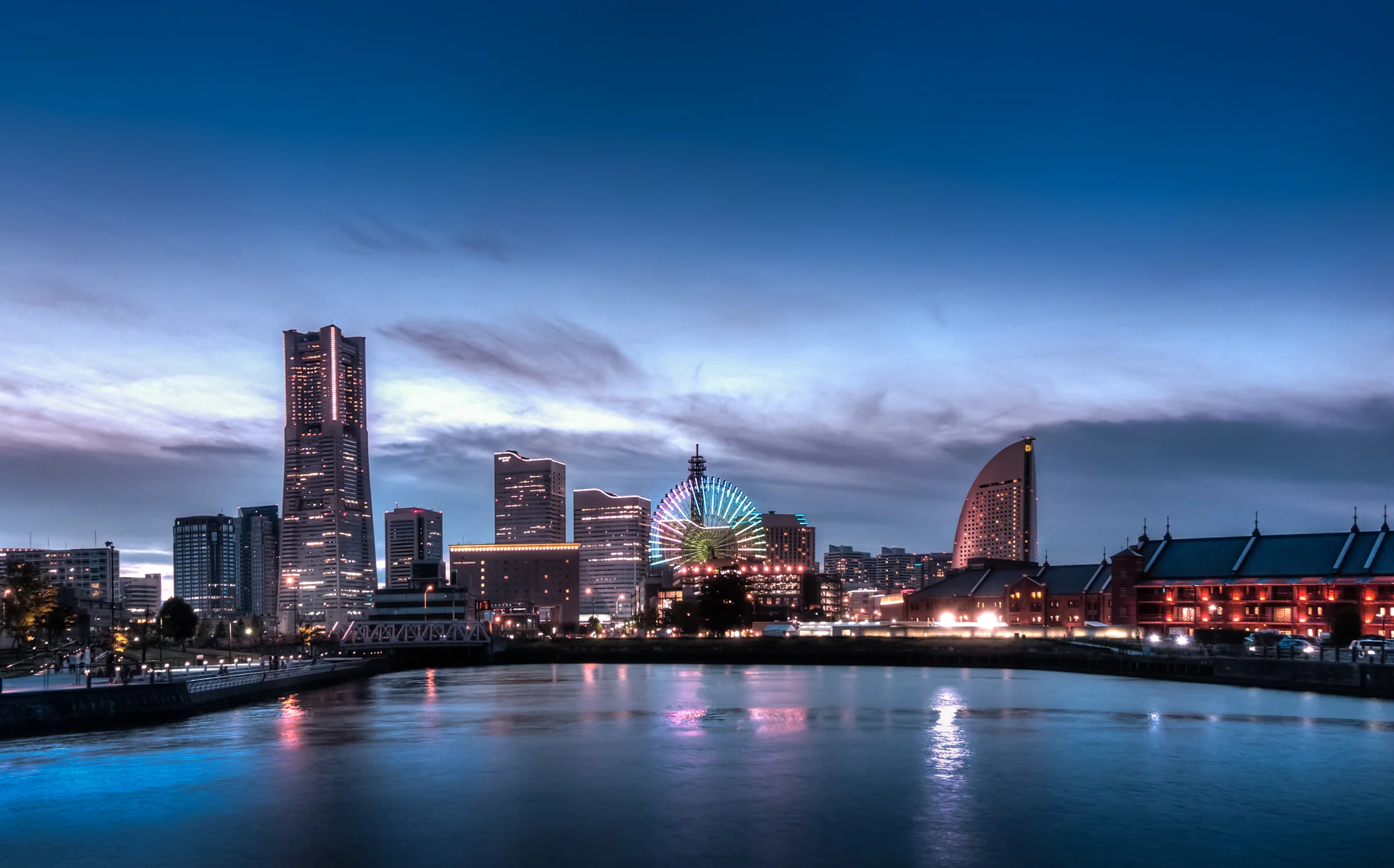
City at a glance
A city in its own right, not just a Tokyo substitute
Yokohama offers several different propositions: the waterfront around Minato Mirai, the older port districts around Kannai and Motomachi, and residential areas farther north or inland. Someone working locally may value a completely different address from a person traveling to Tokyo several days a week.
Make two maps before choosing a home. The first is the local household routine: school, groceries, healthcare, exercise and friends. The second is the route to the exact Tokyo office, airport or regional station you will regularly use. A home should work on both maps. The fact that trains run between the two cities does not establish that every daily commute will be pleasant.
Families should decide early whether education will be municipal, private or international. An attractive harbor view is a poor substitute for a workable school place and collection route. The same applies to a home business: the residential setting and the legal permission to conduct work need to be evaluated separately.
Sources for this section
What may appeal
- Distinct waterfront, central and residential settings within one city
- Local amenities can support a routine independent of Tokyo
- Multiple rail corridors allow different work and family strategies
What to weigh up
- Hills and station approaches can complicate a short-looking journey
- A Tokyo commute needs an exact route assessment
- Rental, school and health paperwork remain substantial parts of settling
Neighbourhoods & finding a home
Websites to find a home
| Website | Search for | Coverage |
|---|---|---|
| Real Estate Japan | Rent / Buy | Japan — filter by prefecture, city or train line |
About these links
Property-search websites help you find listings; individual properties and agents have not been vetted by Offshore Capitalist. Confirm availability, the legal right to let or sell, and payment instructions before committing.
- Real Estate Japan · Checked 2026-10-14
English search for sale and rental listings. Check the city within the prefecture, move-in charges, monthly management costs and whether the property is occupied.
Five areas to compare
These are starting points for viewings, not a ranking. Compare the exact street and building, the journey you actually make, and the services your household will use. Nearby stations can have very different entrances, interchange walks and surroundings.
| Area | Why consider it | What to check on a viewing |
|---|---|---|
| Minato Mirai and Sakuragichō | A waterfront-oriented routine with major cultural and commercial destinations close at hand. | Compare the actual JR, subway or Minatomirai Line route. Inspect tower access, grocery errands, event-day activity and the building’s emergency arrangements. |
| Kannai and Bashamichi | A central port-city setting with access to offices, older streets and the waterfront. | Visit at different times and distinguish an office-facing block from an entertainment street. The right station depends on the destination, not the neighborhood label alone. |
| Motomachi and Yamate | A choice for people drawn to the older port area, local shopping and the hillside residential setting. | Walk the slopes and stairs with the school or grocery routine in mind. Confirm any school place directly and do not assume a scenic hill address is an easy station walk. |
| Yokohama Station and Hiranumabashi | A practical starting point for a household whose routine depends on a major interchange and everyday shopping. | Inspect the station exit and final walk carefully. Crowded approaches, road crossings and rail-side noise can differ materially between nearby apartments. |
| Hiyoshi and Tsunashima | Northern residential options to compare when the Tokyo-facing rail corridor matters more than a harbor view. | Test the exact through-service or transfer needed for work and school. Check the local shopping routine and address-level flood information instead of treating the wider area as uniform. |
Sources for this section
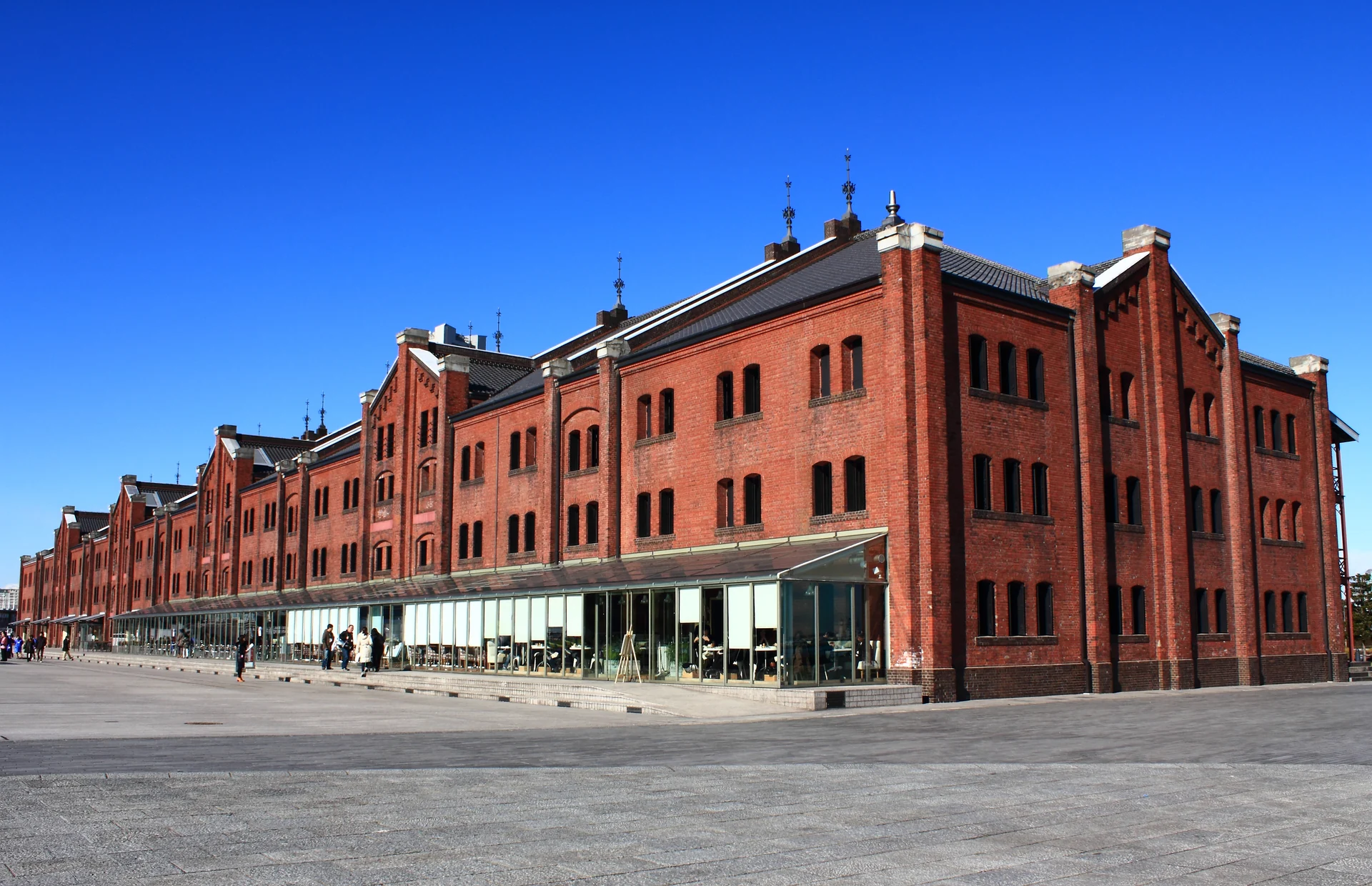
The view, the slope and the rental contract
Yokohama’s topography makes the walk important. A map may show a short distance while concealing stairs, a steep slope or a road crossing that changes the school and grocery routine. Walk the route rather than relying only on the listing’s station description. In taller waterfront buildings, also consider lifts, delivery arrangements and how you would manage during a service interruption.
Obtain an itemized rental quotation and draft terms, including deposit treatment, nonrefundable charges, guarantor requirements, renewal conditions and notice to leave. Ask how the landlord assesses overseas income or a new Japanese employment or business arrangement. A guarantor company’s screening is not the same as automatic acceptance by the landlord.
Inspect noise, sunlight, ventilation and the practical room layout. Check the local hazard information for the address, including flood and slope-related risks where relevant. Keep a dated condition record. For home-working households, confirm that the lease permits the proposed use and that the unit has the needed communications service; a scenic balcony does not answer those questions.
Sources for this section
Schools & childcare
Work backward from enrollment and the school journey
Yokohama’s school-life information explains the municipal education route and links guidance for families from overseas. Contact the ward or education desk about the child’s address, age, prior schooling and language needs. Ask what must be completed before the child can begin and what support the receiving school can provide.
Public-school access is different from admission to a private or international school. For the latter, get current confirmation of places, curriculum, fees and transport directly from the school. Do not infer a place from the number of international schools visible on a map.
Housing decisions should include the after-school journey and the practical effect of hills or rail changes. Bring the child’s school history and any support plan, and identify the person who can communicate with the school during working hours. Older children may need a more substantial curriculum-transition plan than a younger child entering elementary school. A short discussion before the lease can prevent a very long daily journey afterward.
Sources for this section
Check each family member’s enrollment route
Yokohama’s National Health Insurance guidance covers residents who are not insured through an employer or another excluded system. The city’s eligibility page also distinguishes relevant residence categories. Establish the correct scheme for each person rather than assuming that holding a lease or arriving with private travel insurance settles the issue.
Municipal National Health Insurance does not use the same free-dependent model that some people associate with employment-based coverage. Ask how the household’s members and income affect the actual assessment. Confirm when enrollment applies, what evidence is needed and how the current proof of eligibility will be supplied.
Choose a clinic and pharmacy for routine needs, and arrange continuity for regular treatment before supplies run low. Ask about language support, referral requirements and appointment methods. A city with many healthcare facilities can still require a specific search for the service and language your family needs.
Getting around
Yokohama, Shin-Yokohama and your final stop
Yokohama Station is a major interchange, while Shin-Yokohama is the Shinkansen station. Treat them as distinct destinations when comparing property listings. The city’s municipal subway, JR and private rail operators connect different corridors; the most useful route is the one that gets you to your actual destination with manageable changes.
For Tokyo commuting, test the full journey, including the apartment walk, platform access and final office approach. Repeat it in the evening. A direct service can still mean a long standing journey, and a theoretically shorter route with several changes may be less practical with a child or luggage.
Haneda’s rail access through Keikyu can be relevant to Yokohama households. Narita has a different set of rail and transfer choices, including JR services serving Yokohama. Check the date, terminal and timetable for the particular trip. Neither an airport’s advertised journey time nor a property’s distance to the nearest station is a guarantee of the household’s door-to-door travel time.
Sources for this section
Airports & international connections
Gateway options
Compare gatewaysTokyo International Airport (Haneda)HND
InternationalŌta, Tokyo ·  Japan
Primary gateway Ōta, Tokyo. Compare the complete onward journey to Yokohama with your flight times, luggage and arrival hour.
Domestic and international access to Greater Tokyo. Confirm the terminal on your booking before arranging transport or a connection.
Sources & connectivity notes
International passenger services. Check current routes and seasonal schedules.
Research checked 2026-10-13. Routes can vary by season.
Narita International AirportNRT
InternationalNarita area, Chiba Prefecture; serving Greater Tokyo · Japan
Alternative gateway Alternative gateway. Narita area, Chiba Prefecture; serving Greater Tokyo. Compare the complete onward journey to Yokohama with your flight times, luggage and arrival hour.
International gateway for Greater Tokyo, with Calgary among its connections. Narita is in Chiba Prefecture; compare the complete transfer with Haneda.
Sources & connectivity notes
International passenger services. Check current routes and seasonal schedules.
Research checked 2026-10-13. Routes can vary by season.
Climate & environment
Harbor scenery comes with site-specific exposure
Yokohama shares the southern Kanto pattern of humid summers and cooler winters, with seasonal rain and storm disruption to consider. An open waterfront walk and an inland residential street can feel different in wind, heat and shade. When viewing a property, ask how the rooms work through the year rather than judging them by one clear afternoon.
The City publishes disaster-preparation guidance and hazard information. Check the layers relevant to the address, the building’s own evacuation arrangements and where the household would go if transport stopped. A high-floor apartment does not eliminate every practical risk; a hillside location introduces different questions from a harbor-side one.
For children and anyone with mobility constraints, test an alternative route to home when the normal path is inconvenient. Record emergency contacts and keep an accessible supply plan. These preparations are part of making the location work, not a reason to assume that an entire district is unsuitable.
Sources for this section
What residents say
What residents’ own survey adds
Yokohama’s 2024 foreign-resident survey recorded both satisfaction and practical concerns. Shopping convenience, the nearby sea and port, and the international atmosphere were among the attractions respondents selected. Living costs, tax and pension procedures, and life after retirement were prominent worries. That combination is more useful than an unqualified claim that a city is easy for every foreign household.
Build a small local network before a problem arises: a language class, community activity or parent connection can make unfamiliar procedures less isolating. Naka Ward’s multilingual local-life resources are one starting point if you live there; other wards have their own information. Check which office serves the actual home.
If the move includes directing a business or holding significant overseas assets, connect the practical relocation plan to the national tax and residence analysis. A choice between Tokyo and Yokohama is not a choice to disregard Japan’s national rules. Record when you arrive, what work is performed in Japan and where business decisions are made, then assess the obligations on those facts.
Sources for this section
These are attributed public experiences, not client testimonials. Housing, neighbourhood and household circumstances affect the experience.
Planning your move
Your move, step by step
A dependency-based checklist. The sequence is a planning framework; it is not an immigration processing-time promise. Statutory address deadlines apply only to the residents covered by the relevant rules.
01Fix the work and education anchorsBefore narrowing the neighborhood search
Confirm residence feasibility and map the actual job, school and airport destinations. Decide how much of daily life will be in Yokohama and how much in Tokyo.
Documents & evidence
- Passports and status records
- Work-location plan
- School histories and inquiries
- A Tokyo connection does not mean every Yokohama neighborhood offers the same commute.
02Test the property and its routesBefore signing the tenancy
Walk the hills and station approaches, review the address-level hazard information and obtain the full rental terms and charges. Check permission for any planned home-business activity.
Documents & evidence
- Draft tenancy
- Itemized quotation
- Building condition and hazard notes
- A school shown nearby is not an admission offer; a lease is not immigration permission.
03Register with the correct wardAfter establishing the address; observe the applicable 14-day move-in duty
Use Yokohama’s moving-house instructions to identify the notification and documents for an overseas arrival or domestic transfer. Include all relevant household members.
Documents & evidence
- Residence cards and relevant passport documents
- New address
- Transfer or family evidence where required
- The procedure depends on where you moved from and the household’s residence status.
04Complete care, schooling and accountsAs address and eligibility evidence become available
Set up the correct insurance route, complete school procedures and coordinate utilities, communications and bank documentation. Find care for regular medical needs.
Documents & evidence
- Insurance enrollment evidence
- School records
- Identification
- Tenancy details
- Do not treat municipal insurance as automatically providing free dependent coverage.
05Review the first-year household planDuring the first settled month, then periodically
Keep permit dates, lease conditions and tax questions together. Establish a local information network and revisit the commute once the ordinary work and school schedule begins.
Documents & evidence
- Household calendar
- Permit and lease records
- Financial and work-location records
- A successful first month does not remove recurring administrative responsibilities.
Sources & research notes17 references
Sources supporting this guide. Research draft awaiting editorial review.
- MLIT: guide to finding a rental home in Japan
- MEXT: school enrollment guide for foreign children
- Japan Meteorological Agency: regional climate of Japan
- Natural Earth: populated places
- Bank of Japan: valid banknotes and coins
- Haneda Airport: rail access
- Narita Airport: rail access
- Yokohama City: moving-house procedures
- Yokohama City: National Health Insurance
- Yokohama City: who is insured under National Health Insurance
- Yokohama City: school life
- Yokohama Visitors Guide: city areas
- Yokohama Naka Ward: enjoy living in Naka
- Yokohama City: preparing for disasters
- Yokohama City: 2024 foreign-resident survey, English summary published February 2025
- National Tax Agency: salaries paid by an overseas employer
- JETRO: corporate income taxes and foreign-company activities
In Yokohama’s July–August 2024 survey, 71% of responding foreign residents were very or somewhat satisfied with their lives. Respondents also raised living costs and tax/pension procedures as concerns, while shopping and the port were attractions. The survey provides a balanced resident perspective rather than a promise about a particular neighborhood.
City survey: 5,000 adult foreign residents randomly selected from the resident register; 1,512 replies, a 30.2% response rate. Results reflect respondents in 2024, not all residents or current prices.