City at a glance
A university city with a different daily rhythm
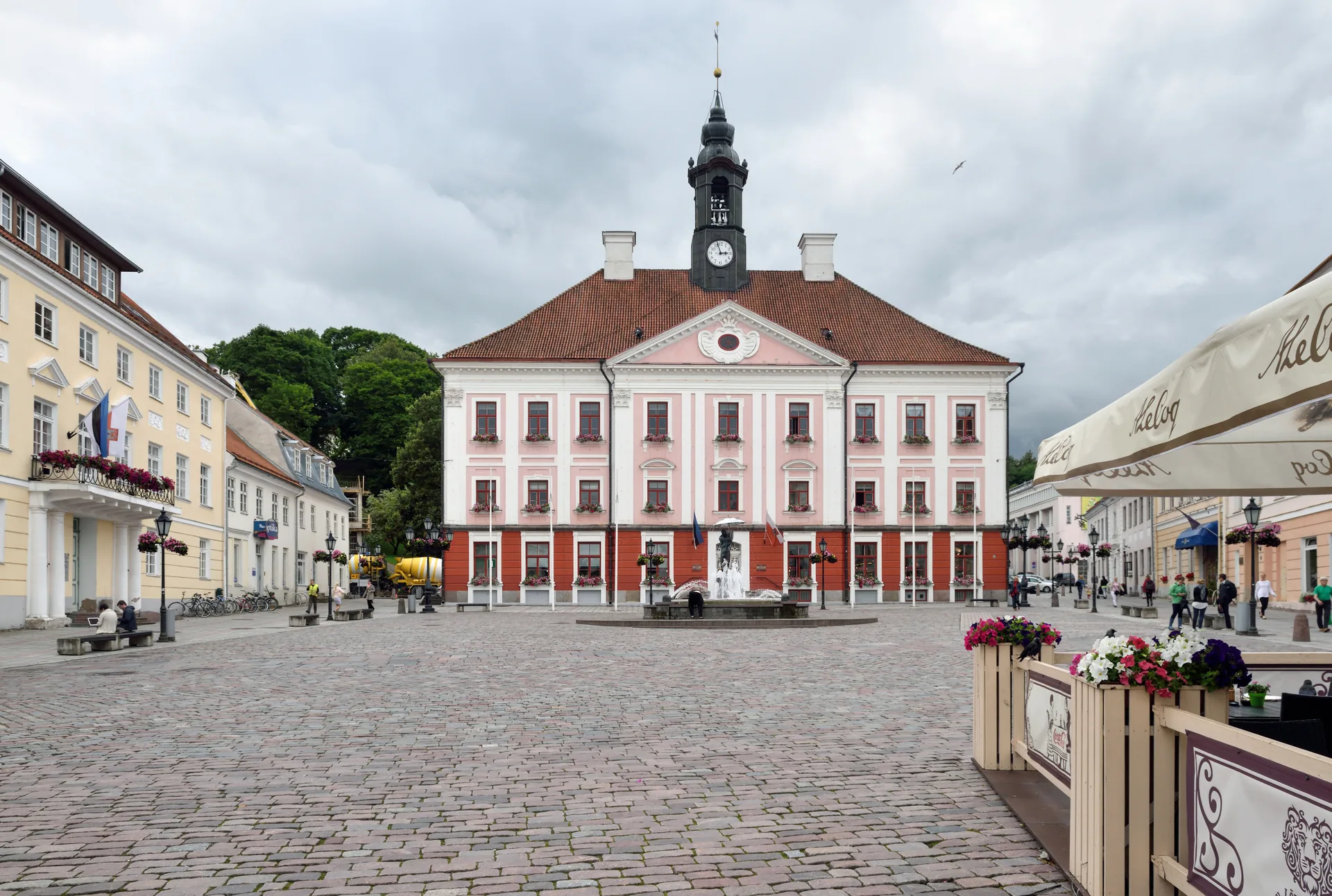
Tartu offers a southern Estonian base organised around the university, the Emajõgi river and a compact historic centre. It is worth considering if your work does not require being in Tallinn every day. The practical question is how well your routine fits the city: home, school, workspace and the journeys you make beyond it.
Try Tartu during an ordinary working week. Walk from candidate properties to groceries and the places the family will use regularly. An attractive summer visit around Town Hall Square tells you little about the commute to a particular school, the airport connection for an early flight or the heating arrangement in an older wooden home.
An online-business owner can have different priorities from a frequent international traveller. Compare work privacy, regular travel and family needs with Tallinn before committing to a long-term contract.
Sources for this section
What may appeal
- Distinct wooden and central neighbourhoods offer different ways to organise daily life.
- A compact university-city setting can suit a household whose work is mostly remote.
- Local orientation and education administration have identifiable city and Welcome Centre entry points.
What to weigh up
- Frequent international travel needs more route planning than a capital-city address may require.
- Adult local transport remains subject to tickets and eligibility; it is not universally free.
- Winter housing performance, school language and doctor availability require property- and household-specific checks.
Neighbourhoods & finding a home
Websites to find a home
| Website | Search for | Coverage |
|---|---|---|
| KV.ee | Rent / Buy | Estonia |
About these links
Property-search websites help you find listings; individual properties and agents have not been vetted by Offshore Capitalist. Confirm availability, the legal right to let or sell, and payment instructions before committing.
- KV.ee · Checked 2026-10-14
Choose Müük for buying or Üür for renting. The short-term rental category is separate; search Tallinn or Tartu and inspect heating and utility details.
Start with these five different settings
Neighbourhood character helps you choose viewing areas; it does not establish rent, safety or school availability. The building’s condition and the precise route to daily services remain decisive.
| Area | Why consider it | What to check |
|---|---|---|
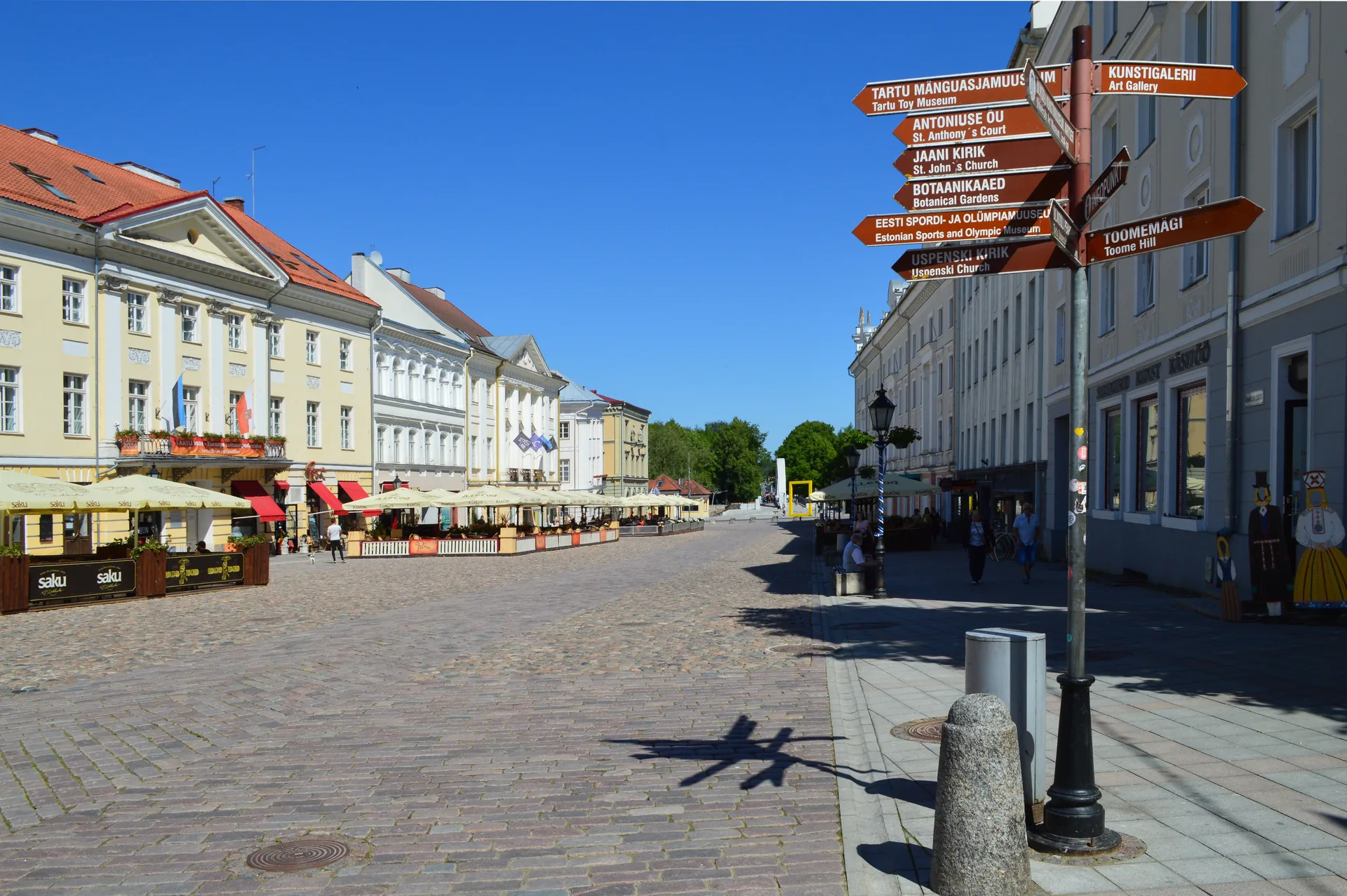
| Centre / Town Hall Square | Historic streets and the university-city atmosphere suit a household that values walking to central services. | Check evening noise, access with luggage and whether the advertised workspace is a separate room. Visit away from the café hours too. |
| Karlova | Wooden buildings and an established neighbourhood identity offer a different setting from the centre’s principal visitor streets. | Ask how the exact home is heated and renovated. Inspect ventilation, sound insulation and the route to work or school. |
| Supilinn | Wooden homes and the relationship with the Emajõgi make it appealing for people drawn to a smaller-scale residential environment. | Inspect building condition, storage and the practical riverside route. Establish property-specific insurance and maintenance arrangements. |
| Tähtvere | A garden-neighbourhood setting northwest of the centre is a useful alternative for households looking beyond the busiest central streets. | Measure the journey from the actual address to the child’s destination and your regular services; a district name is not a commuting time. |
| Tammelinn | A garden-city setting southwest of the centre provides another way to prioritise residential space. | Work through parking, garden responsibilities and transport. A larger home may add upkeep and trips that a central apartment avoids. |
Know what the residential deposit does and does not cover
Section 308 of the Law of Obligations Act limits a residential security deposit to three months’ rent and permits payment in three equal instalments. The first is due after the contract is concluded. The landlord must keep the deposit separately under the statutory conditions; this is security for claims, not automatically another month of rent.
If the landlord has not notified claims within two months after the lease ends, the tenant may demand repayment. That is not a promise that every disputed deposit will arrive automatically on a particular date. Document condition and payments so any deduction can be understood and, if necessary, challenged.
Ask who has authority to let the property and how your household is recorded in the agreement. Decide whether the duration fits the immigration route and school year. A short exploratory stay and a longer residential tenancy solve different problems; establish the rules for extension, termination and any proposed subletting before relying on flexibility.
Check the wooden-house details and the first invoices
The distinctive wooden neighbourhoods make the heating question concrete. Ask whether a property uses district heating, an individual system or equipment requiring active use, and have the landlord demonstrate it. Confirm ventilation and any maintenance responsibilities in writing. Renovated façades and attractive furniture do not establish the condition of the heating or wiring.
Request itemised bills from a warm and a cold month. Identify rent, consumption, fixed charges and any building contribution separately. Establish which accounts you open yourself, what remains in the owner’s name, when readings are taken and how internet equipment is returned at departure. Do not compare homes on rent alone.
Tartu Welcome Centre’s practical guidance includes asking the owner which waste containers serve the building. Include keys, bins, bicycle storage and fault contacts in the handover. For an online business, test indoor mobile coverage and the fixed connection rather than treating an internet listing as evidence of reliable video calls.
Register the home you actually occupy
Tartu’s residence service is the local route for recording an address. Estonia’s national guidance requires a notice within 14 days for an Estonian address change or settlement. Prepare the housing evidence and signatures needed for the people included; the municipality can explain how to proceed where the property or documents create an unusual situation.
Registration has practical consequences for local services, but it does not create every other entitlement. Establish the family’s immigration position separately. A newcomer using a startup, employment or other route should follow the requirements of that route rather than treating a municipal entry as a residence permit.
An e-resident digital identity grants neither the right to live in Tartu nor personal tax residence. Likewise, opening an Estonian company does not by itself settle where the owner is taxed. Keep a record of the actual move, working arrangements and continuing overseas ties for the separate tax analysis.
Schools & childcare
Use ARNO and clarify the teaching language early
Tartu uses ARNO for school allocation and education administration. The registered home and availability matter; contact the city’s Education Department about an in-year move or an unusual prior-school record. The older English basic-education page is useful for understanding the system, but should not be treated as a confirmed calendar for the next intake.
The city’s current preschool guidance allows applications through ARNO or the stated local submission routes. Parents give the desired start and preferences; the application queue, age and other applicable criteria affect allocation. Ask how changing a request affects its position, and keep a copy of the accepted application. A preferred kindergarten is not a reserved place.
As Estonia moves progressively to Estonian-language education, check the specific grade and support offered. Bring reports and any learning-support assessments, and discuss how the child will join classes during the year. If considering private or international provision, confirm admission, curriculum, fees and the commute directly before building the housing decision around it.
Healthcare
Put coverage dates and primary care on the arrival checklist
For ordinary qualifying employment, Tervisekassa describes a 14-day waiting period where the worker was not already insured. Other income arrangements have their own conditions. Confirm the registered employment and cover dates rather than assuming that a first payslip, company ownership or an address entry establishes immediate coverage.
Family-doctor enrolment is another step. Tervisekassa’s primary-care guidance distinguishes eligibility to join a practice list from the insurance that pays for services. Contact practices about acceptance and the language you need. Have relevant medical records available and ask how existing prescriptions and planned treatment will be transferred.
For ongoing specialist care, establish the receiving clinician, referral requirements and insurance-gap arrangements before the move. A private appointment and publicly funded access are different propositions.
Sources for this section
Getting around
Budget with the July 2026 fares
Tartu’s adult bus prices changed on 1 July 2026. The table shows ordinary electronic tickets at the eligible local rate and the standard non-local rate. Personalisation and the applicable registered-residence conditions matter; concessions have separate rules. Do not assume that moving to Tartu makes all adult bus travel free.
The adopted fare schedule and the city’s dated announcement are the references here. Some older English ticket descriptions retained previous daily amounts at review. Validate the card when boarding, and check the current operator information before purchasing a longer pass.
For cycling, distinguish a bus pass from a bike-share entitlement. Tartu Welcome Centre describes the account and payment-card setup for Smart Bike Share. Check docking locations and the actual current product; do not assume that an unused bicycle near your home is an available, unlocked transport option.
| Adult ticket from 1 July 2026 | Eligible local rate | Standard rate |
|---|---|---|
| Electronic one-hour bus ticket | €1.20 | €1.80 |
| Electronic daily bus ticket | €3.00 | €4.50 |
| 30-day bus ticket | €21.30 | €31.90 |
| 30-day combined bus and bike-share ticket | €30.00 | €39.00 |
Airports & international connections
Plan the international journey beyond the city boundary
Tartu Airport is at Reola, outside the centre. Its current ground-access page describes car and taxi arrangements. Confirm a transfer for your actual arrival rather than assuming an old reference to an airport shuttle remains valid. Check the flight dates, connection and return journey before making this airport central to a travel plan.
Tallinn Airport is an alternative gateway. The airport lists intercity coach access, and Tartu Welcome Centre identifies the Tallinn-airport coach connection among the ways to reach the city. Reserve the appropriate departure and allow for arrival formalities and delays. An advertised connection is not a guarantee that a separately ticketed coach will wait for a flight.
If international travel is frequent, price the whole journey: the local transfer, waiting time, possible overnight stay and the effect on school or family arrangements. Compare that cost with living in Tallinn. A lower housing quotation can be outweighed by repeated travel that does not fit the business calendar.
Gateway options
Compare gatewaysTartu AirportTAY
InternationalÜlenurme, serving Tartu ·  Estonia
Primary gateway Ülenurme, serving Tartu. Compare the complete onward journey to Tartu with your flight times, luggage and arrival hour.
Helsinki connection from Tartu. Compare the complete onward itinerary with departures from Tallinn.
Sources & connectivity notes
International passenger services. Check current routes and seasonal schedules.
Research checked 2026-10-13. Routes can vary by season.
Tallinn AirportTLL
InternationalTallinn; about 4 km from the city centre · Estonia
Alternative gateway Alternative gateway. Tallinn; about 4 km from the city centre. Compare the complete onward journey to Tartu with your flight times, luggage and arrival hour.
International gateway for Tallinn. Compare the current destinations, operating season and ground transfer for your itinerary.
Sources & connectivity notes
International passenger services. Check current routes and seasonal schedules.
Research checked 2026-10-13. Routes can vary by season.
Climate & environment
Look beyond the summer riverfront
The Environment Agency’s 1991–2020 normals for Tartu-Tõravere record a January mean of −4.1°C and July mean of 18.0°C. These are station monthly means rather than expected daily extremes. They provide regional context, not a forecast for the street you are considering.
Use that context to inspect daylight, heating controls, drying space and winter access. A walkable summer route may need a different plan with ice, luggage or a small child. Ask how the building’s shared entrance is maintained and where bicycles and outdoor clothing can be kept without obstructing the home.
Sources for this section
What residents say
These are attributed public experiences, not client testimonials. Housing, neighbourhood and household circumstances affect the experience.
Planning your move
Connect the city choice to the international plan
A useful enquiry starts with the household’s nationalities, business activities, expected move date and travel pattern. Include the education and healthcare constraints and the countries where you still hold companies, homes or substantial assets. Those facts help establish whether Tartu supports the overall plan.
Offshore Capitalist can help coordinate immigration, tax, corporate and banking questions with the agreed implementation work. The engagement should identify dependencies and responsible parties. A home, bank account, school place and immigration approval each have their own requirements; one successful application should not leave the rest of the arrival plan assumed rather than completed.
Sources for this section
Your move, step by step
A practical sequence rather than promised agency processing times. Confirm intake dates and individual eligibility with the responsible authority.
01Compare the household and travel fitBefore committing to the city
02Inspect housing and secure a usable agreementBefore paying or shipping belongings
03Register the address and complete essential accountsAfter taking up residence; observe the 14-day notice rule
Submit the residence notice, check the entry and arrange utilities, internet and the appropriate personalised transport product.
Documents & evidence
- Identity and housing evidence
- Signed notice for the people included
- Confusing e-residency with permission or automatic local entitlements
04Confirm healthcare and education handoversBegin before arrival; follow confirmed appointments and allocation
05Review the real routine and outstanding dependenciesAfter the first full billing and travel cycle
Reconcile bills, check transport usage and review unresolved immigration, banking or corporate actions with the responsible advisers.
Documents & evidence
- First invoices and transport costs
- Outstanding-action list
- Allowing a practical move to leave tax and business records out of date
Sources & research notes21 references
Sources supporting this guide. Research draft awaiting editorial review.
- Ministry of Justice — useful tips for concluding a residential lease
- Law of Obligations Act — residential security deposit, section 308
- Ministry of the Interior — submission of a notice of residence
- Tartu — place of residence
- Estonian e-Residency programme — what is e-Residency?
- Estonian Tax and Customs Board — tax residency
- Tervisekassa — employee health insurance
- Tervisekassa — primary health care
- Tartu — basic education and ARNO school allocation
- Tartu — admission to and departure from kindergarten
- Ministry of Education and Research — transition to Estonian-language education
- Tallinn Airport — public transport connections
- Tartu City — bus and bike-share fares from 1 July 2026
- Tartu electronic ticket system regulation — effective 1 July 2026
- Tartu Welcome Centre — living in Tartu
- Tartu Airport — arriving and leaving
- Visit Tartu — the city’s wooden neighbourhoods
- Visit Tartu — Supilinn’s historic wooden homes
- Visit Estonia — Tartu
- Estonian Environment Agency — 1991–2020 mean air-temperature normals
- Resident discussion — daily life in Tartu
In a discussion about daily life, percahlia described studying in Tartu for two years before moving to Tallinn and finding the winter colder than another commenter’s account suggested. Suprimoman valued the compact scale and walking or cycling. These are individual experiences: use them to plan a winter visit and test your own routes, alongside the official climate figures.
Anonymous accounts, including a self-described former student; reviewed October 2026. Not a representative survey or verified weather record.