
City at a glance
Choose Québec City for the life beyond the old town
Québec City offers a distinctive setting for someone who wants French to be part of daily life: an historic upper and lower town, established neighbourhood streets beyond the walls, and access to the St Lawrence landscape. It deserves its own comparison rather than being treated as a smaller version of Montréal. Your working language, school needs and comfort with winter should be central to that comparison.
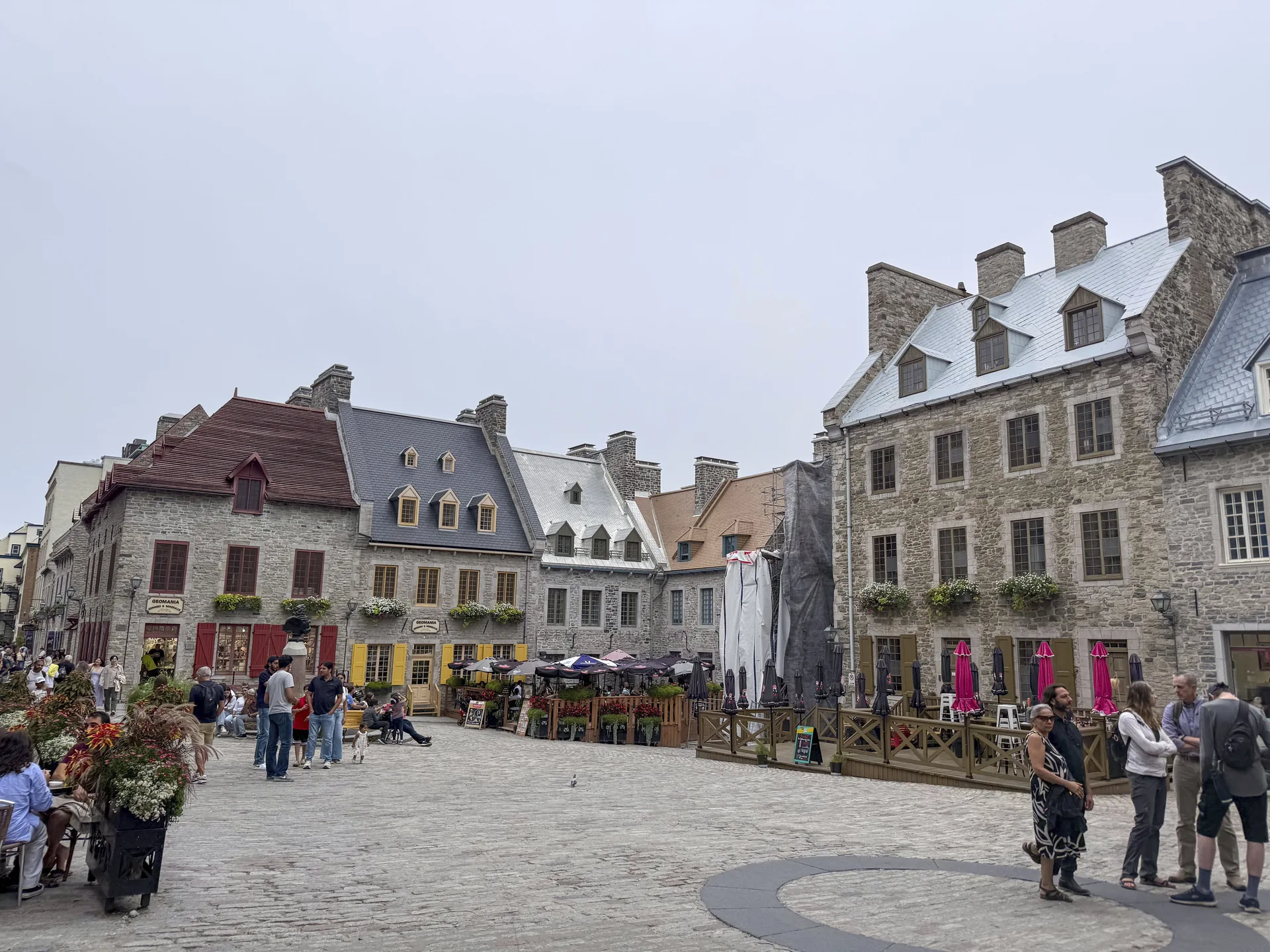
Old Québec is a memorable place to visit, but the best long-term base may be in Montcalm, Saint-Jean-Baptiste, Saint-Roch or Vieux-Limoilou. A home near a useful shopping street and the right bus can matter more than a famous view. The upper/lower-town distinction also matters on foot: a short line on a map may conceal a steep daily climb.
Put French preparation into the move plan. The city directs newcomers to provincial courses and local support, but course eligibility, availability and intensity should be checked for your situation. Do not assume that being able to transact in English as a visitor reproduces the experience of dealing with a lease, a school and routine appointments for years.
What may appeal
- A strong option for households seeking a French-speaking daily environment.
- The historic centre and several distinct nearby neighbourhoods give different urban living choices.
- Local school language support and settlement resources provide concrete starting points.
What to weigh up
- Language and English-school eligibility need planning before the housing decision.
- Steep streets, snow operations and building access can alter a seemingly short journey.
- Healthcare eligibility, prescription cover and access to a regular provider require separate steps.
Cost of living
Price heating and the actual home-office setup
Hydro-Québec distinguishes becoming a new customer, transferring a service address and adding or removing an address. Identify the person responsible for electricity and the correct start date before handover. Its address-based cost-estimate tool is useful when comparing units, but past use cannot guarantee your bill: occupancy, thermostat settings, insulation and heating arrangements can all differ.
Ask for the complete utility arrangement in writing. If heating is included, confirm who controls it and what happens if a room is uncomfortable. If you pay, inspect the system and get an address-specific estimate. A lower advertised rent with separate heating may compare differently with an apartment whose energy costs are included.
For remote work, check available internet service at the exact building and test reception inside, not on the pavement. Think about where calls will happen and whether the room can remain comfortable in both seasons. Verify any restrictions relevant to operating a business from the home rather than assuming a residential lease allows every activity.
Build two budgets: the recurring monthly cost and the move-in cash requirement. Include transport, insurance, furnishings and any childcare or school extras relevant to the household. This is more informative than a citywide “cost of living” number that mixes student rooms, family houses and short holiday stays.
Neighbourhoods & finding a home
Websites to find a home
| Website | Search for | Coverage |
|---|---|---|
| Centris | Rent / Buy | Quebec |
| REALTOR.ca | Rent / Buy | Canada |
| Rentals.ca | Rent | Canada |
About these links
Property-search websites help you find listings; individual properties and agents have not been vetted by Offshore Capitalist. Confirm availability, the legal right to let or sell, and payment instructions before committing.
- Centris · Checked 2026-10-14
Broker-listed homes across Quebec, with separate purchase and rental searches and English or French browsing.
- REALTOR.ca · Checked 2026-10-14
Search by city, neighbourhood or address; switch between homes for sale and for rent.
- Rentals.ca · Checked 2026-10-14
Rental homes, condos and apartments. Use the city and property-type filters; check whether a listing is a particular unit or a rental building.
Compare five different neighbourhood routines
Use the areas below to design a viewing route. These are location-based tradeoffs, not current rent estimates or safety grades. Try the same grocery trip, school connection and work journey from each shortlisted address.
| Area | Why shortlist it | What to check on the ground |
|---|---|---|
| Old Québec / Petit-Champlain | The historic setting, with upper-city streets and the lower-town waterfront side offering very different approaches. | Check stairs and gradients, deliveries, tourist activity, sound insulation and year-round grocery access. A charming visitor location may need compromises as a daily home. |
| Saint-Jean-Baptiste | Rue Saint-Jean runs through the neighbourhood between Old Québec and Montcalm, with a local main-street routine. | Inspect the slope to your bus stop, evening noise on the main street, building access and winter parking. |
| Montcalm | An upper-town comparison around Avenue Cartier, the arts district and the Plains of Abraham side of the centre. | Map the actual school and work trip. Compare the layout and energy needs of individual older apartments rather than assuming uniform housing quality. |
| Saint-Roch | A lower-town option around Rue Saint-Joseph and its commercial and cultural activity. | Test the route to any upper-town destination and the exact street at the hours you will use it. Inspect loading activity, noise and the building entrance. |
| Vieux-Limoilou | A separate neighbourhood setting around 3e Avenue, worth comparing when local errands and community life are priorities. | Check the daily connection across the Saint-Charles toward work, the actual grocery route and winter bicycle or bus alternatives. |
Sources for this section
Read the Québec lease on its own terms
Québec tenancy rules differ from Ontario’s last-month-rent model. TAL explains that a landlord may require advance payment for the first rental period only; a security or key deposit cannot simply be demanded on top. Do not import the deposit conventions of another Canadian province into a Québec negotiation.
Obtain the complete lease, identify what is included and keep receipts. A local description such as “chauffé” should become a clear statement of which heating costs the landlord pays; confirm hot water, appliances, parking, storage and internet separately. If the apartment is furnished, attach a detailed inventory rather than relying on listing photographs.
Ask for a written explanation of renewal, notice and any proposed rent change using the current TAL guidance for the particular lease. A fixed end date should not be interpreted through Nova Scotia’s different fixed-term rules. Keep the relevant notices and deadlines in the household calendar and seek advice promptly if a requested payment or clause is unclear.
Inspect windows, ventilation, damp, stairs and the heating controls. Record the condition at handover and agree how a repair is reported. When winter parking is part of the attraction, establish whether it is a private space, a municipal permit or an assumption about street availability; they are not interchangeable.
Schools & childcare
Plan French schooling and check any English exception early
In Québec public schools and government-subsidized private education, French is the normal language of preschool, primary and secondary instruction. English instruction there requires an applicable eligibility category or temporary authorisation; being an English-speaking family is not by itself enough. Applications go through the educational organisation. Non-subsidized private schools have separate admissions; confirm the particular school’s status and requirements.
For the Centre de services scolaire de la Capitale, newcomer children start with their local catchment school. Its published process places children aged seven and over through an assessment of French and mathematics to organise appropriate support; five- and six-year-olds register directly at the local school.
The same authority states that children whose person with parental authority habitually lives in Québec can access free public education regardless of immigration status, and a school service centre cannot make registration conditional on immigration papers. This does not mean every applicant can choose any school or an English programme. Confirm the responsible service centre, address and child’s placement.
Prepare identity and previous school records, learning-support information and custody documents if applicable. Ask about the language-support setting, start arrangements, transport, lunch and before- or after-school care. Treat availability in those services as separate from admission. For older pupils, discuss grade placement and the implications for their next education stage before the move.
Healthcare
Separate RAMQ registration, medicines and finding a doctor
RAMQ eligibility depends on status and residence. For an eligible person arriving from another country, coverage generally begins after a waiting period of up to three months; the authority lists exceptions, including children under 18. Registration timing and required evidence matter. Ask RAMQ for the household’s actual start dates and arrange suitable cover for any gap rather than assuming the same rule applies to everyone.
Prescription-drug insurance is a separate question. People established permanently in Québec must have it; public-plan eligibility and access to a qualifying private plan affect which arrangement applies. An employer or spouse’s plan can be relevant. Do not assume obtaining a health card completes the medicines-insurance decision.
The Québec Family Doctor Finder is a route onto the waiting list for an accepting family doctor, specialised primary-care nurse practitioner or group, subject to eligibility. It is not a guaranteed appointment date. Keep the RAMQ address current and establish how to obtain necessary care while waiting.
Before arrival, assemble medical summaries, prescriptions by generic name, vaccination records and any pending test results. Discuss the transfer of ongoing treatment with the receiving provider and insurer. A nearby hospital on the map does not establish access to the specific specialist or treatment your household needs.
Getting around
Use the bus network as it operates today
YQB’s official transport page lists route 76 between the airport and Sainte-Foy, and route 80 toward central Québec via Les Saules, with further network connections. Choose the route against the actual accommodation address and arrival time; “airport bus” does not mean it stops beside every Old Québec hotel. Verify the live timetable, luggage arrangements and the last connection before relying on it.
RTC’s Métrobus services are buses, not an underground railway. The operator maintains a network-change page because construction and route adjustments can move boarding points and alter connections. Use the current plan rather than a proposed tram map or an old screenshot when comparing homes.
For walking, assess the elevation as well as the distance. Carrying groceries uphill, accompanying a child or using a mobility aid can turn a picturesque route into the wrong daily route. During a viewing trip, make the ordinary journey instead of limiting the inspection to the building.
If you expect to live without a car, test off-peak and weekend trips as well as the commute. If driving, compare the cost and availability of a genuine parking space and the snow-removal fallback. Your answer may differ between two properties in the same neighbourhood.
Airports & international connections
Gateway options
Compare gatewaysQuébec City Jean Lesage International AirportYQB
InternationalQuébec City ·  Canada
Primary gateway YQB’s official transport page lists route 76 between the airport and Sainte-Foy, and route 80 toward central Québec via Les Saules, with further network connections. Choose the route against the actual accommodation address and arrival time; “airport bus” does not mean it stops beside every Old Québec hotel. Verify the live timetable, luggage arrangements and the last connection before relying on it.
Domestic and international departures, including France. Check seasonal availability when planning travel from Québec City.
Sources & connectivity notes
International passenger services. Check current routes and seasonal schedules.
Research checked 2026-10-13. Routes can vary by season.
Climate & environment
Treat winter access as part of the property
Québec City’s newcomer resources devote specific attention to seasons, clothing and winter driving. Plan for a substantial winter, not just a colder version of a short summer visit. Good footwear, storage for wet gear and an entrance that can be kept clear can affect day-to-day comfort more than another decorative feature in the apartment.
The municipality uses orange flashing lights to indicate a street-parking prohibition during snow-removal operations. Alternative-lot conditions vary by borough, and some areas require a storm permit. Check the current local arrangement before depending on a space elsewhere when the lights come on.
At a viewing, ask who clears the entrance, stairs and any private parking area, where snow is placed and how deliveries are handled. Inspect rails, lighting, drainage and the route to the street. An exposed external stair deserves particular attention if it is the only way into the home.
Summer needs a separate check. Assess sun exposure, ventilation and cooling, then visit the public spaces you want to use in ordinary life. The historic streets and river views are attractions, but a sustainable home is one that supports work, errands and rest in every season.
What residents say
These are attributed public experiences, not client testimonials. Housing, neighbourhood and household circumstances affect the experience.
A household considering the move in June 2025 explained that one partner’s job would be outside the city and they would share one car. Their questions focused on weekend bus coverage and access to parks beyond the usual central shortlist. This is a useful example of a household constraint, rather than testimony about a neighbourhood they had already lived in.
Attributed as a prospective move, not relabelled as a verified long-term resident account.
Planning your move
Coordinate the provincial move with the international one
Living in Québec creates a different provincial context from an Ontario or Atlantic Canadian home. Use the linked Canadian tax and relocation guides to review the wider position before moving assets, changing pay arrangements or directing a foreign company from the new address. The immigration route, tax-residence analysis and access to provincial services have different tests.
Keep a practical record of the move: when the home becomes available, where family members live, where work is performed and what happens to the former residence. An adviser can use those facts to assess the actual arrangement. A city preference should lead to an implementation plan with clear responsibilities, rather than a collection of disconnected applications.
Sources for this section
Your move, step by step
Planning order only; school, insurance and immigration decisions have their own requirements and variable processing times.
01Resolve status, language and family prioritiesBefore a long-term housing commitment
Confirm the immigration and tax plan. Assess French needs and any application for English instruction; locate the relevant school authority before using a school name to select housing.
Documents & evidence
- Identity and status records
- Previous school and learning-support records
- Household language plan
- Assuming English preference alone establishes school eligibility
02Test the upper- and lower-town routineDuring a scouting or temporary stay
Compare actual streets, slopes, groceries and current RTC journeys. View alternatives beyond the old town and confirm what a winter parking arrangement really provides.
Documents & evidence
- Candidate addresses
- Work and school journey plan
- Parking and accessibility questions
- Judging an uphill or winter route only by map distance
03Complete the lease and utility handoverWhen the selected home is verified
Read the Québec lease, identify heating and service inclusions and clarify every advance payment. Record condition and arrange the electricity account for the correct unit and date.
Documents & evidence
- Lease and payment receipts
- Condition inventory
- Electricity responsibility and account confirmation
- Importing another province’s security-deposit convention
04Activate healthcare and education arrangementsOnce the necessary arrival and address evidence exists
Ask RAMQ to confirm individual eligibility and coverage dates; arrange any gap and drug cover. Complete the child’s local registration and any assessment or language-support planning.
Documents & evidence
- RAMQ application evidence
- Medical records and coverage confirmation
- School registration correspondence
- Confusing health-card registration with immediate doctor access
05Review the first full seasonDuring settling in and before winter
Test the heating, winter entrance and transport fallback. Check the household budget against actual bills and retain the facts needed for tax filings and cross-border business follow-up.
Documents & evidence
- Winter access plan
- Actual utility bills
- Travel and work-location records
- Leaving snow-removal responsibility unresolved until the first storm
Sources & research notes20 references
Sources supporting this guide. Research draft awaiting editorial review.
- Destination Québec cité — city neighbourhoods
- Destination Québec cité — Saint-Jean-Baptiste
- Ville de Québec — learning French
- Tribunal administratif du logement — paying the rent
- Tribunal administratif du logement — changing a lease condition
- Ville de Québec — parking during snow removal
- Hydro-Québec — moving and address-specific electricity estimates
- RAMQ — health insurance eligibility conditions
- RAMQ — prescription drug insurance
- Québec government — Family Doctor Finder
- Québec government — eligibility for instruction in English
- Centre de services scolaire de la Capitale — newcomer reception
- Québec Jean Lesage airport — public transport
- Réseau de transport de la Capitale — network changes
- Ville de Québec — newcomer information sheets
- Ville de Québec — weather
- Canada Revenue Agency — determining individual residence status
- Resident discussion — choosing a central Québec City neighbourhood
- Resident discussion — moving from Montréal to Québec City
- Québec — Charter of the French language, section 72 (scope of language-of-instruction rules)
In May 2026, contributors to a Québec City neighbourhood discussion praised Limoilou’s community life, nearby errands and access to the Saint-Charles route. A respondent who said they were staying there temporarily also described enjoying it. These are individual preferences, not proof that every Limoilou address works without a car.
Anonymous self-reported experience, paraphrased from French; no claimed number of shops, safety score or journey time is adopted.