
City at a glance
Choose the daily Ottawa you actually want
Ottawa can offer an appealing combination: the national institutions and activity of a capital, established neighbourhood shopping streets, and a river-and-canal landscape close to the centre. The choice is less about whether the city is “quiet” or “lively” than where the household will spend an ordinary Tuesday. A downtown office, a west-end workplace and a home-based business produce quite different housing shortlists.
Begin with three fixed points: the place you work, the school or childcare arrangement, and the destinations you need every week. Locate them before searching by neighbourhood reputation. A property with more rooms can be poor value if it adds two complicated journeys each day. Conversely, paying for a central address makes little sense if most of your life will be in Kanata or another outer employment area.
This guide concerns Ottawa in Ontario. Gatineau is a legitimate alternative across the Ottawa River, but it is a different municipality and province. Ontario lease and OHIP rules below cannot simply be applied to a Gatineau home. Put the provincial healthcare, school and tax comparison beside the housing comparison before choosing a side of the river.
What may appeal
- Several distinct central neighbourhoods can support a walk-oriented daily routine.
- Capital-city institutions and cultural activity coexist with canal and river landscapes.
- Airport rail and bus options make it possible to compare alternatives to a private transfer.
What to weigh up
- Outer-area work and school journeys can undermine a central housing choice.
- Winter access and parking require more than a summer viewing.
- Ontario rules do not carry across the river to a Gatineau address.
Cost of living
Budget for the building, not just its advertised rent
Write a monthly budget for the actual unit: rent, electricity, heating if separate, water if charged separately, internet, parking, insurance and the transport the location requires. Establish which services the landlord pays and which accounts you must open. “Hydro included” and “utilities included” should be translated into an explicit list, including any usage restrictions.
Hydro Ottawa provides a moving service for opening, closing or transferring an account. Confirm the supplier for the address and submit the correct unit and start date; a municipal Ottawa address does not by itself establish the electricity distributor. Keep the confirmation rather than relying on the landlord’s assurance that the account will transfer automatically.
For a home office, test upload speed and mobile reception in the actual working room, and ask about the building’s available providers. In an older property, investigate insulation, window condition, heating controls and summer cooling. Obtain past consumption information where available and ask what changed between occupancies. A larger, poorly insulated home can erase an apparent rent saving.
Keep one-off costs separate from recurring costs. A moving charge, furnishing purchase and refundable deposit are different from the monthly running cost. This makes it easier to compare a central apartment with an outer-area house without hiding the price of a car or parking.
Sources for this section
Neighbourhoods & finding a home
Websites to find a home
| Website | Search for | Coverage |
|---|---|---|
| REALTOR.ca | Rent / Buy | Canada |
| Rentals.ca | Rent | Canada |
About these links
Property-search websites help you find listings; individual properties and agents have not been vetted by Offshore Capitalist. Confirm availability, the legal right to let or sell, and payment instructions before committing.
- REALTOR.ca · Checked 2026-10-14
Search by city, neighbourhood or address; switch between homes for sale and for rent.
- Rentals.ca · Checked 2026-10-14
Rental homes, condos and apartments. Use the city and property-type filters; check whether a listing is a particular unit or a rental building.
Compare central streets with outer neighbourhoods
Treat the shortlist as a set of routines to test, rather than a league table. Walk from an actual candidate building to groceries, the transit stop and the places you expect to use. Repeat a key journey at the time you will normally travel. The best answer can change across a few blocks.
| Area | Why shortlist it | What to check on the ground |
|---|---|---|
| Centretown / Golden Triangle | A starting point for a downtown-oriented household, Elgin Street and canal-side walks. | Inspect the exact frontage, evening noise, loading activity, grocery route and winter parking. “Central” does not settle building quality or accessibility. |
| The Glebe / Old Ottawa South | Bank Street, local shopping and access to the canal landscape make these useful walk-first comparisons. | Test the actual bus journey rather than assuming rail at the doorstep. Check event-day activity, parking and the school boundary. |
| Hintonburg / Wellington West | A distinct west-of-centre corridor with local shops, arts activity and a neighbourhood main-street setting. | Check how far the home sits from the corridor and the station or bus you need. A desirable district name can cover different daily routes. |
| Westboro Village | Worth comparing for a Richmond Road-centred routine and the western urban neighbourhood setting. | Walk the side-street approach, inspect winter accessibility and use the current network map. Do not price a commute around an extension that has not opened. |
| Kanata or Orléans | Useful outer-city alternatives when work, family or a particular school is already located to the west or east. | Compare all regular trips, not just the commute. Confirm off-peak transit and whether the household needs another vehicle. |
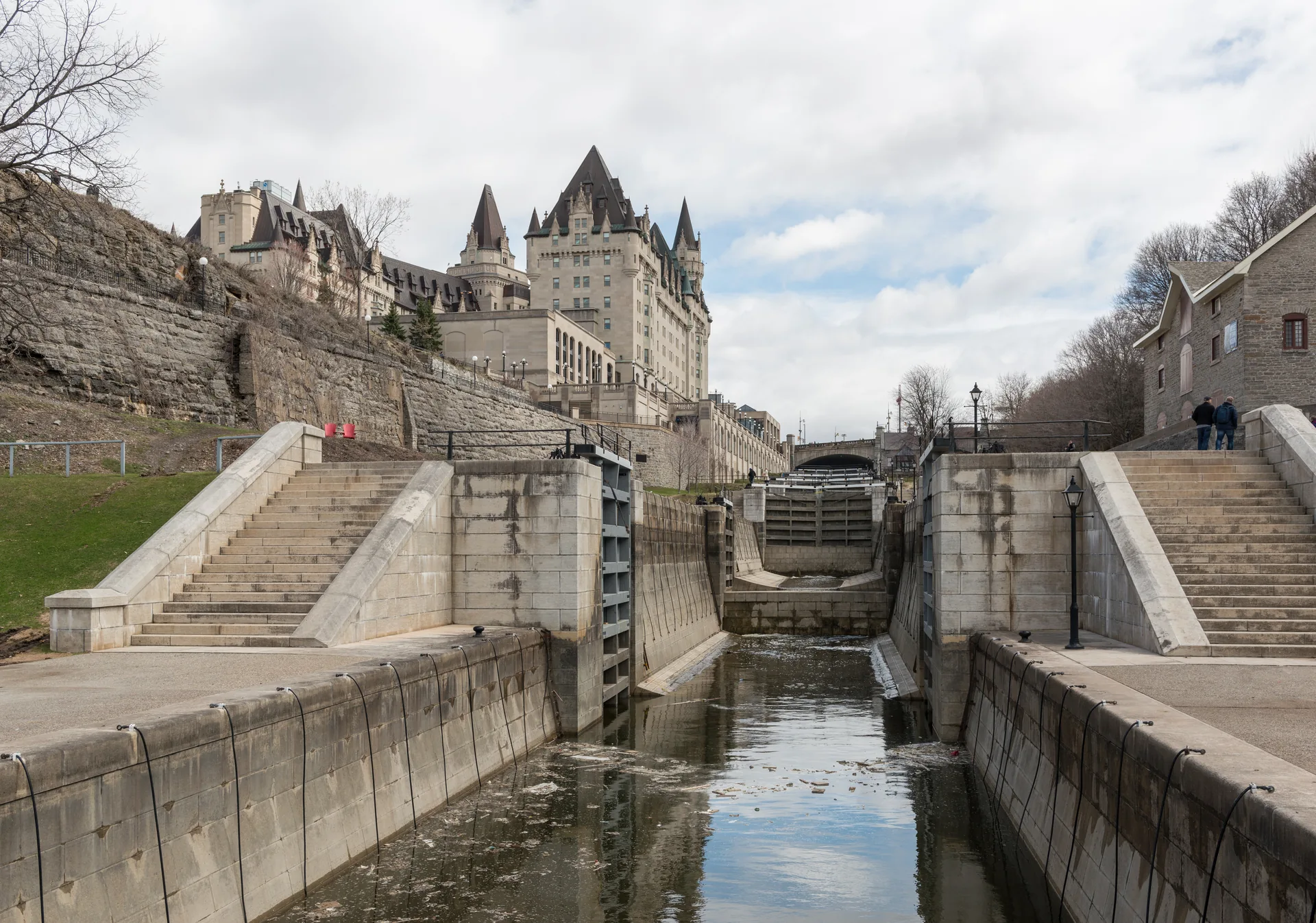
Check the lease and rent-control position separately
For most ordinary private residential tenancies, the Ontario standard lease sets out the rent, parties, inclusions and responsibilities. Read the completed document and every attachment before paying. Verify that the person offering the unit has authority to rent it and that the address, unit number, parking space and move-in date all match what you viewed.
Under the Residential Tenancies Act framework, a required rent deposit is capped at one rental period or one month, whichever is less, and is for the last rental period. It is not a damage fund. Separate that deposit from the first rent payment, any permitted key deposit and optional services so that neither the purpose nor the amount is ambiguous.
Rent-control status is another question. Ontario lists qualifying new buildings, additions and many new basement units first occupied for residential purposes after 15 November 2018 as exempt from the guideline. The date you sign your lease is not the test. Ask for the relevant occupancy information rather than accepting “new lease means no rent control” or “old-looking house means controlled.”
At handover, photograph the condition, list supplied appliances and retain meter readings. Ask who handles repairs and emergencies. If sharing a kitchen or bathroom with the owner or their close family, obtain advice about the applicable legal framework before assuming ordinary tenant protections apply.
Resolve admission before choosing the long-term address
OCDSB directs families with temporary status to Admissions for document review before ordinary registration. Use its school locator for the correct year and proposed address; the closest building is not necessarily the designated school. Compare English, French-language and other board options with the relevant board rather than assuming one board’s process covers the whole city.
The OCDSB Family Reception Centre supports relevant newcomers in grades 2–12, including pupils with prior schooling outside Ontario in a language other than English. Kindergarten and grade 1 follow local registration. The centre’s assessment is booked after the child arrives in Canada; gather school and immunisation records and proof of the Ottawa address beforehand.
Ask how the child’s previous grade, language needs and learning-support arrangements will be assessed. Confirm transport eligibility, start arrangements and before- or after-school care separately. A place at school does not automatically produce a childcare place or a bus seat.
When comparing homes, map the actual drop-off and collection routine for every child. Make any desired special programme or out-of-boundary placement an explicit unresolved dependency until the responsible board confirms it. Avoid signing a long lease on the strength of an estate agent’s school description.
Healthcare
Secure OHIP eligibility and a care plan
Ontario states that eligible applicants no longer face an OHIP waiting period. Eligibility still requires a qualifying status and Ontario residence: the general presence tests include 153 days in a 12-month period and 153 of the first 183 days after establishing residence. A lease, a visitor stay or an overseas company on its own does not establish eligibility.
ServiceOntario asks for three original documents covering eligible status, Ontario residency and identity. For a temporary worker, check the employment and permit evidence for the actual category; the document list specifically flags proof of full-time employment for an Ontario employer and restrictions. Have the authority confirm the household’s position and effective coverage date.
Insurance approval and access to a regular clinician are separate tasks. Before moving, identify how ongoing prescriptions, specialist follow-ups and any time-sensitive treatment will continue. Retain medical and vaccination records, and confirm interim insurance where there is an eligibility or processing gap. Ask what the policy excludes and how claims are paid.
Build a local care list after arrival: regular provider search, pharmacy, appropriate urgent-care options and emergency arrangements. Check supplementary dental, vision, medicines and travel cover separately rather than treating a provincial card as a complete household insurance package.
Sources for this section
Airports & international connections
Plan the airport and everyday journey from current routes
Ottawa airport’s current ground-transport page lists O-Train Line 4 between Airport and South Keys, plus bus 105. Line 4 is not a one-seat train to Parliament or every downtown hotel. Use OC Transpo’s current planner for the onward connection, operating hours and last usable journey after your flight. Older guides recommending route 97 need checking.
For the first arrival, compare transit with an authorised taxi or pre-arranged transfer against luggage, children, mobility needs and the destination’s last stretch. Check the actual pickup level; the airport publishes separate locations for train, bus and private vehicles. Do not make a flight booking depend on a nominal driving time.
For daily travel, save two journeys from each candidate home: your regular weekday trip and the weekend or evening return. Include the walk to the stop, transfers, waiting and the final walk. A neighbourhood near rail can still require an awkward cross-city connection.
If driving, inspect the parking arrangement and its winter rules before signing. If cycling, test the whole route and storage at both ends. Separate a pleasant recreational path from a dependable year-round work journey, and keep a practical fallback for weather or disruption.
Gateway options
Compare gatewaysOttawa International AirportYOW
InternationalOttawa, Ontario ·  Canada
Primary gateway Ottawa, Ontario. Compare the complete onward journey to Ottawa with your flight times, luggage and arrival hour.
Canadian, US, European and sun destinations. Check seasonal availability when planning international travel from Ottawa.
Sources & connectivity notes
International passenger services. Check current routes and seasonal schedules.
Research checked 2026-10-13. Routes can vary by season.
Climate & environment
Inspect for both winter and summer
Ottawa’s municipal climate planning identifies risks from heat, heavy rainfall, freeze-thaw and other extreme events. A housing inspection should therefore cover summer comfort as well as winter heating. Ask how the building handles snow, ice, drainage and loss of power, especially if a household member depends on powered equipment.
The city can declare winter-weather parking bans to support clearing. Check the announcement and the street’s ordinary restrictions; a residential parking assumption can fail on the night it matters. Establish where the car can go during a ban before a storm arrives, and specify who clears the private driveway and entrance.
Walk the entrance, stairs and route to the bus stop with winter in mind. Look for space for wet clothing and boots and ask whether an external stair is the only access. For a summer viewing, request heating information; for a winter viewing, ask about sun exposure and cooling. Neither season alone is a complete test of the home.
Outdoor access is a strength when the routine makes use of it. Choose a place from which a short walk actually reaches the park, canal or river route you value, rather than counting every green area visible on a broad city map.
What residents say
These are attributed public experiences, not client testimonials. Housing, neighbourhood and household circumstances affect the experience.
A December 2025 respondent who said they had lived in Centretown, the Glebe and Hintonburg liked all three, but first asked the prospective mover about workplace, car needs and budget. Another chose Centretown specifically to walk to a downtown job. Their priorities illustrate why a useful shortlist starts with the household routine.
Personal preferences, not a representative survey or a price forecast.
Planning your move
Keep the move connected to your wider structure
An Ottawa home can change where you work and make business decisions. Record your arrival, accommodation, family arrangements and working pattern so the tax analysis reflects what actually happened. The choice of a Canadian city does not settle residency or treaty questions, and an international business should not treat foreign incorporation as a substitute for reviewing the owner’s new working location.
Before moving, review the Canadian personal-tax guide together with the company’s management, payroll, banking and payment arrangements. Keep immigration permission, tax residence and access to public services as separate workstreams. For a business owner, the useful output is a coordinated sequence of actions and records, not just a destination recommendation.
Your move, step by step
These are planning stages, not promised permit, housing, school or healthcare processing times. Complete the dependencies before making non-refundable commitments.
01Confirm the legal and provincial planBefore booking a long stay
Decide whether the actual home will be in Ontario. Resolve work permission and the cross-border tax review, then check OHIP eligibility for each family member. Keep any Gatineau comparison separate.
Documents & evidence
- Passports and status documents
- Employment or business activity summary
- Arrival and household timeline
- Treating a work or visitor document as automatic health coverage
02Shortlist homes around the fixed journeysBefore a long lease
Use a temporary base or viewing trip to compare work, school and regular errands. Ask the board about admission and catchment; inspect the street and the property at more than one time of day.
Documents & evidence
- School records
- Proposed addresses and route notes
- Complete housing budget
- Choosing the neighbourhood before locating work and school
03Sign and document the handoverWhen the property checks out
Read the standard lease and clarify rent-control status, deposits, utilities and parking. Record condition, keys and meter readings and open the relevant utility account.
Documents & evidence
- Signed lease and receipts
- Inventory and condition photographs
- Utility confirmations
- Confusing last-month rent with a damage deposit
04Complete services and school onboardingAs soon as the required evidence is available
Apply for the provincial card with original documents and arrange interim care. Complete Admissions and any newcomer assessment after arrival; confirm the child’s actual first-day arrangements.
Documents & evidence
- Identity, eligible-status and residence evidence
- Medical and immunisation records
- School and assessment correspondence
- Assuming registration is a same-day school start or doctor appointment
05Review the first season and ongoing obligationsDuring the first weeks and before winter
Test backup journeys, snow and parking arrangements, internet and the household budget. Retain the factual record of the move and review cross-border business responsibilities when the working pattern changes.
Documents & evidence
- Local emergency and transport plan
- Budget versus actual bills
- Travel and working-day record
- Letting the plan describe a routine different from the one actually lived
Sources & research notes18 references
Sources supporting this guide. Research draft awaiting editorial review.
- Ottawa Tourism — neighbourhoods and countryside
- Ontario — OHIP eligibility and application
- Canada Revenue Agency — determining individual residence status
- Ottawa Tourism — arts in Wellington West and Westboro
- Ontario — guide to the standard lease
- Landlord and Tenant Board — guide to the Residential Tenancies Act
- Ontario — residential rent increases
- Hydro Ottawa — moving and account services
- Ontario — documents needed for a health card
- Ottawa-Carleton District School Board — registration
- Ottawa-Carleton District School Board — Family Reception Centre
- Ottawa International Airport Authority — ground transportation
- OC Transpo — O-Train Line 4
- City of Ottawa — winter weather parking bans
- City of Ottawa — Climate Ready Ottawa strategy
- IRCC — after receiving a work permit
- Resident discussion — walkable neighbourhoods in Ottawa
- Resident discussion — choosing a community in Ottawa
In an April 2025 discussion, a self-described Glebe resident said they had lived there without a car for four years and found the local walking and Bank Street bus routine useful. Other contributors disagreed about how walkable particular Westboro streets were, especially in winter. These experiences favour checking the exact street and journey rather than buying a district label.
Anonymous, self-reported accounts. Routes, journey times, school quality and safety claims are not adopted as verified facts.