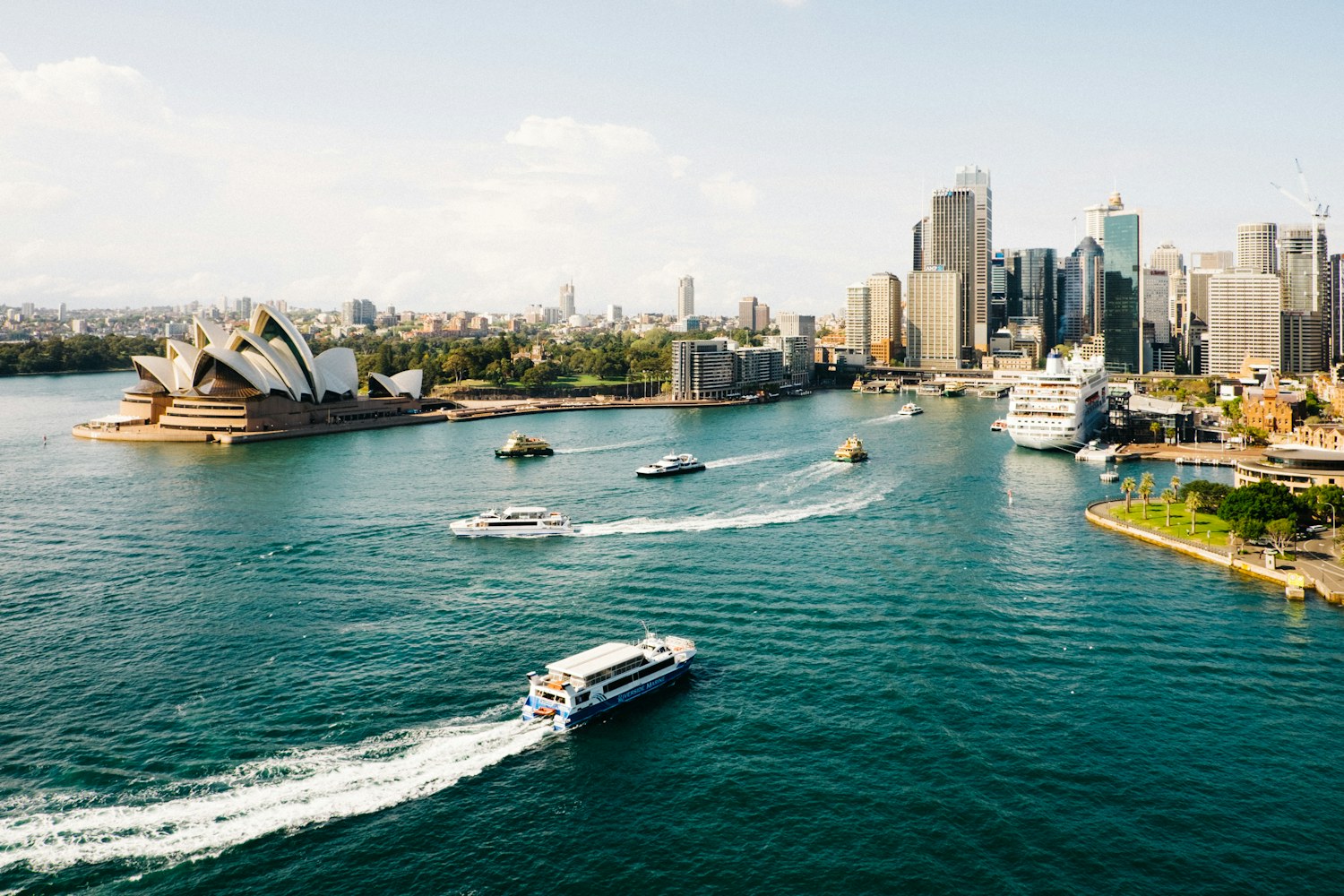
City at a glance
Choose the Sydney you will actually live in
Sydney works best when the things you value fit inside an ordinary week: the school run, workplace, groceries, a swim or a walk, and friends you can reach without crossing the whole metropolitan area. A harbour-side apartment, an Inner West terrace and a home near Parramatta offer quite different routines. Choose your employment and school anchors before choosing a view.
This guide covers Greater Sydney. The ABS estimates 5,638,830 residents in that metropolitan statistical area at June 2025. The much smaller City of Sydney council area reports 237,238 at June 2024; it includes the central business district and nearby suburbs, not the entire metropolis. The different boundaries and dates matter when comparing services or costs.
English is the working language for most local administration and schools. The practical appeal is the combination of a large employment market, distinct neighbourhood centres, beaches and major cultural institutions. The trade-off is that a desirable location can consume a large share of income, while moving farther away can increase travel and car dependence.
What may appeal
- Distinct local centres let households choose between inner-city culture, harbour or beach routines and western employment hubs.
- Large technology, university and healthcare networks with identifiable local workplaces.
- Rail, metro, ferries and cultural institutions can support a rich routine without driving every day.
What to weigh up
- Housing and fee-paying education can dominate spending; a broad rent median is not a quote for the home you want.
- Cross-city journeys, school placement and the final connection to a station can narrow a practical housing shortlist.
- Heat, humidity, building condition and future transport projects require address-specific checks.
Cost of living
Dated costs to build your own budget
Domain’s June-quarter 2026 report puts Sydney’s median advertised house rent at AUD 850 a week. This is a metropolitan house asking-rent benchmark, not the rent on a newly signed lease or a quote for a specified bedroom count, furnished home or central apartment. Compare live homes of the same size and condition in your shortlist.
The other figures below are specific published tariffs or provider examples checked on 14 October 2026. Food, electricity, insurance and car costs still need your household’s own quantities and quotes. In particular, a grocery budget for one adult cannot stand in for a family with young children or dietary requirements.
| Item | Dated amount | What it does—and does not—cover |
|---|---|---|
| House asking rent | AUD 850/week · June quarter 2026 | Domain Sydney median; broad house category, not a bedroom-specific lease quote. |
| Adult public transport | Up to AUD 50/week per adult | Eligible Opal/contactless travel Monday–Sunday; airport station access and other exclusions remain separate. |
| Water usage | AUD 3.41/kL · 2026–27 normal tariff | AUD 3.84/kL drought tariff if its trigger applies; tenant liability is conditional. |
| Home internet example | AUD 95/month ongoing | Aussie Broadband unlimited 50/20 fixed-line plan; availability, hardware and installation checked separately. |
| GP example | AUD 98 standard consultation · from July 2026 | Avoca Street Medical Centre, Randwick: eligible Medicare rebate AUD 45.05, leaving AUD 52.95; a named clinic, not a city average. |
| Preschool example | AUD 130/day · council 2026–27 | Eveleigh Early Learning preschool listed fee, before applicable assistance; requires a place. |
Recurring spending and move-in cash are different
Consider two adults who agree a lease at AUD 850/week, each reach the AUD 50 weekly transport cap, and choose the AUD 95 ongoing internet plan. Rent, these fares and internet total AUD 4,211.67 per month when weekly amounts are annualised using 52 ÷ 12. This is a deliberately limited subtotal: it excludes food, power, water, phones, healthcare, travel, furniture, vehicles and any children’s costs.
At that same illustrative rent, a maximum four-week bond is AUD 3,400 and two weeks’ rent in advance is AUD 1,700: AUD 5,100 of initial rental cash. The bond is held as security and advance rent pays for the opening rental period; neither should be added again as a recurring monthly charge.
For a separately metered, eligible tenancy, a hypothetical 50 kL of water at the normal tariff costs AUD 170.50 in usage. That is not a complete household water bill. NSW rules govern whether the tenant pays usage; fixed water and sewer service charges belong to the landlord. Use Energy Made Easy with the actual address and likely electricity use before accepting a retailer’s headline discount.
Sources for this section
Neighbourhoods & finding a home
Websites to find a home
| Website | Search for | Coverage |
|---|---|---|
| realestate.com.au | Rent / Buy | Australia — choose the city, metro area or suburb |
| Domain — Sydney rentals | Rent | Sydney region — filter to the suburb and property type |
| Domain — Sydney purchases | Buy | Sydney region — filter to the suburb and property type |
About these links
Property-search websites help you find listings; individual properties and agents have not been vetted by Offshore Capitalist. Confirm availability, the legal right to let or sell, and payment instructions before committing.
- realestate.com.au · Checked 2026-10-14
Choose Buy or Rent, then narrow by suburb and commuting area. Confirm the rental payment period, property type and total move-in costs.
- Domain — Sydney rentals · Checked 2026-10-14
Compare the exact suburb, bedrooms, inclusions and weekly rent; confirm the tenancy period and move-in charges.
- Domain — Sydney purchases · Checked 2026-10-14
Compare the exact suburb, bedrooms, inclusions and strata fees. Arrange independent contract and building checks.
Eight areas to compare on a scouting visit
These are starting points for comparing routines, not a ranking of the best suburbs. Inspect the particular street and dwelling: a station-area apartment and a quieter home at the edge of the same suburb can differ substantially. Test the school run and the journey to the actual workplace at the times you would use them.
| Area | Everyday fit | Travel and household check |
|---|---|---|
| Surry Hills / Redfern | Central cafés, restaurants and access to creative and technology workplaces; apartments and terraces. | Compare the walk to Central, Redfern or light rail. Visit after dark to judge traffic and venue noise. |
| Newtown / Camperdown | An active dining and music scene near the University of Sydney and RPA hospital. | Good shortlist for university or hospital work; separate proximity on a map from a convenient bus/train journey. |
| Glebe / Ultimo | Inner-city neighbourhood streets near universities, Broadway and cultural venues. | Useful for an IGS or university shortlist; test hills, crossings and the walk from light rail or bus stops. |
| Chatswood / Crows Nest | North Shore centres with shops, dining and M1 metro access. | Check the actual walk to a station; school catchments and a cross-city school trip still need address-level checks. |
| Manly | Harbour and ocean access, beach routines and a distinct town centre. | Ferry access is attractive for a Circular Quay-area destination; include wharf walking, wait time and the onward connection. |
| Randwick / Kensington | Eastern-suburbs base around the Randwick hospitals campus and UNSW; apartments and residential streets. | Light rail connects Randwick via Central to Circular Quay. Check the correct stop for your campus building and the onward journey to a beach. |
| Green Square / Zetland | Renewal precinct with newer apartment living, library and community facilities. | Check building acoustics, ventilation and the actual station walk. Confirm current school arrangements rather than relying on a sales brochure. |
| Parramatta / Westmead | A western employment and health hub with shopping and park access. | Can suit a western workplace better than a coastal address; test trips to the CBD and coast rather than assuming all of Sydney is nearby. |
Sources for this section
Search, inspect and secure a tenancy
The rental and purchase websites linked with this guide cover Sydney. Domain’s verified Sydney-region searches are also listed in the sources: narrow them by suburb, beds and property type. An attractive listing is an invitation to inspect, not evidence that the advertiser is authorised. For a share house, establish who holds the head lease, what space is yours, which bills are included and how any bond is handled.
Prepare an application pack with identity, evidence of income or savings, employment details and available landlord references. Ask the agent what is necessary and transmit it through a verified channel. At inspection, test water pressure, ventilation and mobile reception, check damp and sun exposure, and ask about parking, pets, repairs and embedded utility arrangements. Photograph existing defects when taking possession.
NSW’s standard residential-tenancy rules limit the bond to four weeks and required rent in advance to two weeks. Return the completed condition report within seven days of moving in and keep a copy. Current NSW reforms also govern rent increases, termination reasons and pet applications; use the state guidance for the type and date of your agreement. A boarding or informal sharing arrangement needs its own review.
If you plan to buy an apartment
Before committing, obtain a strata search and a physical building inspection. The strata records can reveal financial reserves, planned major works, disputes and defects; the building inspection answers a different question about condition. Read by-laws, parking entitlements and recurring levies, and ask the conveyancer about special levies and unresolved remediation.
National foreign-purchaser permission, tax and financing questions belong with the Australia country guide. A Sydney listing or an accepted offer does not answer them. Keep the budget for a purchase separate from a rental move and allow time for independent contract and building checks.
Sources for this section
Work, business & opportunities
Match your home to the employment centre
Tech Central connects the Haymarket, Camperdown and South Eveleigh area with universities, research and technology businesses. Investment NSW’s hub offers a useful starting point for the local ecosystem, including a landing base at 477 Pitt Street. This is relevant to networking and workspace selection, not a promise of a job or customers.
Westmead’s health and innovation precinct and the Western Sydney Aerotropolis create a different geographic shortlist from an inner-city technology role. If your work is tied to a hospital, laboratory or site, confirm the specific campus and shift pattern before committing to a home. Remote workers should check the building’s actual internet service, a backup connection and the hours their overseas clients expect.
Work rights and a practical job search
Use employer career pages, university and hospital recruitment, and professional networks to test the market for your actual occupation. Ask whether a role requires local registration, Australian experience, on-site attendance or a specific work entitlement. English proficiency for everyday life and professional licensing are different questions.
Use the Australia residency information and personal tax guide for the national position. Residence in Sydney, a business contact or a coworking membership does not itself confer permission to work. For an employed move, clarify salary, superannuation, relocation reimbursement and health-cover arrangements in the written offer.
Sources for this section
Schools & childcare
Start with eligibility and the exact address
Use NSW School Finder for the proposed home address and contact the school before signing a lease around it. Kindergarten can start if the child turns five by 31 July in that year, and schooling is compulsory by the sixth birthday. Bring identity and age evidence, address documents, school reports, immunisation information and any learning-support assessment requested by the school.
The normal neighbourhood enrolment route, a fee-paying Temporary Residents Program place and the International Students Program are different pathways. Visa category and exemptions can change the bill. If your child needs specialist support, discuss the placement process with the school; the nearest school on a map is not a guarantee of every support service or a non-local place.
Compare the correct 2026 fee category
These figures are annual school-year tuition, not a prediction of admission. The temporary-resident schedule below expressly excludes visitor-visa students and dependants of international students. Ask DE International to confirm the applicable category and any exemption before using it in your budget.
International Grammar School in Ultimo is an independent, coeducational, secular school with a bilingual programme and NSW curriculum requirements. Its published figures below apply to local students; overseas fees require an individual enquiry. At IGS, annual ICT, some sport, excursions and entry charges sit outside tuition. A school bearing “international” in its name should not be assumed to offer your preferred curriculum or the same fee basis as a government programme.
| Route / provider | 2026 annual tuition (AUD) | Other charges or scope |
|---|---|---|
| NSW Temporary Residents Program | K–6: 6,400; Years 7–10: 6,400; Years 11–12: 7,600 | 40 school weeks; AUD 150 application. Eligibility/exemption review required. |
| NSW International Students Program | K–6: 17,000; Years 7–10: 18,000; Years 11–12: 20,500 | Separate international programme; AUD 300 application. |
| IGS local students | Kindergarten: 25,510; Years 7–9: 33,624; Years 11–12: 35,906 | AUD 500 annual ICT; Years 7–8 sport AUD 110/term; other activities extra. |
| IGS new entry payments | AUD 250 application + AUD 1,950 enrolment | Separate AUD 1,200 fee deposit and advance tuition requirements; overseas quotation differs. |
Sources for this section
- NSW DE International — Temporary Residents Program education fees
- NSW DE International — International Students Program fees
- International Grammar School — 2026 local student fee schedule
- International Grammar School — Fees and overseas enquiries
- International Grammar School — Learning
- International Grammar School — About the school
Childcare and after-school hours
The City of Sydney’s adopted 2026–27 schedule lists Eveleigh Early Learning preschool at AUD 130/day with an AUD 300 holding deposit. Three booked days would therefore be AUD 390/week before any assistance, assuming a suitable place is available. Redfern occasional care lists AUD 42 for a half-day and AUD 84 for a full day; its service accepts children from six weeks to six years.
These are named council services, not metropolitan averages. Occasional care is a different solution from an ongoing full working week. Ask about age groups, opening hours, waiting lists, meals, holiday closures and cancellation terms. Check national Child Care Subsidy eligibility separately, and coordinate after-school or vacation care with the school’s actual pickup arrangements.
Healthcare
Establish a GP and the right payment arrangement
Confirm national Medicare eligibility and enrolment first, then identify a nearby GP taking new patients. A Sydney address is not enough to establish entitlement. Ask whether your consultation is bulk billed, attracts a Medicare gap or requires the full fee up front; bring your card or insurer’s billing details, medication list and relevant records.
Avoca Street Medical Centre in Randwick publishes a standard consultation fee of AUD 98 from 1 July 2026. An eligible Medicare rebate of AUD 45.05 leaves AUD 52.95 out of pocket. Its long consultation is AUD 145, with an eligible rebate of AUD 87.10 and AUD 57.90 gap. Payment is due after the consultation; without Medicare, confirm the full charge and any insurance reimbursement. Ask about new-patient availability and any additional services before booking.
Know the care pathway before you need it
Royal Prince Alfred Hospital serves as a local landmark in Camperdown; the Prince of Wales Hospital is on the Randwick campus. Hospital proximity does not replace a GP relationship. Ask the GP how to access specialists, prescriptions and ongoing care. Arrange dentistry separately and check your insurance’s dental, ambulance and out-of-pocket terms.
For an urgent but non-life-threatening problem, NSW directs residents to healthdirect on 1800 022 222 for assessment and an appropriate service. Free urgent-care access depends on the service and eligibility; do not assume a walk-in visit or every overseas visitor is covered. Sydney’s virtual urgent-care service is referral based. For a life-threatening emergency call 000.
Getting around
Build a commute around the network
The M1 metro’s city extension connects the North Shore through the harbour and city to Sydenham. Do not assume every line drawn on a future network map is operating: the Southwest extension was still described as trial running in the operator’s August 2026 update. Check current journey planning before treating a proposed connection as a reason to sign a lease.
Train, metro, light rail, bus and ferry combinations make some homes workable without daily driving. The difficult part can be the final connection, school pickup or a late shift. Walk the route with a pram or mobility aid if relevant, check step-free access, and price parking and tolls if a car will be essential. A ferry commute also needs a workable alternative during disruption.
Use the fare cap correctly
At the October check, adult Opal/contactless caps are AUD 19.30 on Monday–Thursday, AUD 9.65 on Fridays, weekends and public holidays, and AUD 50 for the Monday–Sunday week. Keep using the same card or device: switching between a physical card and a phone can split your travel history. Tap on and off as required.
Airport station access has separate charging rules and is excluded from the ordinary travel caps. Check concession eligibility rather than assuming overseas student status earns a discount. The cap is a spending ceiling on eligible travel, not a monthly pass or a guarantee that every ferry or transfer is included.
Sources for this section
Airports & international connections
SYD remains the operating passenger gateway at this check
Sydney Airport (SYD) serves international and domestic travel. T1 international is separate from T2/T3 domestic; the airport lists terminal-transfer options, including a free terminal bus and paid train travel. Check the relevant airline’s arrangements and leave room for immigration, baggage collection and re-check when necessary.
When choosing a home, test the door-to-terminal journey for the flights you actually take. Train access can be convenient but the airport station charge changes the price. A separate-ticket domestic connection introduces a different missed-flight risk from an airline-protected itinerary; do not treat a short map distance as enough transfer time.
Sources for this section
Western Sydney International: future passenger opening
As checked on 14 October 2026, Western Sydney International (WSI) is scheduled to begin passenger flights on 25 October 2026. Freight operations and an announced airline schedule are not evidence that a passenger can use it today. Recheck the airport and carrier before booking travel around the opening.
The airport says a free shuttle from St Marys will operate from its first passenger flight, while its metro connection is expected in 2027. Until those services are operating, treat them as plans. For a western Sydney home, the new airport may change future connectivity; it does not make an existing SYD booking depart from WSI.
Gateway options
Compare gatewaysSydney AirportSYD
InternationalMascot, Sydney ·  Australia
Primary gateway SYD has separate international and domestic terminal areas. The airport states that there is no pedestrian link between T1 and the T2/T3 domestic area. For an international-to-domestic connection, account for the actual transfer process and airline requirements instead of treating the airport as one walkable building.
Domestic and international flights use separate terminal areas. Allow for the transfer when changing between them at Sydney.
Sources & connectivity notes
International passenger services. Check current routes and seasonal schedules.
Research checked 2026-10-13. Routes can vary by season.
Climate & environment
Month by month
Sydney Observatory Hill · 1991–2020 averages
WMO Member Nations (2023), Sydney Observatory Hill 1991–2020 normals. NOAA NCEI, doi:10.25921/800j-vn07. Accessed 14 October 2026. · Dataset use and citation conditions
January averages
- Mean daily high
- Mean daily low
- Monthly precipitation
°F and inches are converted from the metric values and rounded for display.
Average daily highs are around 27–28°C in January and February, compared with 18.4°C in June and July. July nights average 8.9°C. Rain occurs throughout the year, with June the wettest month in this station record. Check ventilation, summer cooling and winter heating when inspecting a home; these averages do not show heatwave extremes.
Observatory Hill describes central Sydney near the harbour. It does not represent every western suburb, the Blue Mountains or individual buildings. The Bureau lists this station as closed on 31 August 2020; the chart uses the separately archived 1991–2020 national normals, not its all-years summary.
All monthly values
| Month | Mean daily high | Mean daily low | Monthly precipitation |
|---|---|---|---|
| January | 27.4°C | 20.0°C | 91.1 mm |
| February | 27.7°C | 19.9°C | 131.5 mm |
| March | 26.4°C | 18.4°C | 117.5 mm |
| April | 24.0°C | 15.4°C | 114.1 mm |
| May | 21.5°C | 12.4°C | 100.8 mm |
| June | 18.4°C | 10.0°C | 143.2 mm |
| July | 18.4°C | 8.9°C | 80.3 mm |
| August | 19.7°C | 9.7°C | 75.1 mm |
| September | 21.9°C | 12.3°C | 63.4 mm |
| October | 23.6°C | 14.6°C | 67.5 mm |
| November | 24.9°C | 16.6°C | 90.6 mm |
| December | 26.6°C | 18.4°C | 73.0 mm |
Sources, station & data quality
Australian WMO submission / NOAA NCEI station 94768 · Sydney Observatory Hill. These averages describe the stated period; they are not a forecast. Temperatures are average daily highs and lows, not extremes. Precipitation is an average monthly total, not a count of wet days.
The national submission supplies monthly mean daily highs, mean daily lows and mean monthly precipitation totals. The station data are provided through the WMO archive at NOAA NCEI.
The 1991–2020 reference period is retained. Recent weather is not blended into these averages. Source values are retained without filling missing observations or assigning invented completeness flags.
Source units are degrees Celsius and millimetres. Fahrenheit = Celsius × 1.8 + 32; inches = millimetres ÷ 25.4. Conversion uses the stored metric value; display rounding does not change it.
The archived Australian station file does not supply per-month number-of-years or completeness flags. The 1991–2020 reference period must not be read as proof that all 30 years are present for every value.
Inspect for the season, not just the view
Summer heat is a practical housing issue. Western Sydney can be hotter than coastal areas, while coastal humidity and warm nights can also make sleep uncomfortable. Inspect shade, window orientation, cross-ventilation and cooling; ask which rooms can actually be cooled and what that means for power use. A coastal monthly normal does not describe every western suburb.
For winter, inspect draughts, damp and heating rather than assuming a mild outdoor average guarantees a comfortable home. Heavy rain and coastal storms also affect buildings and journeys. Check the local council’s flood and hazard information for the address, particularly ground-floor rooms, basement parking and waterside homes.
Sources for this section
Beaches need a weather check
Beachwatch advises avoiding swimming during rain and for at least a day afterwards at ocean beaches; estuarine and inland waters can need up to three days. Consult the daily advice for the specific beach. Water appearance alone does not tell you whether stormwater contamination has cleared.
Build outdoor routines around the conditions: shaded routes and cooler parts of the day during heat, and a wet-weather alternative for school or work. The monthly climate chart accompanying this guide is a station-based comparison; local heat, wind and building exposure still need an on-site check.
Sources for this section
Safety & everyday risks
Use local evidence rather than a city-wide label
BOCSAR’s September 2026 update reports changes in recorded crime over the two years to June 2026. Across Greater Sydney, retail theft rose 9.5%, robbery fell 11.9% and residential break-ins fell 5.8%. These are offence trends across a broad region, not the chance of a particular resident becoming a victim or a ranking of neighbourhood safety.
For a housing decision, inspect the walk from the station, lighting, building access and bicycle storage, and consult the official crime mapping for the relevant locality. Budget pressure, a long late-night journey or unsafe swimming can matter more to your household than a single city label. Call 000 for emergencies and 131 444 for non-urgent police assistance.
Public services & practical setup
Set up the actual address
Identify the council that serves the property. City of Sydney services do not extend automatically to Parramatta, Northern Beaches or every suburb marketed as Sydney. Ask the agent or building manager how waste collection, parcel delivery, visitor entry, move-in lifts and parking permits work at the building.
Arrange electricity with the correct meter details, verify who pays water usage, and check nbn availability at the exact address before choosing a plan. Keep the move-in meter readings, connection confirmations and condition-report photographs together. A working connection at the old home does not ensure the same technology or speed at the new one.
Libraries, recreation and disposing of furniture
City of Sydney library membership is free for NSW residents, with identity and address evidence. It provides a useful first local connection as well as books and shared facilities; check the branch’s events and accessibility. Other metropolitan councils operate their own networks.
The City’s bulky-item collection is free for eligible local residential addresses but must be booked. In a managed apartment building, the building manager or nominated contact may need to arrange it. Confirm the collection point before leaving furniture outside, and use the appropriate service for chemicals or other excluded waste.
Sources for this section
Culture, community & daily life
Turn the visitor highlights into a weekly routine
The Australian Museum opposite Hyde Park offers free general entry, with separate charges for major exhibitions. The Art Gallery of NSW also offers free general admission. These are useful recurring options for families and residents, rather than assuming every cultural outing needs a major ticket purchase.
For a satisfying week, choose something local as well as the harbour highlights: a regular sport, volunteering, library activity, music venue or walking group. Inner Sydney’s dining and arts streets, Manly’s water access and Parramatta’s park and cultural destinations produce different versions of city life. Try those routines during the scouting visit, including the return trip home.
What residents say
Different households experience a different city
The accounts below are attributed public anecdotes, paraphrased from their authors’ self-described circumstances. They are not client testimonials or measured evidence of city-wide outcomes. Established housing, nearby friends, children and the distance to work can explain why two residents judge Sydney very differently.
These are attributed public experiences, not client testimonials. Housing, neighbourhood and household circumstances affect the experience.
Wanderer_9292, describing eleven years in Sydney and life as a parent, said friendships had grown through housemates, work, social sport and later playgroups. That contrasts with the original poster’s difficulty establishing a circle after roughly a year to eighteen months.
Two self-described residents at different stages of settling in; community opportunities do not guarantee friendships.
Avia_NZ said that four years after moving from New Zealand, the Inner West felt like home, and highlighted kayaking and harbour access as reasons to enjoy living in Sydney.
Resident reply, not the thread’s visiting original poster. Relative date shown by the page; accessed 14 October 2026.
Aloha_Tamborinist described a child-free couple in their forties with a largely paid-off apartment, walkable shops and little need for a car. They liked daily life but recognised that high rents and current purchase prices made the same arrangement much harder for younger newcomers.
Established homeowner perspective; their historical purchase position is not a current rental budget. Accessed 14 October 2026.
Planning your move
Make the scouting visit answer concrete questions
Arrive with two or three realistic neighbourhood options, a workplace destination and any school requirements. Spend a weekday doing the proposed commute, groceries and school pickup. Inspect more than one building type, ask for written fee and utility details, and check the return journey after an evening activity.
Use the stages below as a practical sequence. Immigration, national tax and banking decisions belong with the Australia guide; the local work is to make the approved move function at a specific address. Leave room between temporary accommodation and a permanent lease to resolve the questions that an online listing cannot answer.
Your move, step by step
Suggested sequence; school, tenancy and service providers confirm their own availability and requirements.
011. Resolve national eligibility and school categoryBefore committing to a move
Confirm work and residence conditions, Medicare or insurance arrangements and the correct school fee route. Ask schools about support and documentation.
Documents & evidence
- Passports and visa evidence
- Child identity, reports and immunisation record
- Medical records and insurance details
- Assuming every temporary resident pays the same public-school fee
- Choosing a home before understanding school placement
022. Test two or three neighbourhood routinesDuring a scouting visit, before a long lease
Run the real commute and school journey, inspect homes and compare written utility and childcare information.
Documents & evidence
- Address shortlist and school-catchment checks
- Employer location and required hours
- Comparable listings with inclusions
- Treating a future metro line or airport as operating
- Comparing furnished short stays with ordinary unfurnished leases
033. Review the tenancy and initial cashBefore signing and paying
Verify the agent, tenancy type, weekly rent, bond, inclusions and payment channel. Plan deposits and advance payments separately from recurring costs.
Documents & evidence
- Written lease and inclusions
- Identity and affordability evidence requested by the agent
- Bond and payment receipts
- Sending money on the strength of an unverified listing
- Counting advance rent twice or treating a deposit as an annual cost
044. Record condition and connect the homeAt move-in; return the condition report within seven days
Photograph condition, retain meter readings and arrange electricity and internet. Confirm building access and waste arrangements.
Documents & evidence
- Completed condition report and dated photographs
- Meter details and connection confirmations
- Building-manager contacts
- Missing the condition-report deadline
- Assuming an advertised broadband tier is available at the property
055. Build the local support networkDuring the first weeks
Establish a GP, complete school or care arrangements, test the regular transport routine and join one recurring community activity.
Documents & evidence
- Medicare or insurer details
- School enrolment confirmation
- ID and local address evidence for services
- Assuming urgent care replaces an ongoing GP
- Leaving school-holiday care or recurring medicine arrangements until the last moment
Sources & research notes59 references
Sources supporting this guide. Research draft awaiting editorial review.
- ABS — Regional population, 2024–25
- City of Sydney — City monitor reports
- Domain — June 2026 rental report
- Sydney Water — Residential prices, 2026–27
- NSW — Water supply and tenant charges
- Transport for NSW — Adult Opal fares
- Aussie Broadband — nbn plans
- Australian Energy Regulator — Energy Made Easy plan search
- NSW — Costs at the start of a residential tenancy
- NSW — Rental property condition reports
- NSW Fair Trading — Changes to rental laws
- City of Sydney — What to look out for in share accommodation
- NSW — Buying a strata property
- Domain — Sydney region rentals
- Domain — Sydney region homes for sale
- Destination NSW — Inner Sydney
- Destination NSW — Manly
- Willoughby Council tourism — Getting to Chatswood
- Destination NSW — A day in Parramatta
- City of Sydney — Green Square
- Sydney Metro — City services open
- Sydney Metro — Southwest trial running
- Investment NSW — Tech Central innovation hub
- Investment NSW — Innovation precincts
- NSW Education — Enrolment
- NSW Education — School Finder
- NSW Education — Starting kindergarten FAQs
- NSW DE International — Temporary Residents Program education fees
- NSW DE International — International Students Program fees
- International Grammar School — 2026 local student fee schedule
- International Grammar School — Fees and overseas enquiries
- City of Sydney — Adopted 2026–27 revenue policy and fees
- City of Sydney — Redfern occasional childcare
- City of Sydney — After-school and vacation care
- Services Australia — Enrolling in Medicare
- Avoca Street Medical Centre — consultation fees from 1 July 2026
- NSW Health — Urgent care
- NSW Health — Emergency departments
- Sydney Local Health District — Royal Prince Alfred Hospital
- Sydney Local Health District — Virtual urgent care
- Sydney Airport — Transit at SYD
- Commonwealth — Western Sydney Airport set to open
- Western Sydney International — How to get to WSI
- NSW Planning — Urban heat
- Randwick Council — Understanding local risks
- NSW Beachwatch — Is it safe to swim?
- NSW BOCSAR — Crime and policing quarterly update
- NSW Police — Police Assistance Line
- City of Sydney — Join the library
- City of Sydney — Book bulky-item collection
- nbn — Moving home
- Australian Museum — Visit
- Art Gallery of NSW — Plan a visit
- r/expats — Return to Australia after London
- r/SydneySocial — Building a social circle
- r/sydney — I love Sydney: resident replies
- South Eastern Sydney Health — Randwick hospital access
- International Grammar School — Learning
- International Grammar School — About the school
CatastrophicLama described returning to Sydney after five years in London for family and better weather, then finding housing costs and rebuilding social life harder than expected after about a year back.
Self-described returning resident. The retrieved discussion gives relative dates; accessed 14 October 2026.