
City at a glance
Living in Paris: choose the everyday city
Paris works especially well when the things you want to do repeatedly sit close together: the school run, a workplace, shops, a park and a reliable station. The attraction is being able to combine a dense cultural life with an ordinary neighbourhood routine. The compromise is that space, quiet and an easy family timetable can be expensive to obtain together. Begin with the week you want to live, then choose the address.
INSEE counts 2,103,778 people in the Paris municipality in 2023. Its much broader functional urban area, defined around commuting relationships, contains 13,320,752. Those boundaries describe very different housing searches. A job advertised as Paris may take you outside the municipality; a suburban school may be closer to a suburban home than to an apartment beside a central landmark.
This guide focuses on Paris proper. Use its neighbourhood comparisons to build a shortlist, then check the exact building and journeys. A scouting stay should include a weekday morning, school dismissal, an evening return and a grocery trip. Couples working from home should also test the apartment with two simultaneous calls rather than assume that two rooms means two usable workspaces.
Sources for this section
What may appeal
- Dense cultural and everyday amenities can support a walkable neighbourhood routine.
- Distinct international airport rail connections and a wide choice of urban transport products.
- Published local housing checks, school procedures and municipal services give newcomers useful practical starting points.
What to weigh up
- A suitable home must reconcile limited space, building quality, street noise and the budget.
- School, office and airport journeys can pull the housing search in different directions.
- Summer heat, setup costs and separate household applications require planning beyond the rent headline.
Cost of living
What Paris housing prices actually measure
For an observed-rent benchmark, OLAP reports a January 2025 mean of EUR 26.30 per square metre across Paris’s private unfurnished rental stock, compared with EUR 28.30 for tenants who moved in during 2024. These exclude charges. They describe existing tenancies, including older rents; they are not a promise of what a newcomer can rent in October 2026. OLAP released its early-2026 neighbourhood and room-count map on 7 October 2026; consult that map alongside current offers.
A more immediate example is a PAP advertisement published on 12 October 2026: a furnished, one-bedroom, 50 m² Saint-Lambert apartment in the 15th, advertised at EUR 1,800 rent plus EUR 150 monthly provisions, or EUR 1,950 including charges. The owner lists a EUR 3,600 deposit and optional parking at EUR 120 per month. This is one asking offer, not a district average or an inspected recommendation.
For buyers, the Paris notaries’ May–July 2026 report puts existing apartments at EUR 9,550 per square metre at end-July. Its later projection is not a completed-sale observation. A city-level figure cannot price a particular floor, energy condition or condominium. Before comparing ownership with renting, obtain the copropriété charges, recent meeting minutes, planned works and the apartment’s diagnostics, then price those commitments with your notaire.
Build the monthly subtotal and the moving-in cash requirement
The table uses the Saint-Lambert asking offer to make the arithmetic visible. It is a housing-and-services subtotal for one adult, not a complete Paris living budget. The electricity consumption is an explicit planning assumption, not measured usage for that apartment. Collective heating and hot water are advertised, but the charge provision still needs checking against the lease and annual reconciliation.
EDF’s residential Tarif Bleu schedule effective 1 August 2026 prices Base 6 kVA at EUR 15.86 monthly plus EUR 0.2001 per kWh, including taxes. At an assumed 200 kWh, that is EUR 55.88. Free’s Pop S page lists EUR 24.99 per month, subject to address eligibility and the offer’s setup terms. Neither number should be extrapolated to an electrically heated family home without its actual consumption history.
Keep food, household supplies, insurance, phones, healthcare, entertainment and travel outside this subtotal until you have your own quotes. A family must add childcare or school costs separately. Visit a nearby supermarket and one of the city’s listed markets with the same shopping list: a basket built from your eating habits is more useful than multiplying a visitor’s restaurant budget. Markets also have different opening days, so check the directory against your working week.
For this advertised furnished tenancy, the first month and deposit alone total EUR 5,550. Add temporary accommodation overlap, removals, any agency or setup fees and the insurance premium actually quoted. The deposit is tied-up cash rather than recurring consumption; do not divide it into an attractive monthly cost and then forget to fund it at signing.
| Monthly component | Illustrative amount | Basis and exclusions |
|---|---|---|
| Rent and charge provision | EUR 1,950.00 | One furnished 50 m² Saint-Lambert advertisement, 12 October 2026. |
| Electricity | EUR 55.88 | EUR 15.86 + 200 kWh × EUR 0.2001; assumed consumption. |
| Internet | EUR 24.99 | Freebox Pop S advertised recurring price; installation and conditions separate. |
| One adult all-zone monthly pass | EUR 90.80 | Published 2026 Navigo Mois full fare; no employer reimbursement deducted. |
| Selected recurring subtotal | EUR 2,121.67 | Excludes food, insurance, phones, health, schools, leisure and other household costs. |
| Same components with two adult passes | EUR 2,212.47 | Only a second pass added; not a two-person food or utility budget. |
Neighbourhoods & finding a home
Websites to find a home
| Website | Search for | Coverage |
|---|---|---|
| SeLoger | Rent / Buy | France |
| PAP — Paris apartment rentals | Rent | Paris municipality; apartment listings |
| PAP — Paris apartment purchases | Buy | Paris municipality; apartment listings |
About these links
Property-search websites help you find listings; individual properties and agents have not been vetted by Offshore Capitalist. Confirm availability, the legal right to let or sell, and payment instructions before committing.
- SeLoger · Checked 2026-10-14
Choose Acheter or Louer and enter the city or neighbourhood. Confirm furnishing, lease term and charges on individual listings.
- PAP — Paris apartment rentals · Checked 2026-10-14
Filter furnishing, lease type and charges; an advertised offer does not establish legal rent compliance.
- PAP — Paris apartment purchases · Checked 2026-10-14
Asking-price advertisements; verify condominium documents, charges, diagnostics and the exact property.
Seven neighbourhoods to compare
Paris’s arrondissement number is a starting point, not a verdict on a flat. The suggestions below combine identifiable local anchors with inspection questions. They are editorial comparisons, not price rankings or promises about safety. Walk the route from the actual station exit: steps, a long interchange or a difficult road crossing can matter more than a short distance on a map.
If an international school is the anchor, ask which campus serves your child’s year group before choosing a home. If work takes you outside the city, test the entire trip at the required hour. A central apartment can be convenient for dinner and still be the wrong base for five weekly journeys.
| Area | Reasons to explore it | Address-level trade-offs |
|---|---|---|
| Batignolles / Clichy-Batignolles, 17th | Compare streets around Square des Batignolles with the newer setting around Parc Martin-Luther-King. Useful for a park-and-local-shops routine. | Treat old and newer buildings separately. Check lift access, storage, summer shading and the exact walk to the transport entrance. |
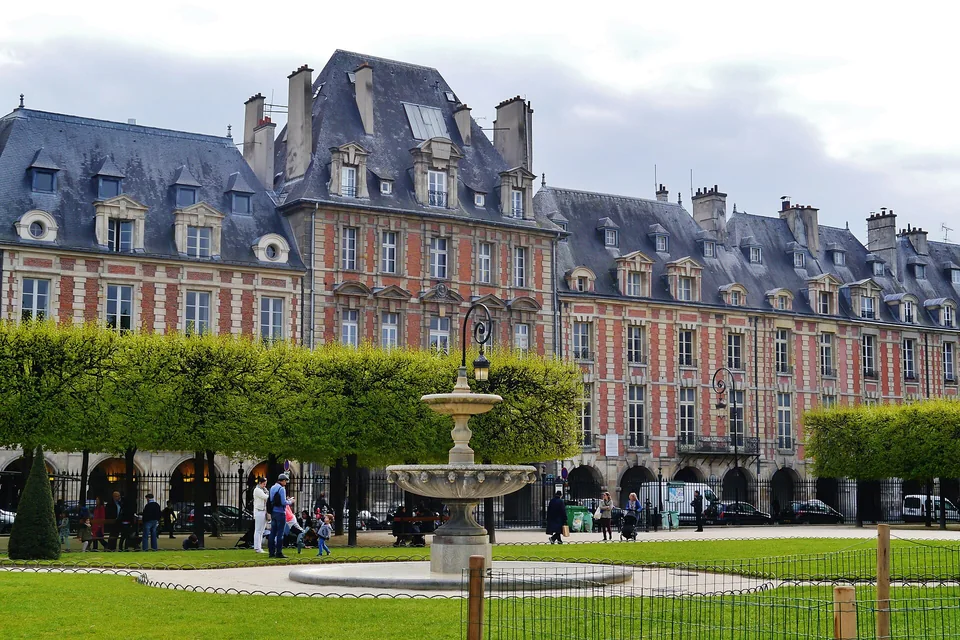
| Marais, 3rd/4th | Place des Vosges, galleries and museums suit someone who wants cultural visits to be part of everyday life. | Inspect stairs, delivery access and bedroom orientation. Test how the street sounds in the evening and whether the apartment has enough daylight for working. |
| Canal Saint-Martin / République, 10th | An option for cafés, restaurants and a social routine around the canal and République. | Compare canal-facing and side-street flats. A desirable evening scene can conflict with an early bedtime; check the bedroom with windows open. |
| Montparnasse / Alésia, 14th | Consider this southern-side shortlist when the station, local streets and trips towards southern Paris fit your week. | A broad district label does not establish walking distance to Montparnasse’s platforms. Rehearse luggage and school journeys separately. |
| Commerce / Convention / Saint-Lambert, 15th | Worth exploring for a more residential routine, everyday shopping and access to the Georges-Brassens area. | The district is large. Check which metro connection serves your address and how long it takes to reach your social activities, not just the office. |
| Passy / western 16th | A practical shortlist if a confirmed school campus or other daily destination is on this side of the city. | Do not pay for a western address before checking the actual campus, childcare pickup and cross-city commute. Compare furnishings and building charges carefully. |
| Belleville / Jourdain, 19th/20th | Hilly streets, local shops and proximity to the Belleville and Buttes-Chaumont landscape offer another version of Paris. | Walk the gradients with a stroller or shopping. Compare the quieter side streets with busy junctions and inspect the route home at your normal return time. |
Get the lease, charges and building right
For a principal home, distinguish an ordinary unfurnished tenancy, an ordinary furnished tenancy and the restricted mobility lease. The usual minimum contract terms are three years unfurnished and one year furnished, with exceptions including student lets. A mobility lease runs from one to ten months and requires an eligible situation such as study, training or a temporary professional assignment. The length of the contract is different from the tenant’s right to leave after valid notice.
For ordinary monthly-paid housing, the deposit ceiling is one month of rent excluding charges if unfurnished, two if furnished; mobility leases prohibit a deposit. The Paris rent-control check is address- and contract-specific. Obtain the reference rent, increased reference and the explanation for any supplement, rather than assuming that the advertised price proves compliance. A charge provision and a fixed charge package also behave differently at reconciliation.
At a viewing, distinguish usable space from a clever photograph. Open windows, look for evidence of leaks, test the shower and ask how heating and hot water are billed. Check lift dimensions if a stroller or mobility aid is involved, and whether bicycles can be stored securely. A courtyard-facing room can reduce street noise but still receive neighbours’ sound or little daylight.
Keep a signed inventory, dated condition photographs and meter readings with the lease. For furnished housing, compare the actual equipment with the inventory. Rental-risk insurance must be arranged for handover; its minimum cover does not automatically protect all your belongings. Verify the owner or agent and written terms before transferring money, and keep any fee or deposit receipt in the same file.
Work, business & opportunities
Find the work location before fixing the commute
INSEE records about 1.81 million jobs located within Paris in 2023. The wider Paris Region investment agency highlights technology and AI, financial services, healthcare and creative or luxury industries, but that is a regional picture. Establish whether an employer means an office in the municipality, a suburban campus or a hybrid role before comparing homes.
For current opportunities, use the city’s Emploi Paris portal and the operator-run STATION F startup job board. STATION F is at 5 parvis Alan Turing in the 13th; jobs in its ecosystem still have their own location, language and experience requirements. The city also lists ParisCode, ParisFabrik and professional French-language pathways. Those are concrete places to investigate training, rather than assuming an English-speaking role will be easy to find.
An owner working remotely needs to resolve both the professional arrangement and the domestic one. Confirm the hours of overlap with clients, a quiet place for calls, the precise internet connection and a backup workspace. Decide what must be done in person and which travel days will strain school pickup. Use the France guides for permission to work, payroll and the tax implications of operating a business from France; a Paris address does not answer those questions.
Schools & childcare
Public, bilingual and international school choices
For public primary education, the home address affects school assignment. Paris’s published campaign for September 2026 opened on 1 April 2026. Families arriving during the year should contact their arrondissement mairie for the current procedure rather than wait for a future annual opening. Prepare identity, family and address documents, and confirm the school assignment before treating a nearby apartment as a school place.
For newly arrived pupils who do not speak French, the Académie’s CASNAV route distinguishes younger children registered through the mairie from 11–18-year-olds needing an assessment when they have not previously attended school in France. The latter route includes French and mathematics tests and an administrative file before assignment. Ask how language support fits the child’s timetable and previous curriculum.
Private admission follows its own timetable and academic criteria. École Jeannine Manuel describes a French bilingual education and an adaptation programme for pupils with little French in grades 2–9; Paris accepts children from age four and has no boarding. Its website currently describes the 2027/28 application cycle, which must not be confused with a vacancy for an immediate move.
When comparing an international programme with the public route, examine the language of instruction, support needs and the next likely country as well as tuition. Ask for the exact campus, admissions decision date, required deposit, lunch and transport charges, withdrawal terms and any learning-support assessment. These decisions can set the housing area more strongly than the preferred neighbourhood.
| Option | Published information | What the family needs to establish |
|---|---|---|
| Paris public primary school | Address-based local assignment; mairie and city enrolment process. | Assigned school, language support, meal registration and after-school arrangements. |
| International School of Paris — 2026/27 | Annual tuition: Nursery–Pre-K EUR 25,500; Kindergarten EUR 31,100; Grades 1–5 EUR 31,400; Grades 6–9 EUR 36,500; Grades 10–12 EUR 39,000. | A place for the exact year group; campus, support needs and the full written invoice. |
| École Jeannine Manuel | Bilingual/adaptation and later programme choices; separate fee schedules for the programme. | Grade eligibility, assessment and offer; use the matching Paris tariff, not an IB-only fee for a younger child. |
Include entry fees, meals and childcare hours
At ISP, a new Grades 1–5 pupil’s published 2026/27 tuition, application and entry charges total EUR 42,600: EUR 31,400 + EUR 1,200 + EUR 10,000. The EUR 3,000 registration down payment is part of tuition, not another fee to add. Nursery–Grade 5 meals are listed at EUR 10 each; optional transport and additional learning support require separate budgeting. Read the withdrawal conditions before committing.
Paris public-school meal charges use ten family-quotient bands. The city’s September 2026 page shows free meals in the first two bands and EUR 7 in the highest band. Complete the relevant Paris Familles or arrondissement caisse des écoles process; the public canteen tariff is not an international-school lunch price.
For municipal nursery care in 2026, the city’s tariff leaflet normally uses 2024 declared resources and family size, then applies the contracted hours and days. For one dependent child it publishes an hourly range of EUR 0.50–5.26. A ceiling-rate example with 160 contracted hours is EUR 841.60 before any billing adjustments. This illustrates an admitted child’s service cost, not the availability of a place or a household’s after-tax cost.
Check the actual daily closing time against the commute and build a backup plan for illness, holidays or delayed trains. The practical choice is not simply municipal versus private: a workable collection time, predictable contracted days and continuity of care may outweigh a lower headline hourly charge.
Healthcare
Establish care locally while completing French coverage
French health entitlement is governed nationally; the France relocation guide and Assurance Maladie explain the applicable route. In Paris, identify the competent CPAM, submit the requested documents and track the acknowledgement and rights confirmation. Keep appropriate cover during any unresolved interval. A signed lease or a booked medical appointment is not itself confirmation of reimbursement.
For routine care, the city lists municipal centres including Edison in the 13th, Tisserand in the 14th and Adélaïde Hautval, formerly Épée-de-Bois, in the 5th. Their booking links cover general and specialist care, dentistry and other services according to the centre. Bring the Carte Vitale or rights attestation, complementary-insurance card and relevant medical records. Full third-party payment depends on the centre’s agreement with the complementary insurer; it is not a blanket promise of free care.
Choose a regular doctor who can meet your needs and ask whether they accept new patients, which languages they use and how follow-ups are organised. Send a concise treatment history before transferring complex care, including generic medication names, allergies and previous results. For a family, confirm paediatric and dental access separately rather than assume that one adult appointment settles everyone’s needs.
For medical emergencies, AP-HP advises calling 15. Its Pitié-Salpêtrière service is an adult emergency option; Necker’s paediatric emergency department serves children under 16, with defined specialty exceptions such as burns. Follow the medical dispatcher’s direction to the appropriate service rather than choosing the hospital nearest a map pin.
Getting around
Match the ticket to the journeys you actually make
In 2026, the standard single Métro–Train–RER fare is EUR 2.55 and Bus–Tram is EUR 2.05. Navigo Liberté+ lists EUR 2.04 and EUR 1.64 respectively for qualifying journeys. The all-zone monthly pass is EUR 90.80, while the annual pass is EUR 998.80 before subscription fees. Compare products around your actual travel frequency, arrival date and eligibility rather than buying a visitor pass by habit.
For a household, test each regular journey in both directions. An easy morning route may be awkward after evening activities, especially with an interchange or a child collection deadline. Locate the usable entrance and check the operator’s accessibility information if stairs are difficult. Allow for walking inside stations, not simply the train time shown on a route map.
Walking can make daily errands much easier if the home, groceries and school are close together. For cycling, inspect the route and secure storage before relying on a bike for every trip. If you keep a car, obtain an address-specific parking quote and check current city and regional vehicle-access rules before bringing it; the optional parking in a rental advertisement is separate from permission to drive everywhere.
Airports & international connections
Choose airport access around your real travel pattern
Paris-CDG and Paris-Orly are distinct international gateways serving the city. Investigate the RER B for CDG and Métro line 14 for Orly, then add the walk from home and the terminal transfer. A family using Orly frequently may value a different location from someone whose regular long-haul departure is from CDG. The airport listings here identify the linked airports; verify the particular airline, terminal and operating date for each trip.
The 2026 full-fare Paris Région–Aéroports single is EUR 14. An appropriate monthly or annual pass covering the airport area can cover the RER B or line 14 journey without a separate airport ticket. The ordinary Navigo day product excludes airport travel. Keep these distinctions in mind when arriving before your regular subscription is active.
Rehearse one trip with luggage before a time-sensitive departure. Check engineering works and first or last services for the travel day, and price a backup transfer for very early flights. A headline station-to-station journey leaves out waiting, walks, terminal security and the delay caused by a lift being unavailable.
Gateway options
Compare gatewaysParis Charles de Gaulle AirportCDG
InternationalParis region ·  France
Primary gateway For CDG, investigate the RER B route; for Orly, the Métro line 14 route. Île-de-France Mobilités says a monthly or annual pass covering the airport area does not require an extra airport ticket. Plan the last walk, station accessibility and service disruptions as well as the rail segment. A journey time between stations is not a door-to-door guarantee.
International gateway for Paris. Compare the current destinations, operating season and ground transfer for your itinerary.
Sources & connectivity notes
International passenger services. Check current routes and seasonal schedules.
Research checked 2026-10-13. Routes can vary by season.
Paris Orly AirportORY
InternationalParis region · France
Alternative gateway Alternative gateway. Paris region. Compare the complete onward journey to Paris with your flight times, luggage and arrival hour.
An alternative international gateway for Paris. Compare the current destinations, operating season and ground transfer for your itinerary.
Sources & connectivity notes
International passenger services. Check current routes and seasonal schedules.
Research checked 2026-10-13. Routes can vary by season.
Climate & environment
Month by month
Paris Montsouris station · 1991–2020 averages
WMO Member Nations (2023), PARIS-MONTSOURIS 1991–2020 normals. NOAA NCEI, doi:10.25921/800j-vn07. Accessed 14 October 2026. · Dataset citation conditions
January averages
- Mean daily high
- Mean daily low
- Monthly precipitation
°F and inches are converted from the metric values and rounded for display.
July and August average daily highs of about 26°C, with lows around 16°C. January averages 7.6°C by day and 3.2°C overnight. Rainfall is spread across the year, so outdoor life and the school run need a wet-weather option in every season. For housing, compare ventilation, shading and upper-floor heat as carefully as winter heating.
Montsouris is the station in southern Paris, at 75 metres elevation. A park station cannot describe every dense street, top-floor flat or suburb. These averages do not show heatwave extremes, indoor temperatures or a particular property’s flood exposure.
All monthly values
| Month | Mean daily high | Mean daily low | Monthly precipitation |
|---|---|---|---|
| January | 7.6°C | 3.2°C | 47.6 mm |
| February | 8.8°C | 3.3°C | 41.8 mm |
| March | 12.8°C | 5.6°C | 45.2 mm |
| April | 16.6°C | 7.9°C | 45.8 mm |
| May | 20.2°C | 11.1°C | 69.0 mm |
| June | 23.4°C | 14.2°C | 51.3 mm |
| July | 25.7°C | 16.2°C | 59.4 mm |
| August | 25.6°C | 16.0°C | 58.0 mm |
| September | 21.5°C | 13.0°C | 44.7 mm |
| October | 16.5°C | 9.9°C | 55.2 mm |
| November | 11.1°C | 6.2°C | 54.3 mm |
| December | 8.0°C | 3.8°C | 62.0 mm |
Sources, station & data quality
French WMO submission / NOAA NCEI station 07156 · Paris Montsouris station. These averages describe the stated period; they are not a forecast. Temperatures are average daily highs and lows, not extremes. Precipitation is an average monthly total, not a count of wet days.
Values and year counts are taken from the matching parameter blocks. The source repeats a precipitation parameter code in the separate rain-days block; that unrelated row is not used.
Only monthly daily-high, daily-low and precipitation-total normals are shown. The file also contains medians, percentiles and historical extremes; none is substituted for a mean.
Source units are degrees Celsius and millimetres. Fahrenheit = Celsius × 1.8 + 32; inches = millimetres ÷ 25.4. Display rounding does not change the stored source values.
All 36 selected monthly values are published at one decimal place, with 30 contributing years reported for each. NOY is a count of years used for that calendar month, not a daily completeness score or a guarantee about individual observations.
Inspect for summer heat as well as winter comfort
Paris requires a home that works across seasons. Use the monthly climate chart to compare the broad pattern, then inspect the building’s response: shade, cross-ventilation, heating controls and moisture matter more than a city average when you are choosing a bedroom. A top-floor room with attractive views deserves a particularly careful hot-weather check.
The city’s heatwave guidance explains why heat can remain a problem overnight and directs residents to precautions and cooler places. Ask which windows can be safely opened, whether shutters or external shading exist and whether any cooling equipment is actually included and permitted. A courtyard-facing bedroom is not automatically cool if warm air accumulates there.
For cold or wet periods, look at window seals, ventilation, drying space and the heating system. Ask for previous energy use where available and distinguish individual electricity from collective building heat. Inspect the return route after dark: a pleasant summer walk may feel different in rain with a child, groceries or mobility limitations.
Airparif publishes annual maps for pollutants including nitrogen dioxide and fine particles. Use the address, nearby road and school frontage when evaluating exposure rather than a single Paris air-quality label. If someone in the household has respiratory needs, discuss their practical requirements with their clinician and incorporate those into the housing search.
Safety & everyday risks
Separate street-level comfort from a city crime label
The police’s Paris safety guide focuses on practical risks such as pickpocketing, street scams and unattended bags. Keep phones and valuables secure on busy transport, use official taxi arrangements and avoid allowing an unsolicited approach to separate you from luggage. For the home, inspect the entrance, locks, intercom and parcel arrangements as carefully as the apartment itself.
INSEE’s territorial dashboard, using police and gendarmerie records, reports 45.2 thefts without violence against people per 1,000 inhabitants in the Paris department in 2025, compared with 9.2 across metropolitan France. This is a recorded-offence rate divided by resident population, not the probability that a resident will be robbed: incidents can involve visitors and commuters too. It does not establish a street-level safety ranking. Use it as context for protecting possessions while judging your own route, schedule and building separately.
Visit shortlisted streets after your usual finishing time and speak to the concierge or building manager about recurring access and maintenance issues. Check the route from the station rather than only the attractive square outside the viewing. Keep records of any tenancy payments and use independently verified contact details if a message unexpectedly changes bank instructions.
Public services & practical setup
Set up the accounts you will actually use
Enedis recommends contacting your chosen electricity supplier one to two weeks before moving; the supplier then arranges network activation. Confirm the meter identifier and opening reading, and whether electricity, heating and water are separate contracts or building charges. For a furnished home, establish who controls each existing account before assuming it transfers automatically.
Use MonParis for the relevant city services and Paris Familles for the household services available through that portal. Keep these separate from national immigration, tax and Assurance Maladie administration. Save the lease, insurance certificate, inventory, utility evidence and school correspondence together so that a repeat request does not stop another application.
DansMaRue is the city’s route for reporting public-space problems such as dumped objects or damaged facilities; 3975 can assist if an online report is difficult. Bulky-waste collection has its own booking procedure. Arrange collection or disposal when replacing furniture instead of assuming the building’s ordinary bins can take it.
At handover, obtain the owner’s maintenance contact, syndic or building-manager details and any instructions for shared equipment. Clarify the process for a leak, lift problem or heating failure and report defects in writing while the initial condition is still easy to establish. An orderly household file saves time long after the first week.
Culture, community & daily life
Make culture and community part of the weekly routine
A Paris cultural routine need not depend on buying a major attraction ticket every weekend. Paris Musées makes the permanent collections of named municipal museums, including Carnavalet and the Petit Palais, free, while temporary exhibitions and sites such as the Catacombs, archaeological crypt and Palais Galliera have separate charges. Check the venue’s current policy rather than treating all museums as one product.
One registration gives access to the city’s lending-library network. Books, language-learning material and several digital services are free to borrow or use; other media can have separate arrangements. Locate the branch you can visit regularly, check its opening days and explore its event programme. It can provide a quieter working or reading option than relying on cafés.
Build social contact around repeat attendance: a language course, sport, parent group or neighbourhood activity is easier to sustain when the journey is short. Use the city’s market and activity listings to plan ordinary shopping and evenings near home. Visiting Place des Vosges or a canal café is pleasant; being able to keep doing the things you enjoy after the first month is what makes the location work.
What residents say
Three residents, three different priorities
These are short paraphrases of directly retrievable public accounts, checked on 14 October 2026. They are self-selected personal experiences, not client testimonials or a representative survey. The contributors’ identities are not independently verified. Their useful contribution is the different questions they raise: whether quiet suits you, whether your social journeys work and whether the apartment stays comfortable at night.
Use those questions during a scouting stay. Try the route to the places you expect to visit weekly, spend time in the neighbourhood after the shops close, and ask the current occupant about the hottest nights. An address can perform well for one stage of life and poorly for another without either resident being wrong.
Sources for this section
These are attributed public experiences, not client testimonials. Housing, neighbourhood and household circumstances affect the experience.
anon543123765, also in their twenties, described a quiet home near the tramway in the 15th, with parks and food options. The drawback was that many social and cultural activities required a metro journey they put at 35–60 minutes.
Self-described resident near the edge of the 15th; the travel range is their experience, not an operator timetable.
xela-luap said they had lived in Paris since 2018 and experienced difficult hot nights in several apartments. Their account highlights the discomfort of homes that retain heat overnight, especially when opening windows brings little relief.
Longer-term resident describing personal heat discomfort; their separate weather measurements are not used as official climate data.
Planning your move
Coordinate the home, family and business move
Start the housing search with the residence and work route, school requirements and budget already understood. Then work through the five-stage sequence below. School applications, healthcare preparation and service bookings can overlap; they do not need to wait until every housing detail is settled.
Use the France guides for national residence, personal-tax and company questions. If you will continue directing a business or serving clients across borders, connect those decisions with the move date before committing to recurring costs. Our international structuring service can help coordinate that wider plan; the neighbourhood and property research here helps turn it into a practical household decision.
Your move, step by step
Five practical stages; school and healthcare work can overlap. The electricity lead time is operator guidance, not a guaranteed completion time.
01Fix the family and work requirementsBefore committing to a long tenancy
Confirm the residence and work route, the actual office or campus, school availability and any continuing medical treatment. Shortlist homes by those repeat journeys and separate recurring costs from the cash needed at signing.
Documents & evidence
- Workplace or campus address and attendance pattern
- Children’s year groups, school reports and requested support information
- Relevant residence/work and continuing-care documents
- A preferred school or nursery is not available until the provider confirms the place.
02Inspect the home and agree the tenancyBefore signing or transferring the deposit
Verify the counterparty, contract category, rent reference, charge arrangements, notice and deposit. Inspect the building as well as the flat, agree the inventory and obtain the insurance certificate required for handover.
Documents & evidence
- Draft lease and agreed charges
- Inventory and condition photographs
- Insurance certificate
- Verified payee and deposit receipt
- Separate refundable deposit and optional parking from monthly rent; check the contract type and exact address.
03Activate services and document the keysElectricity supplier: plan one to two weeks ahead
Arrange electricity and any internet installation, confirm individual versus collective utilities, and record meter readings and condition photographs at handover. Retain the signed lease, inventory and receipts in a shared household file.
Documents & evidence
- Electricity meter identifier and opening reading
- Supplier and internet appointment confirmations
- Signed lease, inventory and key-handover record
- Collective heating or hot water may be a building charge; avoid arranging a duplicate individual supply.
04Complete school, childcare and healthcare filesBefore or immediately after arrival, according to each process
Follow up the school assignment or private admission, select meal and care arrangements, and complete the CPAM route for each person as required. Check which confirmations and documents are still outstanding before relying on the service.
Documents & evidence
- School or nursery’s requested family and address file
- CPAM application and supporting records for the applicable route
- Medication list and relevant clinical reports
- Health-rights attestation and supplementary-cover details when available
- A submitted application does not confirm the start date, assigned place or completed healthcare registration.
05Test the working week and settle into the neighbourhoodDuring the first weeks in the home
Choose the transport product around real journeys, rehearse the airport route, register with a useful library and resolve building defects in writing. Reconcile the first utility bills and adjust the household budget to actual use.
Documents & evidence
- First utility and service invoices
- Transport spending and repeated journey notes
- School calendar and household budget
- Written record of unresolved building defects
- An introductory bill or a mild-weather month does not establish annual household spending.
Sources & research notes49 references
Sources supporting this guide. Research draft awaiting editorial review.
- INSEE — Paris commune, 2023 census
- INSEE — Paris functional urban area
- OLAP — private unfurnished rents, January 2025
- OLAP — early-2026 market-rent map
- PAP — furnished 50 m² Saint-Lambert rental, reference G56/0939
- Notaires du Grand Paris — May–July 2026 market report
- Service Public — furnished, unfurnished and mobility leases
- Service Public — residential tenancy deposits
- Service Public — tenant rental-risk insurance
- Ville de Paris — address-specific rent controls
- EDF — Tarif Bleu residential tariff, 1 August 2026
- Free — Freebox Pop S offer
- Enedis — electricity on moving in
- Île-de-France Mobilités — 2026 fares
- Île-de-France Mobilités — airport access
- Île-de-France Mobilités — airport tickets and passes
- Ville de Paris — public-school enrolment and catchments
- Académie de Paris — newly arrived pupils
- International School of Paris — 2026/27 fees
- École Jeannine Manuel — admissions and bilingual adaptation
- École Jeannine Manuel — fee schedules
- Ville de Paris — school-meal tariffs
- Ville de Paris — 2026 municipal childcare tariff
- Ville de Paris — nursery admission
- Assurance Maladie — health entitlement and application
- Ville de Paris — municipal health services
- AP-HP — Necker paediatric emergency service
- AP-HP — Pitié-Salpêtrière emergencies
- Ville de Paris — employment portal
- Ville de Paris — employment and training services
- Choose Paris Region — regional industries
- STATION F — startup job board
- Ville de Paris — heatwave preparation
- Airparif — annual pollution maps
- Préfecture de Police — Paris safety guide
- INSEE — territorial security indicators, 2025
- Ville de Paris — online services
- Ville de Paris — DansMaRue
- Ville de Paris — library registration
- Paris Musées — admission policy
- Ville de Paris — neighbourhood markets
- Paris je t’aime — Batignolles
- Paris je t’aime — Marais and Canal Saint-Martin
- Paris je t’aime — Montparnasse district
- Paris je t’aime — Belleville walking route
- r/paris — self-described residents of the 15th
- r/paris — xela-luap on apartment heat
- PAP — Paris apartment rentals
- PAP — Paris apartment purchases
Fantasyschmantasy69, an American in their mid-to-late twenties who had moved with their wife, preferred the 15th’s quieter pace after living in South Pigalle. They valued being near a metro stop and accepted less nightlife; they said they had been in the new area for one month.
Recent mover comparing two Paris neighbourhoods; their preference concerns a quieter household routine.